
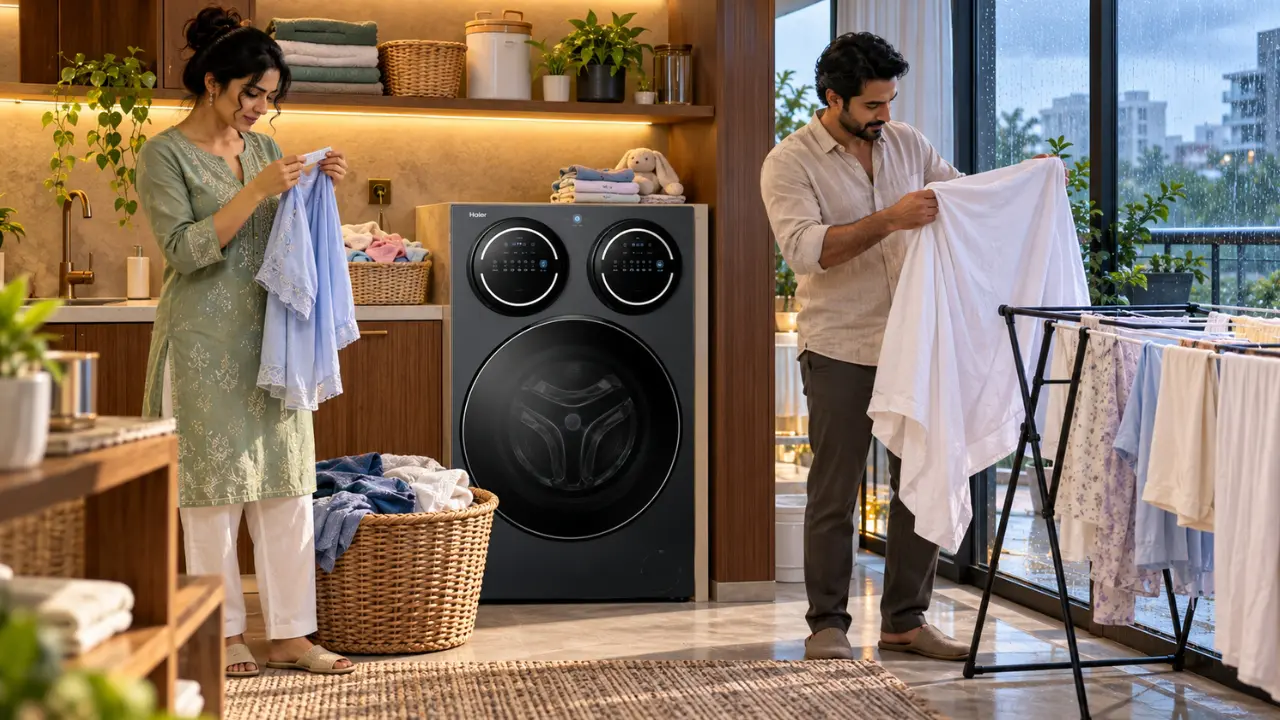

Your laundry cycle has completed! You remove a cotton shirt, give it a quick shake, and notice that it is still wet. The usual question is now: how long will it take to dry?
It would not take too long on a sunny afternoon. However, during the monsoon, the additional moisture can be quite a hassle as clothes are left inside for hours.
Interestingly, it may be as simple as something you didn’t realise when setting your wash options: spin speed.
Most automatic washing machines have various spin speeds that vary from one model to another and are usually rated in RPM. You may encounter two settings: 800 RPM and 1200 RPM.
Both can remove water from washed clothes, but they are not the same.
So, should 1200 RPM always be better? Is it OK to spin delicate clothes at 800 RPM? And by how much will an extra 400 RPM matter?
Let’s learn what is happening inside the drum before we determine which setting deserves a closer look.
What Does RPM Mean in a Washing Machine?
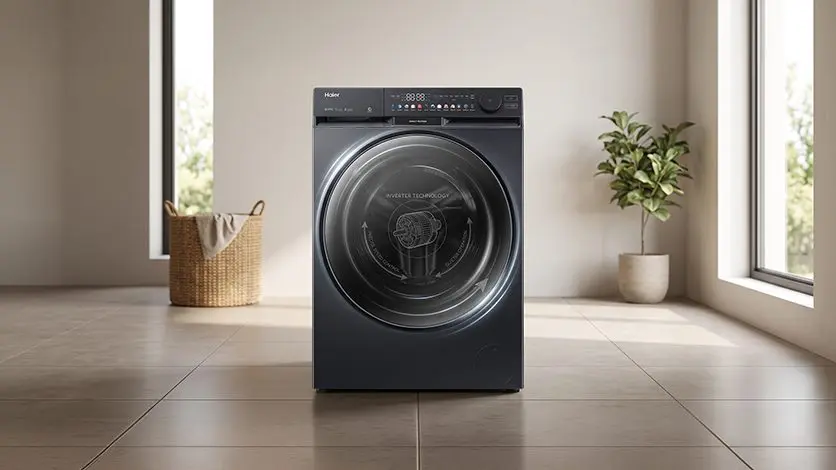
RPM stands for Revolutions Per Minute. It measures how many times the washing machine drum rotates in one minute during spinning.
For example:
- 800 RPM means the drum rotates 800 times per minute.
- 1200 RPM means the drum rotates 1200 times per minute.
- The higher the RPM, the greater the centrifugal force, which may remove more water from clothes.
Wet clothes are pressed against the perforated surface of the rotating drum during the spin cycle. Water moves through the openings and is drained away.
The faster the drum spins, the greater the force acting on the water.
However, there is one important distinction.
Spin speed primarily determines how much water your clothes retain after washing. It is not directly involved in detergent-based dirt or stain removal.
If you increase the RPM setting, your laundry will likely retain less water, but that does not necessarily mean your clothes will be cleaner.
800 RPM vs 1200 RPM: What Actually Changes?
The distinction between these settings becomes apparent when you consider fabric care, moisture removal and typical laundry needs.
1. Moisture Removal
At 800 RPM, the washing machine spins at a moderate speed, extracting water from clothes without subjecting them to the same spinning forces as a higher-speed setting.
At 1200 RPM, the drum rotates 50% faster.
This tends to remove more moisture from clothing, bedsheets and other heavy fabrics.
However, 1200 RPM doesn’t guarantee clothes will dry 50% faster. Depending on fabric thickness, humidity, airflow and the amount of water remaining in the fabric after spinning, the actual drying time may vary.
2. Fabric Care
Not all clothes can withstand the same spinning intensity!
Lightweight, loosely knitted or delicate fabrics may stretch, crease or experience greater mechanical stress at higher speeds.
For less demanding items of clothing, such as most everyday garments, an 800 RPM setting may be more appropriate when the garment care instructions allow it.
Meanwhile, 1200 RPM is generally more appropriate for tougher fabrics that can withstand stronger spinning.
3. Drying Convenience
The thought of washing a week’s worth of office clothes on Sunday evening is enough to make you cringe.
If you’re short on balcony space and the forecast says another rainy morning, what do you do?
A 1200 RPM spin might be helpful here, as additional water extraction during the spin-drying cycle may decrease the time clothes need on the drying rack.
The practical impact of this can be significant during the humid season for Indian households.
4. Wrinkles and Creasing
The higher the spin speed, the more some clothing is likely to be pressed against the drum.
As a result, some fabrics might develop additional creases.
The relatively gentle spinning action at 800 RPM can help minimise this effect.
Of course, the type of fabric and how quickly you remove clothes after washing also have a bearing on wrinkles.
When Is It Best to Use 800 RPM?

Although people sometimes think they are sacrificing washing quality for a lower spin speed, they are not necessarily doing so.
In some instances, a gentler spin is just what garments need.
For Delicate Everyday Clothing
Consider clothes that you’re hesitant to put in the washing machine.
It could be a favourite kurta, a lightweight blouse or a soft knitted top.
Depending on the material and care instructions, such clothing may benefit from a gentler spinning intensity.
An 800 RPM setting might work for:
- Lightweight cotton garments
- Certain synthetic fabrics
- Casual tops and shirts
- Some blended-fabric clothing
- Fabrics that crease easily
For silk, wool, embellished outfits or particularly delicate fabrics, even 800 RPM may be too high. Be sure to follow the care label and use the appropriate wash cycle.
When You’re Concerned About Creasing
A medium spin speed can help reduce excessive creasing if you’re washing formal items of clothing that you iron frequently, such as shirts or trousers.
But don’t overload the drum.
Packing clothes too tightly can prevent proper movement, and the wrong spin speed won’t help.
When Clothes Can Dry Naturally
On warm and windy summer afternoons, you might not need to extract every last bit of water.
If your clothes can dry easily outdoors, 800 RPM might be enough to remove moisture from suitable fabrics.
When Does 1200 RPM Make More Sense?
Now consider the other side.
In certain cases, more intensive spinning can genuinely simplify the laundry process.
During the Indian Monsoon
Clothes can be hard to dry in Mumbai due to frequent rain, in Kolkata because of humid weather, and in Bengaluru because of sudden and unpredictable downpours.
The faster the spin, the more water can be removed before hanging.
While it cannot remove all moisture, 1200 RPM can decrease the amount of drying required afterwards.
For Bedsheets and Durable Cotton Laundry
Even bedsheets, pillowcases and regular cotton clothes can retain considerable moisture after rinsing.
If the fabric care label allows it, 1200 RPM can help remove water more effectively.
This is particularly convenient when washing larger amounts of laundry that would otherwise occupy drying space for a prolonged period.
For Busy Working Households
Suppose you finish your laundry near the end of the day.
You need your office clothes ready for the next morning, but you don’t have much time for extended drying.
Choosing an appropriate higher spin speed can make the process more convenient.
Yet, keep in mind that higher RPM does not eliminate the need for proper drying. Clothes still need to be dried thoroughly before storage or use.
Can Clothes Be Damaged by 1200 RPM?
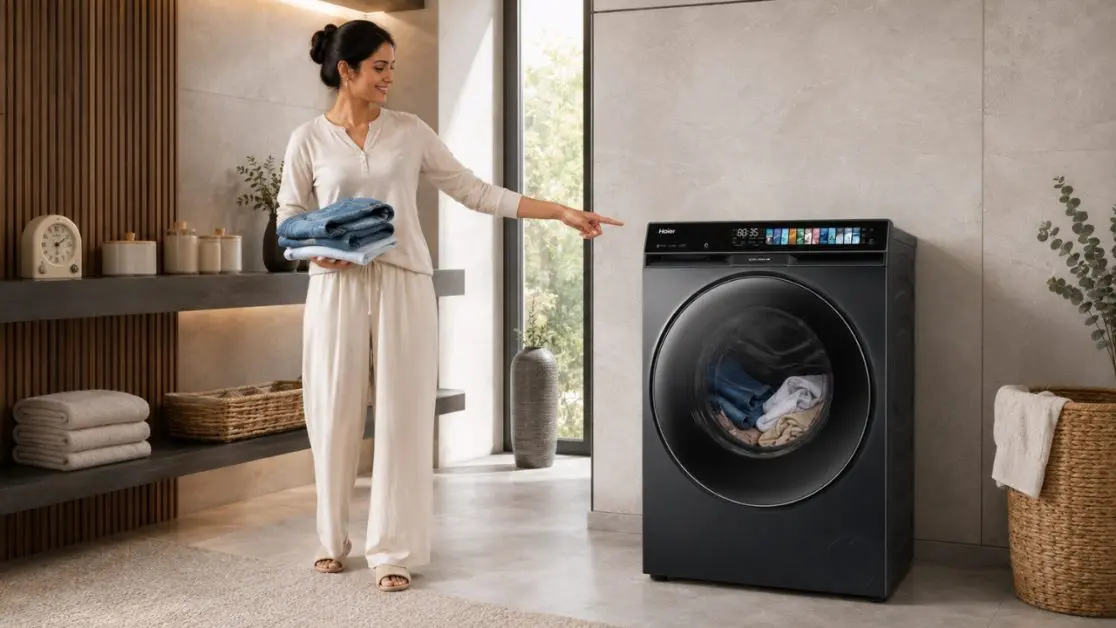
Not automatically.
Modern washing machines are engineered to function at their specified spin speeds. The question is whether a particular fabric can withstand those speeds.
A lightweight knitted item of clothing might not tolerate 1200 RPM well, while a sturdy cotton garment may handle it comfortably.
Other factors are important as well.
Watch Out for These Common Mistakes!
- Overloading the drum can prevent proper movement and lead to uneven spinning.
- Washing delicate garments with heavy clothing can cause additional friction.
- Failure to follow care instructions may lead to stretching, creasing or fabric damage.
- Selecting the highest spin speed for every load may be unsuitable for certain materials.
One useful guideline is to choose the spin speed according to the most delicate garment in the load.
Better still, separate clothing that requires significantly different care.
But that takes us to a very interesting advancement in today’s laundry appliances.
Haier Triple Drum Washing Machine – The Smart Solution to Fabric Care
The issue of spin speed opens the discussion around another problem in Indian homes.
Clothes require different methods of treatment.
The washing programme for cotton bedsheets doesn’t have to be as elaborate as that for delicate fabrics. Likewise, baby garments, office uniforms and everyday clothes might require different washing methods.
This is where the Haier Triple Drum Washing Machine (HW120-DM12LC3GNU1) brings a new level of flexibility.
This Haier washing machine features three independently controlled drums that can wash different types of laundry separately, even simultaneously.
It has a total washing capacity of up to 12 kg across three drums:
- 10 kg main drum for larger everyday laundry loads.
- 1 kg upper drum for smaller loads that need to be washed separately.
- 1 kg second upper drum for further laundry segregation.
Households can separate laundry according to fabric types and washing requirements instead of combining everything into one load.
A 1200 RPM Spin Speed Designed for Everyday Convenience
The Haier Triple Drum Washing Machine has a specified spin speed of 1200 RPM.
This makes it relevant for households looking to extract moisture effectively from suitable fabrics.
The 1200 RPM specification offers the benefits associated with higher-speed spinning, whether you’re washing everyday cotton clothing or household laundry.
However, the appropriate spin speed depends on the selected drum and programme. Please consult the machine’s operating manual for available settings.
Three Independent Direct Motion Motors
A key distinguishing feature is the inclusion of three separate Direct Motion Motors.
Each drum has independent controls that can be used to select different washing cycles according to laundry requirements.
The practical advantage?
It’s not necessary to wait for one category of laundry to finish before starting another load.
This versatility can make laundry planning easier for households with various types of clothing.
Multi-Drum AI Wash
It is not always easy to select the optimal washing settings.
The Haier Triple Drum Washing Machine features Multi-Drum AI Wash, which recommends washing programmes according to the weight of the laundry.
This helps users choose a suitable programme for their load without relying entirely on guesswork.
It’s a useful solution when laundry quantities vary throughout the week.
Smart Dosing for Detergent Management
Another common laundry mistake is adding too much detergent to the washing machine.
Excess detergent can cause unnecessary foaming and leave residue if it isn’t properly rinsed away.
The Smart Dosing feature automatically dispenses detergent and softener, with capacities of 900 ml and 800 ml, respectively.
This makes detergent management easier, as there is no need to measure it manually for every wash.
Drum Essence Wash and Quick Clean
The machine also features Drum Essence Wash, which premixes detergent and water to form dense foam for cleaning different fabric types.
The Quick Clean function helps reduce washing time when laundry needs to be completed sooner.
Quick Clean reduces the specified wash duration from 1 hour and 29 minutes to 46 minutes.
The actual programmes available and washing results will vary depending on the programme settings and laundry conditions.
Together, these features make the Haier Triple Drum Washing Machine an option worth considering for households with frequent mixed laundry needs.
How to Choose the Appropriate Spin Speed for Your Laundry
Instead of selecting the highest RPM every time, ask yourself the following three questions.
What Kind of Fabric Are You Washing?
Begin with the care label.
Delicate fabrics may require 800 RPM or an even lower setting, while durable cotton fabrics may be suitable for 1200 RPM.
How Quickly Do You Need the Clothes to Dry?
If you’re dealing with humid weather or limited drying space, a higher permitted spin speed may be beneficial.
A medium setting may be adequate if the drying conditions are favourable.
Are You Washing Similar Fabrics Together?
Mixing lightweight clothes with heavy towels can result in an unbalanced load.
Launder clothes according to fabric type, weight and care requirements whenever possible.
A multi-drum washing machine may provide additional flexibility for households with diverse laundry needs.
Use Spin Speed to Your Laundry’s Advantage, Not Your Laundry’s Demise
The difference between 800 and 1200 RPM isn’t just about the speed at which a washing machine drum spins.
It’s about choosing the right balance between moisture removal and fabric care.
When garments require gentler treatment, 800 RPM may be beneficial. Meanwhile, 1200 RPM offers stronger water extraction for suitable fabrics, especially when drying conditions are less than ideal.
For Indian homes that handle everything from everyday office attire to bedsheets and smaller delicate loads, washing flexibility is just as important as spin speed.
The Haier Triple Drum Washing Machine (HW120-DM12LC3GNU1) addresses this need with its three separate drums, 1200 RPM spin specification and intelligent washing capabilities.
Explore Haier India’s washing machine range to discover how thoughtful laundry technology can make everyday fabric care more convenient.
Frequently Asked Questions
1. Is 1200 RPM better than 800 RPM?
1200 RPM generally removes more moisture from suitable fabrics, potentially reducing drying time. However, 800 RPM may be preferable for garments requiring gentler spinning.
2. Does 1200 RPM make clothes completely dry?
No. A 1200 RPM spin removes water but does not fully dry clothes. They still require air drying or an appropriate drying appliance.
3. Can I wash cotton clothes at 1200 RPM?
Many durable cotton garments can tolerate 1200 RPM. Always check the garment’s care label, particularly for lightweight, decorated or loosely woven cotton clothing.
4. Does higher RPM consume more electricity?
A higher spin speed can require greater motor power during spinning, but total electricity consumption depends on the machine, programme duration and other operating conditions. Higher RPM does not automatically mean significantly higher overall energy use.
5. Is 800 RPM enough for everyday laundry?
Yes. For many everyday garments, 800 RPM provides useful moisture extraction while offering gentler spinning than 1200 RPM. The best setting depends on the fabric and drying conditions.
6. What is the spin speed of the Haier Triple Drum Washing Machine?
The Haier Triple Drum Washing Machine (HW120-DM12LC3GNU1) has a specified spin speed of 1200 RPM. It also features three independently controlled drums, Direct Motion Motors, Multi-Drum AI Wash and Smart Dosing.