


AI-powered TVs now manage dark scenes, bright rooms, fast action, and long viewing hours automatically.
They read what is playing, understand your room lighting, and adjust pictures and sound in real time. The result is simple. Clear visuals, balanced sound, and zero manual tweaking in real Indian homes.
This is not about better settings.
It is about better systems.
Why dark scenes still break the experience for many homes.
It usually happens late at night.
The house is quiet.
The lights are low.
You start a much-hyped series.
And suddenly, nothing is visible.
Faces melt into shadows. Details disappear. You increase brightness. Blacks turn grey. The mood breaks.
This is not a content problem.
It is a processing problem.
Modern content assumes intelligent screens. When the TV cannot read contrast, depth, and motion together, the experience collapses.
A screen today is not just a display.
It is an interpreter.
The invisible system behind great picture quality
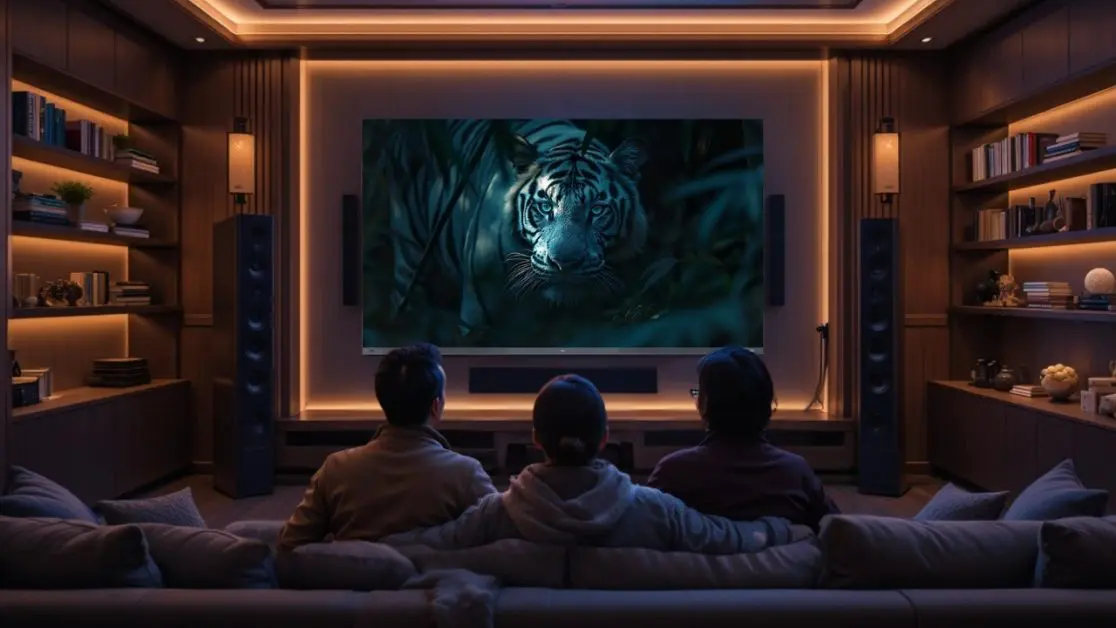
Good picture quality is not about maximum brightness.
It is about balance.
- Blacks that stay deep without crushing detail
- Highlights that pop without glare
- Motion that stays smooth without looking artificial
- Colors that feel real across skin tones and fabrics
Earlier, achieving this meant constant adjustments.
Now, AI manages the entire system at once.
Picture, sound, motion, and room lighting work together.
That shift changes everything.
How AI fixes dark scenes without ruining the mood
AI-enhanced TVs analyse scenes frame by frame.
A night forest is not treated like a sports stadium.
A candle-lit conversation is not processed like animation.
The processor identifies shadows, highlights, motion patterns, and depth, then adjusts locally instead of lifting the entire screen.
What improves in real usage
- Shadow details stay visible without washing out blacks
- Bright elements stay controlled instead of blooming
- Motion remains sharp during fast scenes
- Contrast adjusts scene by scene
Dark scenes stop feeling broken.
They start feeling intentional.
Why Indian living rooms need adaptive brightness
Indian homes are lighting rollercoasters.
Morning sunlight.
Afternoon glare.
Evening tube lights.
Late-night lamps.
Static brightness fails here.
AI-driven displays adjust automatically to ambient light. When the room brightens, visuals compensate. When lights dim, the screen softens.
No manual switching.
No constant corrections.
This matters more than raw brightness numbers.
One screen, many roles, zero compromise
A single TV today handles everything.
- Live cricket with fast camera pans
- Console gaming with rapid inputs
- OTT films with cinematic grading
- Kids content with high color saturation
- News channels with static graphics
Each demands different processing priorities.
AI systems identify the content and adapt instantly.
- Sports prioritise motion clarity
- Movies focus on contrast and color accuracy
- Gaming reduces latency and syncs refresh rates
The screen adapts.
You do not have to.
Why motion finally feels natural
Motion is where many TVs quietly fail.
Blur. Judder. Over-smoothing.
AI-based motion engines analyse frame patterns instead of applying blanket smoothing. Extra frames appear only where needed.
This keeps sports sharp while movies retain their cinematic feel.
High refresh rates like 144Hz help.
Intelligence decides how they are used.
Speed without control creates problems.
Smart motion creates comfort.
Sound becomes smarter when visuals improve
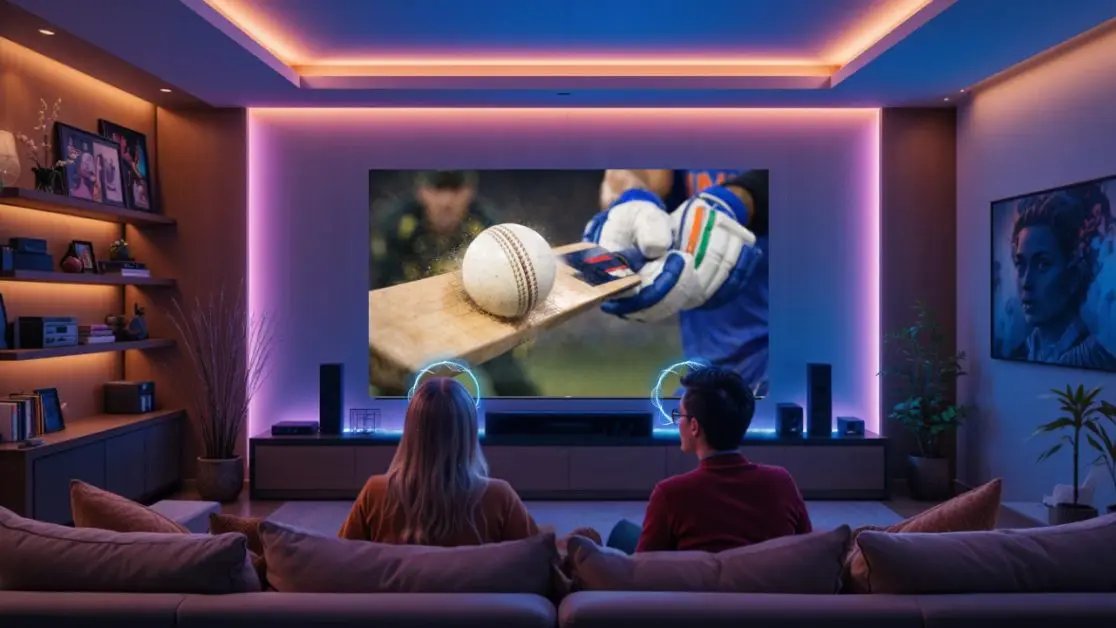
Great visuals demand equally intelligent sound.
AI audio tuning adjusts dialogue clarity, background effects, and bass depending on content.
- Dialogue stays clear during quiet scenes
- Stadium noise feels expansive during matches
- Music never overpowers voices
In large Indian living rooms with open layouts, this balance matters.
Sound should scale with the screen, not fight it.
Eye comfort is no longer optional
Viewing hours are longer than ever.
Work presentations.
Late-night series.
Weekend marathons.
AI-powered features like flicker-free viewing and adaptive brightness reduce eye strain without dulling visuals.
Comfort is not a premium feature anymore.
It is basic viewing hygiene.
Clear visuals should never mean tired eyes.
What an AI Center actually does
Think of modern TVs as having a central brain.
An AI Center connects:
- Visual processing
- Audio tuning
- Gaming optimisation
- Content handling
Instead of separate systems competing, everything works toward one goal.
A consistent experience.
This integration is what separates truly smart TVs from feature-heavy ones.
A real example of AI working as a system
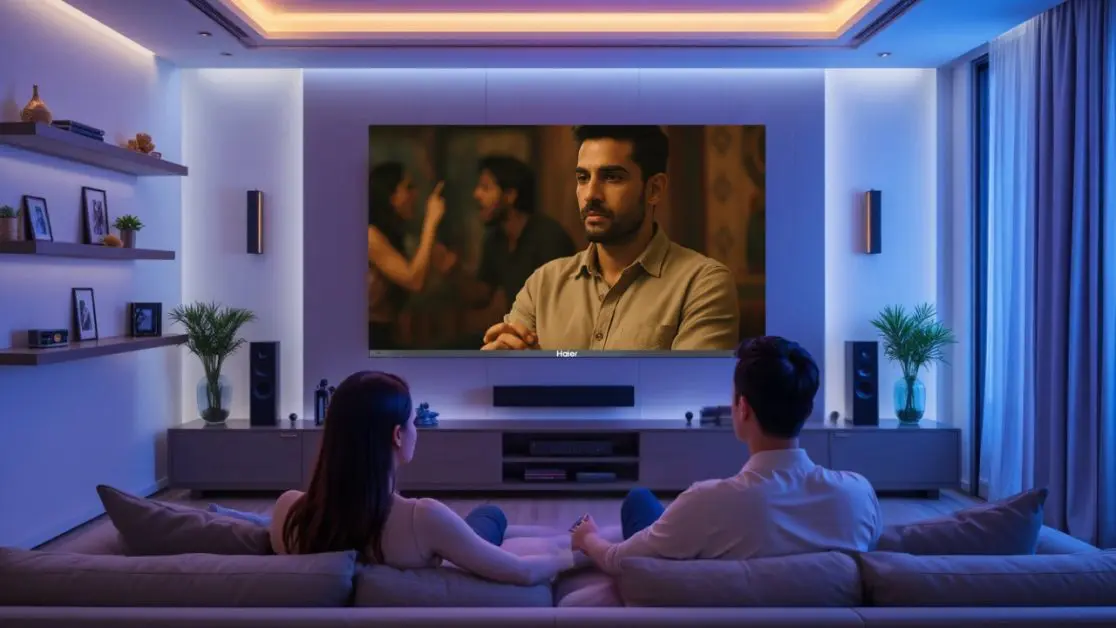
Large QD Mini LED TVs now show what system-level intelligence looks like in practice.
Features such as:
- Scene-by-scene HDR optimisation
- Per-zone local dimming for precise contrast
- Ambient light sensing
- High refresh rates for smooth motion
work together under a single AI framework.
The Haier M96 Series 254 cm (100) QD Mini LED AI Smart Google TV (Model: H100M96FUX) is built around this approach, using an AI Center and AI Ultra Sense Processor to coordinate picture, sound, gaming, and entertainment into one seamless experience .
The value is not in individual specs.
It is in how everything cooperates.
Why smarter screens reduce decision fatigue
The biggest benefit of AI is not visual quality.
It is mental ease.
Fewer settings.
Fewer compromises.
Fewer moments of distraction.
Good AI disappears into the background.
It lets you focus on the story, the match, the moment.
What this tells us about modern Indian homes
Homes today are:
- Multi-purpose
- Time-constrained
- Experience-driven
Appliances that adapt quietly fit better than those that demand attention.
AI-powered TVs follow the same logic.
From manual control to intelligent assistance.
From constant adjustment to quiet confidence.
From dark scenes to bright frames.
The insight worth remembering
Better screens are not about brighter pixels.
They are about smarter decisions happening invisibly.
When AI handles complexity behind the scenes, everyday life feels simpler.
That is what good technology should do.
Work quietly.
Deliver consistently.
And let you forget it is even there.
Frequently Asked Question
How exactly does AI fix dark scenes?
AI processors read contrast, depth, and motion together. They enhance shadow detail only where needed, control highlights, and preserve black levels scene by scene.
Why does live cricket sometimes look blurry or shaky?
Fast camera pans and ball movement expose weak motion processing. Many TVs can’t track motion accurately, causing blur or judder.
How does AI improve TV sound?
AI separates dialogue, ambient sound, and bass, then balances them based on content. Speech stays clear, while effects and music feel immersive without being overwhelming.
Is eye comfort now essential rather than premium?
Yes. With longer screen hours for work and entertainment, comfort is now basic viewing hygiene.