
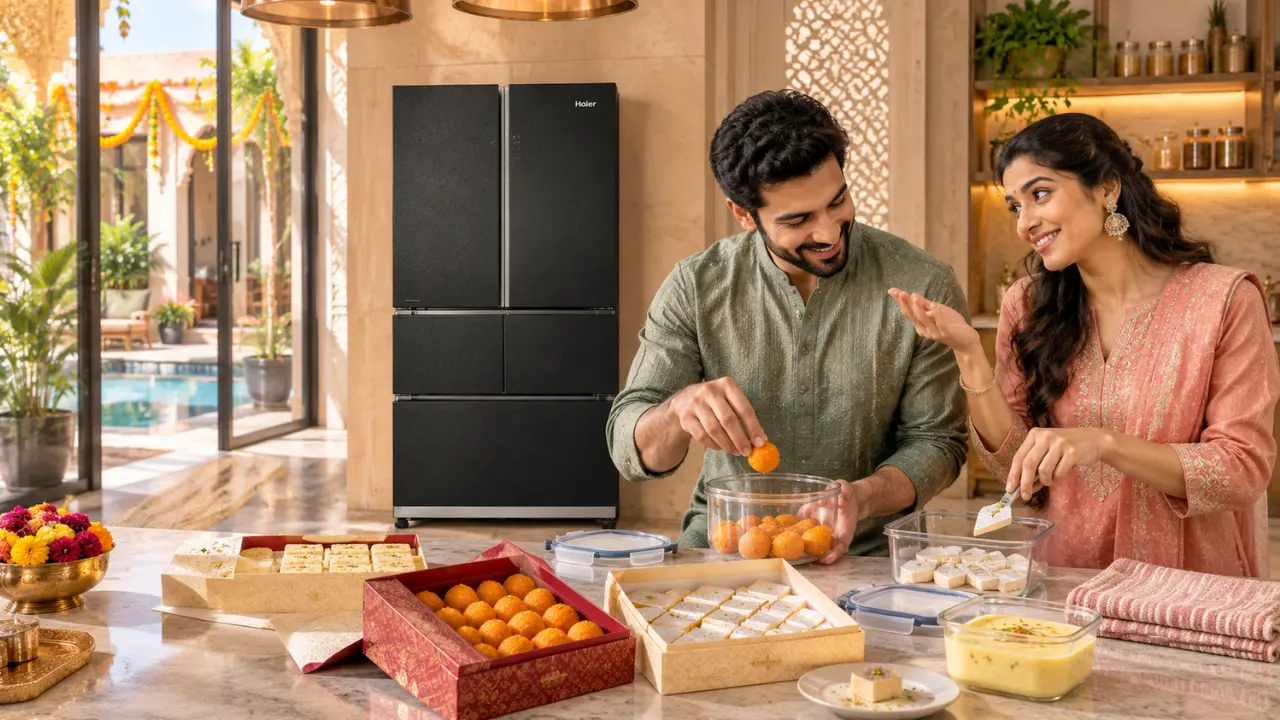

The Bhai Dooj festival has passed, the family has returned and there are still three boxes of mithai left on the kitchen counter. There’s a half-eaten rasmalai there somewhere in the corner, kaju katli in one, and motichoor laddoos in another.
Of course, the first thing that springs to mind is to place everything in the refrigerator.
But should you refrigerate mithai in its original wrappers? Are there different sweets that can be stored together? How long will they remain safe to eat?
To store opened Bhai Dooj mithai boxes, the best thing you can do is move the sweets to clean, airtight, food-grade containers, refrigerate perishable varieties immediately, and store different types of mithai separately. A refrigerator temperature of 4°C or below helps extend storage life, but this depends on the ingredients and how the sweets are handled.
With a bit of care, the taste and texture of festive favourites can be maintained.
Why Do Opened Bhai Dooj Mithai Boxes Require Special Care?
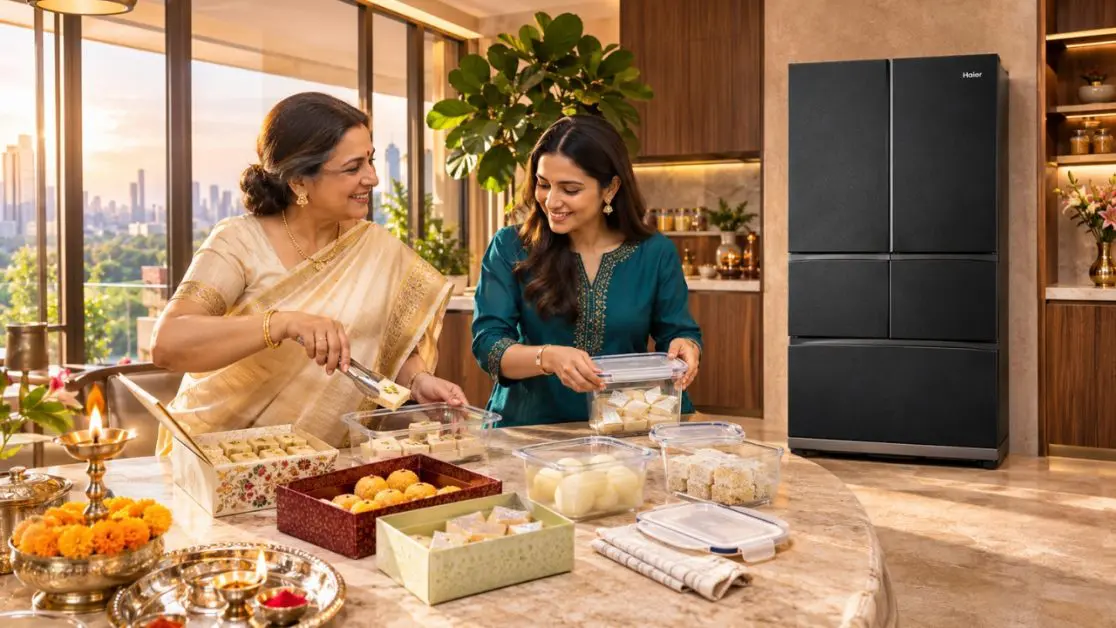
One of those days when sweets come down on us all day long is Bhai Dooj. Your sister has brought homemade besan laddoos, your relatives have sent some varieties of mithai, and the sweet shop in the neighbourhood has delivered that additional box you didn’t even order
By the time evening arrives, several boxes have been opened, passed around and returned to the dining table.
It’s not always the sweets that are the issue. It’s what happens once they’re opened.
Each time a piece is picked up, there is the potential for moisture, air and contact with hands or utensils. In addition, freshness can be affected by temperature changes, especially if sweets made with milk are not kept refrigerated.
Let’s take a look at the following scenarios:
- Milk cake is opened and placed on a dining table, where it is left for several hours.
- Rasgullas are often removed from the fridge and then put back in.
- Dry sweets are served next to strongly flavoured leftovers.
- Various kinds of mithai are packed in one container.
- A carton of sweets is left without a closed lid.
These little things can impact quality and, in some instances, food safety.
While refrigeration helps, the right packaging is also important.
Should You Keep Mithai in Its Original Box or Transfer It?
When you are gifting sweets, attractive festive packaging looks great. But it is not always appropriate for refrigerator storage.
Some mithai boxes are made from cardboard or decorative materials that may not be completely airtight. Once opened, they can allow moisture and other food odours to affect the sweets.
When Is the Original Box Acceptable?
If the mithai box is food-safe and clean, closes securely, and the mithai manufacturer explicitly states that it can be used for refrigerator storage, it may be suitable for short-term storage.
Otherwise, it’s usually easier to transfer the contents.
If boxes are opened, take the following precautions:
- Thoroughly clean and dry a food-grade container.
- Use clean hands and utensils to transfer mithai.
- Place different varieties of sweets in separate containers.
- Make sure the lid is tightly closed to minimise exposure to air and moisture.
- Write the opening date and use-by date on the container.
- Put all perishable sweets into the refrigerator as soon as possible.
One important note: Do not put warm mithai into a closed container while it is still steaming. Cool it promptly and put it in the refrigerator within the recommended cooling time.
How to Store Different Types of Bhai Dooj Mithai
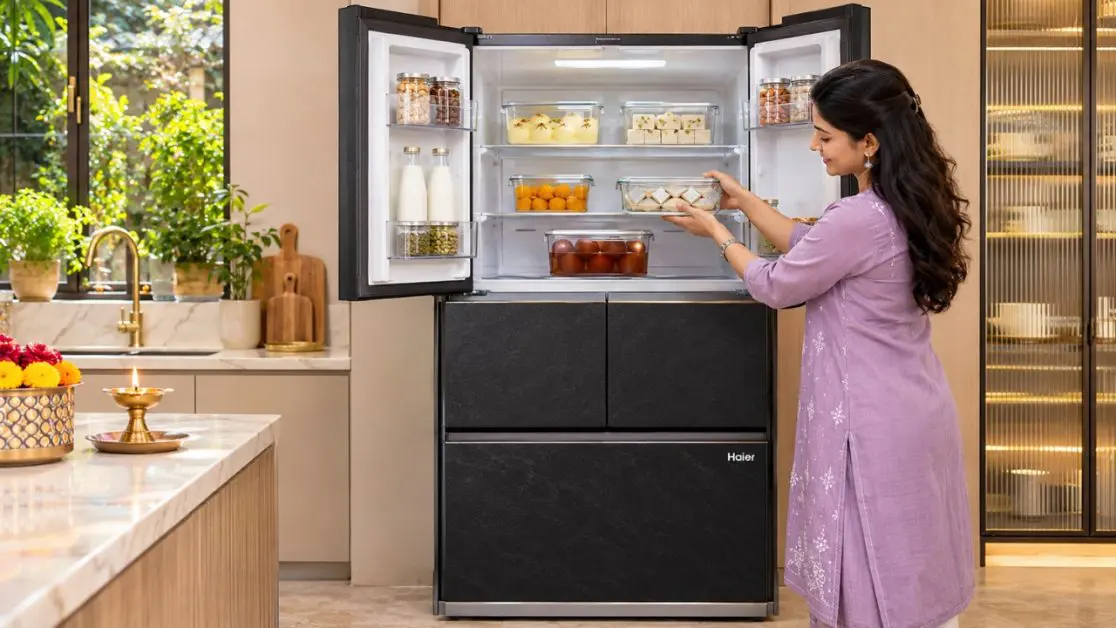
Indian sweets do not react the same way when kept in the fridge.
A box of kaju katli has different storage requirements from a bowl of chilled rasmalai. Knowing about these differences can help ease the management of festive food.
Milk-Based Sweets: Refrigerate Immediately
Milk or moisture-rich ingredients are found in rasmalai, kalakand, milk cake and various other barfi varieties.
Typically, they need more attention when it comes to temperature control because they are prone to spoiling relatively quickly.
For better storage:
- Store milk-based mithai in airtight containers.
- Store in the refrigerator at 4°C or lower.
- Don’t leave perishable sweets at room temperature for more than two hours, or one hour if the temperature is above 32°C.
- Follow the use-by directions given by the sweet maker.
- Consume them promptly rather than assuming they will remain safe for several days simply because they are refrigerated.
- Use a leakproof container for rasmalai, ensuring that the pieces remain in the milk they come with.
Dry Sweets: Preserve Their Texture
Most dry barfis and kaju katli have less moisture content than milk-soaked sweets.
Their ingredients and preparation methods, however, can be quite different.
Commercially packed dry sweets that can be stored at room temperature should be stored as stated on the pack, while those that require refrigeration should be kept in the fridge.
If refrigeration is recommended, place them in tightly closed containers to minimise moisture absorption.
Syrup-Based Sweets: Keep the Syrup and Sweets Together
Gulab jamun and rasgulla have different storage requirements.
If refrigeration is indicated, place them in clean, airtight containers and do not remove the syrup.
This will help maintain their distinctive consistency.
Before using packaged products, check the manufacturer’s storage instructions, especially for products with different storage requirements before and after opening.
Where Should You Place Open Mithai Inside the Refrigerator?
Where you place sweets inside the fridge may affect their ability to stay cold.
Most mithai items are perishable, so an interior refrigerator shelf is better than the door.
Why?
Refrigerator door compartments experience more temperature fluctuations since warmer room air enters whenever the refrigerator door is opened.
A Practical Way of Arranging Refrigerator Storage
| Refrigerator area | Recommended use |
| Main refrigerator shelves | Sealed mithai containers containing perishable sweets |
| Door compartments | Items that can tolerate more variable temperatures |
| Fruit and vegetable drawers | Fresh fruits and vegetables, not opened mithai |
| Freezer compartment | Only sweets that are suitable for freezing |
Don’t stack mithai against air outlets or place too many containers on one shelf. Cold air needs space to circulate.
Also, don’t store opened sweets underneath uncovered raw meat, fish or poultry that could drip onto them.
If the refrigerator is well organised, it is easier to find sweets without having to keep the door open several times.
How Haier In-Vista Makes Festive Refrigerator Organisation Easier
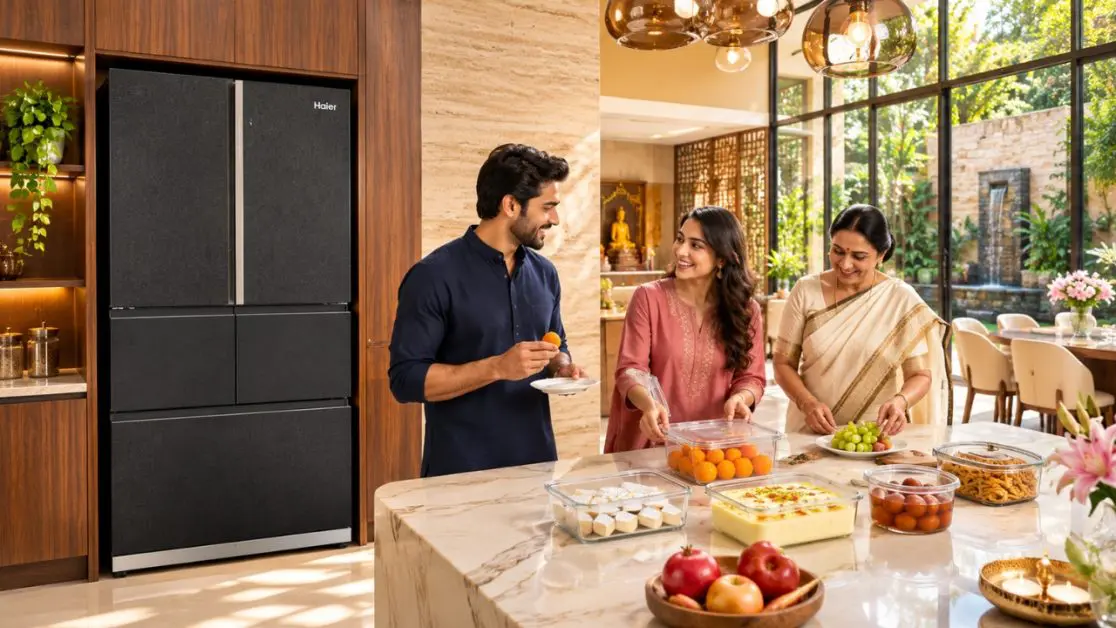
During the festive season, the refrigerator is seldom devoid of sweets.
There are homemade snacks, fresh fruits, drinks and perhaps some leftovers from the festive lunch.
With all this food, space can become a problem.
The Haier 552L In-Vista 5 Door Free Built-In Side By Side Refrigerator (HRM-800P2OBU1) is a smart storage option for today’s Indian households.
The refrigerator has five doors, five storage zones and 12 storage sections, making it easier for families to organise different categories of food more systematically.
Five Doors and Five Zones for Better Organisation
Whereas the Haier In-Vista offers individual compartments for storing various household goods, it allows foods to be grouped separately.
For example, sealed mithai containers can be placed on appropriate refrigerator shelves while fruits, vegetables and drinks can be stored in their own compartments during Bhai Dooj celebrations.
This way, you can access certain items easily without disturbing everything else.
The refrigerator has a 552L capacity, providing ample space for larger households when handling festive food.
Magic Convertible Zone for Flexible Storage
The amount of food needed during the holiday season is not consistent throughout the week.
There may be a need for extra space for ingredients before Bhai Dooj. Once the celebrations are over, you’ll find that there are additional refrigerated food containers to accommodate.
The Haier In-Vista has a 66L Magic Convertible Zone that can convert between refrigerator and freezer functions and operates between -20°C and +5°C.
This flexibility enables households to change the zone according to their storage requirements.
In the case of perishable mithai, set the refrigerator to an appropriate level (4°C or lower) and check the actual temperature. Avoid using freezing temperatures unless the particular sweet is suitable for freezing.
ABT Pro Sterilisation for a More Hygienic Environment
Another attribute of the Haier In-Vista is ABT Pro Sterilisation.
This technology employs automatic sterilisation cycles to help maintain a more hygienic refrigerator and freezer environment.
This is a handy way to support refrigerator hygiene, particularly when storing various types of food items during festivals.
However, sterilisation technology is no substitute for good food handling, airtight packaging or prompt consumption.
Interior Lighting and Smart Food Management
In addition, the refrigerator enables smart food management through the Haier Smart App, making it easier to manage food stored in the refrigerator.
It has 270° interior lighting, which enhances visibility and makes it easier to find containers, even those located further inside.
The Haier In-Vista makes a great refrigerator for families that want a high-end fridge offering flexible storage and everyday convenience.
How Long Can Bhai Dooj Mithai Remain in the Refrigerator?
There is no single rule for the storage time that can be applied to all varieties of mithai.
Several factors affect the shelf life of a sweet, such as ingredients, processes used in making it, preservatives, packaging and previous exposure to room temperature.
For instance, the safe storage time of freshly prepared kalakand might be shorter than that of some commercially packaged dry sweets.
Do not follow a blanket “three day” or “five day” rule. Instead, use these principles:
- Look at the use-by date and after-opening directions on the manufacturer’s label.
- Check with the sweet shop about refrigeration requirements for freshly prepared mithai.
- Note the date when homemade sweets are prepared.
- Refrigerate perishable varieties as soon as possible.
- Throw away sweets that have been exposed to room temperatures for too long.
- Do not judge food safety solely by smell, taste or appearance.
When the time a highly perishable sweet has been outside is unknown, it is best to throw it out.
Common Mistakes That Can Spoil Your Festive Sweets
Even a large refrigerator won’t help if storage is not maintained properly.
So, here are a few things to avoid.
Mixing Different Types of Mithai
When coconut barfi, kaju katli and syrup-based sweets are kept together, there is a possibility of moisture and flavours getting transferred.
It is better to use separate containers.
Using Wet Serving Spoons
Moisture and contamination can be introduced by a wet or previously used spoon.
Use clean, dry utensils to serve sweets.
Overloading the Refrigerator
During festivals, you may find it irresistible to cram another container into an already packed shelf.
But overcrowding can compromise airflow and make it difficult to maintain consistent cooling.
Repeatedly Removing the Entire Box
Don’t take out a big container every time someone wants a sweet. Take a small serving, place it on a plate and return the remaining mithai to the refrigerator immediately.
It’s a very easy and handy habit.
Make Haier Food Storage Easier During the Holidays
Bhai Dooj is a celebration of the brother-sister bond, remembrance, sharing memories and preserving traditions. No one wants to find their favourite sweets stale because of improper storage.
Selecting appropriate containers, following refrigeration guidelines and properly organising different sweets can make a real difference.
The Haier 552L In-Vista 5 Door Free Built-In Side By Side Refrigerator (HRM-800P2OBU1) combines flexible storage space, Magic Convertible technology, ABT Pro Sterilisation and smart food management in one package.
It also comes with a premium Ornate Black Stone Finish, which blends with modern Indian kitchens.
Discover how the Haier In-Vista refrigerator can intelligently organise storage for everyday needs, festivals and throughout the year.
Frequently Asked Questions
Can I refrigerate mithai directly in its cardboard box?
It is generally better to transfer opened mithai into airtight, food-grade containers. Cardboard boxes may not seal properly and can absorb moisture or surrounding food odours.
What temperature is best for storing milk-based mithai?
Store perishable milk-based sweets at 4°C or below. Follow the manufacturer’s instructions and refrigerate them promptly after opening.
Can I store kaju katli and gulab jamun together?
Separate storage is preferable. Gulab jamun contains syrup, which can affect the texture and quality of relatively dry sweets such as kaju katli.
Can Bhai Dooj sweets be stored in the freezer?
Some sweets can be frozen, but others may lose their original texture after thawing. Check the manufacturer’s guidance before freezing, particularly for milk-based and syrup-soaked varieties.
Does the Haier In-Vista refrigerator have separate storage zones?
Yes. The Haier 552L In-Vista 5 Door Free Built-In Side By Side Refrigerator (HRM-800P2OBU1) features five zones and 12 storage sections, along with a 66L Magic Convertible Zone for flexible chilled or frozen storage.