


AI Pictures deliver more natural colours because it learns how humans actually see the world.
Instead of forcing brightness or saturation, it reads scenes in real time, understands light, skin tones, movement, and depth, then adjusts colour the way your eyes expect it to look.
The result feels familiar, balanced, and quietly convincing. Not loud. Just right.
Have you noticed how some TVs look impressive, but not real?
You switch on a new TV.
The reds look louder.
The greens feel electric.
Faces look smooth but somehow… off.
At first, it felt exciting. Then tiring.
This is the difference between more colour and better colour.
Most traditional picture engines chase impact.
AI Pictures chase believability.
And that difference matters more than we realise.
The human eye does not want perfection. It wants familiarity

Think about how you recognise a mango.
Not by how bright it is.
But by the warmth of its yellow.
The slight unevenness.
The soft shadow near the stem.
Natural colour lives in variation, not extremes.
AI Picture systems are designed around this idea.
Instead of pushing every scene to look dramatic, AI Picture observes patterns:
- How daylight changes skin tone
- How shadows behave indoors
- How colours soften at night
- How motion alters perception
This is not about specs.
It is about context.
What actually happens when AI Picture is at work
AI Picture works like a quiet editor sitting behind the screen.
It does three things simultaneously.
1. It recognises the scene
Modern AI picture engines analyse frames in real time.
They identify what is on screen.
- A cricket match
- A late night movie
- A brightly lit kitchen scene
- A dark action sequence
Each scene has different colour priorities.
Grass should look alive, not neon.
Skin should look warm, not plastic.
Dark scenes should hold detail, not turn grey.
2. It understands light, not just brightness
Brightness alone ruins colour.
AI Picture systems read ambient light in your room and adjust output accordingly.
This keeps colours stable whether you are watching during a sunny afternoon or a dim evening.
That is why the same scene feels consistent across different times of day.
No manual tweaking.
No guessing.
3. It fine tunes colour, frame by frame
Instead of applying one global colour setting, AI Picture adjusts locally.
- Highlights stay clean
- Mid tones stay natural
- Shadows retain texture
The system does not shout.
It balances.
Why this matters in real Indian homes
Most Indian homes are not dark home theatres.
They are living rooms with sunlight, ceiling lights, movement, and conversation.
AI Pictures are built for this reality.
During cricket nights
Green pitches stay textured.
White jerseys do not glow unnaturally.
Skin tones remain human even under stadium lights.
Motion feels smoother, and colours stay stable during fast pans.
During family movie nights
Faces look familiar.
Makeup looks real, not painted.
Night scenes do not lose detail.
The room lighting changes. The picture adapts.
During casual viewing
News, YouTube, OTT shows, cartoons.
AI Picture recognises content and avoids overprocessing.
The TV stops trying too hard.
The hidden problem with manual picture modes
Most TVs offer multiple picture modes.
Vivid.
Movie.
Sport.
Standard.
Each one is a guess.
You choose once. The content keeps changing.
AI Picture removes this friction.
Instead of asking you to decide, it decides continuously.
Based on what is playing.
Based on your environment.
This is not automation for convenience.
It is automation for accuracy.
How AI Picture avoids the trap of artificial colour
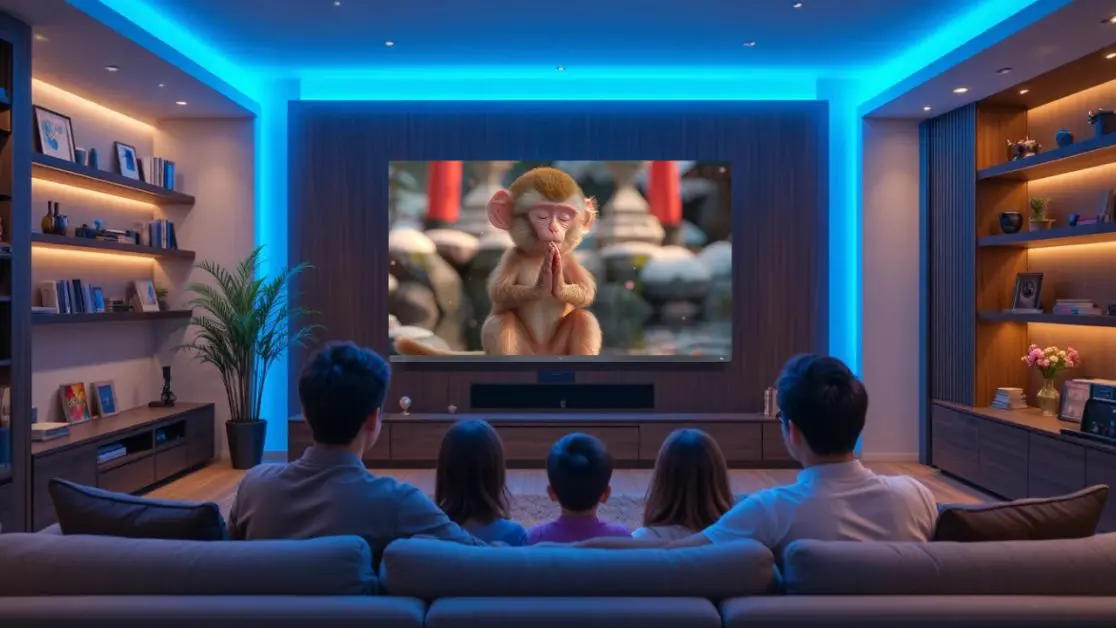
Artificial colour usually comes from three mistakes:
- Over saturation
- Excessive contrast
- Uniform processing
AI Picture corrects all three.
Over saturation gets replaced by selective enhancement
Only colours that need enhancement are touched.
Others are left alone.
Contrast becomes intelligent, not aggressive
Bright areas stay bright.
Dark areas stay detailed.
Uniform processing gives way to depth awareness
Foreground and background are treated differently.
This creates a sense of dimension without gimmicks.
A quick comparison that makes it clear
| Traditional Picture Processing | AI Picture Processing |
| Fixed settings | Dynamic, real time tuning |
| Boosts all colours | Enhances selectively |
| One size fits all | Scene aware |
| Manual adjustments | Automatic adaptation |
| Impact driven | Realism driven |
This is why AI Pictures feels calmer.
Why colour accuracy builds long term comfort
Here is a simple truth.
Eyes get tired faster from unnatural colour.
When colours feel believable, you watch longer without fatigue.
AI Pictures reduce visual strain by keeping colour relationships intact.
- Whites stay white
- Reds stay warm
- Blues stay soft
- Greens stay grounded
Nothing screams for attention.
Where Haier fits into this story
Haier approaches AI Picture as part of a larger system.
Not a feature. A philosophy.
On TVs like the Haier S90 QLED series, AI Picture works alongside intelligent processors, ambient sensing, and adaptive HDR to deliver colour that responds to real environments and real content.
The AI Ultra Sense Processor recognises scenes, adjusts depth, motion, and colour dynamically, and keeps visuals grounded even on very large screens
This matters more as screen sizes increase.
Bigger screens amplify mistakes.
AI reduces them.
Natural colour scales better on large screens
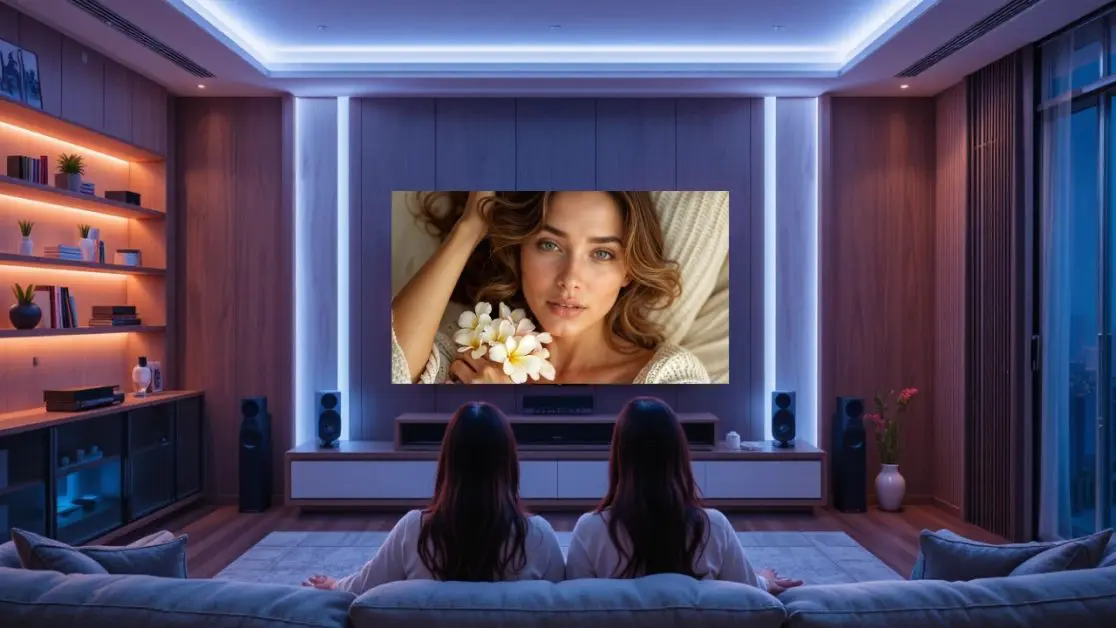
On a small screen, you can hide flaws.
On a big screen, every exaggeration becomes obvious.
AI Picture ensures:
- Skin does not flatten
- Landscapes retain layers
- Animation stays vibrant without bleeding
This is why AI based colour processing becomes essential, not optional, as TVs grow larger.
The system thinking behind AI Picture
AI Pictures are not about colour alone.
It is about understanding relationships.
- Colour and light
- Motion and sharpness
- Depth and contrast
- Content and environment
Change one, the system adapts the others.
That is why AI Pictures feel cohesive.
Not stitched together.
Designed as a whole.
What this means for everyday decision making
When choosing a TV, many people ask:
Is it bright enough?
Is it colourful enough?
The better question is:
Does it look right, across everything I watch?
AI Picture answers that quietly.
You stop adjusting settings.
You stop noticing the screen.
You start noticing the content.
That is the real win.
A simple way to think about it
Good colour impresses.
Natural colour convinces.
AI Pictures are not here to impress you in a showroom.
It is here to live with you, day after day.
The takeaway that stays
Technology works best when it disappears.
AI Picture does not announce itself.
It blends in.
When colours feel natural, you do not think about colour at all.
You just watch.
And that is exactly the point.
Frequently Asked Questions
I keep switching between Vivid, Movie, and Standard. Why is it so confusing?
Because each mode is a static guess, while your content keeps changing. A cricket match, a dark movie, and YouTube news all need different treatment.
How does AI Picture reduce this constant tweaking?
It makes decisions continuously, scene by scene, frame by frame, so you don’t have to. The TV adapts instead of asking you to.
Why do fast scenes sometimes make colours look unstable?
Motion changes how our eyes perceive colour. Traditional engines treat motion and colour separately, causing flicker or bleeding.
How does AI Picture handle motion better?
It understands that motion, depth, and colour are linked. During fast pans, like cricket shots, greens stay textured and whites don’t glow unnaturally.
How does AI Picture adapt to room lighting?
By reading ambient light and adjusting colour and brightness together, not independently. This keeps colours consistent morning to night.
Why does the same scene look different at different times of day on normal TVs?
Because brightness changes without colour correction. AI Picture adjusts both, maintaining balance.
How does natural colour reduce fatigue?
When whites stay white, reds stay warm, and greens stay grounded, your brain relaxes. You watch longer without discomfort.