
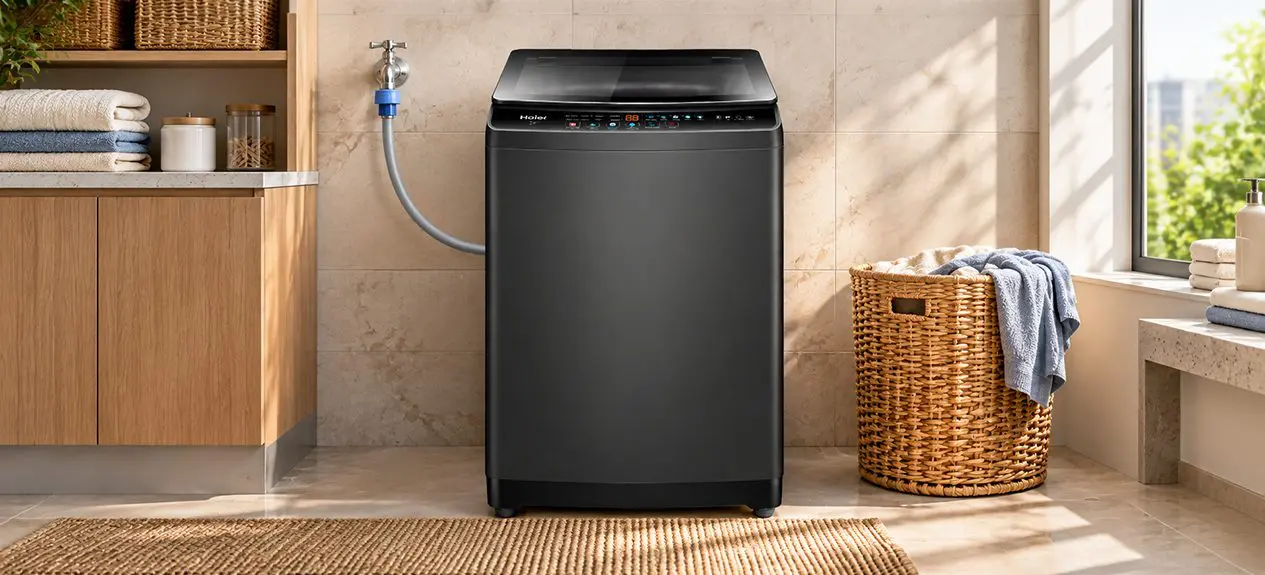

The washing machine water inlet begins with the tap connected to a suitable water supply. You press start, and the machine opens an inlet valve to allow water through the attached hose. Make sure the hose is correctly fitted at both ends, a loose connection will leak when filling. Water pressure is also important, especially if the machine takes longer than expected to fill. Check the tap condition before installation, not after problems show up. A clean, dependable water supply gets the cycle started without interruption. Keep the hose free from sharp bends, and make sure the connection remains easy to inspect.
How Washing Machine Water Inlets Work
Every washing machine water inlet follows a simple route. When you start a cycle, the machine opens a small valve at the back. Water moves from the tap through the hose, passes a mesh filter, then enters the tub. The process looks simple, but each connection matters. Fully automatic machines need a direct water supply for this reason. Semi-automatic models work differently. You can fill their tubs using a tap, hose, or bucket, then stop adding water once the required level is reached.
Single vs Dual (Hot and Cold) Inlets
A single inlet uses one water line, usually for cold water. A dual inlet uses two separate lines, allowing hot and cold water to enter through different connections.
For many Haier models, only a cold water tap is required. Models with an in-built heater, such as the HWM80-H320BK, heat the water inside the machine. Other brands may need a different setup, so check the manual before connecting any hot and cold water inlet.
What Tap and Connection You Need
The tap for a washing machine is the water point that feeds it through a hose. Most homes use a wall tap near the utility area or balcony, and it provides the water connection for washing machine use. Keeping that tap for the machine alone makes the washing machine tap connection simple, with no splitting or swapping between jobs.
- Tap Size and Thread
Haier user manuals for automatic models call for a cold water tap with a 3/4 inch thread. If your tap has a different thread, a tap adapter from a plumbing store bridges the gap. Choose a washing machine tap that is easy to reach, so you can close it after laundry and protect the hose between washes.
- Inlet Hose Length and Fit
Are inlet pipes universal across every washing machine brand? Most share a standard threaded end, though length, connector style and pressure rating differ. The hose supplied with your machine is therefore the safest match, and Haier manuals ask for a fresh hose set in place of an old one.
Measure the distance from the tap to the machine before placing it. The washing machine inlet hose should reach with some slack, and a gentle curve works better than a tight bend.
Water Pressure Requirements
The right water pressure for washing machine use is listed in each model’s manual. Haier user manuals commonly show a working range of about 0.03 to 1 MPa, which is roughly 0.3 to 10 bar.
Low water flow usually has a few simple fixes. Open the tap fully, clean the small mesh filter at the inlet and straighten any kink in the hose. The mix of floor level and tank height decide how strong the flow feels, so a plumber can advise on raising the tank or adding a booster pump where the supply stays gentle.
How to Connect the Water Inlet Safely?
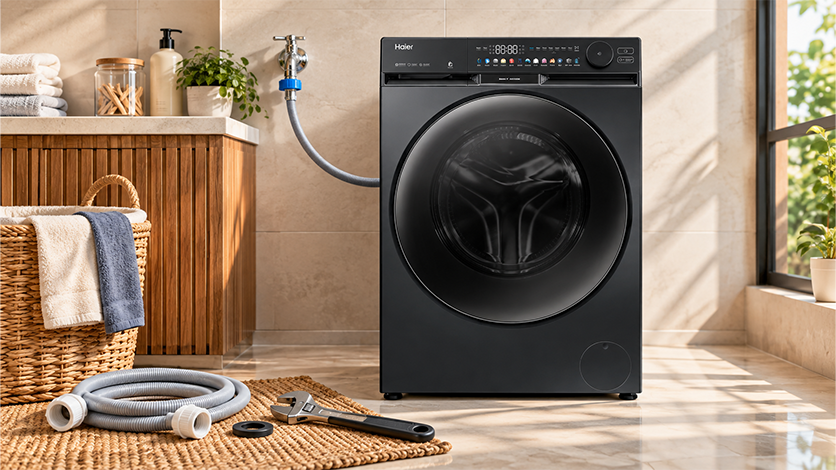
Keep the supplied washing machine inlet hose, its rubber washer and a wrench ready, then follow these steps for a secure washing machine tap connection.
- Check that the rubber washer fits inside the hose coupling.
- Screw the coupling onto the tap and tighten it by hand first.
- Add a final quarter turn with a wrench.
- Attach the other end to the machine’s inlet valve and tighten it by hand.
- Open the tap slowly and look at both joints for moisture.
- Run a short cycle with a little detergent and check the joints again.
Want a full walkthrough of placing and levelling your machine?
Read this blog: How to Install a Washing Machine: A Step-by-Step Guide
Common Inlet and Tap Problems
Most inlet complaints are small and easy to trace. The table below shows what to check first in each case.
| What you notice | Likely cause | First check |
| Slow filling | Low pressure or a clogged mesh filter | Open the tap fully and clean the filter |
| Drip at a joint | Loose coupling or missing washer | Tighten by hand, then a quarter turn |
| Water entering while the machine is off | Inlet valve not sealing | Close the tap and call service |
Searches for an inlet pipe washing machine replacement usually begin with a leaking joint. A hose with cracks or swelling needs replacing, and a service visit settles any issue inside the valve.
Pre-Installation Checklist
Confirm the water connection for washing machine use with this list before the installer arrives.
- A tap with a 3/4 inch thread within easy reach of the machine
- A cold water supply running at a steady flow
- The supplied hose set and rubber washer in the box
- Clear space behind the machine so the hose can curve gently
- Your model’s manual at hand for the exact pressure range
How Haier Machines Work With Your Water Supply?
At Haier, we build our machines around the water connections found in Indian homes. Our top-load washing machines include models with Near Zero Pressure technology, such as the HWM80-310BK, meant for homes where the tap flow is gentle. The HWM80-H320BK adds an in-built heater and a Hard Water Wash feature that protects the heater and drum from salt and limescale.
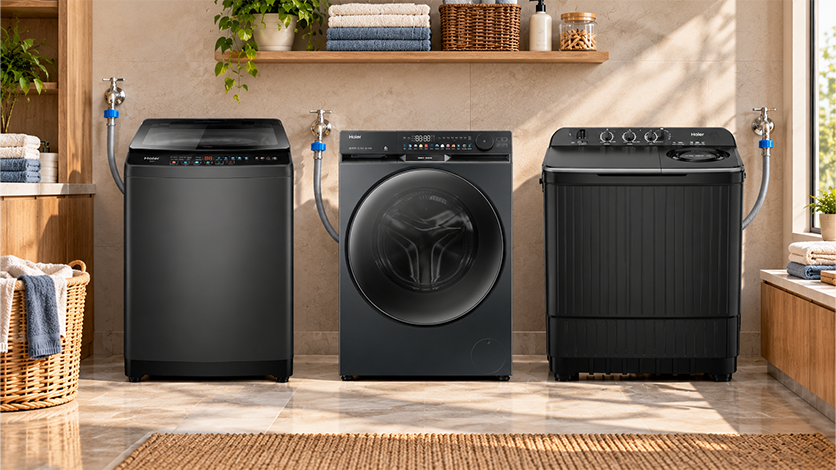
Our front-load washing machines, including the F9 12 kg, suit a fixed water point and add Dual Spray to clear lint and foam after each wash. For hand filling, our semi-automatic washing machines give you that control, and castor wheels on the HTW120-196BK make it easy to move the machine next to any washing machine tap.
Conclusion
Most installation questions come down to the tap, the hose, and the water flow, and you can confirm each quickly before the machine arrives. A secure washing machine tap connection and suitable water pressure for washing machine use keep every cycle starting on time.
FAQs
What water connection does a washing machine need?
A fully automatic washing machine needs a cold water tap with a threaded outlet, usually 3/4 inch, and the inlet hose supplied with it. Semi-automatic machines can also be filled by hose or bucket.
Do I need one or two taps for my washing machine?
One tap is enough for Haier machines, since the manuals ask for a cold water connection only. Models with an in-built heater warm the water inside the machine. The setup needs no second tap or hot line.
What water pressure does a washing machine require?
Haier user manuals commonly list a working range of about 0.03 to 1 MPa, which is roughly 0.3 to 10 bar. Your model’s manual gives the exact figure, and Near Zero Pressure models suit gentle tap flow.
Can I connect a washing machine to any tap?
A tap with a matching threaded outlet works best, because the hose screws on and holds firmly. A smooth nozzle or a different thread needs a tap adapter from a plumbing store, so check the size in your manual.