
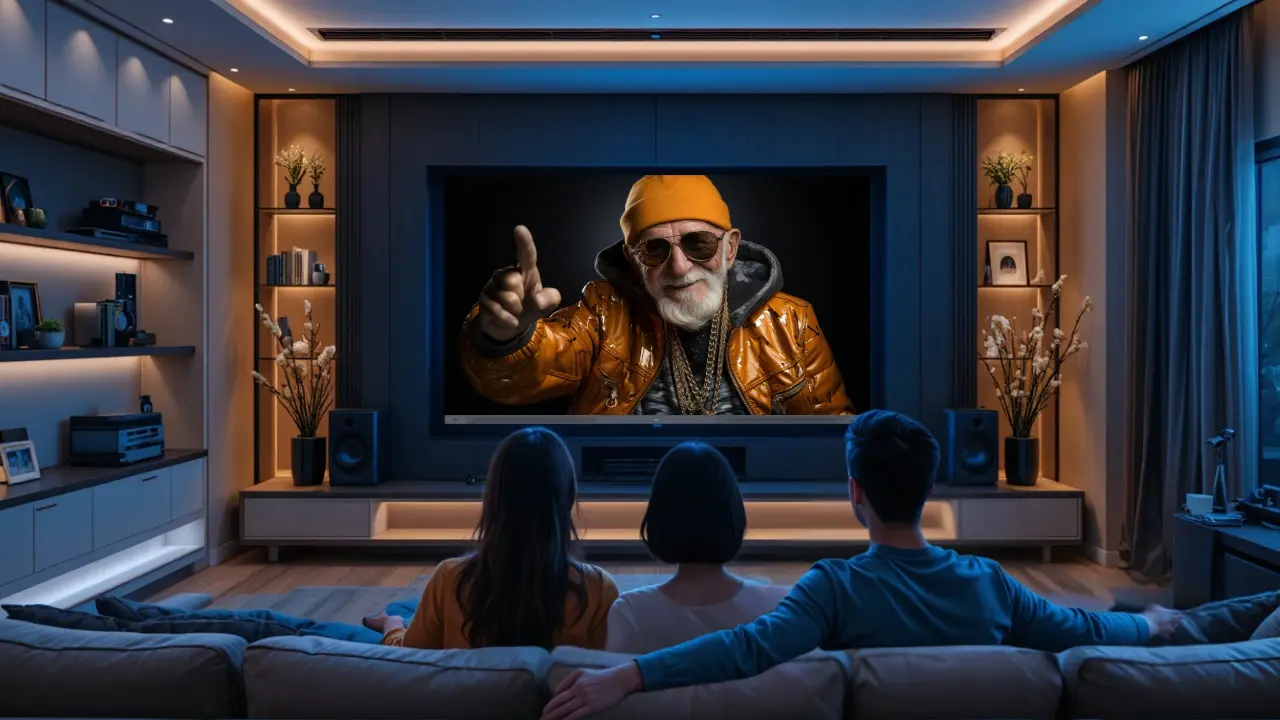

AI enhances picture quality in real time by constantly reading what is on screen, understanding the room around it, and adjusting brightness, colour, contrast, and motion frame by frame.
Instead of relying on fixed presets, modern AI-powered TVs learn and respond instantly, so every scene looks natural, balanced, and comfortable without manual tweaking.
The moment you stop touching TV settings
It usually happens without ceremony.
You switch on the TV after a long day.
A cricket match is already mid-over.
The room lights are half on. Someone is moving around the house.
And you do nothing.
No brightness slider.
No picture mode hopping.
No trial and error.
The picture just feels right.
That is real-time AI at work.
On TVs like the Haier M92 Series QD Mini LED Smart AI Google TV, this moment is intentional. The system is designed so the best interaction is no interaction at all.
Why fixed picture settings no longer work in Indian homes

Indian homes are never static.
Morning sunlight floods the living room.
Evenings bring warm indoor lighting.
Late nights demand softer visuals.
At the same time, content jumps rapidly.
News to OTT.
Cricket to YouTube.
Movies to gaming.
Traditional TVs assume one environment and one type of content. That assumption no longer holds.
The hidden mismatch
- Bright rooms with dim-tuned screens
- Dark rooms with eye-straining brightness
- Sports treated like cinema
- Old HD content stretched on large displays
The issue is not resolution.
It is rigid.
AI-driven picture systems on models like H75M92FUX and H65M92FUX exist to remove this rigidity.
What real-time AI picture enhancement actually does
Strip away the technical language and it comes down to three continuous actions.
1. AI recognises what you are watching
The AI Ultra Sense Processor inside the Haier M92 Series QD Mini LED Smart AI Google TV analyses every frame and identifies the content type in real time.
- Live sports
- Movies and series
- Animation
- Gaming
- Low-resolution broadcasts
Each category gets its own tuning logic.
A cricket match receives motion prioritisation.
A film scene receives depth and colour accuracy.
Older content gets intelligent upscaling.
This recognition happens instantly, not after you change settings.
2. AI reads the room, not just the screen
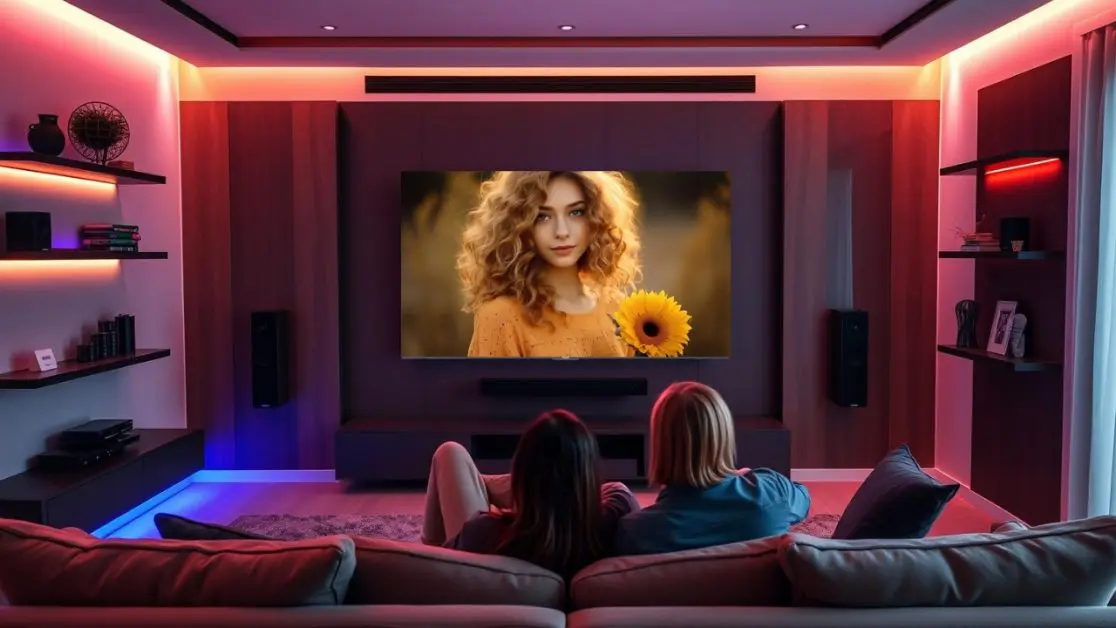
Picture quality does not exist in isolation.
It interacts with the room.
Through ambient sensing and Dolby Vision IQ, TVs like the Haier M92 Series 189cm (75) QD Mini LED Smart AI Google TV (H75M92FUX) adjust brightness and contrast based on the lighting conditions in your home.
Bright afternoon viewing stays vivid.
Late-night viewing softens automatically.
This is not about making the screen brighter.
It is about making it easier on the eyes.
3. AI adjusts frame by frame
This is where real-time AI makes the biggest difference.
Older systems adjust scene by scene.
AI adjusts moment by moment.
- Highlights pull back before they glare
- Shadows retain detail without crushing blacks
- Motion sharpens only when needed
You never see the adjustment happen.
You only feel the comfort.
The system behind better picture quality
Good picture quality is not about extremes.
It is about balance.
On the Haier M92 Series QD Mini LED Smart AI Google TV, picture quality is treated as a system, not a setting.
That system combines
- QD Mini LED panels with hundreds of local dimming zones
- Quantum Dot technology for wider colour accuracy
- AI-driven contrast mapping for depth
- High refresh rate panels for smoother motion
Each layer supports the other.
Remove one, and the experience weakens.
Why motion is where AI proves its value
Motion exposes flaws instantly.
Fast bowling.
Racing games.
Action sequences.
Without AI, motion blur creeps in or smoothing feels artificial.
With AI-powered motion handling on the Haier M92 Series 164cm (65) QD Mini LED Smart AI Google TV (H65M92FUX):
- Frames are analysed intelligently
- Blur reduces without creating artefacts
- Motion stays clear without losing realism
This balance is critical for sports-loving Indian households.
Colour accuracy is not about louder colours
Many screens confuse brightness with quality.
AI takes a different approach.
It studies real-world references.
- Skin tones
- Natural light gradients
- Shadow transitions
- Colour temperature shifts
Instead of pushing saturation, AI corrects imbalance.
Faces look human.
Food looks natural.
Landscapes feel believable.
This is why picture quality on the Haier M92 Series QD Mini LED Smart AI Google TV feels calm, not aggressive.
How AI rescues older content
Most content people watch daily is still not native 4K.
Cable TV.
Older films.
Archived matches.
Online videos.
On large screens like the 189cm (75) H75M92FUX, poor upscaling becomes obvious.
AI upscaling works differently.
It focuses on intent
- Identifies missing detail
- Reconstructs edges carefully
- Reduces noise without flattening textures
The goal is not to invent sharpness.
It is to respect the original content.
That is why old content looks cleaner, not artificial.
A simple comparison
| Aspect | Fixed Picture TV | AI-Powered M92 Series |
| Picture control | Manual presets | Automatic, real time |
| Room light response | None | Ambient adaptive |
| Motion clarity | Static | Content-aware |
| Colour tuning | Generic | Scene-specific |
| Viewing comfort | Inconsistent | Stable |
The difference is not technical.
It is emotional.
Why this matters more than resolution numbers

Resolution sells easily.
Comfort builds loyalty.
AI-enhanced picture quality focuses on long-term viewing comfort.
- Less eye strain
- Fewer adjustments
- More immersive evenings
On TVs like the Haier M92 Series QD Mini LED Smart AI Google TV, AI works quietly in the background so you can stay present in the moment.
The Haier philosophy behind AI picture quality
Haier does not treat AI as a marketing feature.
It treats AI as infrastructure.
Systems like AI Center Max integrate picture, sound, gaming, and ambient awareness into one intelligent engine on models like H75M92FUX and H65M92FUX.
This mirrors real homes.
Life is not segmented.
Technology should not be either.
What this means for everyday Indian homes
This is not about chasing specifications.
It is about smoother evenings.
Parents who do not adjust settings between cartoons and news.
Couples who watch films without eye fatigue.
Working professionals who want effortless downtime.
Families who switch content without friction.
AI-enhanced picture quality removes decision fatigue.
You press play.
The system adapts.
The larger shift
The best technology no longer demands attention.
It listens.
It adapts.
It learns quietly.
Real-time AI picture enhancement on the Haier M92 Series QD Mini LED Smart AI Google TV is not about smarter screens.
It is about calmer living rooms.
And once you experience that ease, going back to manual control feels unnecessarily exhausting.
That is how meaningful innovation usually shows up.
Frequently Asked Questions
I’m tired of adjusting brightness every evening. Will this TV really handle it automatically?
Yes. On the Haier M92 Series QD Mini LED Smart AI Google TV, AI reads your room lighting and adjusts brightness and contrast in real time. You don’t need to switch between “Vivid,” “Cinema,” or “Sports” modes. The system adapts frame by frame so the picture feels naturally balanced without manual tweaking.
I keep switching picture modes between cricket and Netflix. Can AI actually tell what I’m watching?
It can. The AI Ultra Sense Processor detects content types sports, movies, animation, gaming, low-resolution broadcasts and applies scene-specific tuning automatically. Cricket gets motion priority. Films get depth and colour accuracy. You don’t have to intervene.
My living room gets very bright in the afternoon. Will the screen look washed out?
No. AI increases brightness and contrast intelligently not aggressively to maintain clarity without glare. It preserves shadow details while preventing highlights from looking harsh.
I usually watch late at night. Will it hurt my eyes?
AI softens brightness in darker rooms and balances colour temperature for comfort. The goal isn’t maximum brightness, it’s sustained viewing comfort with reduced eye fatigue.
Why does motion blur bother me during cricket matches?
Sports expose motion-processing weaknesses. On models like the Haier H75M92FUX and Haier H65M92FUX, AI analyses frames individually, reducing blur while avoiding the artificial “soap opera effect.” The motion stays sharp but realistic.
How does AI-powered motion handling improve sports without making films look unnatural?
The processor identifies content type before applying motion logic. Sports prioritise clarity and speed tracking. Films prioritise cinematic texture. AI switches between these modes automatically, scene by scene.