

Yes, you can reduce electricity consumption without reducing cooling performance.
You do it by managing airflow, temperature stability, and compressor efficiency. When these three stay balanced, your refrigerator consumes less power and cools more consistently.
Energy saving is not about lowering performance. It is about eliminating waste.
That shift changes everything.
Your Refrigerator Is Not a Box. It Is a Cooling System.
Picture a Sunday afternoon in an Indian home.
Leftover biryani in one container. Cut fruits in another. Milk packets stacked on the side. Water bottles lined up for guests.
Now imagine blocking all the air vents inside that fridge.
Cooling slows down. The compressor works harder. Electricity usage rises.
According to the Bureau of Energy Efficiency, refrigerators account for roughly 15 to 20 percent of household electricity usage in India. That means small inefficiencies run 24 hours a day.
The real question is not how to make your refrigerator colder.
The real question is how to make it smarter.
1. Temperature Precision Saves More Power Than Extreme Cooling
Many homes assume lower temperature equals better cooling.
It does not.
The ideal refrigerator temperature is between 3 to 5 degrees Celsius. The freezer performs best at minus 18 degrees Celsius. Lowering it further increases compressor workload without improving freshness.
What usually goes wrong:
- Setting freezer to extreme low for faster ice
- Ignoring seasonal adjustments
- Overcooling during winter months
A better approach:
- Follow recommended temperature range
- Reduce cooling intensity when food load is low
- Avoid aggressive cooling during mild weather
Precision protects freshness.
Overcorrection wastes electricity.
The Haier Lumiere 520L Rosette White 4 Door Convertible Refrigerator HRB-600RW uses advanced Triple Inverter technology to maintain stable temperatures while minimising energy waste.
Stable cooling consumes less energy than fluctuating cooling.
2. Airflow Is the Invisible Driver of Efficiency
Open your fridge and look at the back panel.
Those vents are not decoration. They are airflow channels.
Blocking them forces cold air to stagnate. The compressor compensates. Power consumption rises.
Appliance efficiency studies show that restricted airflow can increase energy usage by up to 10 percent in heavily loaded refrigerators.
Three common airflow mistakes:
- Overloading during festival prep
- Storing hot food immediately after cooking
- Pushing containers against rear vents
The Lumiere series features 360 degree surround cooling to distribute cold air evenly across shelves.
But technology cannot compensate for blocked airflow.
Cooling is about circulation. Not brute force.
3. Door Open Time Is Silent Energy Loss
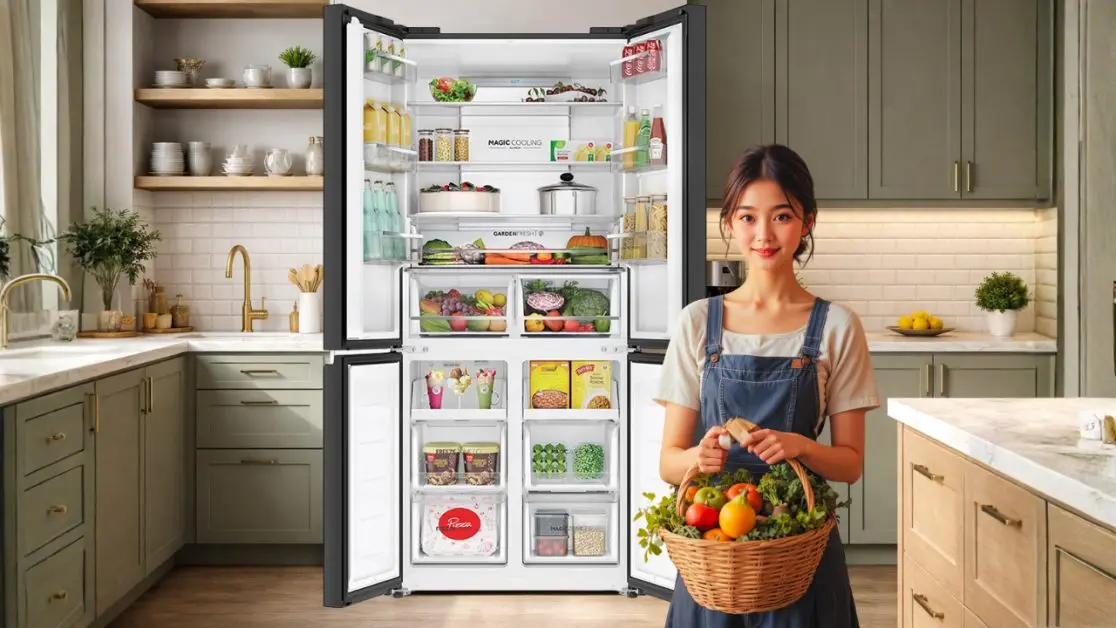
Every door opening lets warm air enter.
The compressor responds immediately.
In homes where children frequently open the fridge for snacks or chilled water, energy consumption can increase by 7 to 10 percent daily.
A practical discipline:
- Decide what you need before opening
- Close the door within 10 seconds
- Organise storage so items are visible
The 95 degree anti-tipping door racks in the Haier Lumiere 520L Mauve Pink 4 Door Convertible Refrigerator HRB-600MP keep bottles stable and accessible.
Better visibility reduces search time.
Reduced search time lowers cooling loss.
Efficiency often hides in behaviour.
4. Convertible Storage Reduces Energy Imbalance
Freezers consume more power than refrigerator sections.
But many Indian households use less freezer space than fridge space.
Running unused freezer volume at minus 20 degrees wastes energy.
The Lumiere’s convertible 90 litre section allows up to 85 percent fridge space flexibility.
That means you align the cooling load with actual storage needs.
Energy comparison:
| Storage Scenario | Compressor Load | Electricity Impact |
| Unused freezer space | High | Wasteful |
| Convertible to fridge | Moderate | Balanced |
| Optimised storage | Stable | Efficient |
Cooling should match lifestyle demand.
Not remain fixed regardless of usage.
5. Inverter Compressors Reduce Power Spikes
Traditional compressors switch on and off at full speed.
Each restart consumes surge power.
Inverter compressors adjust speed gradually. That reduces sudden spikes and stabilises temperature.
Energy efficiency data suggests inverter refrigerators can reduce electricity consumption by 20 to 30 percent compared to non-inverter models under similar conditions.
The Haier Lumiere 520L Pearl White 4 Door Convertible Refrigerator HRB-600PW uses inverter compressor technology along with R600a refrigerant and frost-free cooling.
Consistency saves electricity.
Surges waste it.
6. Lighting and Visibility Influence Cooling Stability
Older refrigerator bulbs generated heat inside the compartment.
Heat increases compressor workload.
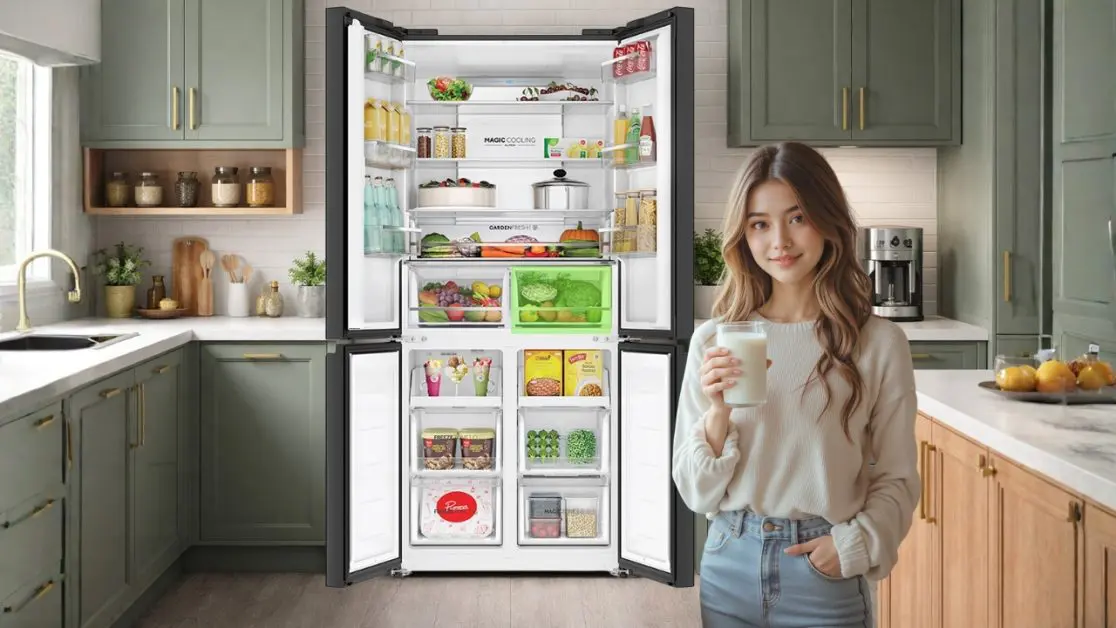
Modern LED lighting produces minimal heat and improves visibility.
The Lumiere series ensures every corner remains illuminated while reducing internal heat load.
Better lighting means:
- Faster access
- Shorter door-open time
- Reduced energy leakage
Small improvements compound over time.
7. Maintenance Protects Performance
Energy efficiency declines when:
- Door gaskets loosen
- Coils gather dust
- Frost accumulates
Industry servicing data in India shows nearly 15 percent of refrigerator inefficiency issues stem from poor maintenance.
Monthly 5-minute checklist:
- Clean door seals
- Wipe condenser area
- Ensure doors close completely
- Avoid frost build-up
Technology performs best when supported by discipline.
8. Star Ratings Show Potential. Usage Determines Reality.
A 3-star refrigerator can operate efficiently when used correctly.
The Lumiere 520L series carries a 3-star rating with 480 units annual energy consumption.
But actual electricity bills depend on:
- Ambient temperature
- Frequency of door opening
- Food load
- Airflow management
Star rating is a baseline.
Behaviour defines the outcome.
Three Practical Paths to Save Electricity Without Losing Cooling
If your goal is to save electricity while maintaining cooling performance, you have three choices.
Option One: Behaviour Optimisation
Cost: Zero
Impact: 10 to 15 percent savings
Option Two: Maintenance Discipline
Cost: Minimal
Impact: Improved compressor lifespan
Option Three: Technology Upgrade
Cost: Higher upfront
Impact: 20 to 30 percent sustained efficiency
The right choice depends on your home stage.
Young couple setting up first kitchen.
Joint family with high storage demand.
Professional living solo.
Energy efficiency is contextual.
The Bigger Picture
India’s residential sector contributes nearly one-fourth of total electricity demand.
Refrigerators run continuously.
When millions of homes reduce inefficiency by even 5 percent, the national impact becomes meaningful.
Efficiency is not about compromise.
It is about alignment between technology, behaviour, and need.
Final Insight: Cooling Performance Improves When Waste Reduces
Do not choose between saving electricity and preserving freshness.
That is a false trade-off.
Align airflow.
Maintain temperature precision.
Use inverter stability.
Optimise convertible storage.
When these systems work together, your refrigerator stays quiet, efficient, and reliable.
And your home feels more organised.
That is not just energy saving.
That is smart living by design.
Frequently Asked Questions
Am I setting my refrigerator temperature too low thinking it will cool faster?
Yes, many people do. The ideal range is 3–5°C for the fridge and –18°C for the freezer. Lowering it further doesn’t improve freshness, it only increases compressor workload and electricity use.
Should I change fridge settings during winter?
Yes. In cooler months, reduce cooling intensity slightly. Your fridge doesn’t need to fight high ambient heat, so keeping summer settings wastes energy.
Is extreme freezer mode necessary for making ice quickly?
Not usually. Temporary use is fine, but keeping it permanently on extreme cooling strains the compressor and raises electricity consumption.
I overloaded my fridge during a festival. Does that increase electricity usage?
Yes. Blocking rear air vents restricts airflow, forcing the compressor to work harder. Energy use can rise by up to 10% in heavily loaded fridges.
I put hot food directly inside. Is that bad?
Yes. Hot food raises internal temperature, triggering longer compressor cycles. Let food cool to room temperature first.
Why does my fridge feel unevenly cooled?
Likely blocked airflow or overpacking. Modern systems like the Haier Lumiere 520L Rosette White 4 Door Convertible Refrigerator HRB-600RW use 360° cooling, but circulation still depends on proper loading.