


A refrigerator rarely gets a day off. It is cooling milk at breakfast, vegetables bought over the weekend, yesterday’s dal, cold drinks for guests and, somewhere at the back, a container everyone has forgotten about.
That constant workload is exactly why the word “inverter” gets so much attention when people shop for a new refrigerator. Unfortunately, it also attracts plenty of half-truths.
Some shoppers assume an inverter refrigerator barely uses electricity. Others think the compressor never stops. Then there is the belief that inverter technology automatically means better cooling, regardless of everything else inside the appliance.
Not quite.
Understanding what inverter technology actually does makes it much easier to judge a refrigerator on its real capabilities rather than one specification on the label.
First Things First: What Does an Inverter Refrigerator Actually Do?
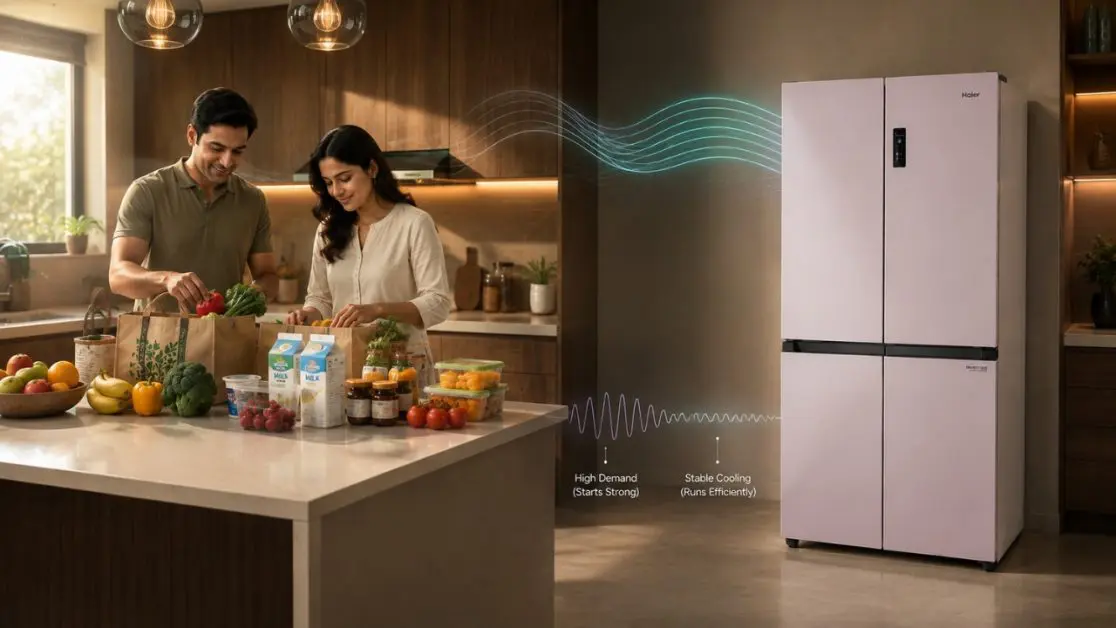
The simplest way to understand inverter refrigeration is to think about changing gears while driving.
A conventional compressor typically works through more pronounced on-and-off cycles. An inverter compressor, on the other hand, can regulate its operation according to cooling requirements rather than repeatedly relying on the same operating pattern.
That distinction matters because refrigerator demand is never completely static. Cooling requirements can change when:
- the refrigerator door is opened frequently;
- warm groceries are placed inside;
- ambient kitchen temperature rises;
- the refrigerator contains a larger food load;
- the required internal temperature has already been reached.
Inverter technology is therefore about responsive compressor operation. It should not be interpreted as a magical shortcut that makes every other aspect of refrigerator design irrelevant.
And that brings us to the myths.
Myth 1: “Inverter Refrigerators Do Not Consume Much Electricity”
Reality: They still require electricity efficiency is the real discussion
An inverter refrigerator is still an appliance running throughout the day. It does not somehow stop consuming electricity simply because its compressor can regulate operation.
What inverter technology can do is help the refrigerator manage compressor performance according to cooling demand. Actual electricity consumption, however, depends on several factors beyond the compressor itself.
These include refrigerator capacity, usage habits, ambient conditions, temperature settings and how frequently the doors are opened.
So, while comparing refrigerators, look at the complete appliance rather than treating the word “inverter” as shorthand for negligible electricity consumption.
Myth 2: “The Compressor Runs Continuously, So Something Must Be Wrong”
This one causes unnecessary worry.
An inverter compressor may operate differently from the obvious start-stop behaviour people associate with older refrigeration systems. At lower cooling demand, it can adjust its operation instead of always behaving at one fixed level.
That does not mean every sound or prolonged operating cycle should automatically be ignored. If cooling performance changes unexpectedly or the appliance behaves abnormally, the user manual and authorised service guidance remain the right references.
The key point is simpler: compressor behaviour in an inverter refrigerator cannot always be judged using expectations formed around conventional compressors.
Myth 3: “Inverter Technology Alone Guarantees Uniform Cooling”
Nope. Cooling is a system, not a single component.
The compressor plays an important role, but effective refrigeration also depends on how cool air moves through the cabinet, how compartments are arranged and how temperature is managed across different storage areas.
This is where refrigerator design deserves more attention.
For example, the Haier Lumiere 520L 3 Star French Door Refrigerator combines an inverter compressor with a broader cooling and storage architecture. Haier describes its Magic Cooling system as using 360° Surround Cooling, while the Lumiere product material also highlights Triple Inverter technology for maintaining precise temperatures while minimising energy waste.
In other words, do not shop for a compressor in isolation. Shop for a refrigerator.
Myth 4: “An Inverter Refrigerator Is Only Useful for Small Families”
There is no such rule.
Whether a refrigerator suits a household depends much more on its capacity, compartment configuration and the family’s actual food-storage habits.
Consider an Indian household that shops for vegetables once or twice a week, keeps several milk packets chilled, stores homemade batters and leftovers, freezes food in batches and needs extra room when relatives visit. Capacity and flexibility become just as important as compressor technology.
The Haier Lumiere 520L 3 Star French Door Refrigerator illustrates that distinction rather neatly. It provides a total capacity of 520 litres, including a 90-litre convertible section. The product can offer up to 440 litres of fridge space, while its convertible configuration can provide up to 170 litres of freezer space.
That is a far more useful way to evaluate suitability than assuming “inverter” belongs to a particular family size.
Myth 5: “Convertible Storage and Inverter Technology Are Basically the Same Thing”
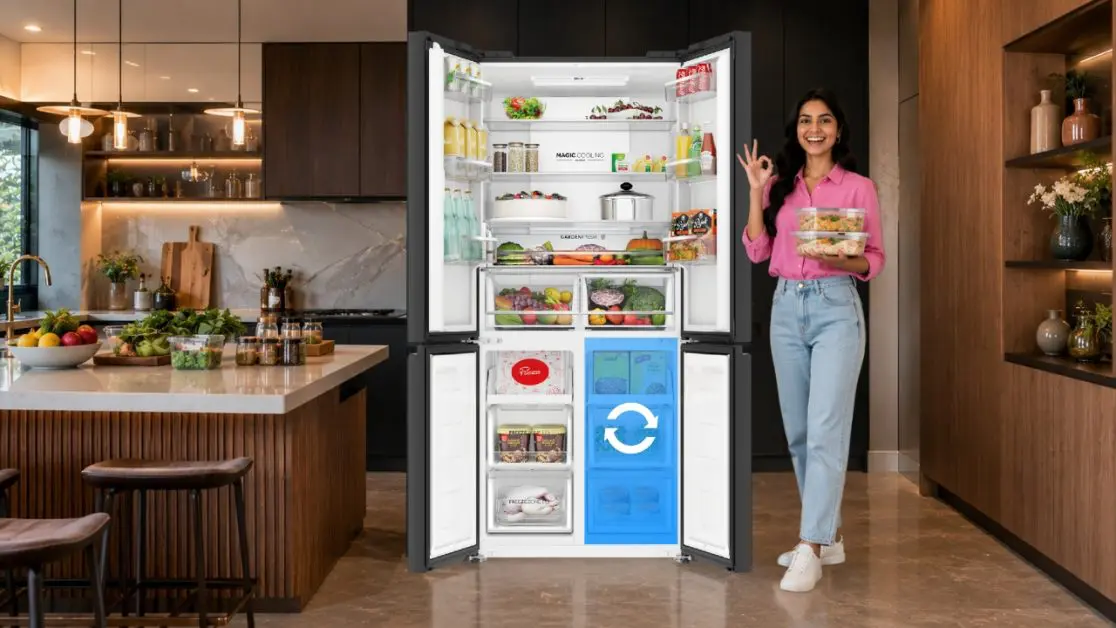
They solve different problems.
Inverter technology relates to compressor operation and cooling demand.
Convertible storage changes how available refrigerator space can be used.
The distinction becomes important when household requirements keep shifting. You may need additional freezer room at one point and considerably more fresh-food space at another.
Haier’s Lumiere range addresses this through its Magic Convertible Zone, a 90-litre customised space with an adjustable temperature range from -20°C to 5°C.
That flexibility can accommodate different storage requirements rather than permanently locking the compartment into one role.
Myth 6: “All Inverter Refrigerators Are Essentially the Same”
This is probably the biggest buying mistake on the list.
Two refrigerators can both have inverter compressors and still offer very different everyday experiences.
Look beyond the headline technology and compare practical details such as:
- total usable capacity;
- fridge and freezer configuration;
- adjustable or convertible compartments;
- cooling distribution;
- shelf strength and arrangement;
- odour-management features;
- interior accessibility;
- energy rating;
- warranty terms.
The Lumiere 520L models, for instance, include toughened glass shelves, adjustable storage, Deo Fresh Technology designed to absorb odour and impurities while maintaining freshness, and a 95-degree anti-tipping door-rack design intended to keep bottles and jars more secure.
These are the details you interact with every day. They deserve as much attention as the compressor badge.
Myth 7: “A Bigger Inverter Refrigerator Is Automatically Better”
Only if you need the space.
A large refrigerator that does not suit the kitchen, storage pattern or household requirements can be an awkward purchase, however impressive its specifications appear.
Before choosing one, ask yourself:
- How many people regularly use the refrigerator?
- Do you store a week’s vegetables at once?
- Is frozen-food storage important?
- Do large utensils frequently go straight into the fridge?
- Would convertible space actually get used?
- Is there sufficient kitchen space around the appliance?
For households that genuinely need substantial storage, the Lumiere’s 520-litre capacity and multiple organised storage zones can be relevant. The product specifications also list toughened-glass shelving, fruit and vegetable cases, frost-free operation and an inverter compressor.
The point is not to buy the biggest refrigerator available. It is to buy enough refrigerators for the way your home actually works.
What Should You Check Instead of Believing the “Inverter” Hype?
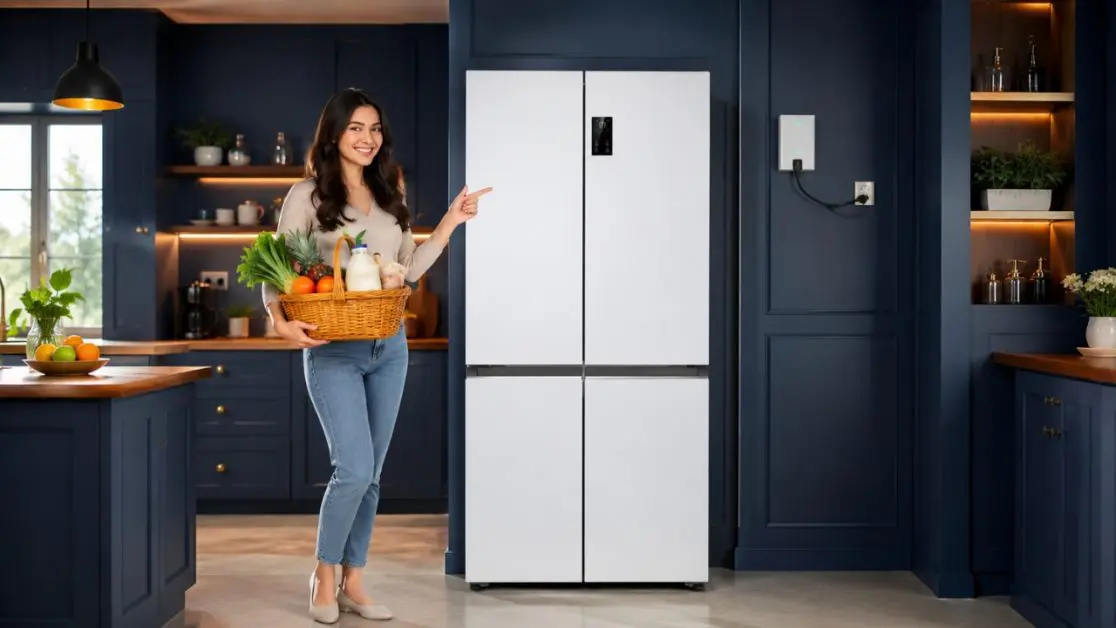
When comparing models, use inverter technology as one part of the decision, then examine the complete refrigerator.
A more useful buying checklist
Cooling:
Check how the refrigerator distributes cooling across different areas and whether its cooling system matches the size and compartment layout.
Storage flexibility:
Think about how often your fridge-to-freezer requirements change.
Capacity:
Choose based on actual household storage, not simply the number printed on the door.
Everyday organisation:
Shelves, door racks, vegetable compartments and accessible storage zones can make a surprising difference after the novelty of a new refrigerator wears off.
Energy rating:
Do not confuse inverter technology with the appliance’s complete energy-efficiency picture. Review the refrigerator’s stated energy rating as part of the purchase decision.
Warranty:
Check exactly what is covered. Haier lists a 2-year complete product warranty and 10-year warranty on the compressor for the Lumiere 520L models featured here.
Look Beyond the Inverter Label
An inverter compressor is meaningful technology, but it should never become the only reason to choose a refrigerator.
how well does the entire refrigerator work for your household?
Haier’s Lumiere 520L 3 Star French Door Refrigerator brings inverter-based refrigeration together with a 520-litre four-door format, flexible convertible storage, 360° Surround Cooling, Deo Fresh Technology and practical storage features designed around everyday refrigerator use. The range is available in finishes including Mauve Pink, Pearl White and Rosetyte White, giving households options beyond functionality alone.
So, the next time someone says, “It has an inverter, so it must be better,” there is a better response.
Better at what?
Start there. Then look at cooling, capacity, flexibility, organisation and the features you will genuinely use every single day.
Frequently Asked Questions
1. What is an inverter refrigerator?
An inverter refrigerator uses an inverter compressor that can regulate its operation according to cooling requirements rather than relying only on conventional fixed operating cycles. This helps the refrigerator respond to changing cooling demand more efficiently.
2. Does an inverter refrigerator consume less electricity?
Inverter technology is designed to manage compressor operation according to cooling demand, but electricity consumption depends on the complete refrigerator. Capacity, energy rating, temperature settings, ambient conditions, food load and door-opening frequency can all influence consumption.
3. Does the compressor in an inverter refrigerator run all the time?
An inverter compressor may operate for longer periods at adjusted levels instead of repeatedly switching between pronounced start-and-stop cycles. This behaviour alone does not necessarily indicate a problem. Users should refer to the product manual or authorised service support if they notice abnormal cooling or operation.
4. What is special about the Haier Lumiere 520L 3 Star French Door Refrigerator?
The Haier Lumiere 520L 3 Star French Door Refrigerator combines a 520-litre capacity with inverter technology and flexible storage. Depending on the model, highlighted features include 360° Surround Cooling, Triple Inverter technology, Deo Fresh Technology, toughened glass shelves and a 90-litre Magic Convertible Zone.
5. What is the Magic Convertible Zone in the Haier Lumiere refrigerator?
The 90-litre Magic Convertible Zone provides customised storage with an adjustable temperature range from -20°C to 5°C. It allows the compartment to accommodate different storage requirements instead of remaining restricted to one fixed purpose.
6. Is the Haier Lumiere 520L suitable for Indian households that need more storage?
For households requiring substantial refrigerator capacity, the Lumiere offers 520 litres of total storage and can provide up to 440 litres of fridge space through its convertible configuration. Its toughened glass shelves and adjustable storage features are also designed to accommodate everyday food storage and larger Indian home utensils