

Protecting delicate festival wear during Holi cleaning means acting fast, choosing the right wash cycle, separating fabrics carefully, and using a washing machine that understands fabric sensitivity.
The goal is simple. Remove colour without damaging silk, chiffon, georgette, or embroidered outfits. Quick rinsing, gentle programs, low spin, and smart wash technology make the difference.
Holi ends in laughter.
It begins in panic.
Because the moment you see pink streaks on your cream chikankari kurta or blue splashes on your silk dupatta, celebration turns into calculation.
Can this be saved?
It can.
But only if you understand the hidden system behind Holi stains.
Why Holi Stains Behave Differently on Delicate Fabrics
Holi colours do not act the same on cotton T shirts and silk sarees.
Synthetic powders bind loosely to thick cotton fibres. They cling deeply to silk and chiffon. Oil based colours seep faster. Natural gulal settles into embroidery threads.
According to the Bureau of Indian Standards, silk and wool fibres absorb moisture rapidly, making them more vulnerable to pigment locking. That means time is your biggest risk.
A delicate outfit left unwashed for 6 hours absorbs more stain than one rinsed within 30 minutes.
The lesson is clear.
Stains do not wait for you to finish lunch.
The 30-Minute Rule for Delicate Festival Wear
The first 30 minutes decide everything.
- Rinse immediately in cold running water.
- Avoid rubbing embroidered sections.
- Do not use hot water. Heat sets pigments.
- Keep colours from spreading by washing items separately.
This simple response reduces long term damage.
Fast action costs nothing. Delayed action costs fabric life.
Sorting Before Washing: The Invisible Discipline
Most damage happens before the wash cycle even begins.
We throw everything together. Whites with pastels. Heavy lehengas with light dupattas.
That is convenient.
It is also a risk.
Three Sorting Options That Protect Delicate Festival Wear
One option is fabric-based sorting.
Separate silk, chiffon, georgette, net, and cotton. Each reacts differently to spin speed and water pressure.
The second option is colour-based sorting.
Wash whites and creams alone. Even faint leftover gulal can transfer.
The third option is weight-based sorting.
Heavy embroidered garments should not tumble against lightweight scarves.
| Sorting Method | Benefit | Cost of Ignoring |
| Fabric-based | Protects fibre strength | Fibre weakening |
| Colour-based | Prevents dye transfer | Permanent tint |
| Weight-based | Reduces friction damage | Tears and snags |
This is not overthinking.
This is fabric management.
Choosing the Right Wash Program for Delicate Holi Clothes
Technology matters here.
Modern front load washing machines now include fabric-specific programs that control drum movement, water level, and spin speed automatically.
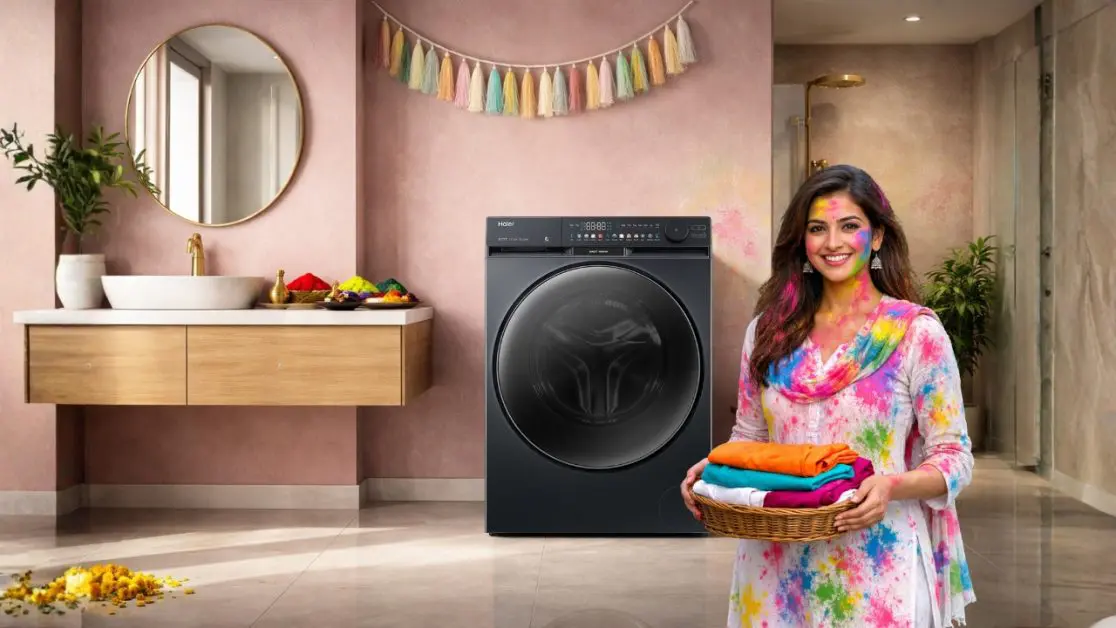
Take the Haier 10 Kg Fully Automatic Front Load Washing Machine HW100-DM14F9BKU1. It offers 16 programs including Delicate and Hand Wash options, with a Direct Motion Motor designed for silent and vibration free washing.
That matters.
Because delicate Holi wear does not need aggression. It needs precision.
What Makes a Delicate Cycle Effective?
- Lower RPM spin speed
- Controlled drum rotation
- Balanced water temperature
- Reduced mechanical friction
The HW100-DM14F9BKU1 supports up to 1400 RPM but allows controlled settings for delicate garments. It also includes a Pillow Shape Drum design that reduces fabric wear.
Protection is not about weaker washing.
It is about smarter washing.
For larger households where festival wear piles up quickly, the Haier 12 Kg F9P Front Load Washing Machine HW120-DM14F9BKU1 provides 14 programs including Delicate and Refresh modes.
Capacity matters when cousins visit.
So does control.
Cold Water vs Warm Water: The Temperature Decision
Temperature is not a minor setting.
It is chemistry.
According to textile care guidelines published by the Textile Association of India, most Holi pigments dissolve best in cold water initially. Heat locks stains into protein based fibres like silk.
So the framework looks like this:
- First rinse in cold water.
- Wash in cold or mild temperatures.
- Avoid high heat drying.
Heat feels powerful.
Cold water saves fabric.
The Role of AI in Protecting Delicate Festival Wear
Most people guess wash settings.
Guessing is expensive.
Modern AI enabled washers sense fabric load and adjust parameters automatically. The Haier 10 Kg model includes One Touch AI Wash, which detects fabric type and load to optimize washing settings.
Why does this matter during Holi cleaning?
Because festival loads are unpredictable. Mixed fabrics. Mixed stains. Mixed urgency.
An AI enabled wash reduces over spinning and over rinsing.
Less friction. Less shrinkage. Less stress.
Machines do not celebrate Holi.
But they can protect what you wore.
Steam Refresh for Delicate Festival Wear
Not every outfit needs a full wash.
Some need refreshing.
Steam programs , available in the 10 Kg Haier model , help reduce odours and wrinkles gently.
This works well for:
- Lightly stained dupattas
- Odour removal after outdoor celebrations
- Quick garment refresh before storage
Full washing is not always the solution.
Sometimes the right level of intervention protects longevity.
Energy and Water Efficiency During Holi Cleaning
Festival cleaning often means multiple loads.
Efficiency becomes relevant.
The Haier models include Eco Wash and 5 Star energy rating.
According to India’s Bureau of Energy Efficiency, front load washing machines use up to 50 percent less water than traditional top load models.
That matters.
Because Holi cleaning should not triple your utility bills.
Saving fabric and saving electricity can coexist.
Post Wash Drying: The Forgotten Step
Damage often happens after washing.
Silk stretched under direct sunlight fades. Heavy sarees hung by one end distort shape.
Better options:
- Lay delicate garments flat on a clean towel.
- Avoid direct noon sunlight.
- Do not wring by hand.
Drying is not an afterthought.
It is the final act of preservation.
The Organisational Lesson Hidden in Holi Cleaning
Protecting delicate festival wear during Holi cleaning is not about laundry.
It is about systems.
When we act early, sort wisely, use the right technology, and choose precision over force, outcomes improve.
In homes. In wardrobes. At work.
Constraints create discipline.
A delicate fabric forces you to slow down. That slowing down protects value.
Smart appliances quietly support that discipline. They remove guesswork. They reduce risk. They make the home feel more controlled during chaotic moments.
That is the real benefit.
Not cleaner clothes.
More confidence.
A Simple Framework to Remember
When Holi ends, remember this:
1. Act within 30 minutes.
2. Sort before washing.
3. Choose delicate programs.
4. Use cold water first.
5. Dry with care.
Protection is not dramatic.
It is methodical.
And when your silk saree or embroidered kurta survives another festival season looking almost new, you realise something.
Celebration feels better when preservation follows.
Because in the end, colours should fade from the fabric.
Not from memory.
Frequently Asked Questions
I just noticed a pink gulal on my cream chikankari kurta. Is it already ruined?
Not if you act quickly. Rinse immediately under cold running water without rubbing. Early rinsing prevents pigment from locking into delicate threads.
I left my silk saree stained for 4–5 hours after Holi. Did I make it worse?
Yes, time increases absorption. Silk fibres absorb moisture quickly, which helps pigments settle deeper. Cold rinsing immediately is critical.
Why do Holi colours stick more stubbornly to silk and chiffon than cotton?
Protein-based fibres like silk absorb moisture rapidly, allowing pigment to bind more deeply compared to thicker cotton fibres.
Can I scrub embroidered areas gently to speed things up?
No. Even light rubbing can spread colour into threadwork and distort embroidery.
Which wash program should I choose for silk and embroidered wear?
Select Delicate or Hand Wash modes that lower RPM and reduce mechanical friction.
How does the Haier 10 Kg Fully Automatic Front Load Washing Machine HW100-DM14F9BKU1 help protect delicate fabrics?
It offers 16 programs including Delicate and Hand Wash, controlled RPM settings, and a Pillow Shape Drum that reduces fabric wear.
Is a larger capacity machine better for festival cleaning?
Yes, but only if you avoid overloading. The Haier 12 Kg F9P Front Load Washing Machine HW120-DM14F9BKU1 supports larger loads with dedicated delicate modes.
What does One Touch AI Wash actually do?
It detects fabric type and load weight to optimise water level, temperature, and spin speed, reducing guesswork and fabric stress.