
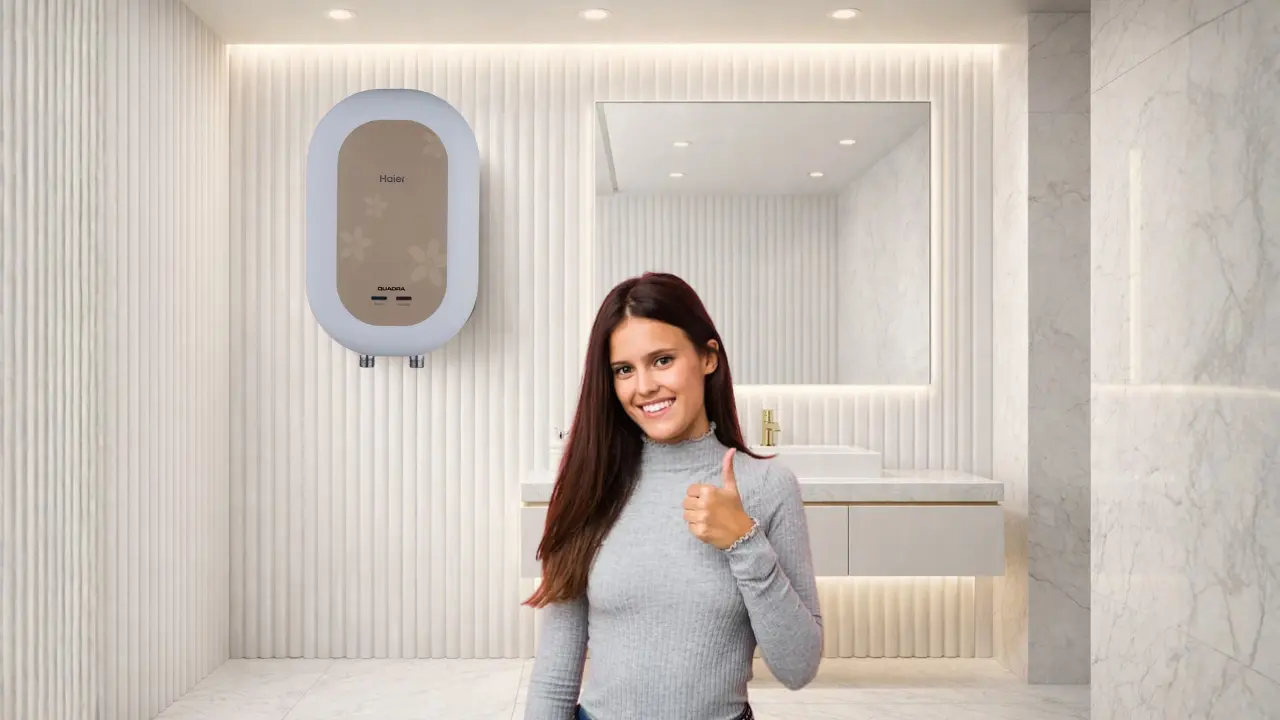

Durability that matches daily Indian usage means appliances built for pressure, power cuts, water hardness, long hours, and real family rhythms.
It means products that survive splashy bathrooms, voltage swings, summer overload, festival marathons, and everyday multitasking without asking for constant care.
That is the short answer.
The longer answer lives inside Indian homes.
Why does “Durable” mean something different in India?
Walk into a typical home on a weekday morning.
The geyser runs before sunrise.
The washing machine works through back to back loads.
The refrigerator door opens every few minutes.
The AC runs for hours in peak heat.
This is not an occasional use.
This is daily endurance.
According to the Bureau of Energy Efficiency, appliances like ACs and water heaters contribute a large share of household electricity usage in summer. More usage means more stress. More stress demands better build quality.
Durability in India is not about surviving a demo test.
It is about surviving real life.
And real life here is intense.
The Hidden Stress Factors Indian Appliances Face
1. Water Pressure in High Rises
Urban India is rising vertically. Apartments on the 10th or 20th floor deal with higher water pressure.
An appliance that cannot handle pressure fails quietly first. Then loudly.
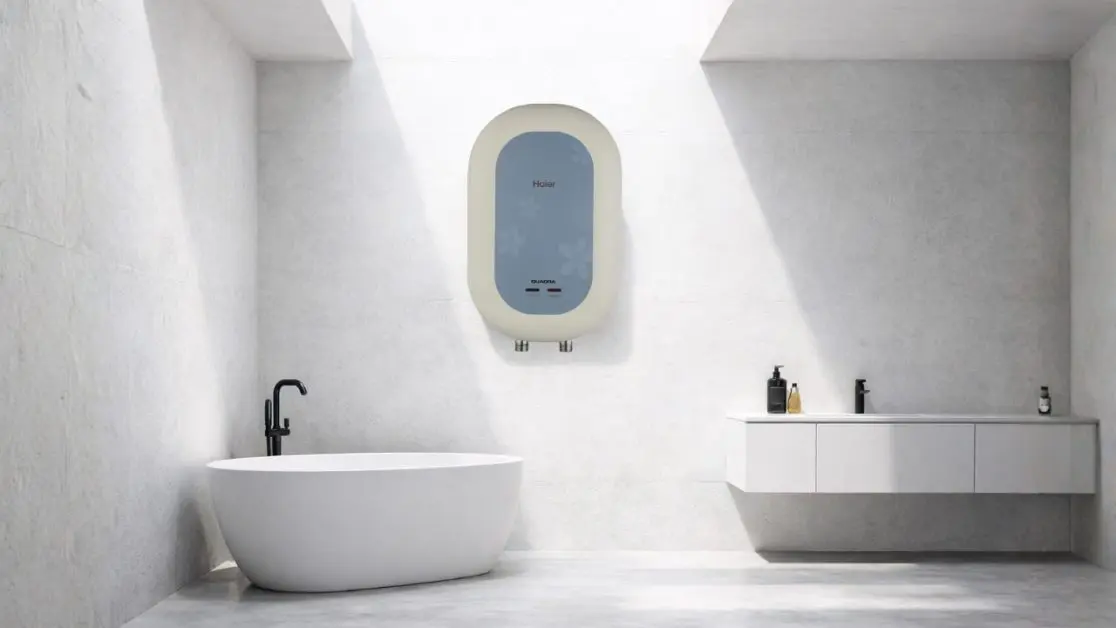
For example, an 8 bar rated pressure system ensures safe performance in high rise buildings. The Haier 3L Instant Water Heater EI3V-C1(W)-P is designed for 8 bar working pressure and high heat conditions.
That is not a spec line.
That is protection from burst tanks and plumbing strain.
2. Hard Water in Many Cities
In cities like Delhi, Bengaluru, Jaipur, and parts of Maharashtra, hard water causes scale build up inside heating elements.
Scale reduces efficiency.
Efficiency loss increases power consumption.
Higher heat stresses components.
A durable heating element matters here.
The Incoloy 800 stainless steel heating element used in select Haier 3L water heaters is designed for longer service life under high temperature conditions.
Stainless steel inside the tank is not luxury.
It is insurance.
3. Power Fluctuations and Overheating
Voltage fluctuations are common in many towns and even metro outskirts.
Overheating protection becomes critical.
Dual Thermal Proof systems, with two safety cut offs at 75°C and 95°C, offer layered safety against overheating.
One sensor as backup is good.
Two sensors are better.
Durability is often invisible.
You only notice it when something does not go wrong.
Durability Is a System, Not a Single Feature
People often ask, what makes an appliance durable?
One option is thicker material.
The second option is smarter internal design.
The third option is layered safety.
The best products combine all three.
Take the example of a glass lined tank in instant water heaters. A glass lined or enamel coated tank enhances corrosion resistance and extends product life under high heat and pressure.
It is like coating a steel tiffin box from inside to prevent rust.
Small detail. Big difference.
Durability is never one heroic feature.
It is a quiet collaboration of many small ones.
What Daily Indian Usage Actually Looks Like
Let us map it simply.
| Daily Habit | Stress Created | What Durable Design Solves |
| Back to back showers | Continuous heating | Fast heating with stable elements |
| Balcony or semi outdoor install | Water splashes | IPX4 water resistance |
| High rise water supply | High pressure | 8 bar rating |
| Infrequent deep cleaning | Bacteria growth | Anti bacterial heating modes |
| Busy mornings | Long runtime | Thermal protection systems |
IPX4 rated water resistance protects against splashes and allows safer indoor or semi outdoor installation.
In Indian bathrooms, splashes are normal. Buckets spill. Kids play. Steam collects.
A durable appliance assumes this reality.
The Cost of Choosing “Just Enough”
There are three ways households think about durability.
- Lowest upfront price
Economically efficient today. Risk of higher maintenance tomorrow. - Balanced build and warranty
Slightly higher investment. Lower service interruptions. - Over engineered long term solution
Highest initial cost. Maximum stability over years.
Most families move toward option two once they experience a breakdown during peak summer or winter.
Because the cost of appliance failure is not only money.
It is an inconvenience.
It is cold showers before work.
It is food spoilage.
It is a broken AC during a heatwave.
Durability protects routines.
And routines are sacred.
Durability Builds Trust Quietly
I have noticed something interesting.
The most appreciated appliances are not the flashiest ones.
They are the ones that simply keep working.
For example, Haier water heaters like the 3L IPX4 Ivory Instant Water Heater come with a 3 year product warranty and 5 year tank warranty.
Longer tank warranty signals confidence in build quality.
Warranty is not just a document.
It is a statement.
Durability in the Era of Smart Living
Modern Indian homes are adding smart features.
Smart AC modes.
Convertible refrigerators.
App connected TVs.
Innovation excites.
But innovation without durability becomes fragile.
A smart feature must survive daily wear. Buttons must respond after years. Sensors must remain accurate in dust and humidity.
Durability today means:
- Reliable electronics under voltage fluctuation
- Rust resistant internal materials
- Multi layer safety in heating systems
- Water and splash resistance for real bathrooms
- Pressure tolerance for vertical living
Innovation attracts attention.
Durability retains loyalty.
Festival Season Is the Ultimate Stress Test
Think about Diwali.
Cooking runs for hours.
Guests use the bathroom continuously.
Refrigerators open and close every few minutes.
Washing machines process extra laundry.
Festivals compress weeks of usage into days.
A durable appliance handles peak loads without complaint.
This is where features like continuous heating capability and robust heating elements show their real value.
Durability shines under pressure.
Durability Is Also About Hygiene
Water heaters today are not just about temperature.
They are about clean water.
Anti bacterial modes that heat water to 80°C help inhibit bacteria formation inside the tank.
In homes with kids and elderly family members, hygiene is not optional.
Durability extends beyond metal.
It includes safety and health.
The Bigger Principle: Build for the System, Not the Showcase

Here is what daily Indian usage teaches us.
Homes are complex systems.
Water supply varies.
Electricity fluctuates.
Usage patterns spike.
Maintenance cycles are irregular.
An appliance that survives here can survive anywhere.
Durability is not over engineering.
It is contextual engineering.
Design for Mumbai humidity.
Design for Jaipur heat.
Design for Bengaluru hard water.
Design for high rise Gurugram pressure.
When brands design for context, households feel understood.
And when households feel understood, they stay loyal.
How to Think About Durability Before You Buy
Ask three simple questions:
- What kind of stress will this appliance face in my home?
High pressure. Hard water. Long runtime. - Does it have layered protection?
Dual thermostats. Anti corrosion lining. Splash resistance. - Is the warranty aligned with its core component?
Tank warranty. Heating element quality.
Durability decisions are rarely visible on day one.
They reveal themselves on day 500.
Durability Is a Leadership Mindset
There is a pattern here.
Organizations that last build for volatility.
Homes that feel sorted choose appliances built for volatility.
Durability is not about pessimism.
It is about preparedness.
When a product is designed to withstand Indian daily usage, it reduces micro stress inside the home.
Fewer breakdowns.
Fewer service calls.
Fewer disruptions.
And that creates something subtle.
Calm.
In a country that moves fast and celebrates hard, appliances that endure quietly are not just convenient.
They are stabilizers.
Durability that matches daily Indian usage is not a feature.
It is a philosophy.
And once you see it that way, you never buy the same way again.
Frequently Asked Questions
Why is water pressure a problem for appliances in high-rise apartments?
High-rise buildings often use pumps that increase water pressure. Appliances without adequate pressure tolerance can develop leaks, damage internal tanks, or experience pipe stress.
What does an 8-bar pressure rating mean in a water heater?
An 8-bar pressure rating means the appliance can safely operate under high water pressure commonly found in tall apartment buildings.
Do I really need a high-pressure rated appliance if I live on the 10th floor or above?
Yes. Higher floors often experience pumped water pressure, and appliances with lower pressure tolerance may fail prematurely.
Why are voltage fluctuations dangerous for appliances?
Voltage fluctuations can cause overheating, damage electrical components, and shorten appliance lifespan.
What is a dual thermal protection system?
It is a safety mechanism with two temperature cutoffs that automatically shut down the appliance if overheating occurs.
Is one safety sensor enough in heating appliances?
One sensor provides protection, but dual sensors create an additional safety layer in case the first one fails.