
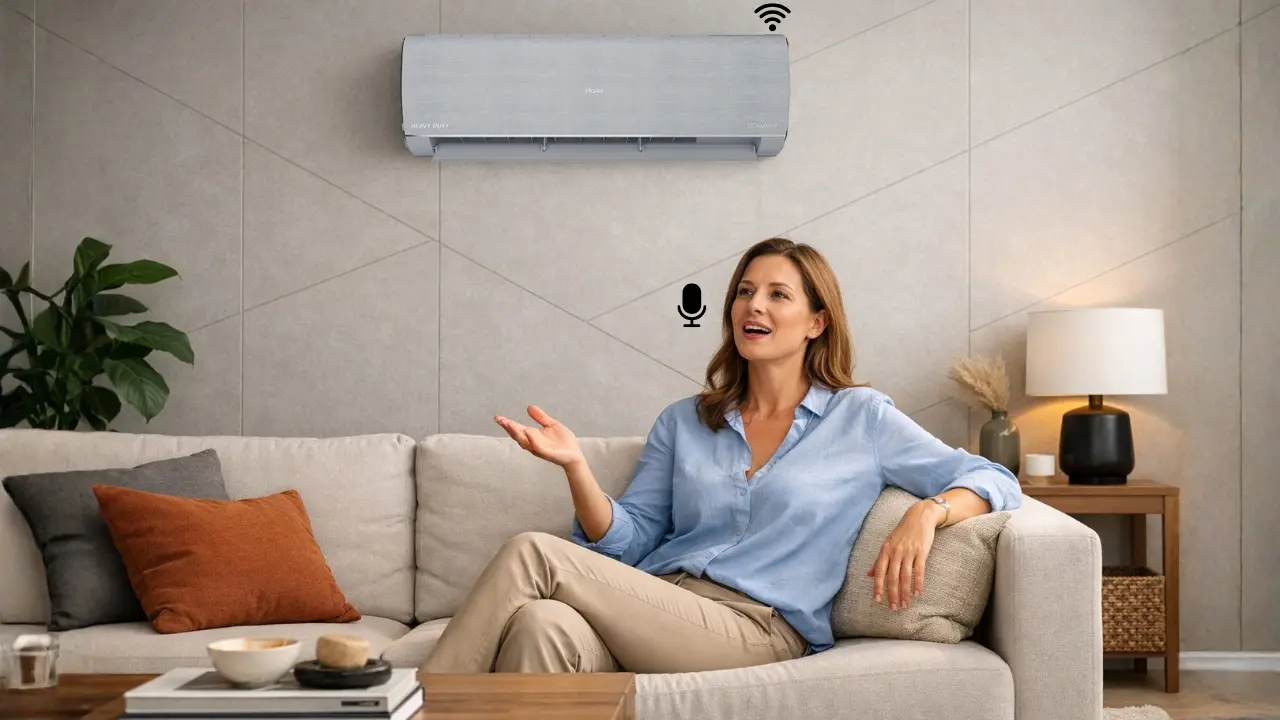

Voice commands replace traditional remotes when convenience becomes more valuable than control.
In modern Indian homes, voice control is no longer a novelty. It is a practical shift. Instead of searching for a remote under cushions or adjusting settings manually, you simply speak. The appliance listens. The room responds.
Voice commands replace traditional remotes because they reduce friction. And in busy homes, friction is the real enemy.
The Remote Is Not the Problem. Friction Is.
Picture this.
It is 9:45 pm. Dinner is done. Someone is half asleep on the sofa. The TV volume feels too loud. The remote is missing. Again.
You look under the cushion. Check the coffee table. Ask the kids. Nothing.
Finally, someone stands up.
Now imagine the same moment. You say, “Lower the volume.” Done.
The shift is small. The impact is large.
When devices are used daily, even small inefficiencies multiply.
Convenience compounds.
Why Voice Control Feels Natural in Indian Homes
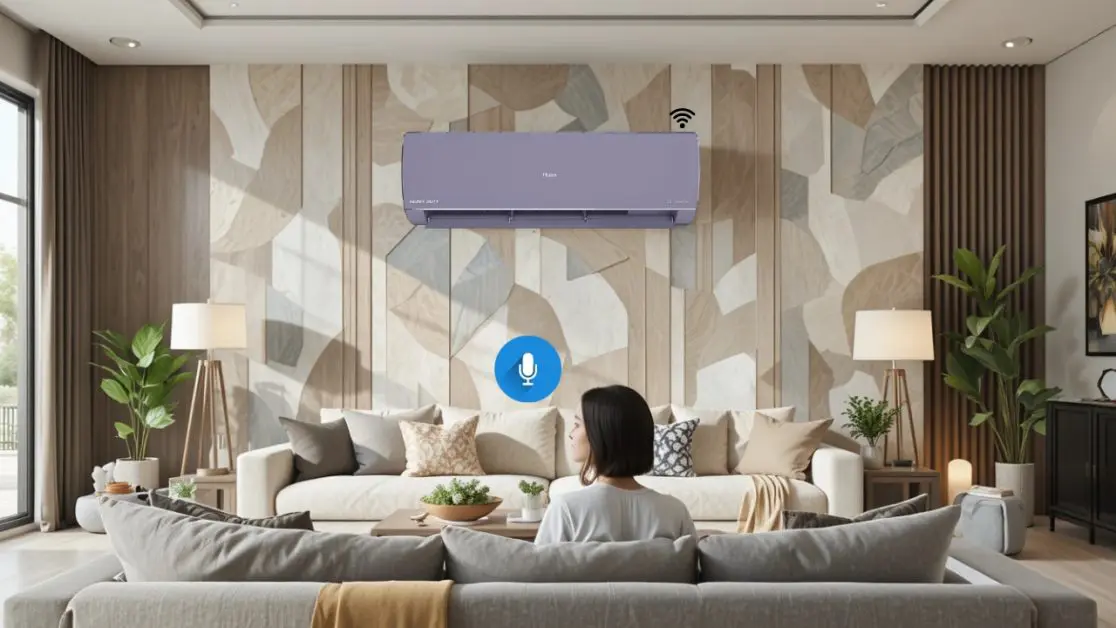
Indian homes are layered spaces.
The living room doubles as a workspace. The bedroom becomes a study corner. The kitchen is part dining room, part conversation hub.
Hands are rarely free.
- Cooking while checking the fridge.
- Holding a baby while adjusting the AC.
- Carrying groceries while switching on lights.
Voice commands solve for busy hands.
When speech becomes a habit on smartphones, it naturally moves to appliances.
That is when voice commands replace traditional remotes.
How Voice Commands Actually Change Daily Life
Let us break this down into real scenarios.
1. The Working Professional Living Solo
You walk in after a long commute.
One option is to:
- Unlock the door
- Find the AC remote
- Switch it on
- Wait for cooling
The second option is:
- Say, “Turn on the AC.”
With features like Direct Voice Control in select Haier models, even WiFi is not mandatory. The technology responds to your voice without extra setup .
The cost:
- Slight learning curve in the beginning.
The benefit:
- Immediate comfort. No searching. No tapping.
When voice commands replace traditional remotes, the first win is time.
2. The Family Evening Setup
Cricket match night.
Lights dim. Snacks ready. Kids are excited.
Someone wants the fan lower. Someone wants the volume higher. Someone else wants subtitles on.
Without voice control, one person becomes the “remote manager.”
With voice control, everyone participates.
Haier’s AI-powered TV technology and ACs increasingly integrate voice support that lets you adjust settings without leaving your seat.
The hidden technology here is delegation.
Voice spreads control.
3. Parents With Young Children
Hands full. Always.
Bottle in one hand. Toddler in the other.
The AC feels too cold.
Traditional remote:
- Search
- Click
- Adjust
Voice command:
- “Set the temperature to 26 degrees.”
Done.
Voice commands reduce effort when effort is already stretched.
That is not luxury. That is design empathy.
Beyond Comfort: The Energy Equation
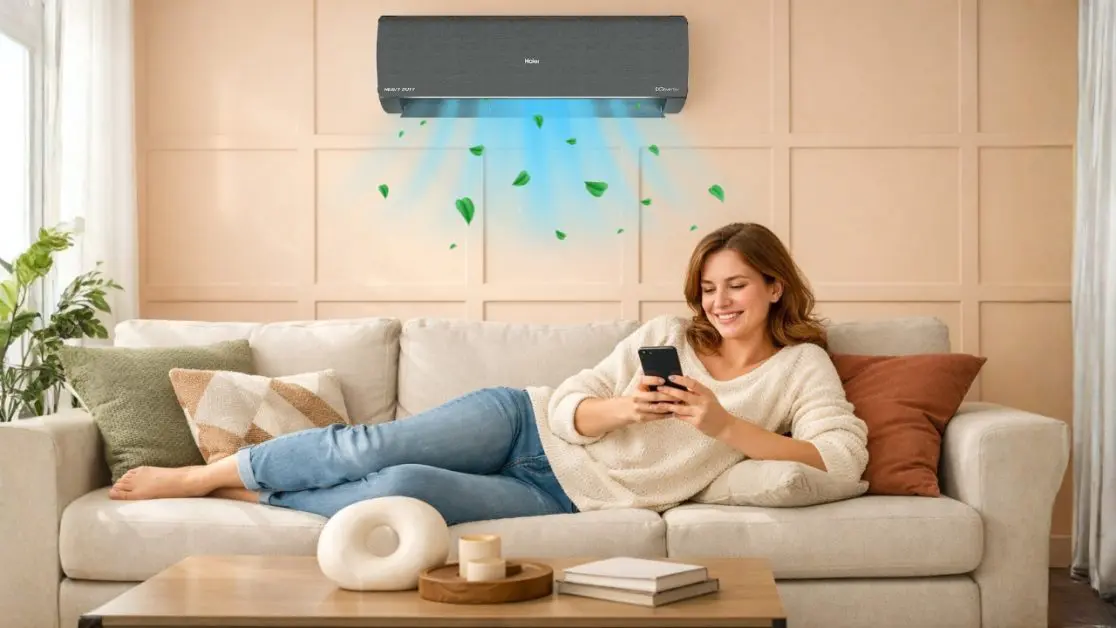
Voice commands are not only about ease. They connect to smarter energy usage.
Consider this.
AI Climate Control technology such as Haier’s AI Atmox platform learns usage patterns, tracks room conditions, and adjusts automatically .
Voice commands work alongside these technologies.
You say:
- “Switch to Eco mode.”
- “Turn off the AC.”
- “Check electricity usage.”
Now pair that with AI Human Detection, which reduces power when the room is empty .
The technology becomes proactive.
According to India’s Bureau of Energy Efficiency, air conditioners can account for up to 40 percent* of summer electricity bills in urban homes. Even small optimisations reduce cost.
Voice commands replace traditional remotes when:
- They reduce idle running.
- They make switching off easier.
- They integrate with AI Eco 2.0 modes.
The cost:
- Slightly higher initial appliance investment.
The benefit:
- Lower recurring electricity expenses.
- Reduced energy waste.
- Better control visibility.
Convenience and savings begin to overlap.
What Actually Happens When We Speak to Machines
This is not about talking to gadgets.
It is about reducing cognitive load.
Every remote has:
- Buttons
- Modes
- Symbols
- Tiny text
Voice simplifies choice.
Instead of remembering which button activates Eco mode, you say it.
Instead of navigating menus, you express intent.
Speech becomes an interface.
And that changes how decisions feel.
The best interface disappears.
Traditional Remotes vs Voice Commands: A Practical Comparison
| Factor | Traditional Remote | Voice Commands |
| Search time | Often misplaced | Always available |
| Physical effort | Requires handling | Hands-free |
| Accessibility | Limited for elderly | Easier speech-based |
| Energy control | Manual memory-based | Faster response |
| Multi-user flexibility | Single user at a time | Anyone can speak |
This is not about replacing one tool entirely.
It is about expanding control options.
Voice commands replace traditional remotes in moments where friction costs more than familiarity.
The Role of AI in Making Voice Work
Voice alone is not enough.
It needs intelligence behind it.
Haier’s AI Atmox features include:
- AI Pre-Cooling that anticipates arrival within a 100-metre geofence
- AI Target Cooling that directs air precisely where needed
- AI Electricity monitoring 2.0 with graphical tracking
- AI Human Detection to cut unnecessary power
Voice becomes powerful when it connects to technology that already thinks.
Without AI, voice is command-based.
With AI, voice becomes conversation-based.
You say “I’m home.” The room adjusts.
That is a different category of living.
What Organisations Can Learn From This Shift
This shift is not limited to homes.
It mirrors how modern workplaces operate.
In organisations, we replace long forms with quick approvals. We reduce email chains with direct messages. We automate routine reports.
Why?
Because friction slows progress.
When voice commands replace traditional remotes, it reflects a broader principle:
technology evolves toward lower effort pathways.
Homes and workplaces both follow this rule.
The fewer steps between intent and action, the better the experience.
And better experience drives adoption.
Is Voice Control Perfect? Not Yet.
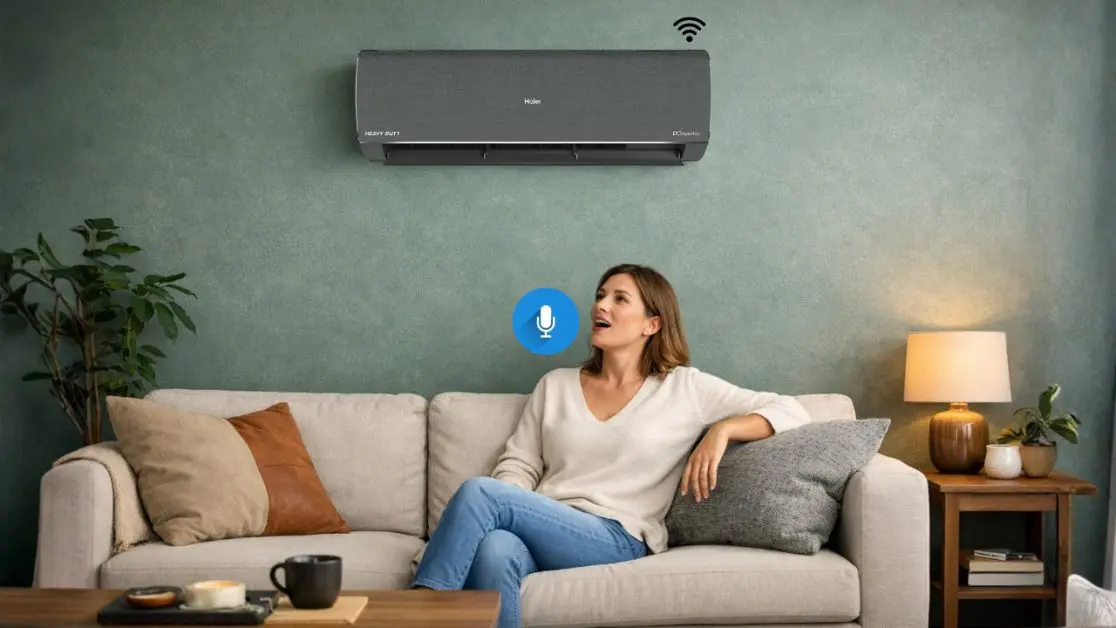
There are trade-offs.
- Background noise may interfere.
- Accents require tuning.
- Some people prefer tactile buttons.
The goal is not elimination of remotes.
It is optional.
In most Haier technology, remote control remains available. Voice becomes an added layer, not a forced shift.
The smartest technology does not remove choice. They reduce friction.
When Should You Consider Voice-Enabled Appliances?
One option is:
- When setting up a new home.
- When upgrading AC or TV.
- When energy efficiency is a priority.
The second option is:
- When elderly family members need simpler controls.
- When children use devices independently.
- When accessibility matters.
The third option is:
- When you value seamless experiences.
- When you want appliances that anticipate needs.
- When small daily conveniences matter.
Each path has different motivations.
But the outcome is similar.
Voice commands replace traditional remotes when living spaces become busier, smarter, and more connected.
The Bigger Picture: Homes That Listen
We used to design homes around furniture.
Now we design them around flows.
Morning routines. Work calls. Evening downtime. Weekend hosting.
Voice control fits into these flows naturally.
You wake up.
You speak.
The room responds.
No searching. No tapping. No interrupting your moment.
Haier’s AI-driven ecotechnology shows how voice, AI Climate Control, and energy monitoring work together instead of operating in silos .
And that integration is the real story.
Because when devices listen, they reduce mental clutter.
When they reduce mental clutter, homes feel calmer.
And when homes feel calmer, decisions feel easier.
Voice commands replace traditional remotes not because technology demands it.
Because life does.
The remote was built for control.
Voice is built for flow.
In a world that keeps getting faster, flow wins.
Frequently Asked Questions
Why do I feel less tired using voice commands instead of remotes?
Voice commands reduce the number of steps between intention and action. Instead of finding the remote, pressing multiple buttons, and navigating menus, you simply say what you want. This removes small but repetitive decisions, lowering daily cognitive load.
I keep losing my remote. Is voice control actually a better solution?
Yes, especially in busy homes. Voice control eliminates the need to physically locate the remote. Since voice interfaces are always available, they remove one of the most common frustrations associated with traditional remotes.
Why do voice-controlled appliances feel more natural in daily routines?
Speaking is one of the most natural forms of interaction. As people increasingly use voice assistants on smartphones, extending that habit to home appliances feels intuitive and seamless.
Can I control my AC or TV while cooking or cleaning without touching anything?
Yes. Voice commands allow hands-free control, making it easier to adjust appliances when your hands are busy or messy during cooking, cleaning, or other household tasks.
I’m holding my baby most of the time. Can voice commands actually help me manage appliances?
Absolutely. Voice control lets you adjust temperature, lighting, or volume without needing to free your hands, which is especially helpful for parents managing children.
Can voice commands help reduce electricity usage at home?
Indirectly, yes. Because voice makes it easier to turn appliances off or switch to energy-saving modes quickly, it encourages more responsive energy management.
I often forget to turn off the AC. Can voice commands help with that?
Yes. Voice commands allow instant control without needing to find a remote, making it easier to switch devices off before leaving a room or going to sleep.