
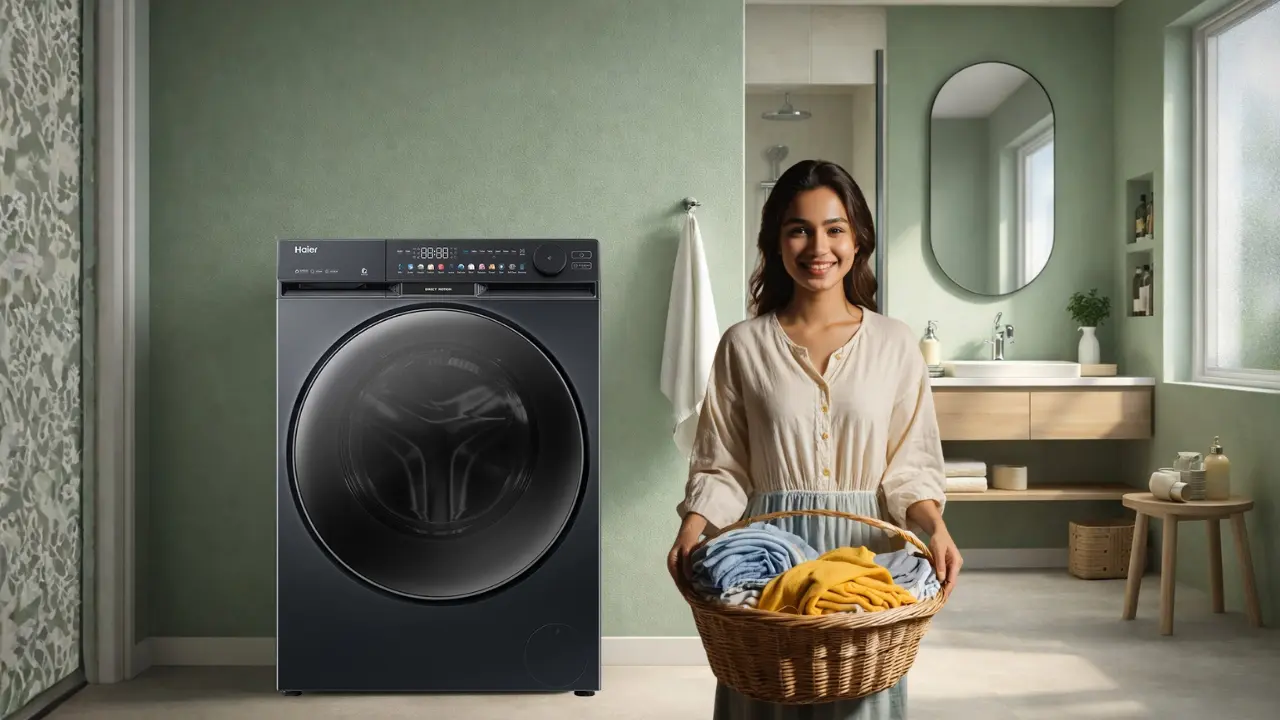

The best washing machine settings for delicate fabrics use gentle drum movement, low spin speed, cool or lukewarm water, and shorter wash cycles.
These settings reduce friction, protect fibers, and prevent stretching or fading. Modern front load machines with dedicated Delicate or Silk programs make this process easier by automatically adjusting water level, drum rotation, and temperature.
Because delicate clothes do not fail suddenly.
They fade slowly.
Lose shape gradually.
And then one day, that favourite kurta or silk blouse simply does not feel the same.
Laundry, in other words, is not just cleaning.
It is fabric care.
And delicate fabrics demand a different system.
Why Delicate Fabrics Need Different Washing Settings
Walk into any modern Indian wardrobe.
Cotton shirts.
Athleisure wear.
Occasional silk sarees.
Georgette kurtas for festive evenings.
Linen shirts for summer weddings.
Each fabric behaves differently inside a washing machine.
The invisible system here is fiber strength.
Cotton fibers are strong.
Denim is tougher.
But silk, chiffon, lace, and wool behave more like thin threads than woven armor.
Aggressive washing damages them.
Three things cause most fabric damage during laundry:
| Laundry Factor | What Happens | Impact on Delicate Fabrics |
| High spin speed | Strong centrifugal force | Stretching and distortion |
| Hot water | Fiber expansion | Shrinking and fading |
| Rough agitation | Fabric rubbing | Tearing and pilling |
That is why washing delicate fabrics requires different settings.
Not complicated ones.
Just intentional ones.
The Most Important Washing Machine Settings for Delicate Clothes
Laundry care becomes easier when you understand the core controls on a washing machine.
Three settings matter more than anything else.
1. Temperature
Delicate fabrics prefer cooler water.
- Cold water (20°C to 30°C) protects dyes and fibers
- Lukewarm water helps remove mild stains without stressing fabric
- Hot water should be avoided for silk, lace, and wool
Heat weakens fibers over time.
Cool water preserves them.
2. Spin Speed
Spin speed is measured in RPM.
Many front load machines run at 1200 to 1400 RPM for normal loads.
Delicates should stay below 600 RPM.
Lower spin reduces:
- Fabric stretching
- Wrinkles
- Fiber breakage
3. Wash Cycle Type
Most modern washing machines include dedicated programs such as:
- Delicate
- Silk
- Wool
- Hand Wash
These cycles slow down drum rotation and reduce friction between clothes.
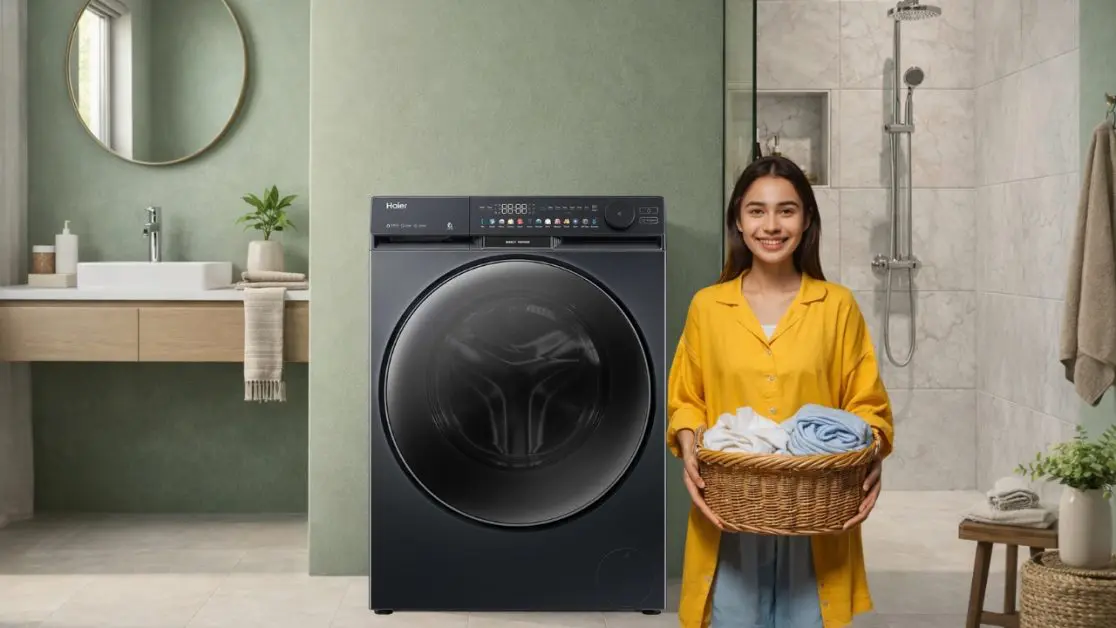
For example, machines like the Haier 10 Kg Fully Automatic Front Load Washing Machine HW100-DM14F9BKU1 offer multiple fabric-specific wash programs including Delicate, Silk, Wool, Baby Care, and Hand Wash cycles designed for sensitive fabrics.
This is not just convenience.
It is fabric science embedded into software.
A Simple Fabric Settings Guide

Not every delicate garment behaves the same way.
Some require extremely gentle care.
Others simply need reduced spin.
The table below simplifies the decision.
| Fabric Type | Recommended Temperature | Spin Speed | Cycle Type |
| Silk | Cold water | 400–600 RPM | Silk / Delicate |
| Wool | Cold or lukewarm | 400–600 RPM | Wool cycle |
| Chiffon | Cold water | 400 RPM | Delicate |
| Lace | Cold water | 400 RPM | Hand Wash |
| Rayon | Cold water | 600 RPM | Delicate |
The rule is simple.
The softer the fabric, the slower the wash.
The Hidden Laundry System Most People Ignore
Most laundry mistakes do not come from the machine.
They come from overloading.
When too many clothes enter the drum:
- Fabrics twist together
- Friction increases
- Water circulation decreases
Delicate fabrics require space.
Front load washing machines solve part of this problem with drum design.
For example, machines like the Haier HW120-DM14F9PBKU1 12 Kg F9 pro Front Load Washing Machine use a pillow shaped drum designed to reduce fabric friction while maintaining cleaning performance.
Think of it like a washing ecosystem.
The drum.
Water flow.
Rotation speed.
When these work together, clothes move freely rather than rub aggressively.
Three Smart Ways to Wash Delicate Fabrics

Laundry decisions become easier when you see them as options.
Here are three approaches most households use.
Option One: The Dedicated Delicate Cycle
This is the simplest approach.
Modern machines offer built in programs specifically designed for sensitive fabrics.
Benefits:
- Automatic water level adjustment
- Reduced drum movement
- Lower spin speeds
Cost:
- Slightly longer wash times.
But fabrics last longer.
Option Two: Manual Gentle Settings
Some households prefer control.
They adjust settings manually.
Typical configuration:
- Temperature: Cold
- Spin speed: Low
- Cycle: Short wash
Benefits:
- Faster wash cycles
- Flexible control
Cost:
- Requires understanding machine settings.
Option Three: Steam Refresh Instead of Washing
Sometimes clothes are not dirty.
They are simply worn once.
Steam refresh cycles remove odours and wrinkles without full washing.
Benefits:
- Extends garment life
- Saves water and detergent
- Reduces fabric stress
Cost:
- Only suitable for lightly worn clothes.
The insight here is powerful.
Not every garment needs a full wash.
The Detergent Mistake That Ruins Delicate Clothes
Settings matter.
But detergent matters more.
Regular detergent often contains strong surfactants designed for cotton or heavy stains.
Delicate fabrics require gentler solutions.
Recommended approach:
- Use mild liquid detergent
- Avoid powder residue
- Use half the normal quantity
Why?
Because delicate cycles use more water and gentler agitation.
Excess detergent stays trapped in fibers.
Which causes stiffness over time.
Modern Washing Machines Are Becoming Fabric Intelligent
The next shift in laundry is automation.
Smart washing machines increasingly sense fabric type, load size, and dirt level.
For instance, advanced models now offer AI powered washing programs that automatically adjust water level, spin speed, and wash duration based on the load.
This matters because most households do not want to study laundry science.
They want clothing care to happen quietly in the background.
Technology is finally catching up with that expectation.
Small Habits That Protect Delicate Clothes
Laundry care is not just about machine settings.
Small habits make a large difference.
Here are simple practices followed by professional fabric care services.
1. Turn garments inside out
This protects embroidery and prints.
2. Use laundry mesh bags
Especially useful for:
- Lingerie
- Lace tops
- Small silk garments
3. Avoid over drying
Heat damages delicate fibers faster than washing.
Air drying remains the safest option.
4. Wash similar fabrics together
Mixing denim with silk creates unnecessary friction.
Sorting is not an old habit.
It is a fabric protection system.
The Future of Laundry in Modern Indian Homes
Laundry used to be physical labour.
Buckets.
Hand scrubbing.
Sun drying on terraces.
Today it is becoming a quiet background system inside the home.
Front load machines with features like Direct Motion motors operate with lower vibration and noise while improving energy efficiency.
Which means laundry can run late at night.
Or during work calls.
Or while the house sleeps.
This shift matters because homes today are busier than ever.
Working professionals return late.
Parents juggle school schedules.
Couples manage hybrid work routines.
The washing machine has quietly become an invisible household partner.
The Real Secret to Caring for Delicate Fabrics
Most people believe delicate fabrics require complicated care.
They do not.
They require respect.
Lower heat.
Gentler movement.
A little more space.
That is it.
Laundry systems succeed when they remove friction.
Not just from clothes.
From daily life.
Because the goal of a modern home appliance is not just efficiency.
It is peace of mind.
And sometimes, that begins with something as simple as choosing the right washing machine settings for delicate fabrics.
Frequently Asked Questions
I always get confused by washing machine options. What’s the safest setting for my delicate clothes?
Use the Delicate or Silk cycle, cold water (20–30°C), and low spin (400–600 RPM). This combination minimizes friction and prevents damage.
I don’t know if my fabric is “delicate” or not. How do I decide quickly?
If it feels light, soft, flowy, or expensive (silk, chiffon, lace, wool), treat it as delicate. When in doubt, go gentler.
I’m in a hurry. What’s the quickest safe setup for delicate laundry?
Choose a short wash cycle, cold water, and low spin. Skip heavy agitation.
Do I really need to separate clothes every time, or is that overkill?
For delicates, yes. Mixing them with heavy fabrics like denim increases friction and causes damage.
Is it okay if I increase spin speed just to make clothes dry faster?
Not recommended. High spin stretches and distorts delicate fibers.
I want faster laundry cycles. What’s the trade-off for delicate fabrics?
Faster cycles increase friction. You save time, but reduce garment lifespan.
Is hand washing really better than machine washing for delicates?
Not necessarily. Modern machines with delicate cycles are often gentler and more consistent.
Can I skip washing and still freshen my clothes somehow?
Yes. Use a steam refresh cycle or air them out, ideal for lightly worn garments.