
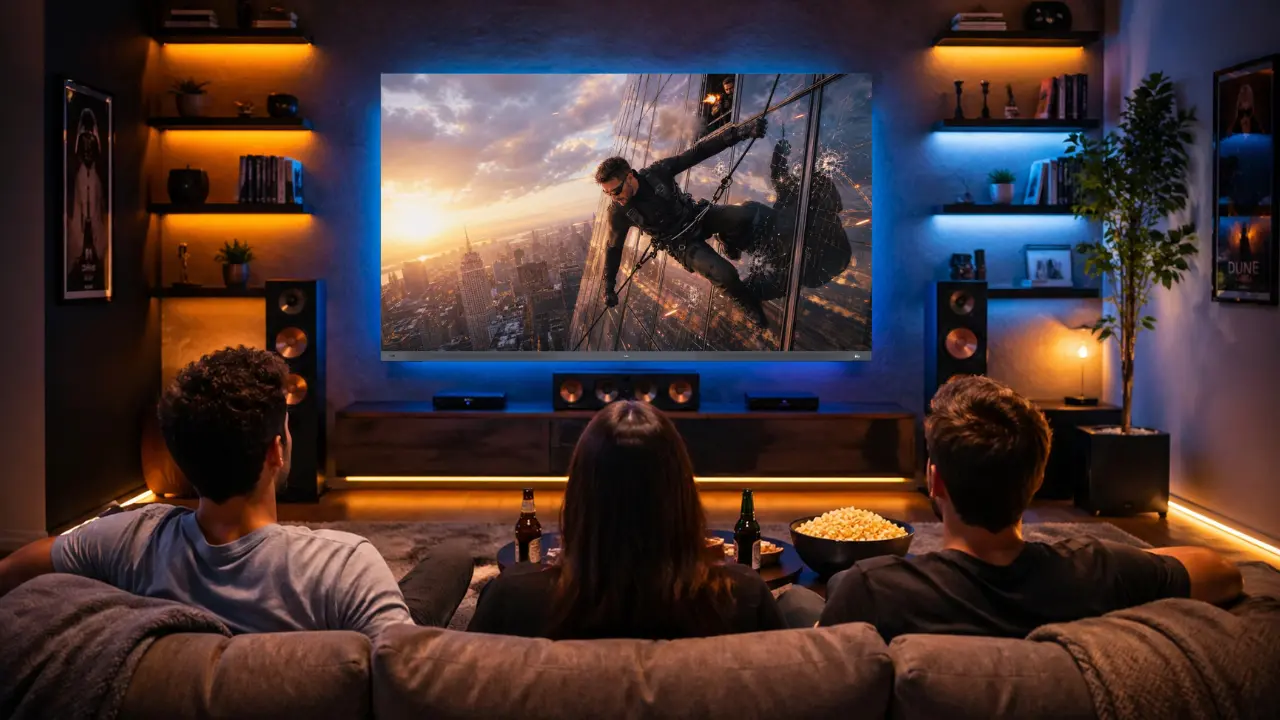

Ultrasense AI personalizes your viewing experience by learning how you watch, what you prefer, and when you engage, then adjusting content, picture, sound, and even recommendations in real time to match your habits.
It turns a TV from a screen into a system that understands your home.
The remote isn’t the problem. The overload is.
It’s 9:30 PM.
Dinner is done. Phones are charging. Someone opens the TV.
And then it begins.
Scrolling. Searching. Debating. Settling.
Ten minutes later, you’re still choosing what to watch.
This is not a content problem. It’s a decision fatigue problem.
India now has access to thousands of shows across platforms. Netflix. YouTube. Hotstar. Regional OTT apps. News. Sports. Reality.
Choice exploded.
Clarity didn’t.
The real upgrade isn’t more content. It’s better filtering.
That’s where Ultrasense AI steps in.
What does personalization actually mean in a smart TV?

Personalization isn’t just “recommended for you.”
That’s the surface.
The real system runs deeper.
At its core, Ultrasense AI does three things:
- Observes patterns
What you watch. When you watch. How long you stay - Adapts settings
Brightness, sound, contrast based on content and room conditions - Curates experiences
Suggests what to watch, when to watch, and how to watch
It’s less like a remote.
More like a quiet assistant.
One that pays attention.
Three ways most people experience TV today
Before we understand Ultrasense AI, it helps to see the contrast.
1. The manual viewer
- Scrolls through apps manually
- Adjusts brightness and volume repeatedly
- Relies on memory to find content
Cost: Time, effort, inconsistency
Benefit: Full control
2. The platform-dependent viewer
- Uses recommendations from OTT apps
- Gets suggestions within Netflix or YouTube
- Still switches between apps manually
Cost: Fragmented experience
Benefit: Better discovery within platforms
3. The AI-assisted viewer
- Gets unified suggestions across platforms
- TV adapts picture and sound automatically
- Content surfaces based on context, not just history
Cost: Requires smarter hardware
Benefit: Seamless, intuitive viewing
Ultrasense AI operates in the third layer.
How Ultrasense AI learns your habits without asking questions
Think of it like a neighbourhood chaiwala.
He never asks what you want after the third visit.
He just knows.
Less sugar. Strong tea. Served quickly.
That’s pattern recognition.
Ultrasense AI follows a similar loop.
- You watch cricket on weekends
- You switch to movies after 10 PM
- Kids watch cartoons in the afternoon
The system maps this rhythm.
Then it anticipates.
What happens behind the scenes
This is where things shift from feature to system.
On advanced televisions like the Haier New M96 Series 254cm (100) QD-Mini LED AI Smart Google TV (H100M96FUX), Ultrasense AI works through a centralized intelligence layer.
According to the product details, the AI Center integrates visuals, sound, gaming, and entertainment into one adaptive engine .
That means:
- Picture improves automatically
- Sound adjusts without intervention
- Content becomes easier to discover
Personalization is no longer a setting. It’s the default behavior.
How Ultrasense AI improves what you see
1. Scene detection in real time
Watching a dark thriller?
Contrast deepens.
Switch to a cricket match?
Motion sharpens.
The system recognizes scenes instantly and optimizes visuals.
Insight: Great viewing is not about better screens. It’s about better interpretation.
2. Ambient adaptation
Afternoon sunlight changes everything.
Most TVs struggle here.
Ultrasense AI adapts brightness and color temperature based on ambient light.
- Less glare
- Better clarity
- Reduced eye strain
A screen that adapts to your room feels natural.
3. Color and depth optimization
Different content demands different tuning.
- Animated shows need vibrancy
- Movies need depth
- Sports need clarity
Ultrasense AI adjusts this automatically.
No manual tweaking.
How Ultrasense AI improves what you hear

Sound shapes emotion.
And AI understands context.
With AI-driven audio:
- Dialogue becomes clearer
- Background noise gets balanced
- Surround sound feels more immersive
Advanced systems, like those in Haier’s premium range, combine multi-channel audio with tuned sound systems to create layered audio experiences.
Insight: When sound aligns with visuals, immersion feels effortless.
How Ultrasense AI changes content discovery
This is where users notice the biggest shift.
Without AI:
- Open apps
- Scroll endlessly
- Switch between platforms
With Ultrasense AI:
- One interface
- Cross-platform recommendations
- Personalized homepage
With Google TV integration, content is curated across platforms based on behavior.
It’s no longer about where content lives. It’s about what fits you.
What personalization actually saves you
1. Time
- Average search time: 10 to 15 minutes
- With AI: 2 to 5 minutes
That’s:
- 5 hours saved per month
- 60 hours saved per year
Time compounds.
2. Mental effort
Too many choices drain energy.
AI reduces decision fatigue.
Clarity beats abundance.
3. Energy efficiency
AI optimizes brightness and performance.
Less wastage.
More efficiency.
The invisible system most people miss
Ultrasense AI doesn’t just react to content.
It reacts to context.
- Time of day
- Lighting conditions
- Viewing patterns
This creates a system that feels intuitive.
Because it behaves like a human assistant.
Why this matters in Indian homes
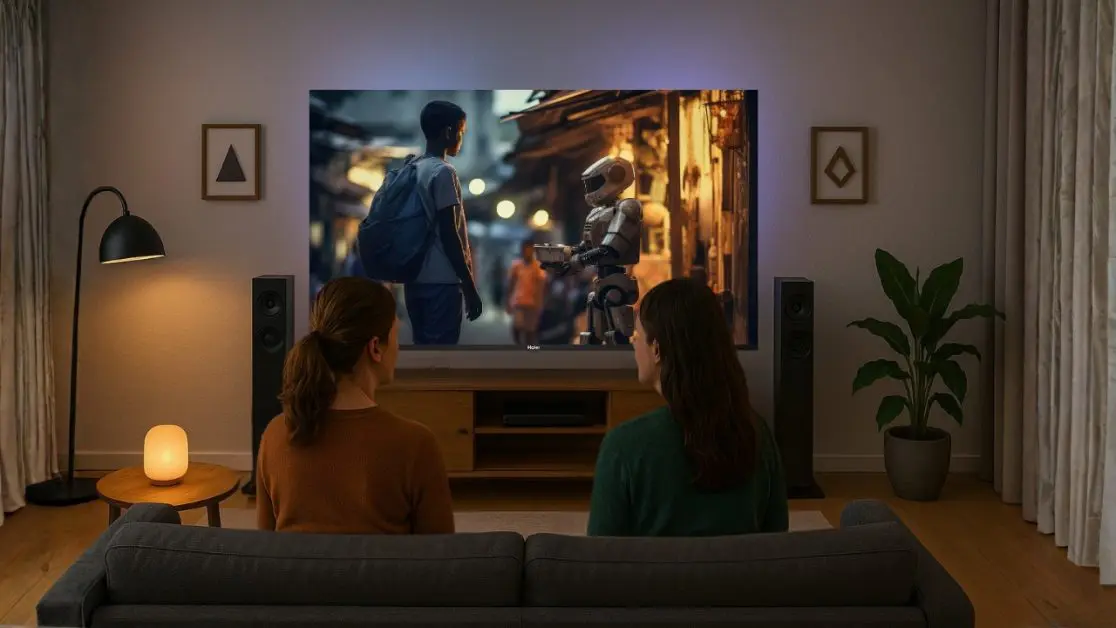
Indian homes are shared spaces.
One TV. Many preferences.
- Parents prefer news
- Kids want cartoons
- Young professionals stream OTT
This creates friction.
Ultrasense AI reduces it.
Not perfectly.
But consistently.
Three questions to ask before choosing an AI TV
1. Does the AI adapt across all content?
Or just within apps?
2. Does it respond to your environment?
Lighting. Sound. Usage patterns.
3. Does it reduce effort?
If it adds steps, it’s not intelligent.
The bigger shift: TVs are becoming systems
We used to buy screens.
Now we choose systems.
Systems that:
- Learn
- Adapt
- Improve
A screen shows content. A system shapes experience.
Final thought
The best technology feels invisible.
It removes friction.
It simplifies decisions.
And when your TV starts doing that, it stops being a device.
It becomes part of how your home functions.
That’s what Ultrasense AI is quietly building.
Frequently Asked Questions
I spend more time scrolling than watching. How does Ultrasense AI help with that?
Ultrasense AI helps reduce scrolling by learning your viewing habits and surfacing content that matches your routine, mood, and timing. Instead of jumping across Netflix, YouTube, Hotstar, and other apps manually, it can bring more relevant options into one personalized experience.
Why do I feel tired just choosing what to watch at night?
Because too many options create decision fatigue. The problem is not lack of content, it is too much content without clear filtering. Ultrasense AI tries to solve this by narrowing choices based on your behavior.
I usually give up and watch the same thing again. Can AI suggest something better?
Yes. Ultrasense AI can recognize patterns such as what you watch at night, on weekends, or during family time, then suggest content that fits those habits instead of only showing generic recommendations.
My family argues over what to watch. Can Ultrasense AI make that easier?
It can help by learning different viewing patterns in the home. For example, it may be understood that kids watch cartoons in the afternoon, parents prefer news, and the family watches movies at night.
Does Ultrasense AI only recommend shows, or does it actually change the whole viewing experience?
It does more than recommend shows. It can personalize content discovery, picture settings, sound output, brightness, contrast, and overall viewing comfort.
I keep increasing the volume to hear dialogue. Can Ultrasense AI help?
Yes. AI-driven sound can make dialogue clearer while balancing background music and effects.
Why does background noise feel too loud in some shows?
Different content mixes audio differently. AI can analyze the sound profile and adjust output so voices, background effects, and music feel more balanced.
Does Ultrasense AI improve surround sound?
In advanced TVs, AI can work with multi-channel audio systems to create a more immersive and layered sound experience.
Can AI make movies feel more cinematic at home?
Yes. When visuals and sound are tuned together, movies can feel more immersive without requiring you to adjust picture mode and audio mode manually.