
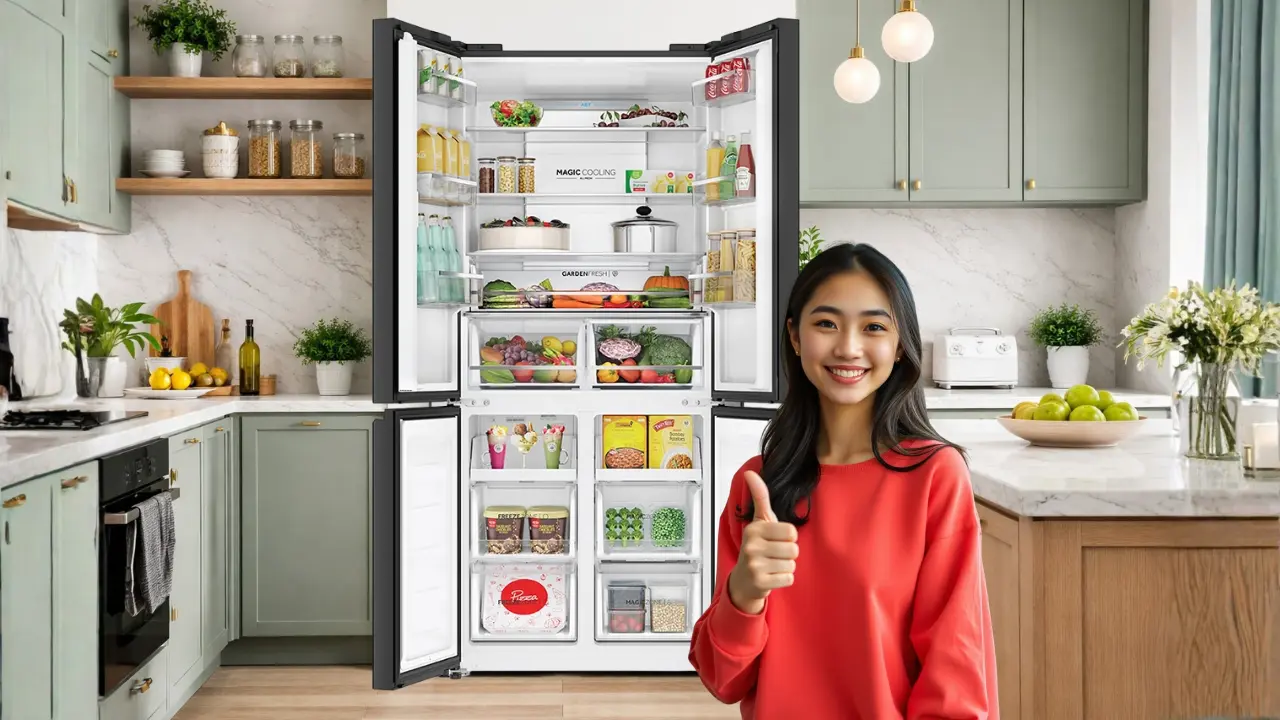

A fridge allowing for unimpeded internal span utilizes the entire depth for keeping items, rather than segmenting the inside with bulky supportive dividers.
This translates to bigger holding surfaces, broader shelving, and simpler reaching of provisions. Practically, it enables contemporary families to stash oversized vessels, entertaining spreads, and bulk food purchases while avoiding the squandering of precious appliance cubic capacity.
A cooling unit appears straightforward.
Unseal the access. Place edibles within. Seal it once more.
But examine closely and you might observe something puzzling.
Plenty of older model coolers surrender capacity stealthily.
Not in an obvious way. Not in a major manner. But structurally speaking.
The internal barriers of the unit.
The dense plastic separators between storage tiers.
The restricted frontage that compels containers to fit snugly from side to side.
This is an inherited design characteristic from past eras.
And newer cooling appliances are beginning to reassess this.
One of the more noteworthy changes is what designers term full internal breadth devoid of any center dividing support.
Initially, this terminology seems complex.
In actual application, it addresses one of the most common household dilemmas in urban residences.
Capacity.
Why Refrigerator Space Always Feels Smaller Than It Should
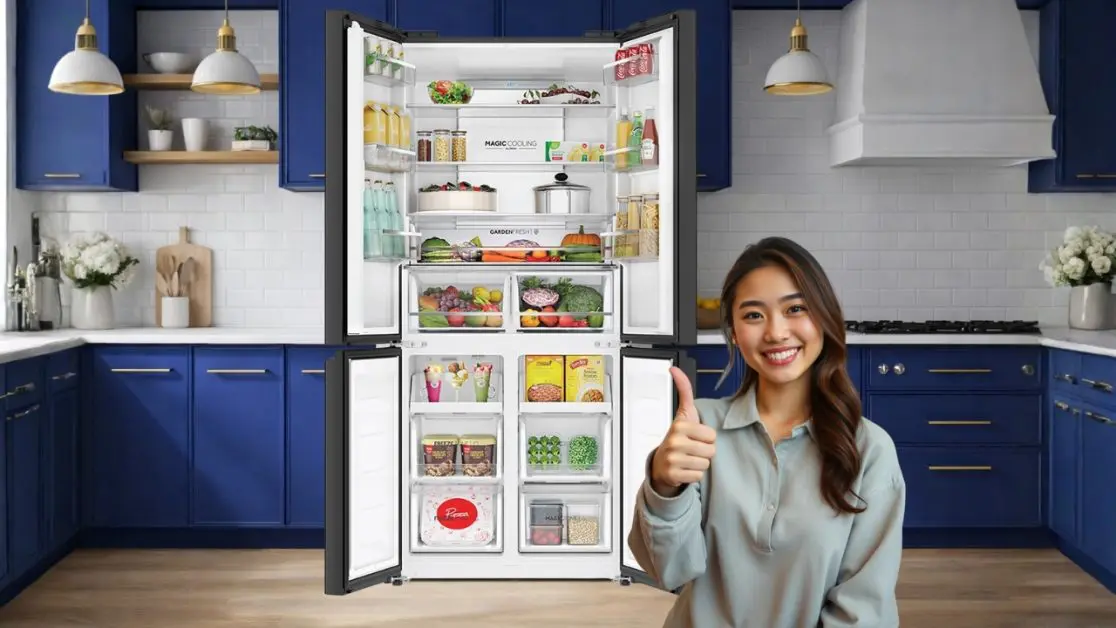
Open the fridge during a Sunday grocery unload.
Milk packets.
Vegetable baskets.
Leftover curry.
A large steel bowl of soaked rajma.
A watermelon waiting to be cut.
Suddenly the fridge feels full.
But here is the hidden truth.
Most refrigerators do not use their full width for storage.
The internal structure eats into the usable space.
Traditional refrigerator design usually includes:
- Thick divider walls between compartments
- Narrow shelf layouts
- Bulky insulation panels that reduce internal width
The result is simple.
A fridge that looks big outside but feels cramped inside.
This is exactly the problem no wall partition refrigerators try to solve.
They redesign the internal architecture so that the entire width of the fridge becomes usable storage space.
And that small change transforms how people store food every day.
What “100% Usable Fridge Width” Actually Means
Think of a bookshelf.
One design places thick wooden boards every few inches.
Another design uses open shelving with minimal structure.
Which one stores more books?
The open design.
Refrigerators follow the same principle.
100% usable fridge width means the internal design removes unnecessary vertical partitions, allowing shelves to span the entire width of the refrigerator.
This creates uninterrupted storage space.
Here is a simple comparison.
| Refrigerator Design | Storage Experience |
| Traditional partition fridge | Narrow shelves, containers must be rotated sideways |
| Partial partition fridge | Slightly wider but still restricted by internal walls |
| No wall partition fridge | Full width shelves, large items fit comfortably |
The difference becomes obvious the moment you try to store a large item.
Pizza boxes.
Festival sweet trays.
Leftover biryani vessels.
They simply fit.
The Real-Life Moment When This Feature Makes Sense

Picture a Friday evening.
Guests are coming over.
The kitchen counter fills with preparation bowls.
Someone stores marinated paneer. Someone chills drinks. Someone slides in a dessert tray.
Suddenly space becomes precious.
This is when the hidden benefit of 100% usable fridge width becomes obvious.
Instead of playing a small puzzle game with containers, everything slides in naturally.
A refrigerator should reduce friction in daily life.
Space design decides whether it does.
Three Everyday Situations Where Full Fridge Width Matters
Not every household notices refrigerator design immediately.
But certain moments reveal it clearly.
1. Weekly Grocery Shopping
Urban Indian households increasingly shop once or twice a week.
This means storing larger quantities of food.
Typical items include:
- Large vegetable baskets
- Family size yogurt containers
- Multiple milk packets
- Fresh fruits in bulk
A full width refrigerator shelf accommodates these items without stacking everything awkwardly.
Stacking reduces airflow.
Airflow affects cooling.
Good fridge design protects both.
2. Festival and Family Gatherings
Indian kitchens are deeply social spaces.
Festivals multiply food preparation.
Think about what enters the fridge during celebrations.
- Boxes of sweets
- Large bowls of kheer
- Prepared gravies for the next day
- Extra beverages
A refrigerator with limited width forces constant rearrangement.
A wider shelf quietly absorbs the chaos.
Design solves cultural realities.
3. Large Cooking Containers
Indian cooking often uses wide steel or glass containers.
Not narrow plastic boxes.
Dal vessels.
Leftover sabzi bowls.
Prepared dough containers.
Traditional narrow fridge compartments struggle with these shapes.
Full width shelves adapt better.
The fridge should match how people cook.
Not the other way around.
Why Engineers Are Rethinking Refrigerator Interiors
For decades, refrigerator innovation focused on cooling power.
Stronger compressors.
Better temperature control.
Lower electricity consumption.
All important.
But modern homes introduced a new challenge.
Storage flexibility.
Households today store a wider variety of food:
- Ready-to-eat meals
- Meal prep containers
- Fresh produce
- Dairy alternatives
- Packaged snacks
- Beverages
The fridge must become a flexible storage system.
That requires design changes.
Removing internal wall partitions is one of the smartest ones.
How Modern Side-by-Side Refrigerators Use This Idea
Side-by-side refrigerators are especially suited for this concept.
Their wider design naturally allows broader shelves.
For example, models like the Haier 596L Regal Steel 2 Door Smart Convertible SBS Refrigerator (HRS-682WRSU1) combine wide interior storage with convertible compartments and smart cooling systems.
Key specifications from the product information include:
| Feature | Benefit for Homes |
| 596 litre capacity | Suitable for larger families |
| Convertible fridge space | Freezer and fridge sections can swap roles |
| Expert Inverter technology | Stable cooling with lower energy use |
| Deo Fresh technology | Keeps food fresh longer |
The refrigerator also supports smart connectivity and advanced cooling management.
But notice something important.
The technology supports the design.
Cooling matters.
Energy efficiency matters.
Yet the daily user experience often depends on something simpler.
How easily food fits inside.
Design Insight: Appliances Should Adapt to Life
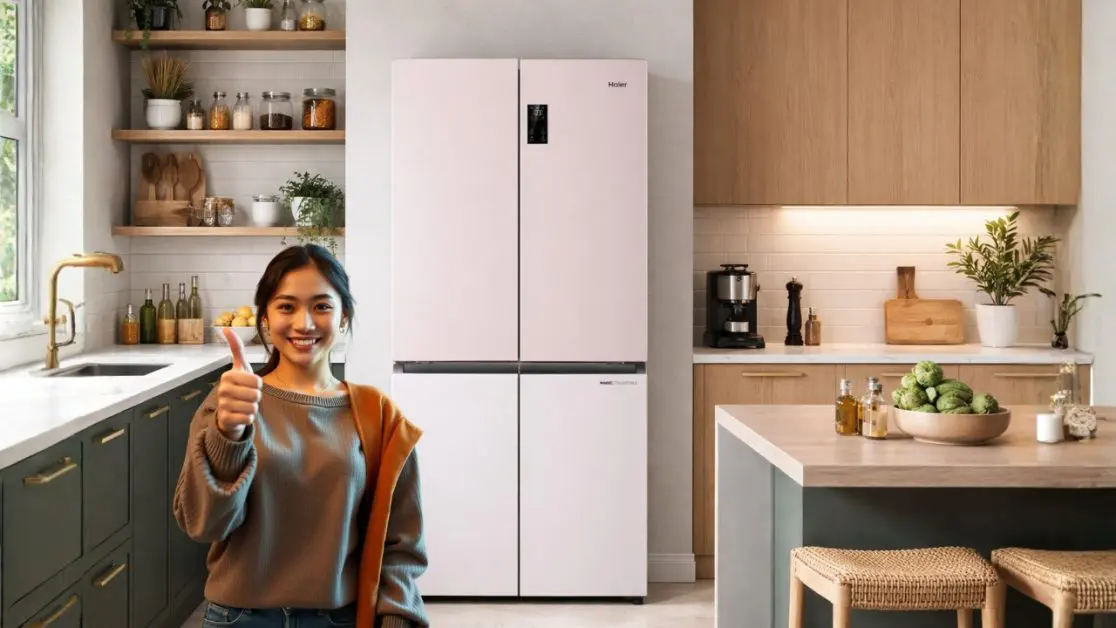
Most appliance innovation follows a pattern.
First comes raw performance.
Then comes usability.
Then comes lifestyle integration.
Refrigerators now live in the third stage.
Homes have changed.
Apartments are compact.
Cooking styles are diverse.
Grocery habits shift toward weekly shopping.
Appliances must adapt to these rhythms.
A wider fridge interior looks like a small design tweak.
But small tweaks reshape daily behaviour.
Less rearranging.
Less stacking.
Less frustration.
Good design disappears into convenience.
The Hidden Systems Inside Refrigerator Design
Look at a refrigerator shelf and it appears simple.
Glass panel. Metal support. Cooling vents.
But behind that simplicity sits a complex balance.
Engineers must consider:
- Cooling airflow
Wider shelves must still allow even cold air distribution. - Structural strength
Shelves must hold heavy cookware and containers. - Energy efficiency
Internal space must not compromise insulation. - User accessibility
Every corner should remain reachable.
Removing internal partitions makes these challenges harder.
Which is exactly why innovation matters.
It requires smarter engineering.
Not just bigger space.
What to Look For When Choosing a Wide Interior Refrigerator
Not every large refrigerator truly offers full usable width.
Some appear wide but still include internal restrictions.
Here are practical things to check.
1. Shelf Width
Measure or check specifications for shelf span.
Full width shelves should accommodate wide trays comfortably.
2. Door Opening Design
Some modern refrigerators allow door racks to remain stable even at 90 degree opening angles.
This improves access to wide shelves.
3. Convertible Storage
A convertible fridge allows freezer sections to turn into refrigerator space when needed.
This adds flexibility during festivals or parties.
4. Cooling Distribution
Look for technologies that maintain even cooling across wide shelves.
Uneven airflow can create warm spots.
5. Lighting
Large interiors require strong internal lighting.
Wide LED panels make it easier to locate food at the back.
Small details create better everyday experiences.
A Refrigerator Is Quiet Infrastructure
Most appliances do their job quietly.
A refrigerator especially.
It hums in the corner of the kitchen.
Day and night.
But the design decisions inside it shape daily routines.
They decide whether leftovers stack easily.
Whether groceries fit without rearranging.
Whether weekend cooking feels effortless.
A refrigerator with 100% usable fridge width does not shout about innovation.
It simply removes friction.
And the best technology often does exactly that.
It disappears into everyday life.
The kitchen feels calmer.
The fridge feels bigger.
And the household runs just a little more smoothly.
Sometimes the most powerful innovation is not louder cooling or brighter displays.
Sometimes it is simply this.
Use the space you already have.
Frequently Asked Questions
Why does my fridge always feel smaller than it actually is?
Most traditional refrigerators lose usable space due to thick internal walls, narrow shelves, and bulky insulation. So even if the external size is large, the internal usable width is limited.
Is a bigger fridge always better, or is design more important?
Design often matters more. A well-designed fridge with full-width shelves can feel more spacious than a larger fridge with partitions.
Should I prioritize capacity (litres) or usable space?
Usable space is more practical. A 500L fridge with partitions may feel tighter than a 450L fridge with 100% usable width.
How do I know if a fridge actually has full usable width?
Check shelf span, absence of vertical dividers, and whether large trays fit without angling.
What is convertible fridge space and why does it matter?
It allows switching freezer space into fridge space useful during parties or festivals.
Do smart fridges actually improve storage experience?
Indirect features like temperature control and connectivity support better organization.
Is wide interior design more important than smart features?
For daily usability, yes. Smart features are secondary to physical space design.