
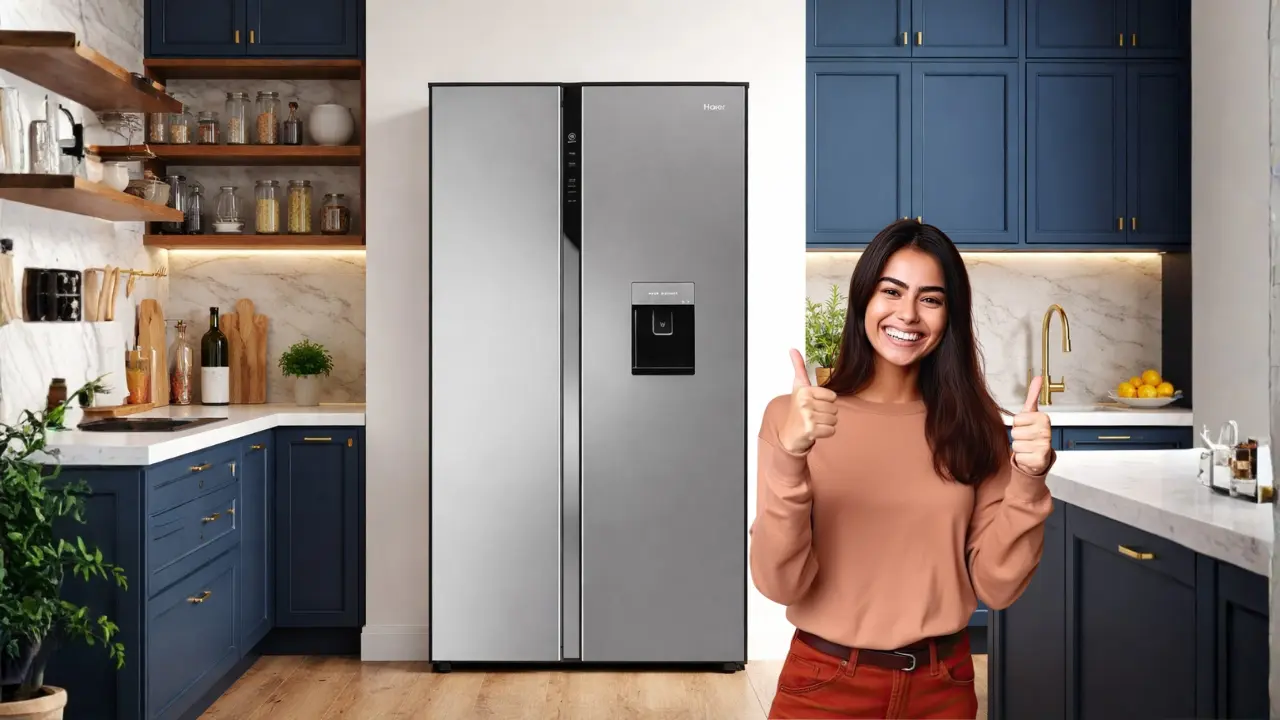

Haier establishes the standard for energy use by engineering devices that smartly control power, cooling, and operation instantaneously.
Via innovations such as inverter compressors, clever sensors, AI-guided enhancements, and effective cooling setups, Haier products decrease electrical consumption while sustaining robust functionality.
The outcome is straightforward: reduced utility costs, more intelligent residences, and appliances that seamlessly fit into today’s Indian lifestyle. Energy conservation frequently seems like a technical specification.
Actually, it’s a routine occurrence. You sense it when the monthly power statement appears. You observe it during an outage.
You depend on it as equipment functions through intense Indian heat waves. Power efficiency isn’t solely about mechanics; it’s about domestic finances.
Furthermore, in various aspects, the companies leading the next generation of home goods will be those that effectively address this challenge discreetly.
The Everyday Moment That Reveals an Energy System
Picture a typical evening in an Indian home.
The ceiling fan spins.
The refrigerator hums quietly in the kitchen.
The washing machine finishes a late load of laundry.
Most people never think about how much electricity flows through these moments.
Yet appliances account for nearly 30–40% of household electricity consumption in urban homes, according to data from the International Energy Agency and India’s Bureau of Energy Efficiency.
That number is growing.
Homes are becoming more connected. Kitchens are more advanced. Living rooms are more immersive.
Energy demand rises with comfort.
So the real question becomes simple.
How do appliances deliver more comfort without consuming more electricity?
This is where companies like Haier have focused their engineering attention.
Energy Efficiency Is a System, Not a Single Feature
Many people assume energy efficiency comes from a single technology.
A better compressor.
A more efficient motor.
A smarter control panel.
The truth is different.
Energy efficiency works like a system inside the appliance.
Several components cooperate:
- Sensors detect temperature, load size, or usage patterns
- Processors interpret that information
- Motors and compressors adjust power levels
- Cooling systems distribute air more efficiently
Each layer contributes small improvements.
Together they produce meaningful energy savings.
This system’s thinking explains how brands set new energy benchmarks.
Three Ways Modern Appliances Reduce Energy Consumption
Energy efficiency usually emerges from three strategic approaches.
Each one addresses a different part of the appliance experience.
1. Intelligent Power Adjustment
Traditional appliances operate like a light switch.
On or off.
Modern appliances behave more like a dimmer.
They adjust power continuously depending on need.
This is where inverter technology plays a major role.
Instead of running compressors or motors at full power every time, inverter systems modulate speed gradually.
Benefits include:
- Lower electricity consumption
- Reduced temperature fluctuations
- Longer appliance lifespan
For example, inverter compressors in refrigerators maintain consistent cooling while avoiding frequent start-stop cycles.
This stability improves both energy use and food preservation.
2. Smarter Cooling and Airflow Design
Cooling systems are another hidden factor.
Older refrigerators cool unevenly. Some sections become colder than others. Compressors work harder to maintain balance.
Modern cooling technologies distribute airflow strategically.
For instance, advanced systems like Magic Cooling combined with Expert Inverter technology improve efficiency and cooling stability inside refrigerators.
This means the appliance does not need to overwork.
Less wasted cooling.
Lower electricity use.
More stable food storage.
Energy efficiency often begins with airflow engineering.
3. Adaptive Storage and Usage Flexibility
Energy efficiency also depends on how appliances respond to real household behavior.
Consider refrigerator usage.
Families do not use their freezer space equally every week.
Festive seasons increase storage.
Summer months increase beverage cooling.
Some weeks the freezer barely opens.
Smart convertible refrigerator designs solve this mismatch.
For example, convertible systems allow freezer sections to convert into refrigerator space when needed, helping optimize cooling distribution.
This flexibility prevents unnecessary cooling loads.
Less wasted energy.
More practical storage.
A Real Example Inside a Modern Refrigerator
Energy benchmarks become clearer when we examine an actual appliance.
Take the Haier 596L Regal Steel 2 Door Smart Convertible SBS Refrigerator (HRS-682WRSU1).
On the surface it looks like a premium side-by-side refrigerator.
Inside, however, it contains several energy-focused design elements.
| Feature | How It Supports Energy Efficiency |
| Expert Inverter Technology | Adjusts compressor speed to reduce power consumption |
| Convertible Storage | Optimizes cooling load based on usage |
| Stabilizer Free Operation | Protects appliance during voltage fluctuations |
| Multi-fan cooling system | Distributes cold air evenly |
| Digital control panel | Allows precise temperature control |
Even small design choices contribute.
For instance, stabilizer-free operation protects the refrigerator from voltage fluctuations common in many Indian regions, reducing energy stress on the compressor.
Energy efficiency is rarely one dramatic innovation.
It is the accumulation of dozens of thoughtful design decisions.
Why Indian Homes Need Smarter Energy Appliances
Energy efficiency matters everywhere.
But in India, it matters even more.
Several factors amplify the impact:
Climate Intensity
Indian summers push appliances to their limits.
Cities like Delhi, Nagpur, and Ahmedabad frequently cross 40°C temperatures during peak summer months.
Refrigerators and air conditioners must work harder.
Efficient systems reduce strain during these extreme conditions.
Electricity Cost Sensitivity
Electricity tariffs vary across states but household electricity prices often increase gradually each year.
Even small improvements in appliance efficiency compound over time.
A refrigerator that saves 20 percent electricity annually can produce meaningful household savings.
Growing Appliance Density
Modern homes contain more appliances than ever.
A typical urban household now runs:
- Refrigerator
- Washing machine
- Television
- Water heater
- Air conditioner
- Kitchen appliances
Energy efficiency becomes cumulative.
Each efficient appliance contributes to the whole system.
Energy Benchmarks Are Also About Trust
There is another layer to the conversation.
Consumers no longer evaluate appliances only by capacity or appearance.
They evaluate long-term value.
Questions buyers increasingly ask include:
- How much electricity will this appliance consume yearly?
- Will it survive voltage fluctuations?
- Does it maintain stable performance in summer?
Energy efficiency answers all three.
In this sense, energy benchmarks create trust.
When appliances run efficiently for years, they become invisible partners in daily life.
You stop thinking about them.
And that is the ultimate goal of good design.
What Buyers Can Look For When Choosing Energy Efficient Appliances
Consumers who want energy-efficient homes often evaluate several signals before purchasing.
A few practical indicators help.
Look for inverter-based systems
Inverter compressors or motors typically consume less electricity over time.
They also reduce noise and mechanical wear.
Check cooling or wash optimization technologies
Technologies that adapt performance based on usage patterns improve efficiency.
Examples include AI-driven washing cycles or smart cooling systems.
Consider flexible storage and usage features
Convertible refrigerator spaces or load sensing washing machines reduce unnecessary energy use.
Evaluate voltage stability protection
Stabilizer-free operation protects appliances from fluctuating power supply conditions.
This improves both safety and efficiency.
Energy Efficiency Is Becoming a Design Philosophy
Energy benchmarks used to belong to engineers.
Today they influence design philosophy.
Appliance makers are rethinking how products interact with real homes.
That shift produces several trends:
- Smart sensors that adapt appliances to household routines
- AI driven washing and cooling optimization
- Reduced standby power consumption
- Integrated smart connectivity
The goal is not simply to build efficient machines.
The goal is to create appliances that understand their environment.
The Bigger Pattern Behind Energy Benchmarks
There is a pattern hiding behind this entire conversation.
Energy efficiency improves when technology becomes more aware of context.
The appliance observes:
- Temperature
- Load
- Time of day
- Usage frequency
Then it adjusts.
In other words, the appliance begins to behave less like a machine and more like a responsive system.
That shift defines the future of home appliances.
The Insight Most Homes Discover Too Late
Many people choose appliances based on price alone.
Then they live with them for ten years.
Energy consumption accumulates silently during that decade.
A simple insight emerges.
The cheapest appliance today is rarely the most economical appliance tomorrow.
Energy efficiency rewrites that equation.
It shifts value from purchase cost to lifetime performance.
The Quiet Future of Smarter Homes
Walk into a modern home ten years from now.
The appliances will look familiar.
A refrigerator.
A washing machine.
A television.
But inside, something will be different.
Every appliance will continuously optimize energy use.
Sensors will measure load.
AI systems will adjust performance.
Cooling and heating systems will operate precisely when needed.
Homes will consume less electricity without sacrificing comfort.
This is the quiet revolution behind energy benchmarks.
Not louder machines.
Smarter ones.
And the brands shaping that future are the ones designing appliances that learn how homes actually live.
Frequently Asked Questions
I’m confused between a cheaper fridge and an energy-efficient one. What should I prioritize?
Focus on lifetime cost, not just upfront price. Energy-efficient appliances (like inverter-based models) save electricity every day, which compounds over years. The cheaper model may cost more in the long run due to higher power bills.
I see “inverter technology” everywhere. Does it actually make a difference for me?
Yes. Inverter systems adjust power dynamically instead of switching on/off repeatedly. This reduces electricity use, keeps temperatures stable, and increases appliance lifespan.
If my washing machine uses less power, does it clean less effectively?
Not necessarily. Modern machines use AI-driven wash cycles and load detection to optimize water, time, and energy without compromising cleaning.
I want fast cooling in my fridge. Does that increase electricity usage?
Older systems: yes.
New systems: not really. Technologies like multi-fan airflow and smart cooling distribute cold air efficiently, avoiding energy waste.
What does a “convertible refrigerator” really do for me?
It lets you switch freezer space into fridge space based on your needs. This prevents cooling unused areas, saving electricity.
I don’t use all the features every week. Am I wasting energy?
In older appliances, yes.
In modern systems, no adaptive features reduce energy use when demand is low.