
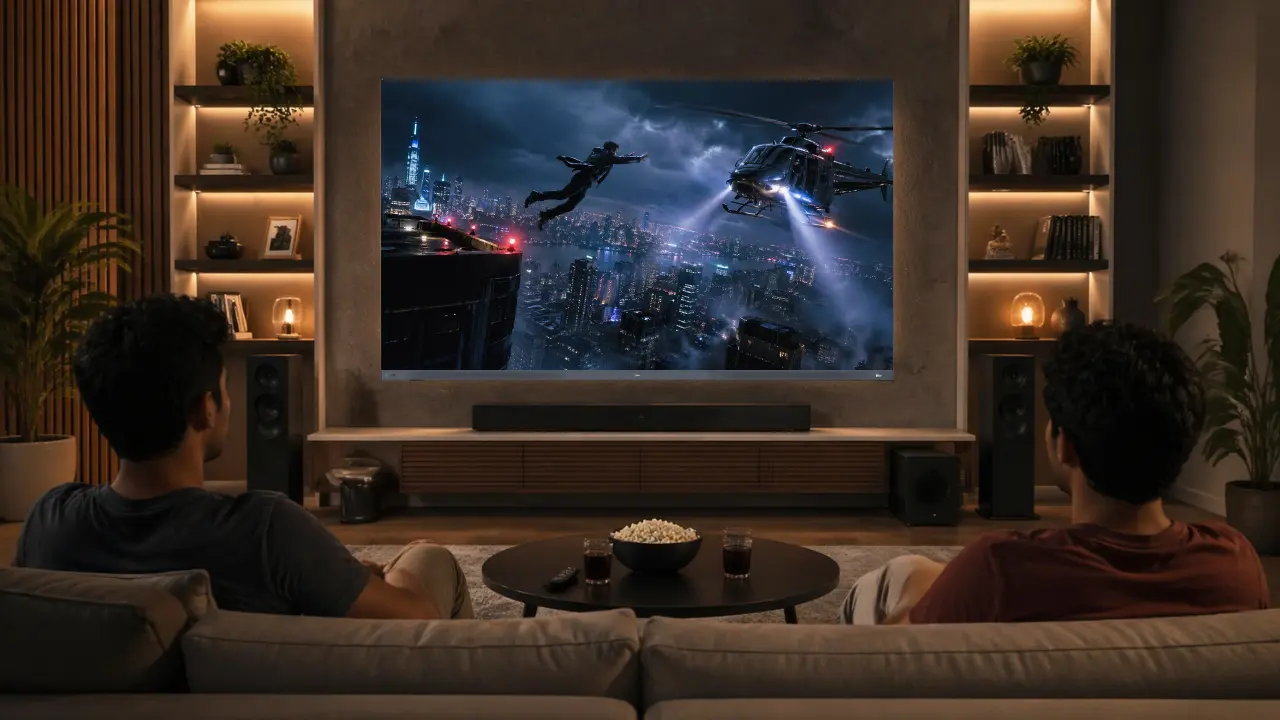

What does the customer experience with Haier big screen TVs actually feel like?
It feels less like watching TV and more like living inside your content.
With models like the Haier S90 QLED 254cm (100) Google TV with AI Center MAX (H100S90FUX) and the Haier M80F Mini LED 215cm (85) Google TV with Sound by KEF (H85M80FUX), everyday viewing turns into a personalised, immersive, and quietly intelligent experience.
The living room has changed. The screen is now the centre of gravity.
Walk into a modern Indian home at 9:15 pm.
Dinner plates are pushed aside. Someone is scrolling Netflix. Someone else is waiting for highlights. A child is watching YouTube on mute.
And then, the TV turns on.
Everything aligns.
That shift is not about content. It is about scale.
A 189cm(75) or 254cm(100) screen does something subtle. It changes how a room behaves. Conversations pause. Attention gathers. The space feels intentional.
That is exactly where models like the Haier S90 QLED 254cm (100) Google TV (H100S90FUX) step in.
Big screen TVs are no longer devices. They are anchors for shared moments.
Why does a bigger screen feel so different?
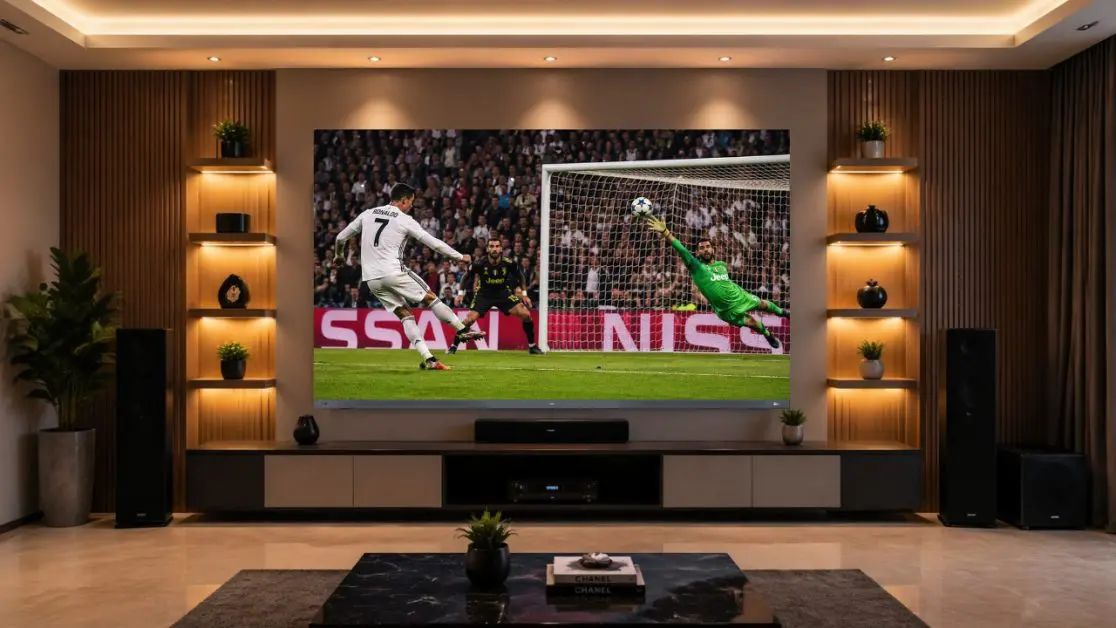
Because size is not just visual. It is psychological.
Here is what changes when screens grow:
- Faces feel closer
- Sound feels directional
- Movement feels real
- Distractions fade
Take the Haier S90 QLED 254cm (100) Google TV with AI Center MAX (H100S90FUX).
It combines AI picture processing with a 144Hz refresh rate, making motion smoother and sharper for sports and gaming.
The result is simple.
You stop watching. You start experiencing it.
The hidden system: Experience is built on layers, not features
Most people think TV experience comes from resolution.
It does not.
It comes from alignment of multiple systems working together.
One layer is picture intelligence
Modern Haier TVs like the Haier M92 Series 189cm (75) QD-Mini LED Smart AI Google TV (H75M92FUX) use AI processors that detect scenes and adjust contrast, brightness, and colour in real time.
This means:
- A cricket match looks sharp in daylight
- A dark movie scene stays detailed at night
- Colours feel natural, not forced
The second layer is sound immersion
Sound changes perception more than visuals.
With Sound by KEF-tuned audio systems in models like the Haier M80F Mini LED 215cm (85) Google TV (H85M80FUX), sound is no longer flat. It surrounds you.
- Dialogues feel closer
- Background music feels layered
- Action sequences feel spatial
A simple insight:
Better sound makes average content feel premium.
The third layer is motion clarity
Blur breaks immersion.
Features like MEMC and high refresh rates in TVs like the Haier M96 Series 254cm (100) QD-Mini LED AI Smart Google TV (H100M96FUX) reduce motion blur, especially during sports and gaming.
This is why:
- Fast bowling looks crisp
- Racing games feel responsive
- Action scenes stay fluid
What does this mean in real Indian homes?
Let’s move from specs to moments.
Because experience lives in moments.
1. Cricket nights become shared rituals
On a Haier M96 Series 254cm (100) QD-Mini LED TV (H100M96FUX):
- Wide viewing angles keep everyone comfortable
- High brightness ensures clarity even with lights on
- Dolby Atmos builds stadium-like sound
This is not passive viewing.
It becomes collective participation.
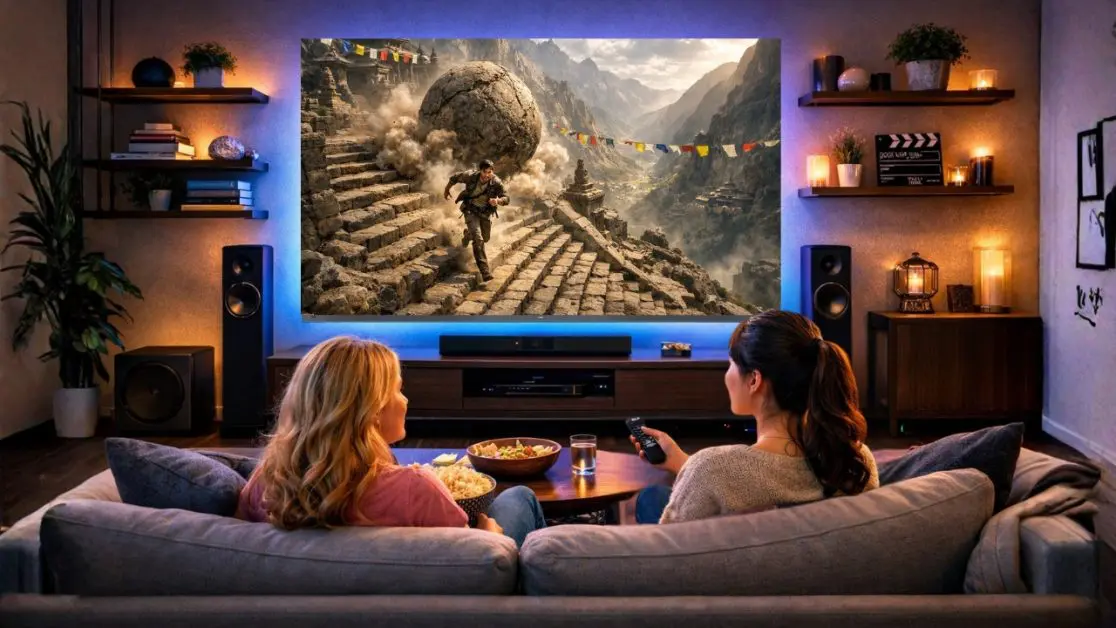
2. OTT becomes personal cinema
Google TV integration across models like the Haier S90 QLED (H100S90FUX) curates content based on your habits.
Instead of searching endlessly, the system surfaces what matters.
This reduces friction.
And friction is the enemy of relaxation.
3. Gaming shifts from hobby to experience
With features like VRR, ALLM, and AMD FreeSync Premium Pro in the Haier S90 QLED 254cm (100) Google TV (H100S90FUX):
- Lower latency
- Faster frame transitions
- Reduced screen tearing
The difference is subtle at first.
Then impossible to ignore.
The real choice: What kind of experience do you want?
Buying a big screen TV is not a technical decision.
It is a lifestyle decision.
Option 1: The occasional viewer
- Watches TV casually
- Uses it mostly for news or background content
Cost: Lower investment
Benefit: Functional viewing
Trade-off: Limited immersion
Option 2: The balanced user
- Mix of OTT, sports, and casual viewing
Cost: Moderate investment
Benefit: Noticeable comfort upgrade
Trade-off: Not fully cinematic
Option 3: The experience seeker
- Wants a cinematic, high-performance setup
Cost: Higher investment
Benefit: Transformational experience
Trade-off: Needs space and intent
What makes Haier big screen TVs stand out in this journey?
It is not a single feature.
It is integration.
AI Center MAX approach
The Haier S90 QLED (H100S90FUX) and M96 Series (H100M96FUX) integrate visuals, sound, gaming, and performance into one AI-driven system.
This means:
- Picture adapts
- Sound aligns
- Performance optimises
All without manual effort.
Design that respects modern homes
Large TVs often feel intrusive.
But slim-fit designs and near bezel-less screens make models like the Haier S90 QLED 254cm(100) TV (H100S90FUX) blend into interiors.
The result is subtle.
The screen stands out only when it turns on.
Comfort-driven viewing
Features like AI ambient sensing and flicker-free viewing in models like the Haier M92 Series (H75M92FUX) adjust brightness based on room lighting.
This reduces eye strain.
Because comfort is part of experience.
The overlooked factor: Effortless control
Technology fails when it adds effort.
Haier removes friction.
- Hands-free voice control
- Google TV ecosystem
- Smart casting and home integration
The insight is simple:
The best interface is the one you forget exists.
A quick breakdown of what shapes the experience
| Experience Layer | What It Does | Why It Matters |
| QLED / Mini LED Display | Enhances brightness and contrast | More lifelike visuals |
| AI Ultra Sense Processor | Real-time picture optimisation | Better clarity automatically |
| Sound by KEF + Dolby Atmos | Spatial, immersive audio | Theatre-like experience |
| 144Hz Refresh Rate | Smooth motion | Ideal for sports and gaming |
| Google TV | Personalised content | Saves time |
The deeper pattern: Homes are becoming experience ecosystems
Look closely.
Your AC adjusts temperature.
Your fridge manages freshness.
Your TV curates entertainment.
This is not random.
It is a shift toward intelligent living systems.
Haier big screen TVs sit at the centre of this shift.
So what actually changes after you bring one home?
Not everything.
But the important things do.
- Evenings feel more intentional
- Weekends feel more immersive
- Family time feels more connected
And the biggest shift?
You stop asking, “What should we watch?”
You start asking, “What do we feel like experiencing today?”
The final insight: Screens don’t create experiences. Systems do.
A bigger screen alone does not change anything.
But when picture, sound, AI, and usability align, something clicks.
The room changes. The moment deepens. The experience stays.
That is what the Haier S90 QLED 254cm (100) Google TV (H100S90FUX), Haier M96 Series 254cm (100) QD-Mini LED AI Smart Google TV (H100M96FUX), and Haier M80F Mini LED 215cm (85) Google TV (H85M80FUX) are really delivering.
Not just technology.
Transformation.
Frequently Asked Questions
I’m confused. Do I really need a 75” or 100” TV, or is that overkill for my living room?
If your room allows a comfortable viewing distance (roughly 8–12 feet for 75”+), it won’t feel like overkill, it will feel natural within days. Bigger screens reduce distractions and pull you into content, especially for movies, sports, and gaming.
I mostly watch casually. Will I even notice the difference with something like the Haier S90 QLED 100 Google TV H100S90FUX?
Yes, but in subtle ways. Even casual viewing feels more intentional faces look closer, sound feels fuller, and you’ll likely spend less time switching content because the experience itself is more engaging.
Will a big screen actually bring my family together, or is that just marketing?
It can because it changes behavior. Bigger screens naturally gather attention. Instead of fragmented viewing (phones, laptops), people tend to sync into one shared experience.
My living room has lights on during matches. Will the picture still look good?
Yes, especially with QLED or Mini LED panels. High brightness ensures clarity even in well-lit rooms, so you don’t need to dim lights to enjoy content.
Does AI picture adjustment actually work, or is it just a gimmick?
It works quietly in the background. You’ll notice:
Better brightness during daytime
Clearer dark scenes at night
Natural colors without manual tweaking
I don’t want to keep using a remote. Can I control it easily?
Yes. Hands-free voice control and casting make interaction almost invisible. The goal is to remove effort, not add it.
Will it integrate with my other smart devices at home?
Yes, through the Google ecosystem. It can connect with other smart devices, making your TV part of a larger home system.