
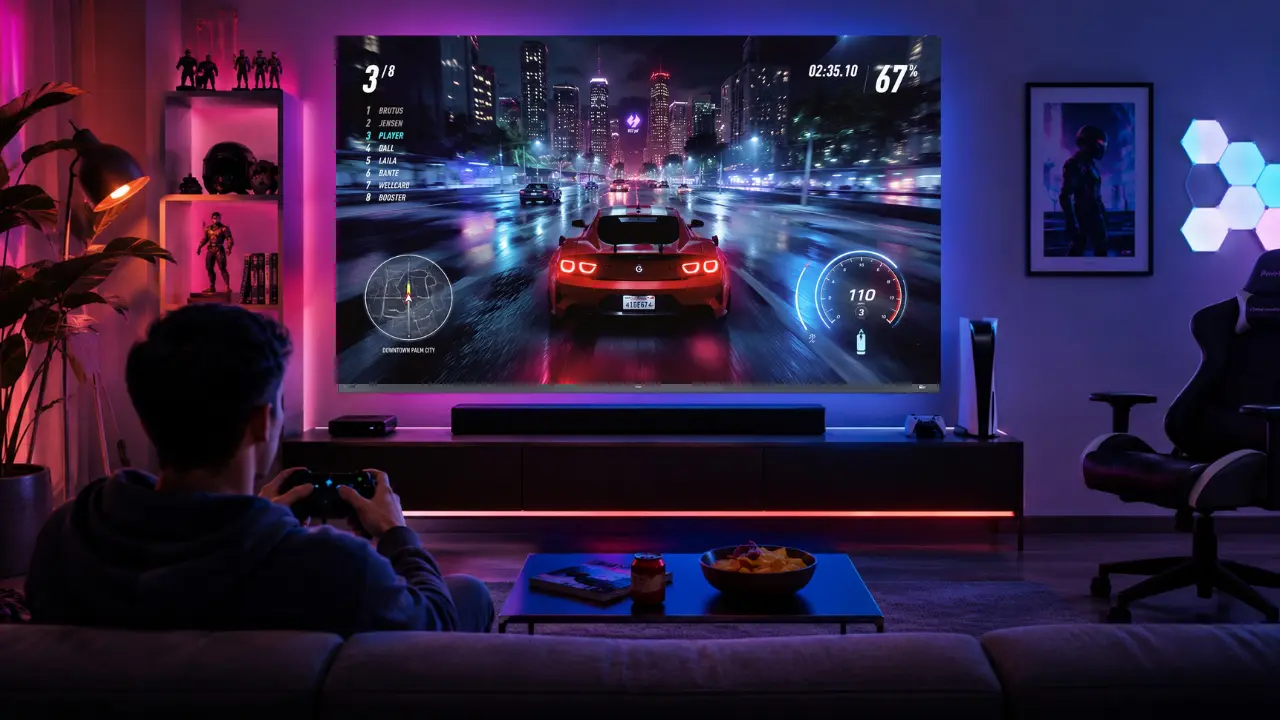

Gaming setups have changed. Quite dramatically, actually.
A few years ago, the dream setup for most gamers revolved around a desk, a gaming chair, RGB lighting, and a monitor sitting a few inches away from their face. That was the gold standard.
Today? Not always.
More gamers are moving away from traditional monitors and embracing large-screen televisions. Not because monitors suddenly became bad. They didn’t. But because modern gaming TVs have evolved far beyond their old role of simply displaying content.
The gap has narrowed.
And in other cases, the keyboard/mouse completely fell by the wayside.
Games on big screens make sense for a growing number of gamers these days, particularly console gamers and home theater enthusiasts.
The Changing Tide is More Than Just Size
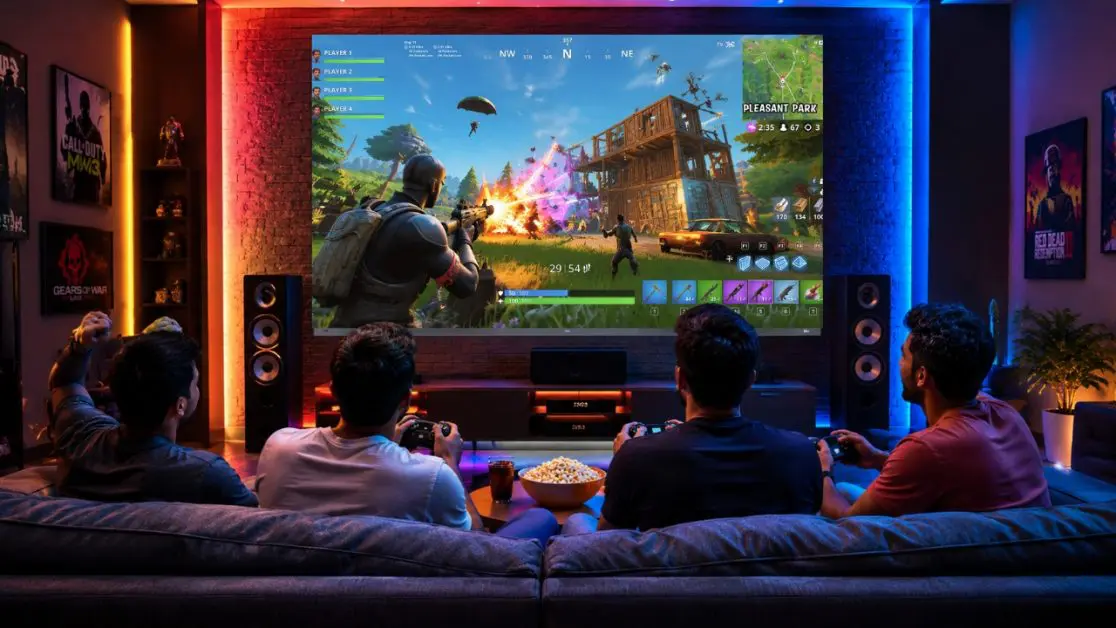
First things first. No one is upgrading to a larger television set just because “big is beautiful.”
That would be too simplistic.
The real reason lies in how gaming itself has evolved.
Modern games are cinematic. Massive open worlds. Rich visual storytelling. Detailed environments. Realistic lighting. Spatial audio. Competitive multiplayer experiences.
Games are no longer confined to a small corner of a desk.
They are experiences.
And experiences often feel better when they occupy your field of vision.
Think about exploring a sprawling city in an open-world title. Or driving through mountain roads in a racing simulator. Or watching a football stadium erupt during a sports game.
A larger display changes the scale of everything.
You stop looking at the game.
You start feeling inside it.
Why Competitive Gamers Are Paying Attention
There is a common misconception that only casual gamers buy large TVs.
Not anymore.
Modern gaming-focused TVs now offer features that were once exclusive to premium gaming monitors.
Features like:
- High refresh rates
- Variable Refresh Rate (VRR)
- Auto Low Latency Mode (ALLM)
- HDMI 2.1 connectivity
- AMD FreeSync Premium Pro
- Advanced motion optimisation
- Dedicated gaming modes
These technologies reduce latency, minimise screen tearing, improve responsiveness, and create smoother gameplay experiences.
The result?
Big-screen gaming no longer means sacrificing performance.
In fact, many gamers are discovering they can enjoy competitive gameplay while benefiting from a significantly larger viewing area.
Seeing More Matters
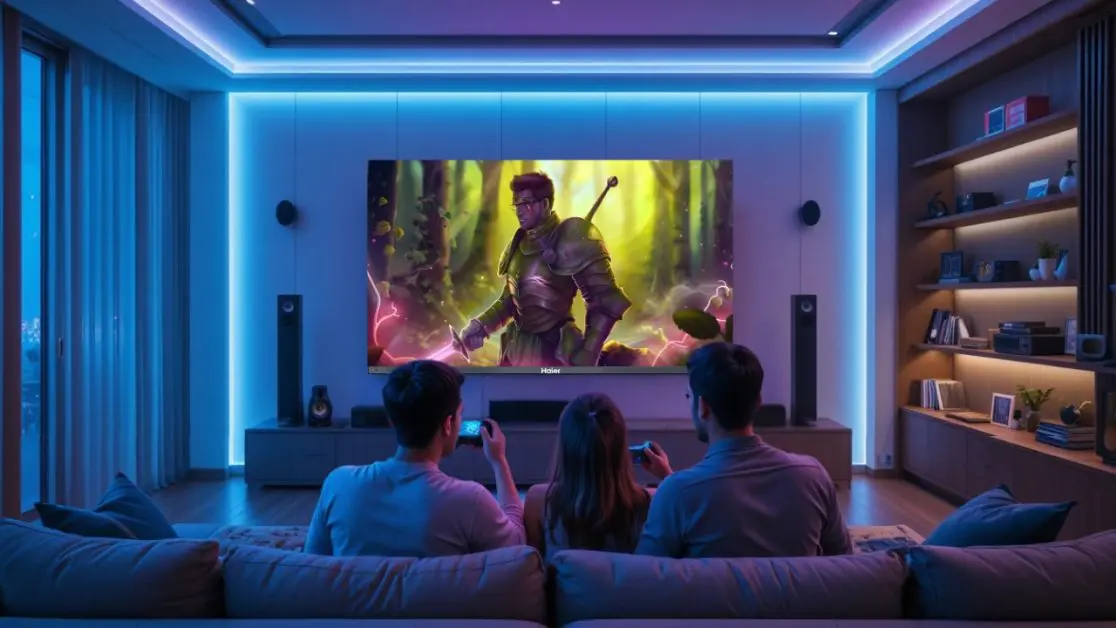
Here’s something people rarely talk about.
A larger screen can actually improve visual awareness.
When playing racing games, sports simulations, battle royales, or action-adventure titles, larger displays make environmental details easier to notice.
Small movement in the distance.
An incoming opponent.
A corner of the map.
A subtle visual cue.
On a large screen, these details feel more noticeable and easier to track.
Not because the game changed.
Because your viewing experience changed.
Gaming Is No Longer a Solo Activity
This is probably one of the biggest reasons behind the trend.
Gaming has become social.
Friends gather for multiplayer tournaments.
Families play together.
Weekend gaming sessions often look more like entertainment events than isolated gaming marathons.
A monitor works brilliantly for one person.
A large TV works brilliantly for everyone.
Whether it’s split-screen racing, FIFA competitions, cricket games, fighting games, or couch co-op adventures, a bigger screen naturally creates a more inclusive experience.
Nobody wants to squint from the side of a room.
The Rise of Console Gaming in India
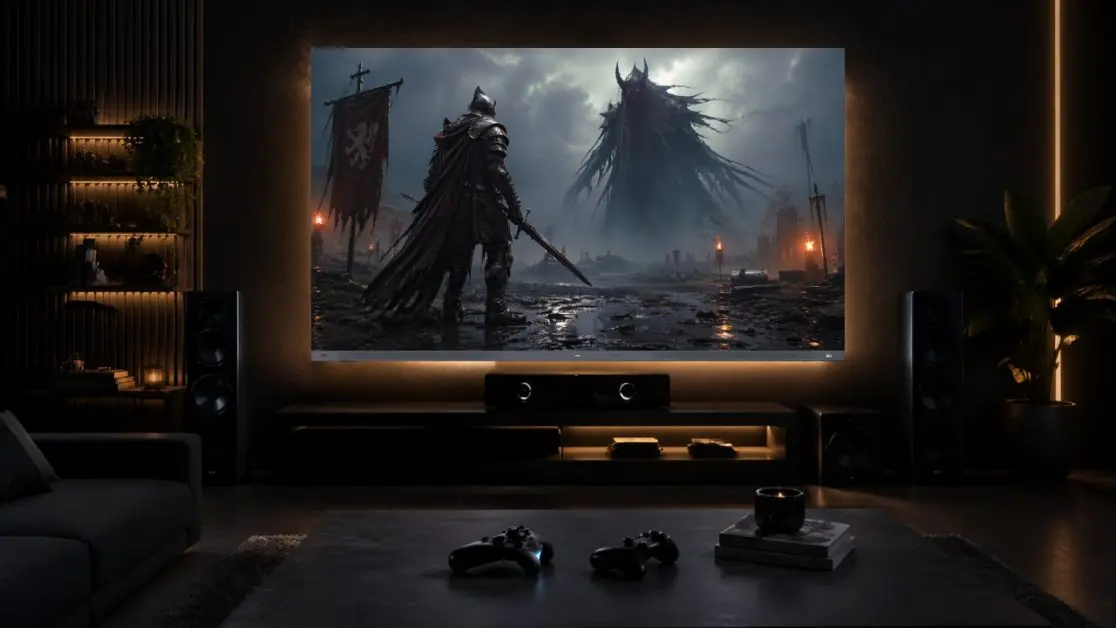
Console adoption has steadily increased across Indian households.
And consoles are built differently.
They are designed around televisions.
PlayStation and Xbox systems are engineered to deliver immersive experiences on large displays, where 4K visuals, HDR performance, and high refresh rates can truly shine.
This is where premium televisions are becoming the centrepiece of modern gaming rooms.
Not an accessory.
The centrepiece.
What Modern Gamers Need from a TV
A gaming TV today needs much more than a large panel.
It must deliver:
Smooth Motion Handling
Fast-paced games demand fluid movement.
Whether you’re playing a racing simulator or a first-person shooter, motion blur can ruin the experience.
High refresh rates help maintain visual clarity during intense gameplay.
Low Input Lag
Every millisecond matters.
A gaming display should respond instantly to controller inputs without noticeable delay.
Rich Contrast and Colour Accuracy
Modern games are visual masterpieces.
Deep blacks, brighter highlights, and vibrant colours help creators’ artistic vision come alive.
Immersive Sound
Audio is often overlooked.
Until footsteps behind you decide the outcome of a match.
Strong audio performance adds another layer of immersion and awareness.
Why Haier’s QD Mini LED TVs Are Built for Modern Gaming
This is exactly where Haier’s latest QD Mini LED lineup enters the conversation.
The new Haier M92 and M96 Series have been developed for users who expect more than traditional television viewing.
They are designed to support gaming, streaming, sports, entertainment, and smart home experiences from a single screen.
Haier New M92 Series QD Mini LED AI Smart Google TV
Available in:
- Haier New M92 Series 164cm (65) QD Mini LED AI Smart Google TV (H65M92FUX)
- Haier New M92 Series 189cm (75) QD Mini LED Smart AI Google TV (H75M92FUX)
These models bring together several features gamers actively look for:
Gaming-Focused Features
- Native 144Hz refresh rate
- VRR support
- ALLM
- AMD FreeSync Premium Pro
- Dedicated Game Mode
- HDMI 2.1 connectivity
- MEMC motion enhancement
The combination helps create smoother gameplay with reduced tearing, lower latency, and enhanced responsiveness.
AI Ultra Sense Processor
Gaming visuals are only as good as the processing behind them.
The AI Ultra Sense Processor intelligently analyses scenes and optimises:
- Motion
- Colour
- Contrast
- Depth
- Sharpness
This helps games appear more detailed and visually balanced across different environments.
Sound by KEF
Many gaming setups invest heavily in separate audio systems.
Haier integrates Sound by KEF technology along with Dolby Atmos support to create richer and more immersive audio experiences directly from the TV.
When Bigger Becomes Truly Massive
Then there is the flagship.
Haier New M96 Series 254cm (100) QD-Mini LED AI Smart Google TV (H100M96FUX)
This isn’t simply a television.
It’s closer to a gaming arena inside your living room.
The M96 Series combines:
- Massive 254cm (100) screen
- QD Mini LED technology
- AI Ultra Sense Processor
- 144Hz refresh rate
- AMD FreeSync Premium Pro
- Dolby Vision IQ
- HDR10+
- Sound by KEF
- 6.2.2 Channel speaker system
- Dolby Atmos support
The result is an experience built around scale, immersion, and responsiveness.
For gamers who want their setup to feel larger than life, the M96 Series creates a completely different level of engagement.
A football stadium feels enormous.
A racing circuit feels expansive.
An action game feels cinematic.
You don’t merely watch the game.
You enter it.
Quick Comparison for Gamers
| Gaming Requirement | Traditional Monitor | Haier M92/M96 QD Mini LED TVs |
| Large Viewing Area | Limited | Excellent |
| Family Gaming Sessions | Restricted | Ideal |
| HDR Experience | Varies | Advanced HDR Support |
| Dolby Atmos Audio | Usually External | Built-In Support |
| VRR & ALLM | Available | Available |
| AMD FreeSync Premium Pro | Selected Models | Available |
| Smart Entertainment Hub | Limited | Full Google TV Ecosystem |
| Multi-Purpose Usage | Gaming Focused | Gaming + Movies + Sports + Streaming |
The Future of Gaming Looks Bigger
Gaming habits continue to evolve.
People are building entertainment spaces instead of gaming corners.
Consoles are becoming more powerful.
Games are becoming more cinematic.
And display technology is advancing rapidly.
That’s why the question is no longer:
“Can a TV replace a monitor?”
For many gamers, the question has become:
“Why am I still limiting myself to a monitor?”
For those looking to combine immersive visuals, responsive gaming performance, premium audio, AI-powered optimisation, and large-screen entertainment, Haier’s New M92 Series and flagship New M96 Series QD Mini LED Google TVs present a compelling answer.
The experience is bigger.
And increasingly, that’s exactly what modern gamers want.
Frequently Asked Questions
What is VRR and why does it matter?
Variable Refresh Rate synchronizes the TV’s refresh rate with the game’s frame rate, reducing screen tearing and stuttering for smoother gameplay.
What does ALLM do?
Auto Low Latency Mode automatically switches your TV into Game Mode when a console is detected, reducing input lag without requiring manual adjustments.
Does HDMI 2.1 make a difference?
Yes. HDMI 2.1 enables higher bandwidth, supporting 4K gaming at high refresh rates, VRR, and other advanced gaming features available on modern consoles and PCs.
Is a 144Hz TV better than a 120Hz TV?
For console gaming, the difference is generally minimal since most current consoles are limited to 120Hz. PC gamers with powerful hardware may benefit more from a native 144Hz display.
Should PC gamers switch to a TV?
It depends on usage. If you enjoy controller-based gaming, racing simulators, adventure games, or couch gaming, a gaming TV can be an excellent choice. For esports titles played with keyboard and mouse at a desk, many players still prefer monitors.
Can I use a gaming TV as a PC monitor?
Yes. Modern TVs with HDMI 2.1, Game Mode, and low input lag can work well as PC displays, although text clarity and desk viewing distance should also be considered.