
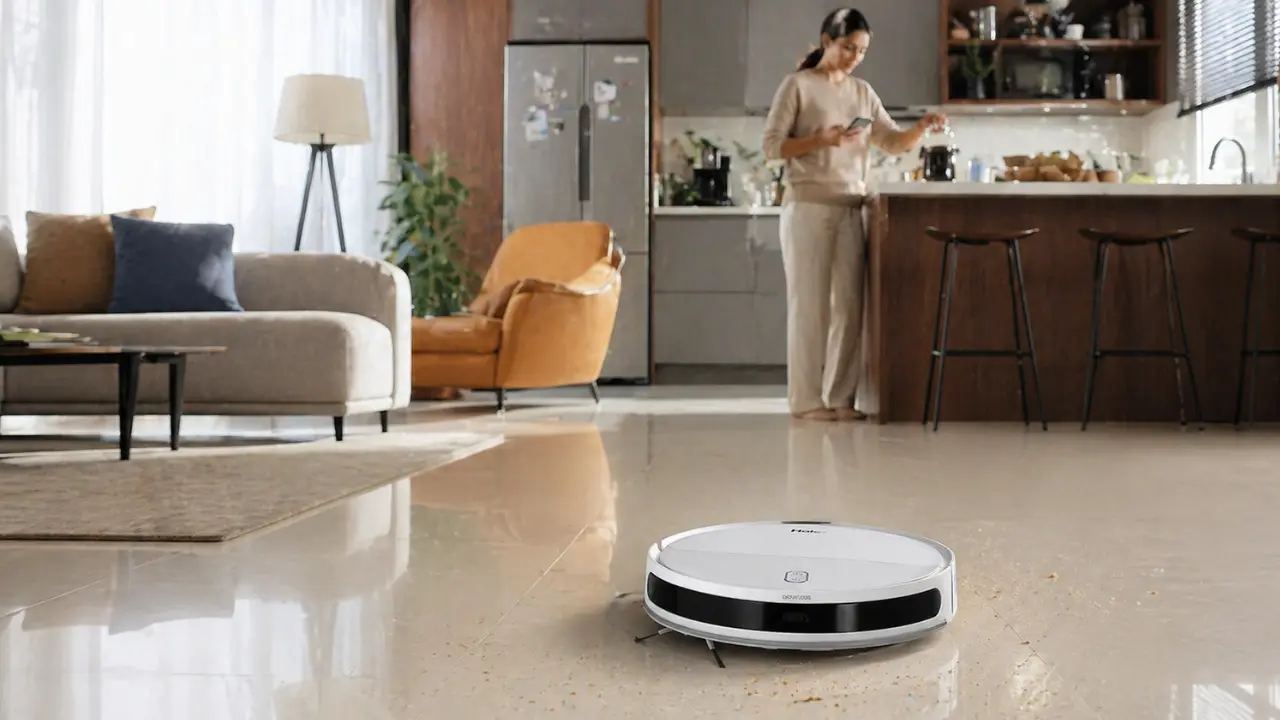

Robot vacuum cleaners save time and effort by automating daily floor cleaning, reducing manual work by up to 70%, and maintaining consistent hygiene through scheduled, intelligent cleaning cycles.
They turn cleaning from a task you manage into a system that runs quietly in the background.
Why does cleaning always show up at the worst time?
It is 9:15 pm.
Dinner is done. The sink is full. WhatsApp is buzzing. And the floor?
Crumbs. Dust. Footprints from a long day.
You notice it. You ignore it. You promise to clean tomorrow.
This is not laziness.
This is decision fatigue.
Cleaning is not hard.
Starting is.
And that is where robot vacuum cleaners change the equation.
The real problem is not dirt. It is repetition.
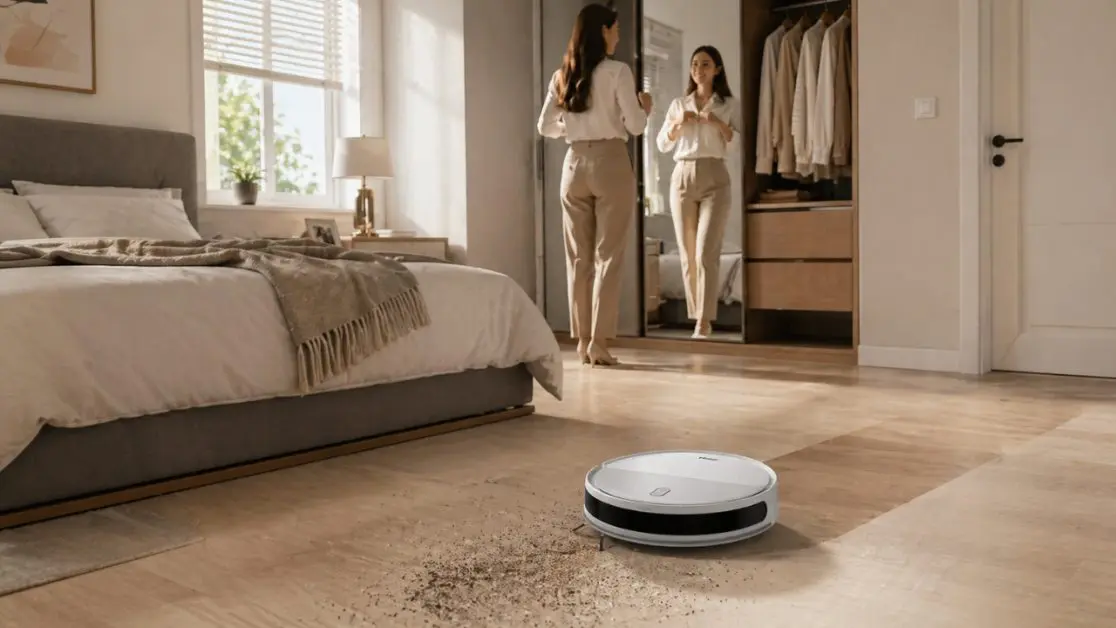
Most homes do not get dirty in one big moment.
They get dirty slowly. Predictably. Every day.
- Dust settles constantly
- Hair accumulates silently
- Foot traffic creates invisible patterns
- Kitchens spill more than they show
A study by the American Cleaning Institute suggests that households spend 6 hours per week on cleaning tasks. In Indian homes, especially with open layouts and urban dust, that number feels familiar.
The insight is simple:
Cleaning is not a one-time job. It is a recurring system.
And systems work best when automated.
What exactly does a robot vacuum cleaner do differently?
It shifts cleaning from effort to execution
Traditional cleaning depends on human energy.
Robot vacuum cleaning depends on predefined intelligence.
Here is how that plays out in real life:
| Task | Traditional Cleaning | Robot Vacuum Cleaning |
| Daily sweeping | Manual effort | Scheduled automation |
| Dust control | Reactive | Preventive |
| Time required | 20 to 40 minutes | Near zero active time |
| Consistency | Depends on routine | System-driven |
| Coverage | Often uneven | Mapped and structured |
The difference is not speed. It is consistent.
A robot vacuum does not skip days. It does not feel tired. It does not postpone.
How robot vacuum cleaners save time in real homes
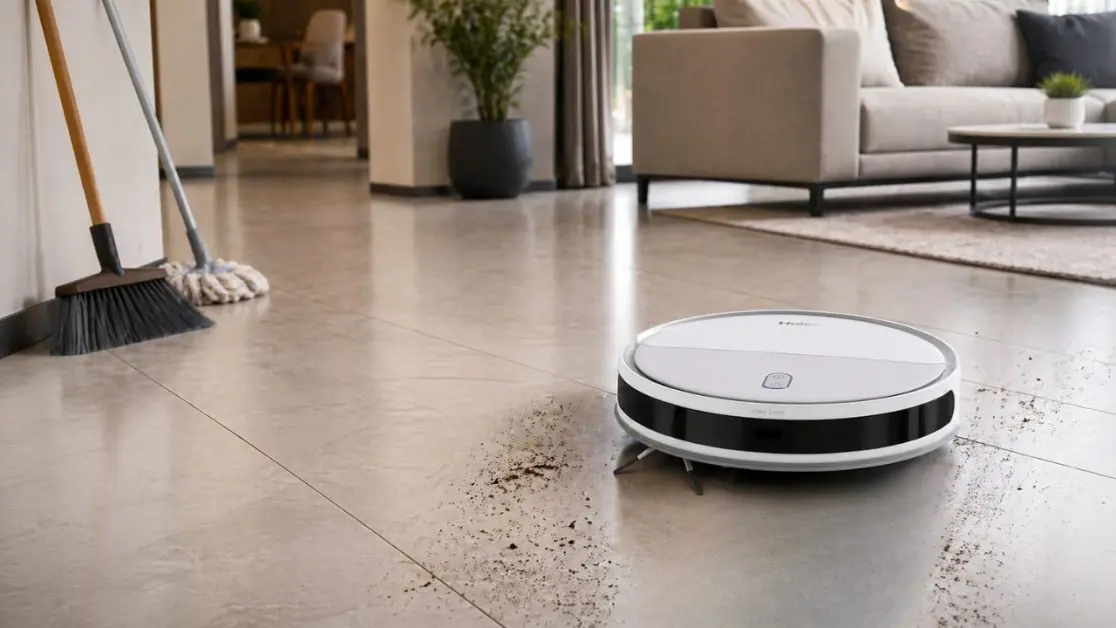
1. They clean while you do something else
The most obvious shift.
You are not cleaning. The system is.
- Working professionals run cleaning cycles during office hours
- Parents schedule cleaning during school time
- Night cleaning runs silently in the background
A robot vacuum with 120 minutes runtime can cover an entire 2BHK or 3BHK floor in one cycle
Time saved is not just minutes. It is attention.
2. They reduce cleaning frequency pressure
Manual cleaning creates pressure.
“The floor looks dirty. I need to clean today.”
Robot cleaning removes that pressure.
- Daily light cleaning replaces weekly deep stress
- Dirt never accumulates enough to become overwhelming
- The home stays consistently presentable
Consistency beats intensity. Every time.
3. They eliminate micro-decisions
Every cleaning task comes with decisions:
- Which room first
- Which tool to use
- How long to clean
Robot vacuums remove all of this.
With features like multi-map memory and smart navigation, they remember layouts and optimize cleaning paths automatically
No thinking. No planning.
Just execution.
How robot vacuum cleaners reduce physical effort
Effort is not just about lifting. It is about repetition.
Most people underestimate how tiring cleaning is.
Not because it is heavy.
Because it is repetitive.
Robot vacuums reduce effort in three key ways:
1. Automated navigation replaces manual movement
Advanced models use laser navigation to map your home and clean efficiently without random movement
This means:
- No missed spots
- No unnecessary repetition
- No manual correction
Precision reduces effort.
2. Suction power handles deep cleaning without manual force
Modern robot vacuums deliver up to 5000Pa suction power, strong enough for:
- Tiles and marble floors
- Carpets and rugs
- Dust in corners and edges
You are not pushing a broom.
You are letting suction do the work.
3. Mopping and sweeping happen together
Some models combine both functions.
- Sweep dust
- Mop surfaces
- Deliver a finished floor in one cycle
This removes the need for multiple cleaning steps.
One pass replaces two.
The three ways people approach home cleaning today
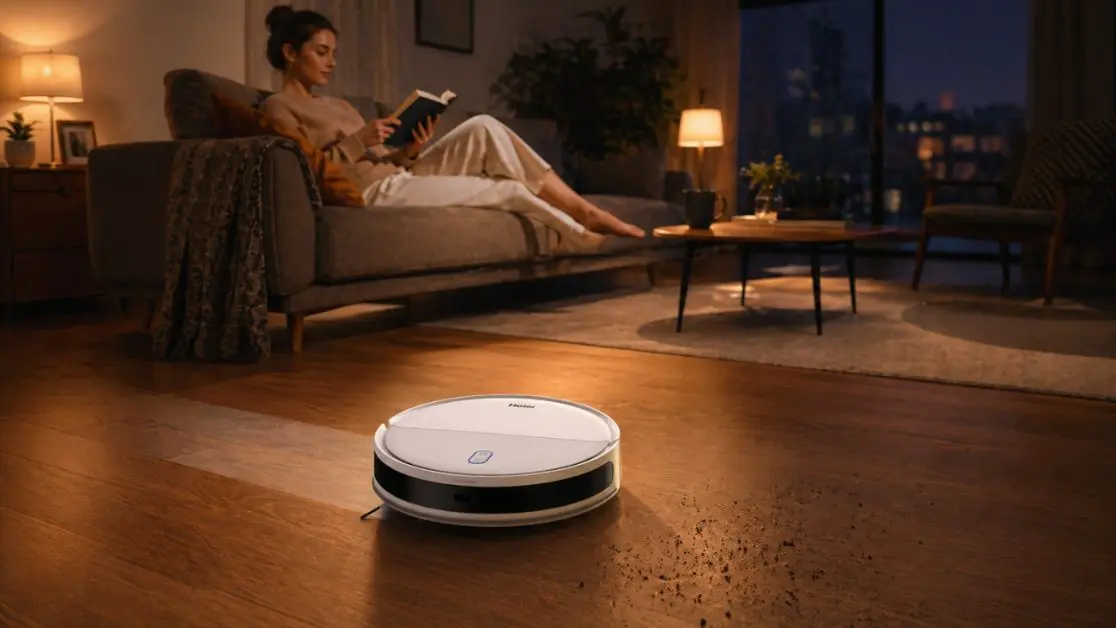
One option is manual cleaning
- Economical
- High effort
- Time-consuming
Best for small spaces or occasional use.
The second option is part-time help
- Reduces effort
- Still requires coordination
- Inconsistent quality
Works well but depends heavily on availability and timing.
The third option is automated cleaning systems
- Low effort
- High consistency
- Time-efficient
Robot vacuum cleaners fall into this category.
Each option has a cost.
The real question is what you want to optimize for.
What makes modern robot vacuum cleaners actually “smart”?
It is not just automation. It is an adaptation.
Here are the systems at work:
- Obstacle detection to avoid furniture and stairs
- Scheduled cleaning for routine maintenance
- App control and voice commands via Alexa or Google Assistant
- Auto return to charging dock when battery is low
Some advanced models even include:
- Auto-empty dust boxes that reduce manual cleaning further
This is where effort drops dramatically.
Because maintenance becomes occasional, not daily.
A simple breakdown of time and effort saved
What changes over a month?
| Activity | Without Robot Vacuum | With Robot Vacuum |
| Daily cleaning time | 25 mins | 0 to 5 mins |
| Weekly effort | 3 hours | Under 30 mins |
| Physical strain | Moderate | Minimal |
| Mental load | High | Low |
Time saved in a month: 10 to 12 hours
That is not just time.
That is reclaimed space in your day.
Where robot vacuum cleaners fit in Indian homes
They work best where life is busiest
- Urban apartments with limited time
- Dual-income households
- Homes with pets
- Families with children
Especially in cities where dust levels are higher, daily maintenance matters more than occasional cleaning.
Robot vacuum cleaners solve this exact problem.
What about real-world limitations?
No system is perfect.
And clarity builds trust.
Things to consider:
- Initial setup takes time
- Cluttered floors reduce efficiency
- Deep corner cleaning may still need manual touch
But here is the pattern:
Automation handles 80% of the work.
Humans handle the remaining 20%.
That is still a massive shift.
A quick look at what modern models offer
Take something like the Haier CIVIC Robot Vacuum Cleaner (CIVIC X11).
- Laser navigation for precise cleaning
- 5000Pa suction for deep cleaning
- 2-in-1 mopping and sweeping
- 5 map memory for multi-room homes
- Voice control integration
Or the Haier CIVIC PRO Robot Vacuum Cleaner (CIVIC X11 PRO):
- All of the above
- Plus an auto-empty station that reduces manual intervention further
These are not just features.
They are effort-reduction systems.
The hidden shift most people miss
Robot vacuum cleaners are not about cleaning floors.
They are about changing how cleaning happens.
From:
- Reactive to preventive
- Manual to automated
- Effort-driven to system-driven
The real upgrade is not the machine. It is the mindset.
So what does this mean for how we live?
Every home runs on invisible systems.
- Cooking systems
- Laundry systems
- Cleaning systems
When these systems fail, life feels heavy.
When they work, life feels easy.
Robot vacuum cleaners fix one of the most repetitive systems in your home.
And when repetition disappears, something interesting happens.
You get your time back.
A simple way to think about it
You can clean your home every day.
Or you can build a system that cleans it for you every day.
One costs effort.
The other costs a decision.
And better decisions compound faster than effort ever will.
Frequently Asked Questions
Why do I keep postponing cleaning even when I know it’ll take just 20 minutes?
Because the problem isn’t time it’s starting. Cleaning requires multiple small decisions (when, where, how), and after a long day, your brain avoids that effort. Robot vacuums remove this mental friction by running automatically, so cleaning happens without needing motivation.
I come home tired… can a robot vacuum really take this off my plate?
Yes that’s exactly where it helps most. You don’t “find time” to clean anymore. You schedule it once, and it runs daily in the background. Instead of reacting to mess, your home stays consistently clean.
My house doesn’t look dirty, so do I really need daily cleaning?
Yes because most dirt is invisible buildup. Dust, hair, and micro-particles accumulate daily. Robot vacuums focus on prevention, stopping dirt from becoming noticeable (or overwhelming).
Will it actually make a difference if it cleans every day?
Absolutely. Daily light cleaning:
Prevents dust layering
Reduces allergens
Keeps floors consistently presentable
It’s the difference between maintenance and damage control.
Do I have to control it every day?
No. Once scheduled, it runs automatically. You can:
Set daily cleaning times
Control via apps
Use voice assistants like Amazon Alexa or Google Assistant
How does it know where to clean?
Advanced models use laser mapping and sensors to:
Scan your home layout
Store multiple room maps
Clean in structured paths (not random movement)
What’s the benefit of auto-empty stations?
They reduce maintenance drastically. Instead of emptying the dustbin daily, you may only do it once every few weeks.