
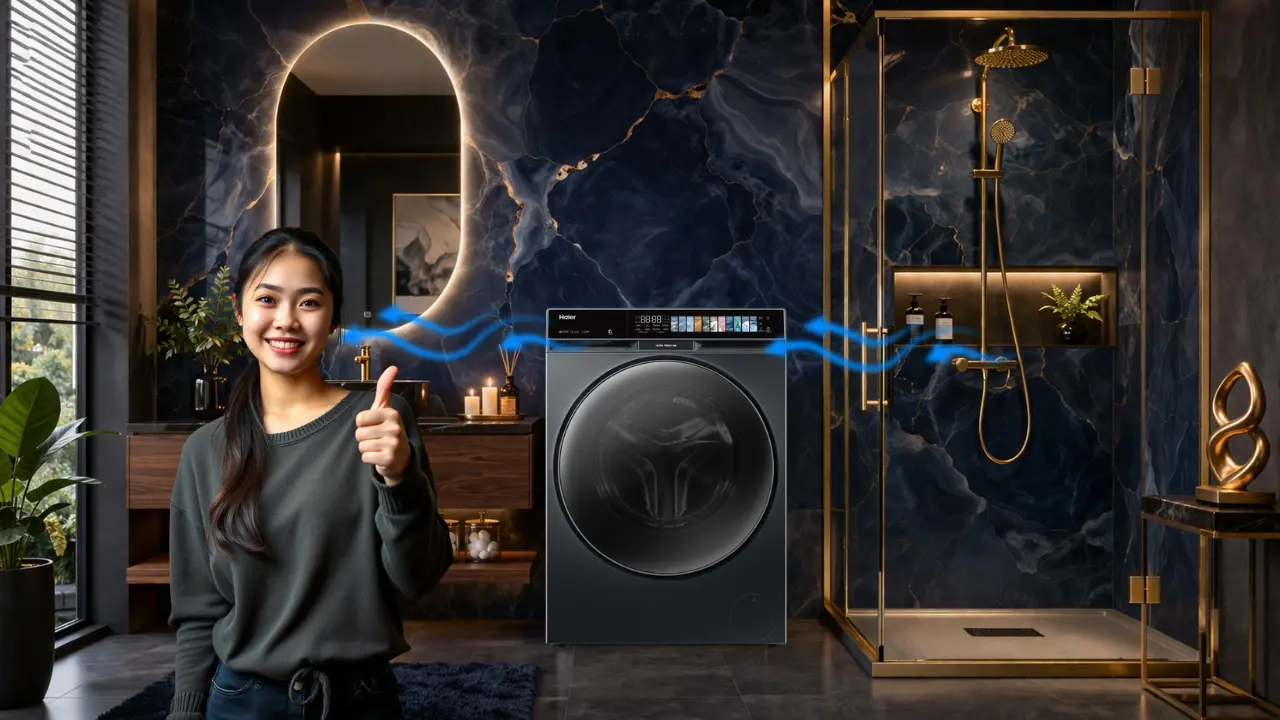

Air ventilation improves laundry hygiene by removing trapped moisture, reducing bacterial growth, and preventing odours from settling into fabrics.
Good airflow keeps clothes fresher for longer, supports faster drying, and protects both your garments and your washing machine from hidden damp-related damage.
Why do freshly washed clothes sometimes still smell?
Sunday night.
Laundry is done. Clothes look clean.
But by morning, something feels off.
This is not a detergent issue.
It is not even a washing issue.
It is a ventilation gap.
Laundry hygiene is not defined by washing. It is defined by what happens after washing.
When airflow is missing, moisture stays trapped.
When moisture stays trapped, bacteria grow.
When bacteria grow, odour follows.
That is the system most homes unknowingly run.
What actually happens without proper ventilation?
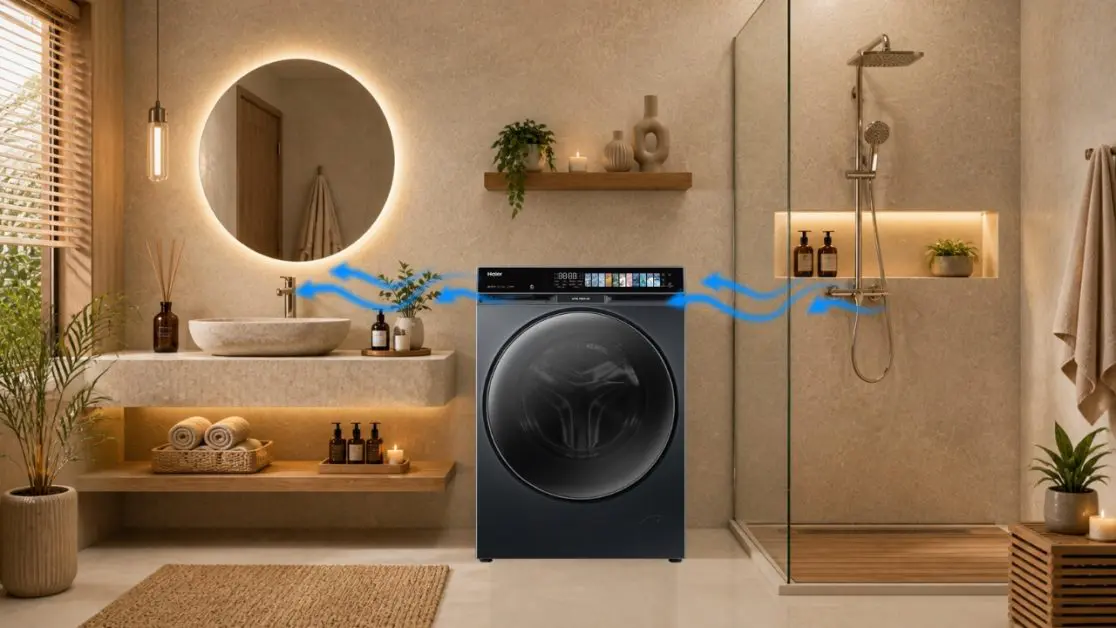
Moisture is the real enemy
Every wash cycle ends with residual moisture.
Even after high-speed spinning, fabrics retain water. Now the next few hours decide everything.
| Scenario | What Happens | Outcome |
| No airflow | Moisture stays inside fabric | Odour develops |
| Slow airflow | Gradual drying | Mild smell risk |
| Strong airflow | Quick evaporation | Fresh clothes |
Studies show that damp fabrics can develop bacteria within 6 to 8 hours in closed conditions.
That is why clothes forgotten in the drum overnight smell different.
Not because they were not cleaned.
Because they were not aired.
Why this problem is more common in Indian homes
Climate meets routine
Laundry hygiene behaves differently in India.
Three factors create friction:
- High humidity in many regions
- Limited indoor drying space
- Night-time laundry habits
Put them together and you get slow drying cycles.
And slow drying is where hygiene breaks down.
Humidity does not just delay drying. It changes the entire hygiene equation.
Three ways households handle laundry ventilation
Every home solves this differently.
One option is natural ventilation
Balconies. Open windows. Sunlight.
Benefits:
- Zero energy cost
- Sunlight helps reduce bacteria
- Simple and familiar
Costs:
- Weather dependent
- Pollution exposure
- Ineffective during monsoon
The second option is assisted indoor drying
Fans, exhausts, or air conditioning support airflow.
Benefits:
- Works across seasons
- Faster than passive drying
- More control
Costs:
- Energy usage
- Uneven airflow
- Still struggles in high humidity
The third option is built-in air ventilation inside washing machines
This is where systems thinking changes the outcome.
Machines like the Haier 12 Kg F11 Front Load Washing Machine (HW120-DM14F11BKU1) and the Haier 12 Kg F11 Front Load Washer & Dryer Washing Machine (HWD120-DM14F11BKU1) are designed with Ultra Fresh Air Technology.
Here is what that means in practice:
- Air circulates inside the drum even after washing
- Moisture does not stay trapped
- Clothes remain fresh for up to 12 hours
The system refreshes the drum every two minutes with continuous airflow .
That is not drying.
That is active ventilation built into the machine itself.
Why ventilation inside the machine changes everything

The machine is not just a tool. It is an environment
Most people think washing ends when the cycle stops.
But the drum remains closed. Moisture remains inside.
Without airflow, the machine becomes a humid container.
That leads to:
- Odour buildup
- Mold risk
- Residue accumulation
With ventilation, the system resets itself.
A ventilated drum does not hold yesterday’s moisture. It protects tomorrow’s laundry.
What improves when airflow improves
Small shifts. Big impact.
Better ventilation creates ripple effects:
- Clothes smell fresh for longer
- Laundry timing becomes flexible
- Less need for rewashing
- Fabrics stay healthier
Think about weekday routines.
Late-night laundry. Early morning rush.
A machine that keeps clothes fresh inside reduces pressure on time.
And time is the real constraint in modern homes.
The hidden cost of poor ventilation
What looks small becomes repetitive
Ignoring airflow creates daily inefficiencies.
| Problem | Immediate Effect | Long-term Cost |
| Damp clothes | Slight smell | Odour retention in fabrics |
| Slow drying | Delayed usage | Higher energy consumption |
| Moist drum | Residue buildup | Reduced machine life |
| Rewashing | Extra cycles | Increased water bills |
Laundry happens every week. Sometimes every day.
So these small costs multiply.
Poor ventilation is not a mistake. It is a repeating system flaw.
How modern washing systems are redesigning hygiene
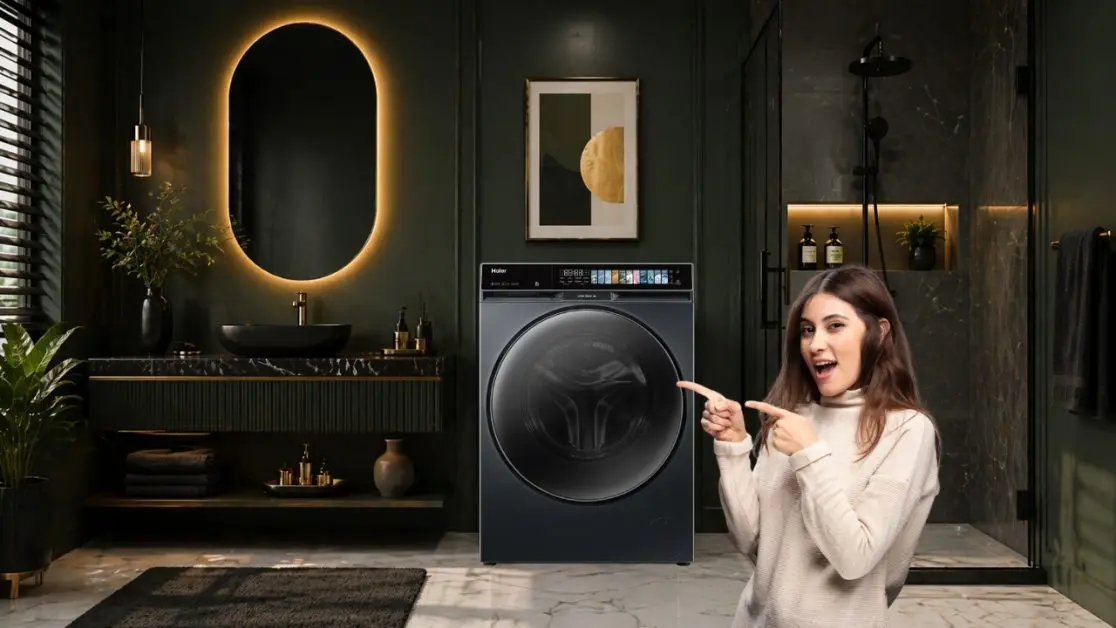
From cleaning to complete fabric care
Washing machines are evolving.
Not just better wash cycles.
Better post-wash environments.
Features like:
- 360 degree air circulation
- Automated drum refresh cycles
- Extended freshness windows
These turn machines into hygiene systems.
In models like the Haier F11 series, airflow continues for hours after washing ends .
That means hygiene is maintained, not just achieved.
What should you actually do at home
A simple ventilation framework
Start with practical steps:
- Do not leave clothes inside the drum for long
- Keep drying areas ventilated
- Use fans or airflow support indoors
- Clean the drum regularly
- Choose machines with built-in ventilation systems
Each step reduces moisture retention.
Each step improves hygiene consistency.
The bigger shift: Laundry is no longer just washing
We grew up thinking laundry is about removing stains.
That is only one part.
Modern laundry is about managing:
- Moisture
- Airflow
- Time
Miss one, and the system breaks.
Clean clothes are not created by water alone. They are created by air as well.
What changes when you get ventilation right
Laundry becomes predictable.
Clothes feel fresher.
Machines stay cleaner.
Decisions are reduced.
And that is the real upgrade.
Not just cleaner clothes.
A simpler everyday life.
Because the best systems do not ask for attention.
They quietly fix what used to go wrong.
Frequently Asked Questions
Why do my clothes smell even after washing them properly?
Because washing isn’t the full process, drying conditions matter just as much. When clothes sit in a closed, moist environment after washing, bacteria begin to grow, causing odour. Poor airflow is usually the real issue, not detergent quality.
I did my laundry late at night. Should I leave it in the machine till morning?
Not ideal. Within 6–8 hours, trapped moisture can lead to bacterial growth and a musty smell. Either remove and dry immediately or use a machine with built-in ventilation to keep clothes fresh longer.
Is it true that bacteria grow in freshly washed clothes?
Yes if moisture is trapped. Clean clothes are still damp after washing, and without airflow, that dampness becomes a breeding ground for bacteria.
Why does my washing machine itself smell bad sometimes?
Because the drum stays humid after cycles. Without ventilation, moisture leads to mold, residue buildup, and odour inside the machine.
What is built-in air ventilation in washing machines?
It’s a system that circulates air inside the drum after washing, preventing moisture buildup and keeping clothes fresh for extended periods.
How is this different from drying?
Drying removes water completely using heat. Ventilation simply keeps air moving to prevent moisture stagnation and odour formation.
I forgot my laundry in the washer overnight. Do I need to rewash it?
If it smells musty, yes. The odour indicates bacterial growth. If it still smells neutral, you can dry it immediately with strong airflow.
Why do my clothes sometimes smell only after drying?
Because slow drying allows bacteria to grow gradually. The smell becomes noticeable once the fabric is fully dry.