
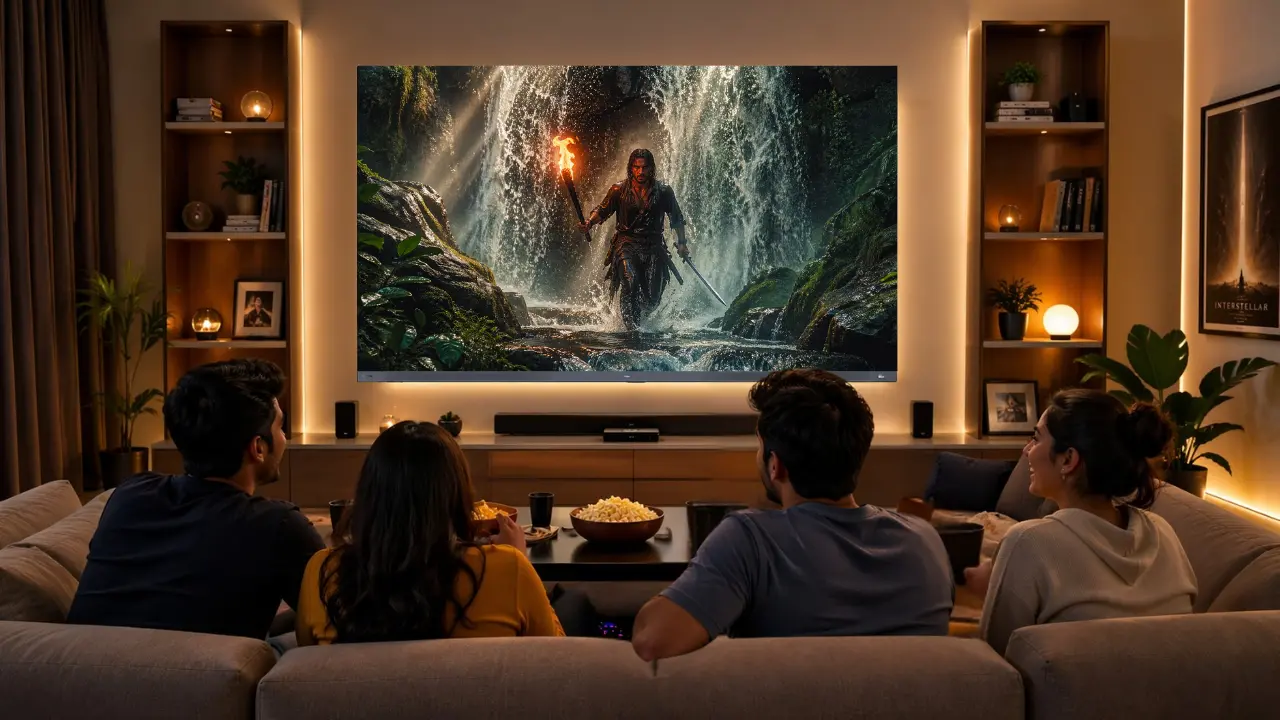

A theatre-like experience at home is not about one feature. It’s a system.
Haier delivers it by combining large-screen Mini LED displays, intelligent AI processing, cinematic audio tuned by KEF, and immersive formats like Dolby Vision and Dolby Atmos.
The result feels less like watching TV and more like stepping inside the scene.
What does “theatre-like” really mean at home?
Friday night. Lights dimmed. Popcorn in a steel bowl. Someone is arguing over what to watch.
You press play.
And within seconds, the room changes.
Not because the content is great. But because the experience feels different.
That’s the difference.
A screen shows content. A system creates immersion.
Most people assume size alone creates that theatre feeling. Bigger TV, better experience.
That’s only half true.
Because a theatre is not just a big screen.
It is a carefully designed system where picture, sound, motion, and environment work together.
And this is exactly where Haier approaches things differently.
The hidden system behind a cinematic experience
A theatre-like experience is built on four invisible pillars:
- Visual depth
- Sound positioning
- Motion clarity
- Context awareness
Miss one, and the illusion breaks.
Let’s break this down.
1. Visual depth is what makes images feel real
Why do some TVs look flat even in 4K?
Because resolution alone is not depth.
Depth comes from contrast, brightness, and how light is controlled.
This is where technologies like Mini LED step in.
Take the Haier M80F Mini LED 189cm (75) Google TV Sound By KEF (H75M80FUX).
- Uses Mini LED backlighting with local dimming zones for deeper blacks and brighter highlights
- Supports Dolby Vision for dynamic HDR
- Offers wide viewing angles so everyone in the room sees the same quality
Now zoom out.
What this means in real life
- Night scenes in movies stop looking grey
- Cricket stadium lights feel intense, not washed out
- Skin tones look natural, not overprocessed
Insight:
Clarity shows you the picture. Contrast makes you feel it.
2. Sound is not volume. It is placement.
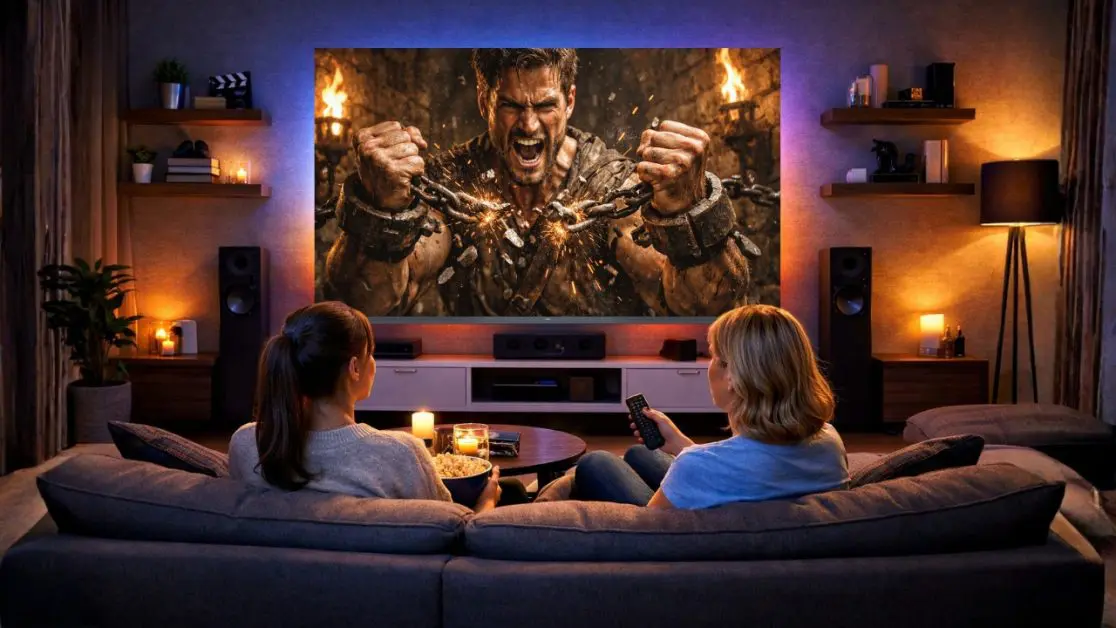
Why do theatre speakers feel different from TV sound?
Because they surround you.
Not blast at you.
Haier integrates KEF audio technology, a brand known for acoustic precision.
In models like the Haier M80F Mini LED 215cm (85) Google TV Sound By KEF (H85M80FUX):
- 2.1 channel speakers with a dedicated woofer
- Dolby Atmos for 3D spatial sound
- Balanced bass and clarity for dialogues and effects
Now consider the flagship.
The New M96 Series 254cm (100) QD-Mini LED AI Smart Google TV (H100M96FUX) goes further:
- 6.2.2 channel audio setup
- Multi-layered sound with vertical and horizontal channels
- Up to 90W audio output
What this changes at home
- Dialogues feel like they come from actors, not the TV box
- Crowd noise in matches wraps around you
- Action scenes move through space, not just left to right
Insight:
Great sound does not compete with visuals. It completes them.
3. Motion clarity is the difference between smooth and distracting
Why do fast scenes sometimes feel blurry?
Because most TVs struggle with motion.
Sports. Gaming. Action films.
They demand consistency between frames.
Haier tackles this using:
- DLG 120Hz and higher refresh rates
- MEMC (Motion Estimation, Motion Compensation)
- AI-based motion optimization
For example, the M96 series pushes up to 144Hz refresh rate, ensuring ultra-smooth visuals even in high-speed scenes.
What this means for everyday viewing
- No ghosting in fast cricket shots
- Smooth camera pans in movies
- Gaming feels responsive, not delayed
Insight:
Motion is where immersion breaks first. Fix motion, and everything else feels better.
4. Intelligence is what personalizes the experience
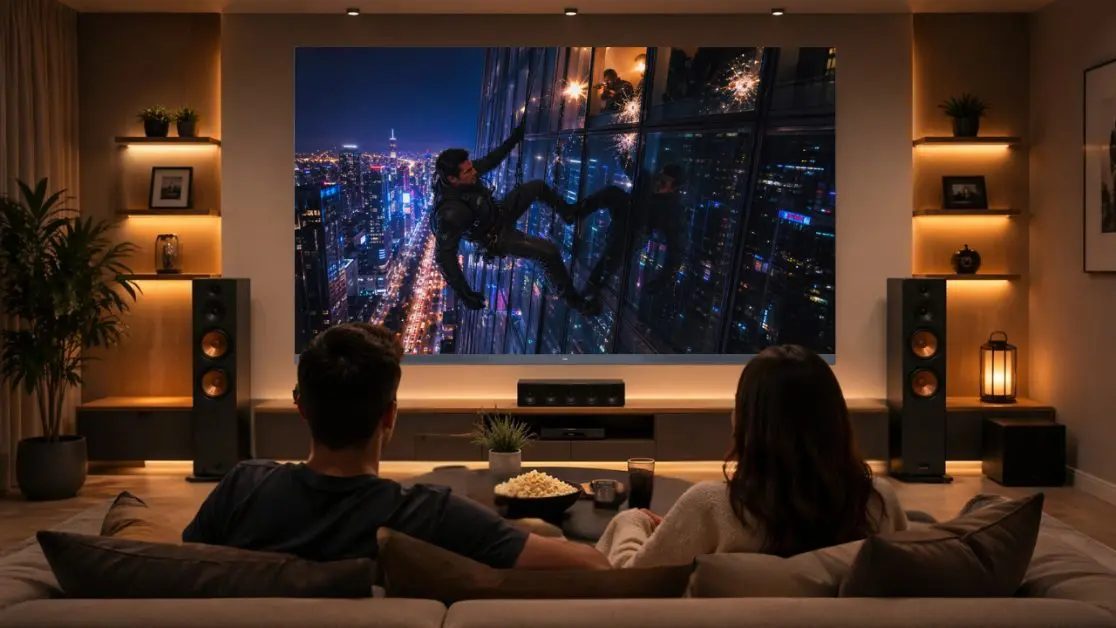
What if your TV understood your room?
That’s where AI enters.
Haier TVs are not static screens. They adapt.
Features like:
- AI Ultra Sense Processor for scene recognition
- AI Scene Detection and AI Motion enhancement
- Google TV for personalized recommendations
Real-world impact
- Brightness adjusts based on room lighting
- Colors shift subtly depending on content
- Your homepage feels curated, not cluttered
Even voice control becomes frictionless.
No remote hunting. Just ask.
Insight:
The best technology disappears. You notice the experience, not the system.
So what actually creates the theatre feel?
Let’s simplify.
| Element | What it does | What you feel |
| Mini LED + HDR | Enhances contrast and brightness | Visual depth |
| KEF Audio + Dolby Atmos | Surround sound positioning | Audio immersion |
| High Refresh Rate + MEMC | Smooth motion handling | Natural movement |
| AI Processing | Real-time optimization | Effortless experience |
A theatre is not one big feature.
It is alignment.
Three ways people approach a “big screen upgrade”
Option 1: Bigger screen, basic features
- Looks impressive initially
- Lacks depth and sound immersion
- Feels underwhelming over time
Cost: Lower upfront
Trade-off: Experience fades quickly
Option 2: Good picture, average sound
- Visuals improve significantly
- External sound systems become necessary
- Setup gets complicated
Cost: Medium
Trade-off: Fragmented experience
Option 3: Integrated cinematic system
- Picture, sound, motion, AI work together
- Minimal external setup required
- Consistent, immersive experience
Cost: Higher upfront
Benefit: Long-term satisfaction
Insight:
You are not buying a TV. You are designing a viewing system.
What Indian homes actually need
This is where things get real.
Most Indian homes are not built like theatres.
- Living rooms double as dining spaces
- Lighting conditions change throughout the day
- Families watch together from different angles
So the system must adapt.
Haier TVs are designed for this exact context:
- Wide viewing angles for group watching
- Anti-reflection screens for bright rooms
- Smart recommendations across OTT platforms
- Voice control for multi-user convenience
This is not about recreating a theatre.
It is about translating the experience into real homes.
The overlooked detail: Size with purpose
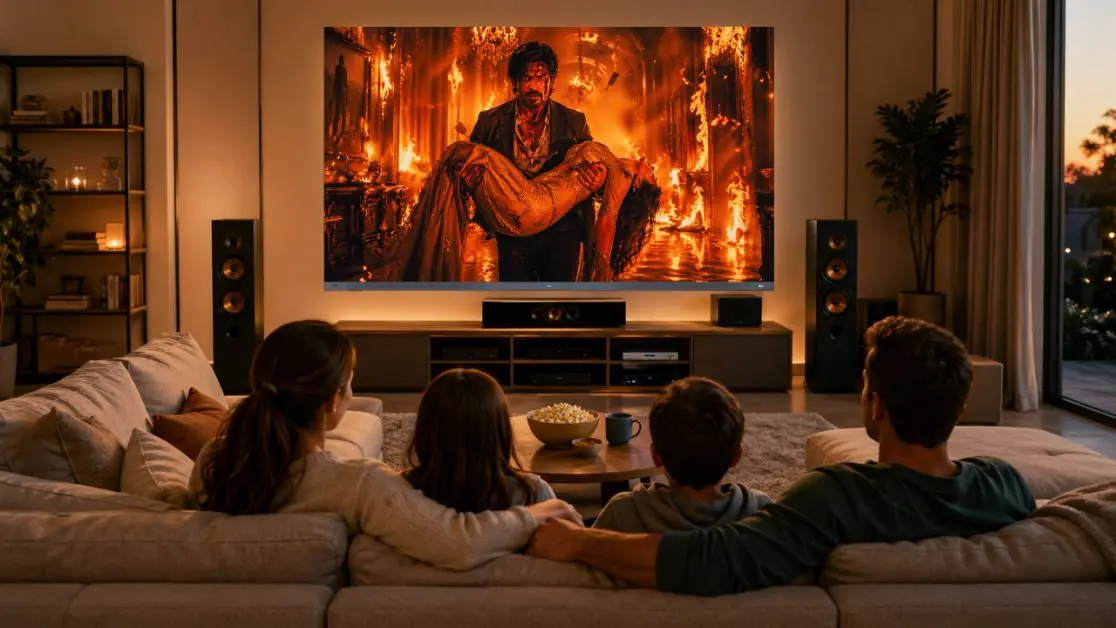
Does bigger always mean better?
Only if it matches your space.
- 189cm (75) works well for compact living rooms
- 215cm (85) fits medium to large setups
- 254cm(100) creates a true cinema wall
But here’s the catch.
Without proper picture and sound systems, size alone feels empty.
That’s why models like the M96 combine:
- Massive 254cm(100) display
- 2000+ dimming zones for precision lighting
- AI optimization across content types
Insight:
Scale without detail overwhelms. Scale with intelligence immerses.
Why this matters more than ever
Work ends late.
Weekends feel shorter.
Family time is fragmented.
So when people sit down to watch something, they don’t want “just okay.”
They want an experience that feels worth it.
That feels like a break.
That feels intentional.
And that is what a theatre-like system delivers.
Not luxury.
But meaningful downtime.
The bigger shift: From watching to experiencing
Here’s what most people miss.
This is not about TVs anymore.
It is about how homes are evolving.
- Living rooms are becoming entertainment hubs
- Screens are replacing outings for convenience
- Technology is blending into lifestyle choices
Haier is not just building bigger TVs.
It is building systems that understand this shift.
Final thought
A theatre is not a place.
It is a feeling.
The feeling that the world outside pauses for a while.
The feeling that the story pulls you in completely.
The feeling that everything just works.
When picture, sound, motion, and intelligence align, that feeling shows up at home.
Quietly.
Effortlessly.
Exactly when you need it.
Frequently Asked Questions
Why do some 4K TVs still look flat?
Resolution alone does not create depth. Haier uses Mini LED backlighting, local dimming, Dolby Vision, and strong contrast control to make scenes feel more realistic.
I watch a lot of dark movies. Will Haier Mini LED TVs make night scenes look better?
Yes. Mini LED with local dimming helps produce deeper blacks, so dark scenes look less grey and more cinematic.
My living room is bright during the day. Will the picture still look good?
Haier TVs with high brightness, anti-reflection screens, and AI adjustment are better suited for changing light conditions in Indian homes.
My family watches from different corners of the room. Will everyone see the same picture quality?
Wide viewing angles help maintain consistent color and clarity even when people are not sitting directly in front of the TV.
What does Haier’s AI actually do while I’m watching TV?
AI can recognize scenes, adjust brightness, improve motion, optimize colors, and make the viewing experience feel more natural.
I don’t like scrolling endlessly across OTT apps. Can Google TV help?
Yes. Google TV brings recommendations from different platforms into one interface, making content discovery easier.
I keep losing the remote. Can I control Haier TVs with voice?
Yes. Voice control lets you search, open apps, and control the TV without depending only on the remote.
Will the TV adjust to my room lighting automatically?
Haier’s AI-based processing can help optimize brightness and picture settings based on content and viewing conditions.