
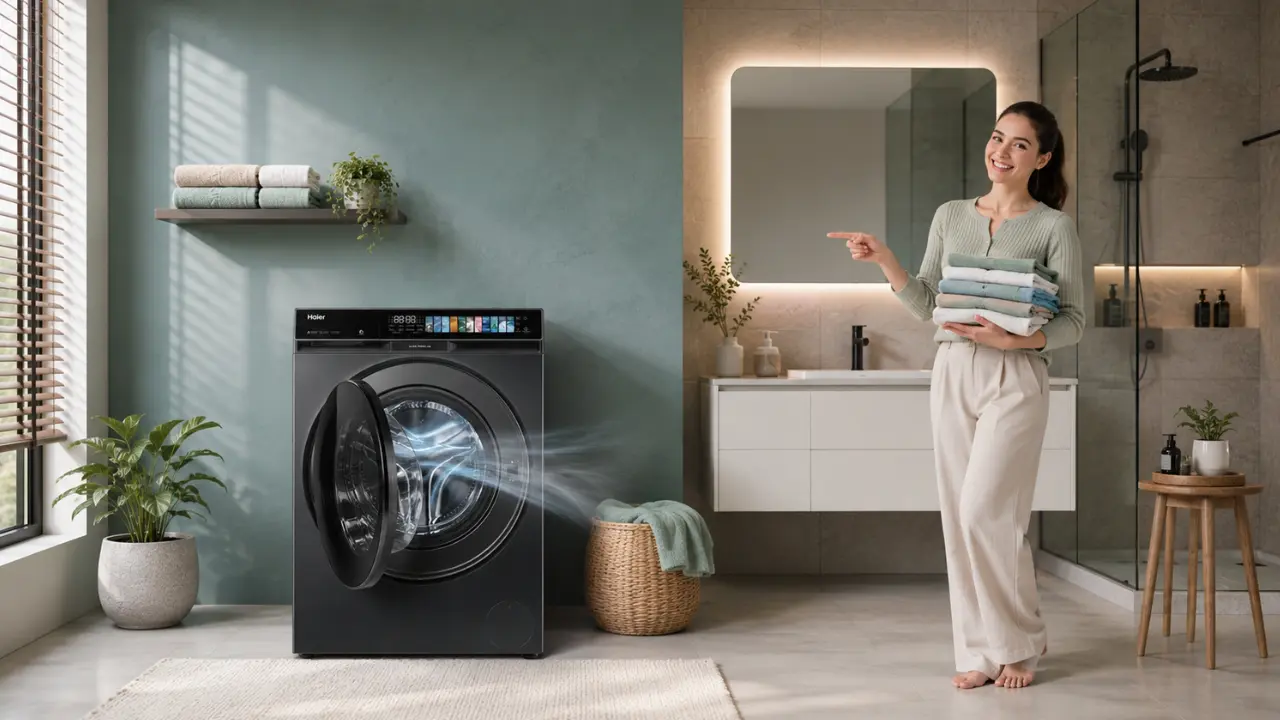

Why does air flow inside a washing machine drum matter?
Air flow inside a washing machine drum helps reduce moisture buildup, prevents unpleasant odours, supports fabric hygiene, improves drying efficiency, and extends the life of both clothes and the machine itself.
In Indian homes where humidity, daily laundry loads, and fast-moving routines collide, proper drum ventilation quietly becomes one of the most important parts of modern washing performance.
A washing machine does not stop working when the cycle ends.
That is the part most people miss.
The drum keeps holding something invisible long after clothes are removed. Moisture. Heat. Residual detergent particles. Fabric lint. Humidity trapped inside metal walls.
And trapped moisture changes everything.
The smell people blame on detergent? Often trapped air.
The slightly damp feeling in freshly washed towels? Usually poor drum ventilation.
The black residue near the rubber gasket? A moisture system that never fully dries.
A washing machine is not just a cleaning system anymore. It is a moisture-management system.
Especially in Indian homes.
Because Indian laundry behaves differently.
Monsoon humidity. Smaller utility spaces. Frequent washing cycles. Mixed fabric loads. Sweat-heavy clothing during summers. Delicate festive wear. Gym clothes. School uniforms. Bedsheets washed late at night and forgotten till morning.
The machine handles all of it.
Which means the invisible movement of air inside the drum matters far more than most buyers realise.
A sealed drum creates silent problems

Think about what happens after a workout.
If you throw sweaty gym clothes into a closed bag and leave them overnight, the smell changes quickly. Not because the fabric is weak. Because trapped moisture creates the perfect environment for bacterial growth.
A washing machine drum behaves similarly.
The problem is not water alone.
The problem is still water plus trapped air.
Why moisture buildup becomes worse in Indian homes
Several factors make airflow more important in Indian households:
- Higher humidity during monsoon seasons
- Compact apartment utility areas
- Multiple wash cycles per week
- Frequent washing of sweat-heavy clothing
- Delayed unloading after wash cycles
- Hard water residue in many cities
One invisible pattern connects all these issues.
Air circulation determines whether moisture escapes or lingers.
And lingering moisture always leaves a cost behind.
The hidden system inside modern washing machines
People often compare washing machines using obvious metrics:
- RPM speed
- Capacity
- Energy rating
- Wash programs
- Smart controls
Important? Absolutely.
Complete picture? Not even close.
Because washing performance is not only about cleaning clothes.
It is also about what happens between washes.
Modern front-load washing machines are designed around airflow pathways that help drums dry faster after cycles end. Better circulation reduces bacterial growth, supports fresher-smelling interiors, and improves long-term hygiene.
That changes daily life in subtle ways.
Fewer odours.
Less manual cleaning.
Reduced dampness inside the gasket.
Better freshness for clothes stored immediately after washing.
A well-designed washing machine feels cleaner over time because the system supports itself.
That is what good appliance design actually means.
Not more features.
Better invisible systems.
Why drum airflow matters for fabric hygiene
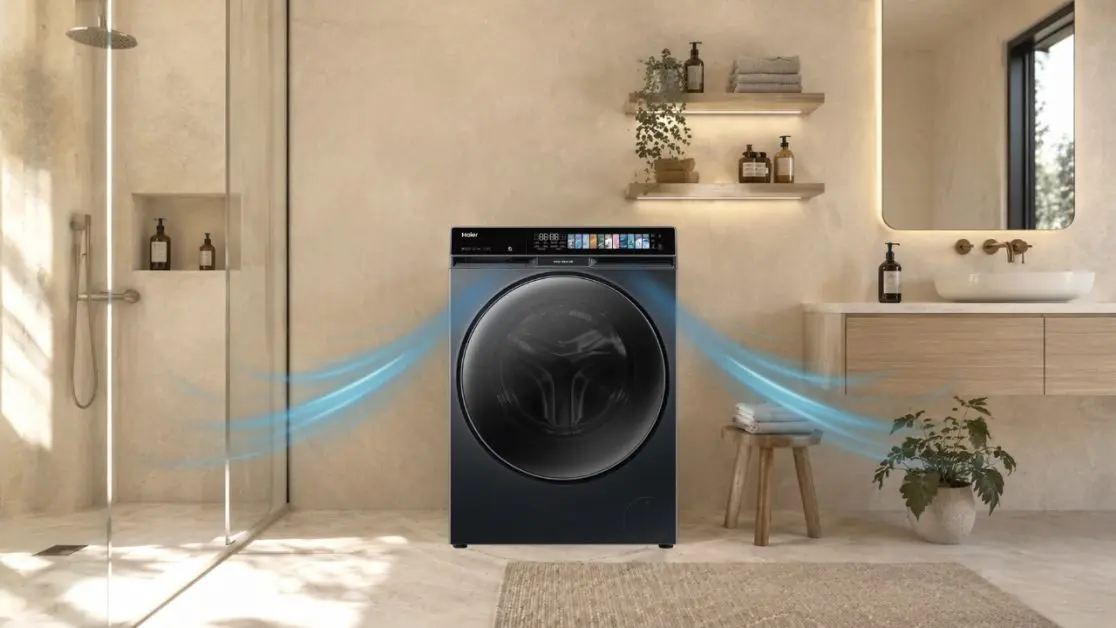
Most people assume detergent handles hygiene alone.
It does not.
Detergent cleans. Airflow protects the result afterwards.
Moisture changes fabric freshness quickly
Imagine washing towels during monsoon season.
They smell fresh when the cycle finishes.
But leave them inside the drum for six hours and something changes. The fabric feels heavier. The smell becomes dull. Sometimes slightly sour.
That shift happens because stagnant moisture alters the environment inside the drum.
Proper airflow reduces that risk by helping moisture escape faster.
This matters even more for:
- Baby clothes
- Sportswear
- Office shirts
- Bedsheets
- Innerwear
- Kitchen towels
These fabrics absorb body oils, humidity, and bacteria differently.
Freshness is not only about washing well.
It is about drying intelligently.
The drum is like a room with no windows
That is the easiest way to understand airflow.
Imagine locking a wet bathroom with no ventilation for two days.
Now imagine the same bathroom with sunlight and airflow.
Same water.
Different outcome.
Washing machine drums work the same way.
Without airflow, the drum becomes a closed moisture chamber.
With airflow support, the environment stabilises faster.
The machine smells fresher because moisture leaves instead of settling.
Simple principle. Massive impact.
Modern lifestyles increased the need for better airflow
Older laundry habits looked different.
People washed fewer clothes. Homes had larger drying areas. Laundry happened manually and often outdoors.
Today, the rhythm changed.
Laundry became continuous
Modern Indian households wash smaller loads more frequently:
- Gym wear after workouts
- Kids’ uniforms during weekdays
- Office clothing after commutes
- Delicate fabrics separately
- Bedsheets during weekends
- Quick washes between work calls
The washing machine is no longer a once-a-week appliance.
It became a daily-use ecosystem.
And frequent usage means the drum rarely gets enough natural drying time.
That makes engineered airflow far more important than before.
Why odours are often a design problem, not a user problem
People blame themselves for washing machine odours.
But many times, the issue comes from poor moisture management inside the appliance itself.
A badly ventilated drum traps:
- Detergent residue
- Fabric softener buildup
- Moisture pockets
- Lint particles
- Warm humid air
That combination slowly creates odours.
Not instantly.
Gradually.
Which is why people often notice the smell only months later.
The machine looked clean the entire time.
But invisible systems were already failing.
Aphorism worth remembering:
Most appliance problems begin where airflow stops.
The role of drum design in air circulation
Airflow is not random.
It is engineered.
The shape of the drum, gasket structure, internal paddles, spin efficiency, and post-wash ventilation all influence how moisture moves.
That is why premium washing machines often feel fresher over years of use.
Not because users clean them more.
Because the system reduces moisture retention better.
Some design elements that support better airflow
- High-speed spin cycles that reduce residual water
- Drum patterns that improve water movement
- Better gasket structures
- Self-cleaning drum systems
- Ventilation-focused internal layouts
- Smart wash-dry integration
The important insight here:
A washing machine is not one feature.
It is a chain of systems working together.
Why airflow matters even more in washer-dryer combinations
Washer-dryers face a harder challenge.
They handle both water and heat inside the same enclosed drum.
That means moisture management becomes even more critical.
Poor airflow in washer-dryers can lead to:
- Damp-smelling clothes
- Longer drying times
- Heat inefficiency
- Residual humidity
- Fabric discomfort
Good airflow improves the transition between washing and drying.
And that changes convenience dramatically for working households.
Especially in apartments where outdoor drying space is limited.
How Haier approaches smarter drum environments
Haier’s modern front-load washing machines increasingly focus on hygiene, efficiency, and fabric care as connected systems rather than isolated features.
For example, models like the Haier 12 Kg F11 Front Load Washer and the Haier 12 Kg F11 Front Load Washer & Dryer are designed around high-capacity performance and smarter fabric management for modern households.
The real shift is not capacity alone.
It is how modern machines reduce friction in everyday life.
Because nobody wants to spend Sunday mornings cleaning the inside of an appliance meant to clean everything else.
That contradiction matters.
What modern buyers increasingly look for
Today’s washing machine buyers increasingly prioritise:
- Hygiene support
- Reduced odour buildup
- Faster drying support
- Fabric freshness
- Lower maintenance effort
- Cleaner drum environments
The conversation moved beyond “Does it wash clothes?”
Now the question is:
Does it keep the entire laundry experience feeling effortless over time?
That is a different standard entirely.
Small habits that improve airflow naturally
Even the best drum design benefits from smarter usage habits.
A few simple behaviours change machine hygiene significantly.
Practical ways to improve drum ventilation
- Leave the door slightly open after washes
- Avoid overloading the drum
- Use the correct detergent quantity
- Run drum-clean cycles regularly
- Remove washed clothes promptly
- Wipe the gasket occasionally during humid seasons
None of these steps are difficult.
But together, they change the moisture system inside the machine.
And systems matter more than isolated actions.
The future of washing machines is invisible intelligence
The best appliances do not demand attention constantly.
They quietly reduce problems before users notice them.
That is where washing machines are heading.
Toward systems that manage:
- Moisture automatically
- Drum hygiene intelligently
- Fabric freshness consistently
- Energy use efficiently
- Maintenance proactively
Airflow becomes part of that larger shift.
Because freshness is not a feature.
It is the result of dozens of invisible decisions working together.
And modern homes increasingly reward appliances that solve invisible problems well.
Not flashy ones.
Just reliable systems that make everyday life feel lighter.
That is the real role of airflow inside a washing machine drum.
Not dramatic innovation.
Quiet prevention.
The kind people only notice when it is missing.
Frequently Asked Questions
Why is airflow important in a washing machine drum?
Airflow helps reduce trapped moisture inside the drum after wash cycles. Better air circulation prevents unpleasant odours, supports fabric hygiene, reduces bacterial buildup, and keeps the washing machine fresher over time. It also helps minimise dampness around the rubber gasket and inner drum surfaces.
Can poor airflow inside a washing machine cause bad smells?
Yes. Poor airflow often traps moisture, detergent residue, and lint inside the drum. Over time, this creates the perfect environment for odours and bacterial growth. This is especially common in humid Indian weather or homes where laundry loads run frequently.
How can I naturally improve airflow in my washing machine?
A few simple habits make a major difference:
Leave the washing machine door slightly open after use
Remove clothes soon after the cycle ends
Run regular drum-clean cycles
Avoid overloading the drum
Clean the gasket occasionally during humid seasons
These small steps help moisture escape faster and improve overall drum hygiene.
Does airflow affect clothes’ freshness after washing?
Absolutely. Freshly washed clothes can develop a damp smell if they remain inside a poorly ventilated drum for too long. Good airflow helps maintain freshness by reducing residual humidity inside the machine after wash cycles finish.
Do modern front-load washing machines have better airflow systems?
Many modern front-load washing machines are designed with improved moisture management and drum ventilation systems. Features like high-speed spin cycles, self-cleaning technology, and smarter drum designs help reduce moisture retention and support better hygiene for everyday laundry use.