
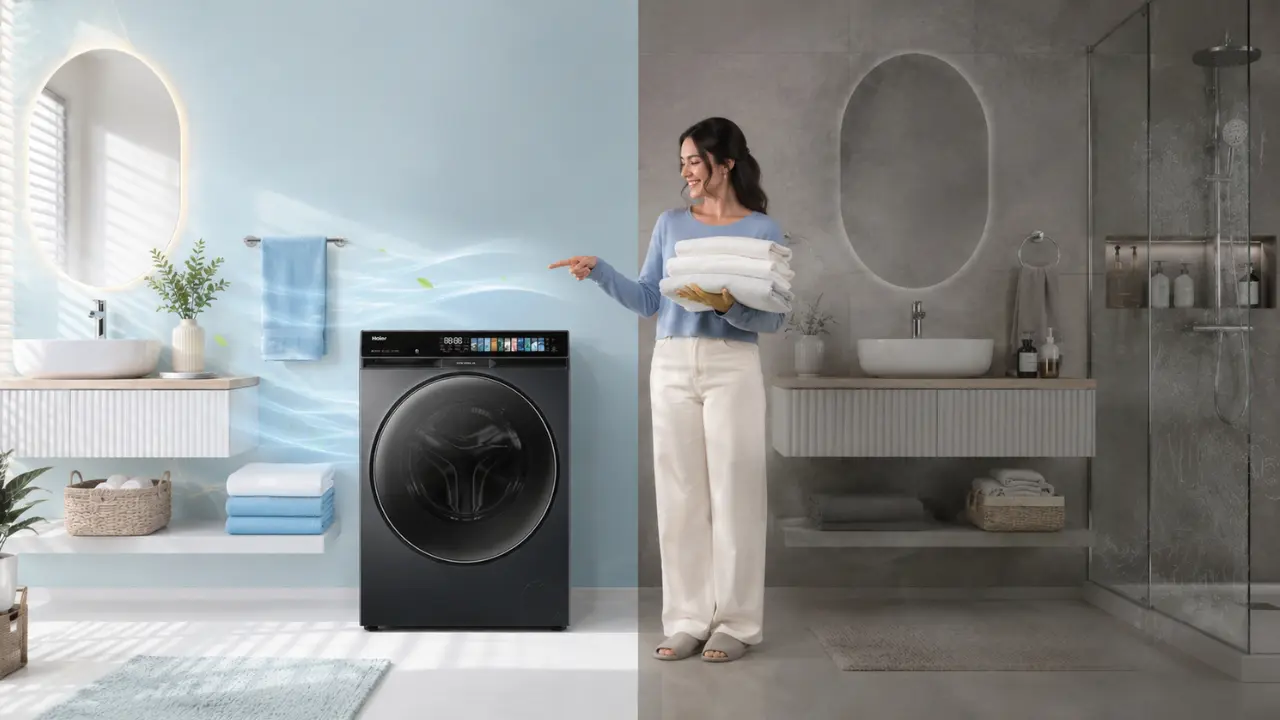

Washing machines with Fresh Air Technology help reduce trapped moisture, stale odours, and bacterial buildup by circulating fresh air inside the drum even after the wash cycle ends. Traditional washing machines clean clothes effectively, but machines with Fresh Air Technology improve what happens after the wash, especially in humid Indian homes where moisture and odour buildup are common.
A washing machine is not just a cleaning appliance anymore.
It is part of the atmosphere of a home.
That sounds dramatic until the monsoon arrives.
Wet towels take longer to dry. Gym wear smells strange after a few hours. Someone forgets laundry inside the machine overnight after a late office call. The next morning, the drum smells damp even though the clothes are technically clean.
Most people think washing performance ends when the spin cycle finishes.
That assumption is outdated.
Because modern laundry problems are no longer just about stains.
They are about freshness. Hygiene. Moisture. Airflow. Time.
And that is where Fresh Air Technology changes the equation.
The Real Difference Begins After the Wash Cycle Ends
Traditional washing machines were designed around one primary job:
Wash clothes well.
And they do.
But modern households expect more from appliances now.
People want appliances that reduce friction.
Less maintenance.
Less smell.
Less effort.
Less mental load.
Fresh Air Technology exists because appliance makers finally recognised something obvious:
A sealed drum full of moisture creates problems over time.
Without Fresh Air Technology
Most conventional front-load washing machines trap residual moisture inside the drum after the cycle finishes.
That creates conditions for:
- Damp odours
- Moisture retention
- Bacterial buildup
- Rubber gasket smell
- Stale drum air
The solution traditionally has been behavioural.
People are told to:
- Leave the door slightly open
- Dry the gasket manually
- Remove clothes immediately
- Run drum-cleaning cycles regularly
Useful advice. But fragile systems.
Because human routines break constantly.
Especially in modern Indian homes.
With Fresh Air Technology
Fresh Air Technology changes the system itself.
Instead of depending entirely on user habits, the machine actively circulates fresh air through the drum after washing.
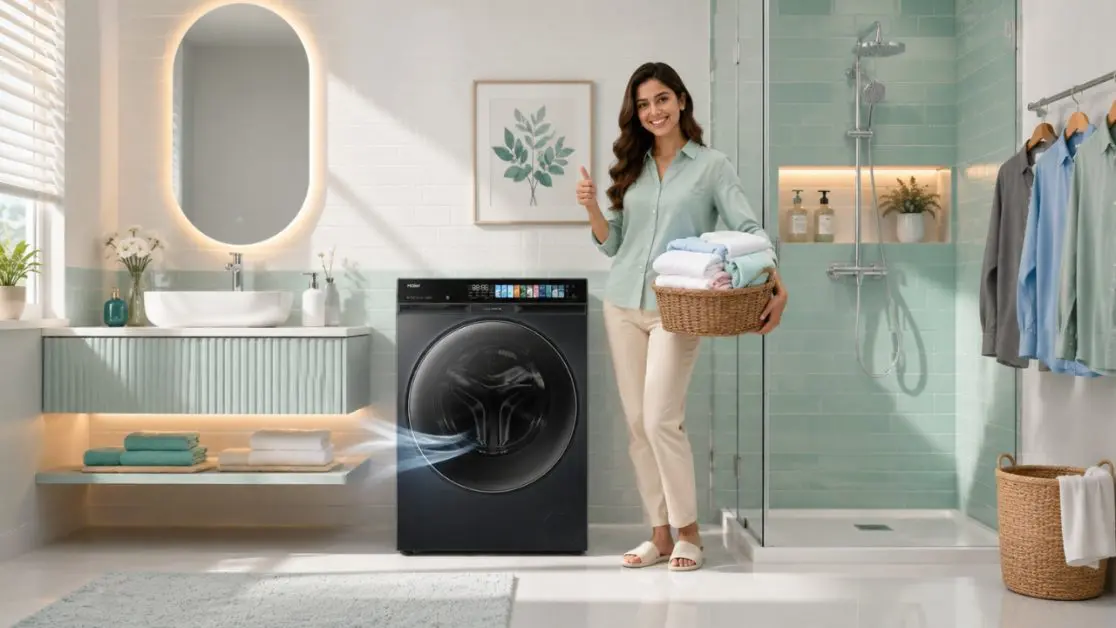
For example, the Haier 12 Kg F11 Front Load Washer Washing Machine HW120-DM14F11BKU1 uses Ultra Fresh Air Technology that keeps fresh air circulating for up to 12 hours after the wash cycle. The system refreshes the drum every 2 minutes using 360° micro-pressure airflow.
That matters more than it first appears.
Because moisture is rarely a one-time issue.
It is cumulative.
Indian Homes Create Different Laundry Challenges
Many appliance conversations still borrow assumptions from colder, drier countries.
Indian households operate differently.
Humidity changes appliance behaviour
In many Indian cities, moisture lingers everywhere during monsoon season.
Inside wardrobes.
Inside bathrooms.
Inside utility spaces.
Inside washing machines.
A front-load washer installed in a compact apartment utility area behaves differently from one placed in a large ventilated laundry room abroad.
The environment changes the appliance experience.
Laundry frequency is higher
Indian households often run:
- Daily loads
- Smaller wash cycles
- Frequent fabric refreshes
- Mixed fabric cleaning
School uniforms. Sarees. Gym clothes. Office wear. Bedsheets during summer.
The washing machine becomes a high-frequency appliance.
Which means trapped moisture compounds faster.
Space limitations matter
Many urban homes place washing machines:
- Inside bathrooms
- On enclosed balconies
- Inside utility cabinets
- Near kitchen areas
Ventilation becomes limited.
Fresh Air Technology helps reduce dependency on external airflow conditions.
That is not a luxury feature.
It is an environmental adaptation.
Freshness Is Becoming Part of Performance
People once compared washing machines using only:
- Capacity
- RPM
- Star rating
- Price
Those metrics still matter.
But they no longer tell the full story.
Because appliance expectations evolved.
Today, buyers quietly evaluate something deeper:
How does this appliance behave in real life?
One machine cleans clothes. The other protects freshness.
That is the actual comparison.
Take two scenarios.
Scenario One: Traditional Front-Load Washing Machine
You finish a late-night wash cycle at 11:30 PM.
You forget the clothes overnight.
Morning arrives.
The drum smells damp.
The clothes need re-airing.
The machine door stays open half the day.
A small inconvenience.
Repeated hundreds of times across years.
Scenario Two: Washing Machine with Fresh Air Technology
The cycle ends.
Fresh air circulation continues automatically inside the drum.
Moisture reduces gradually.
Freshness lasts longer.
The drum environment stays cleaner.
The appliance absorbs part of the maintenance responsibility itself.
That shift is subtle.
But important.
Modern Appliances Are Quietly Becoming Behavioural Systems
The best appliances do not simply perform tasks.
They shape routines.
Think about refrigerators.
Manual defrosting once felt normal.
Now frost-free cooling feels essential.
The same transition is happening in laundry care.
Freshness is becoming part of expected performance.
Not an optional premium feature.
People adapt to bad systems surprisingly easily
Leaving washing machine doors open became “normal.”
Manually drying rubber gaskets became “routine.”
Accepting slight damp smells during the monsoon became “part of life.”
But habits are not proof of good design.
Sometimes they are proof that people learned to compensate for limitations.
Fresh Air Technology questions those limitations directly.
Where Haier’s F11 Series Fits Into This Shift
Haier India has increasingly focused on appliance innovations designed around actual Indian household behaviour rather than theoretical usage patterns.
That distinction matters.
Because Indian homes demand:
- High-frequency washing
- Humidity management
- Energy efficiency
- Quiet operation
- Fabric care
- Space-conscious appliance design
The Haier F11 Series reflects this thinking clearly.
The Haier 12 Kg F11 Front Load Washer Washing Machine HW120-DM14F11BKU1
This model combines Ultra Fresh Air Technology with:
- AI Colour Full Panel
- One-Touch AI Wash
- Direct Motion Motor
- Stain Removal Programs
- Smart Dosing
- Super Drum 525
- WiFi-enabled control systems
The machine refreshes the drum every 2 minutes for up to 12 hours after washing.
That design focuses on maintaining freshness after cleaning finishes.
The Haier 12 Kg F11 Front Load Washer & Dryer Washing Machine HWD120-DM14F11BKU1
For households managing heavier laundry loads, combined wash-and-dry routines, or unpredictable schedules, the washer-dryer version extends the same Fresh Air philosophy further.
This model includes:
- Ultra Fresh Air Technology
- Wash & Dry functionality
- AI One Touch operation
- Direct Motion Motor
- Smart Gentle Dry
- Dual Vortex Self-Cleaning system
- WiFi smart controls
The broader insight here is important.
Haier is not treating hygiene as a separate feature.
It is integrating freshness into the overall laundry system itself.
The Hidden Cost of Dampness Is Mental Load
Most appliance marketing focuses on visible performance.
But invisible stress shapes daily life more deeply.
A washing machine that smells damp creates hesitation.
People delay loads.
Rewash clothes unnecessarily.
Leave doors permanently open.
Manage the appliance instead of trusting it.
Over time, those small interruptions accumulate.
That is why the smartest appliance innovations often feel quiet.
Not flashy.
Not dramatic.
Just smoother.
Good technology removes decisions
Fresh Air Technology reduces one recurring household decision:
“How do I keep the washing machine fresh after every wash?”
The appliance handles more of the problem automatically.
That is the future of smart home systems.
Not complexity.
Calmness.
The Real Comparison Is About Lifestyle Friction
Comparing washing machines with and without Fresh Air Technology is not really about airflow.
It is about lifestyle design.
One system assumes the user will constantly manage moisture manually.
The other system actively participates in freshness maintenance itself.
That difference becomes visible slowly.
During monsoon.
During busy work weeks.
During back-to-back laundry cycles.
During real life.
And perhaps that is the clearest lesson modern appliances are teaching us:
The best technology does not demand attention. It quietly prevents problems before they become routine.
Frequently Asked Questions
What is the main difference between washing machines with and without Fresh Air Technology?
Traditional washing machines focus mainly on cleaning clothes during the wash cycle, while machines with Fresh Air Technology continue managing freshness even after washing ends by circulating air inside the drum.
Why are people suddenly comparing freshness features in washing machines?
Because modern laundry problems are no longer only about stain removal. People now care about odour prevention, drum hygiene, moisture control, and reducing rewashing.
Do regular washing machines trap moisture after washing?
Yes. Most conventional front-load machines retain some moisture inside the drum and gasket area after the cycle finishes, especially in humid conditions.
What problem does Fresh Air Technology actually solve?
It helps reduce stale odours, trapped moisture, and damp-smelling clothes caused by delayed unloading after wash cycles.
Do washing machines without Fresh Air Technology require more maintenance?
Traditional front-load washing machines often require more manual care to manage moisture. Users usually need to leave the door open, wipe the gasket regularly, and ensure the drum dries properly to avoid odour buildup.