
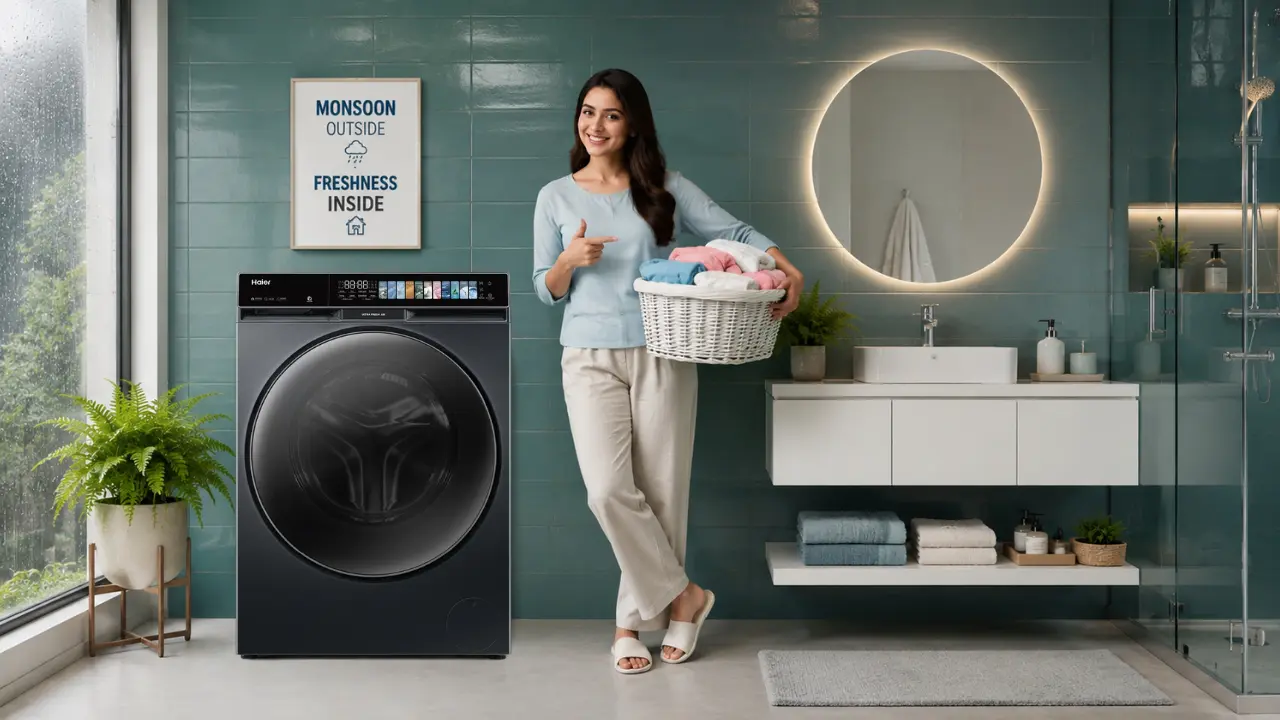

Humidity changes how homes feel. Smart appliance technology changes how homes respond.
Indian humidity is not just uncomfortable. It changes how clothes smell, how quickly bacteria spreads, how long fabrics stay damp, and how fresh a home feels after laundry day. Technologies like Ultra Fresh Air circulation, AI-powered wash systems, and moisture-control washing cycles help reduce trapped odour, improve fabric freshness, and make laundry management easier during sticky Indian weather.
Monsoon season reveals problems people ignore during winter.
A towel refuses to dry.
Gym clothes smell strange even after washing.
Bedsheets stay damp longer than expected.
The washing machine itself starts smelling heavy.
And suddenly, laundry becomes less about cleaning and more about managing moisture.
That is the hidden system behind humid Indian weather.
Humidity does not only affect temperature.
It affects freshness.
And freshness is emotional.
A home that smells fresh feels calmer.
Clean clothes feel lighter.
Dry fabrics feel healthier.
Most people think washing machines only remove dirt.
Modern machines are solving a different problem now.
What happens after the wash cycle.
That shift matters more in India than many people realise.
Why Indian Humidity Creates a Different Laundry Problem
Humidity behaves differently across Indian homes.
Mumbai apartments experience coastal moisture almost year-round.
Kolkata sees sticky monsoon air that slows fabric drying.
Chennai combines heat with dense humidity.
Kerala homes often deal with continuous dampness during rainy months.
Different cities.
Same problem.
Moisture lingers.
According to the India Meteorological Department, relative humidity in many Indian coastal regions regularly crosses 70% during monsoon periods. That changes how fabrics behave indoors.
Clothes absorb moisture from the air even after washing.
That creates three invisible problems:
- Odour retention
- Bacterial growth
- Delayed drying
And here is the surprising part.
The washing machine drum itself can become part of the problem.
A closed drum traps leftover moisture.
Rubber gaskets hold water.
Detergent residue builds up.
Air circulation stops.
The result?
A machine designed for cleaning slowly develops stale smells.
This is why humid weather changes appliance expectations.
People no longer want appliances that simply “work.”
They want systems that recover freshness automatically.
That is where newer laundry technologies become important.
The Real Battle Is Not Washing. It is moisture management.
Most households focus on stain removal.
But in humid weather, moisture becomes the bigger enemy.
Think about what usually happens after a wash cycle.
One option is opening the machine door for hours.
The second option is manually wiping the drum.
The third option is washing clothes that have developed odour.
All three options create friction.
And modern appliances are quietly being redesigned around reducing friction.
Because the best home technology removes tasks people should not have to think about.
That is exactly where technologies like Ultra Fresh Air systems matter.
How Ultra Fresh Air Technology Works in Humid Conditions
Traditional washing machines stop working once the wash cycle ends.
That is outdated thinking.
Humidity continues affecting clothes after the cycle.
The Haier 12 Kg F11 Front Load Washer Washing Machine (HW120-DM14F11BKU1) and the Haier 12 Kg F11 Front Load Washer & Dryer Washing Machine (HWD120-DM14F11BKU1) use Ultra Fresh Air Technology to address this exact issue.
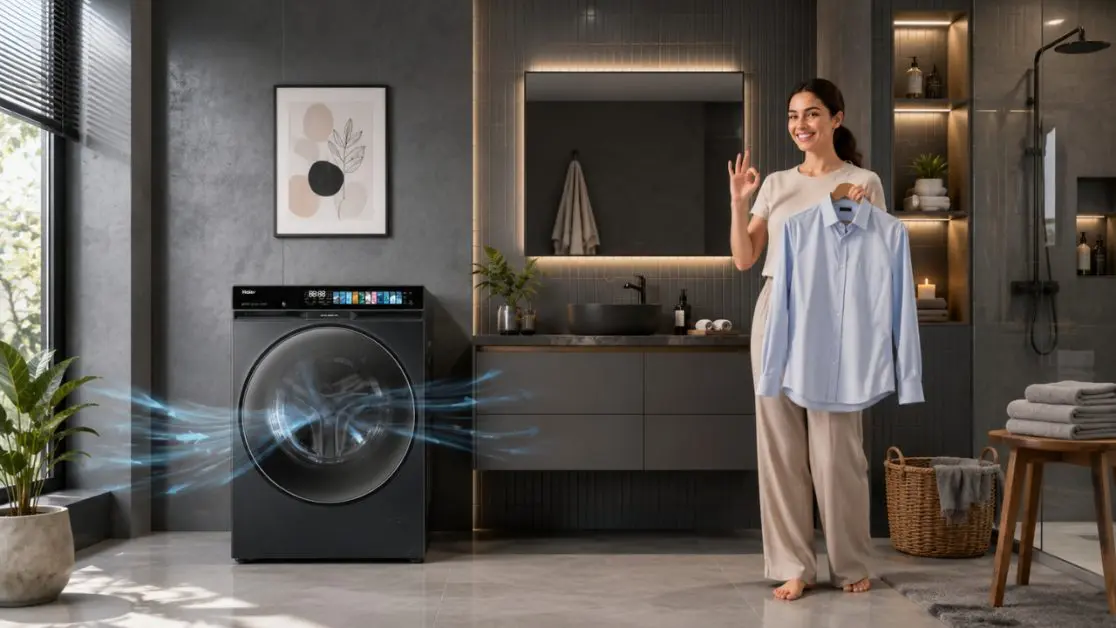
Instead of trapping moisture inside the drum, the system uses 360-degree micro-pressure air circulation to refresh the drum every two minutes for up to 12 hours after washing.
That changes the experience completely.
The machine keeps air moving even after the cycle finishes.
Which means:
- Less trapped odour
- Better drum freshness
- Reduced moisture buildup
- Clothes feel fresher for longer
- Lower chances of stale-smelling laundry
It sounds simple.
But simple systems often solve the biggest daily frustrations.
A refrigerator changed food storage by controlling temperature.
Modern laundry systems are changing fabric care by controlling moisture.
That is the larger pattern.
Humidity Is Also a Lifestyle Problem
People rarely discuss this openly.
Humid weather changes routines.
Laundry gets delayed.
Bedsheets pile up.
Office clothes need rewashing.
Parents worry about hygiene for children.
Working professionals living alone postpone laundry because drying becomes unpredictable.
Even emotional energy shifts.
A humid home feels heavier.
And appliance technology increasingly shapes emotional comfort, not just utility.
Why Freshness Matters More in Modern Indian Homes
Modern homes operate differently now.
People return late from work.
Laundry often runs overnight.
Weekend washing loads are larger.
Indoor drying has increased in apartments.
That creates a new demand.
Machines need to support real routines, not ideal routines.
This is where technologies like Night Wash and AI-assisted washing systems become useful during humid seasons.
The Haier F11 series includes Night Wash functionality designed for quieter operation.
That allows families to run late-night cycles without disturbing sleep.
Small features.
Big behavioural shift.
Because convenience compounds.
One smart feature saves ten tiny decisions.
And that is how modern appliances quietly reduce mental load.
Why AI-Powered Washing Matters During Humid Weather
Most people underestimate how inconsistent laundry conditions are during monsoon season.
Sweat levels change.
Fabric weight changes.
Humidity changes drying time.
Children return home with muddy clothes.
Office wear needs gentler care.
A fixed wash cycle struggles in changing environments.
That is why AI-driven washing systems are becoming more relevant.
One-Touch AI Wash Reduces Guesswork
The Haier F11 range includes One-Touch AI Wash functionality that automatically senses:
- Fabric type
- Load size
- Dirt level
Then adjust settings accordingly.
This matters because humid weather creates inconsistency.
One day requires heavy stain removal.
Another day only needs freshness recovery.
Manual adjustments become tiring over time.
AI systems reduce that cognitive effort.
The smartest appliances are not the ones with the most buttons.
They are the ones that quietly remove unnecessary decisions.
That is the future of home technology.
The Hidden Relationship Between Humidity and Hygiene
Humidity increases bacterial growth.
That is not fear marketing.
It is basic environmental science.
Warm, damp spaces create favourable conditions for microbial activity.
This is why towels smell strange faster during monsoon months.
This is why damp clothes feel unpleasant even when technically “clean.”
The solution is not overwashing.
The solution is better airflow and moisture control.
How Drum Freshness Impacts Everyday Hygiene
Most people focus on detergent quality.
Very few think about drum hygiene.
But the drum touches every fabric you wash.
If moisture remains trapped inside, freshness quality drops over time.
Technologies designed around airflow change that equation.
Haier’s Ultra Fresh Air system works like ventilation for the washing drum.
It continuously refreshes the internal environment instead of allowing moisture to stagnate.
The principle feels familiar because Indian homes already understand airflow.
People open windows after rain.
They dry mattresses in sunlight.
They place fans near damp corners.
Freshness has always depended on movement.
Modern washing machines are simply applying the same principle intelligently.
Modern Laundry Is Becoming a Recovery System
Old appliances completed tasks.
New appliances recover environments.
That difference matters.
A modern air conditioner balances humidity.
A refrigerator stabilises freshness.
A smart washing machine protects fabric conditions after washing.
Home appliances are becoming environmental management systems.
And humid Indian weather exposes why that evolution matters.
Why Large-Capacity Washing Machines Matter During Monsoon Season
Humidity also changes washing frequency.
Families often wait for larger laundry loads because drying becomes harder during rainy weeks.
That increases demand for higher-capacity washing systems.
The Haier F11 12 Kg range supports:
- Larger family loads
- Bedsheets and blankets
- Bulk monsoon laundry
- Festival-season washing
- Faster weekly laundry management
Capacity is not just about kilograms.
It is about rhythm.
The right appliance reduces backlog.
And backlog is what makes homes feel chaotic during monsoon months.
The Best Technology Often Feels Invisible
People rarely celebrate airflow.
Until the absence of airflow creates discomfort.
That is how good technology works.
You stop noticing the machine.
You notice the ease.
Fresh-smelling clothes.
Less rewashing.
Quieter nights.
Fewer laundry headaches during monsoon season.
The appliance fades into the background.
Life improves in the foreground.
That is the real goal of smart home technology.
Not complexity.
Clarity.
Not more features.
Less friction.
What Humid Indian Weather Really Teaches Us About Modern Homes
Humidity reveals whether a home system is reactive or adaptive.
Reactive systems wait for problems.
Adaptive systems prevent them quietly.
That is why technologies built around airflow, freshness retention, AI-assisted washing, and moisture management matter increasingly in Indian homes.
Because Indian weather is not predictable anymore.
Urban homes are becoming smaller.
Laundry routines are becoming faster.
And people want appliances that understand modern life without demanding constant attention.
The washing machine is no longer just a cleaning tool.
It is becoming part of the home’s climate system.
And perhaps that is the bigger insight.
The future of appliances is not about making machines smarter.
It is about making everyday life feel lighter.
Especially during a humid Indian July afternoon when even dry clothes do not feel fully dry.
That is when the right technology stops feeling optional.
It starts feeling human.
Frequently Asked Questions
Why do my clothes still smell damp even after washing them?
In humid Indian weather, fabrics absorb moisture from the air after washing. If airflow is poor, odour-causing bacteria can return before clothes fully dry.
Why does my washing machine smell worse during monsoon season?
Moisture gets trapped inside the drum, rubber gasket, and detergent compartments. In humid environments, that trapped moisture creates stale smells over time.
I leave my laundry inside the washer overnight. Do I need to wash everything again?
Not always, but humid conditions increase the chances of odour buildup quickly. Air-circulation technologies like Ultra Fresh Air help reduce trapped moisture after the cycle ends.
Why do towels smell strange faster during the rainy season?
Towels retain moisture longer because of their thickness. In humid weather, slow drying creates ideal conditions for bacterial growth and stale smells.
Why do bedsheets feel damp even after drying indoors?
High indoor humidity slows evaporation. Clothes and fabrics may technically be dry but still retain atmospheric moisture.