
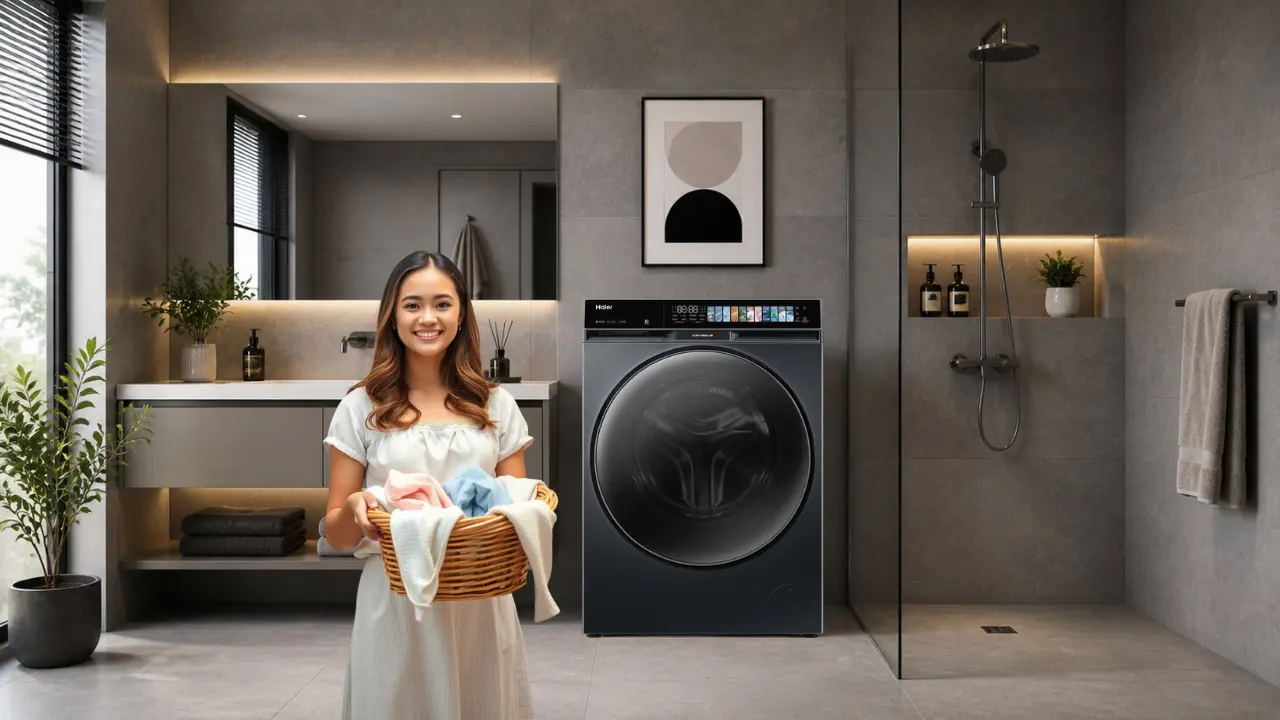

Yes. Air circulation reduces bacteria build up by removing moisture, disrupting stagnant air pockets, and limiting the conditions where microbes thrive.
It does not eliminate bacteria completely, but it slows growth, reduces odour, and keeps surfaces and fabrics fresher for longer.
Why does your home smell “off” even when it looks clean?
Sunday morning. Windows closed. AC running. Laundry done last night.
Everything looks fine.
But something feels… stale.
That feeling is not imagination. It is biology.
Bacteria do not need visible dirt. They need stillness, moisture, and time.
And most modern homes unintentionally provide all three.
- Closed windows trap humidity
- Appliances hold residual moisture
- Fabrics stay damp longer than they should
Clean spaces can still host invisible growth.
Clean is visual. Hygiene is environmental.
That distinction changes everything.
What actually causes bacteria build up in homes?
Bacteria growth is not random. It follows a simple system.
Three conditions create the perfect breeding ground:
1. Moisture
Bathrooms, kitchens, and even washing machines retain moisture after use.
2. Stagnant air
Closed rooms with no airflow allow microbes to settle and multiply.
3. Organic residue
Sweat, food particles, detergent residue. Invisible, but present.
Put them together, and growth accelerates.
| Condition | What Happens | Result |
| High humidity | Surfaces stay damp | Bacteria multiply faster |
| Poor ventilation | Air becomes stagnant | Odours build up |
| Residue buildup | Microbes feed easily | Hygiene declines |
Bacteria do not grow because something is dirty. They grow because the environment allows it.
So where does air circulation fit into this system?
Air circulation does one critical job.
It breaks the environment bacteria depend on.
Here is how it works:
- Moving air reduces moisture retention
- Continuous airflow prevents stagnation
- Dry surfaces slow microbial growth
Think of it like drying clothes on a windy terrace versus a closed room.
Same clothes.
Different outcome.
Airflow is not cleaning. It is prevention.
Does air circulation kill bacteria? Or just control it?
This is where most people get it wrong.
Air circulation does not kill bacteria directly.
It changes the conditions so bacteria struggle to survive.
Three possible approaches:
One option is chemical cleaning
- Kills bacteria quickly
- Requires effort and consistency
- Temporary effect
The second option is passive neglect
- No intervention
- Bacteria grows freely
- Odours and hygiene issues increase
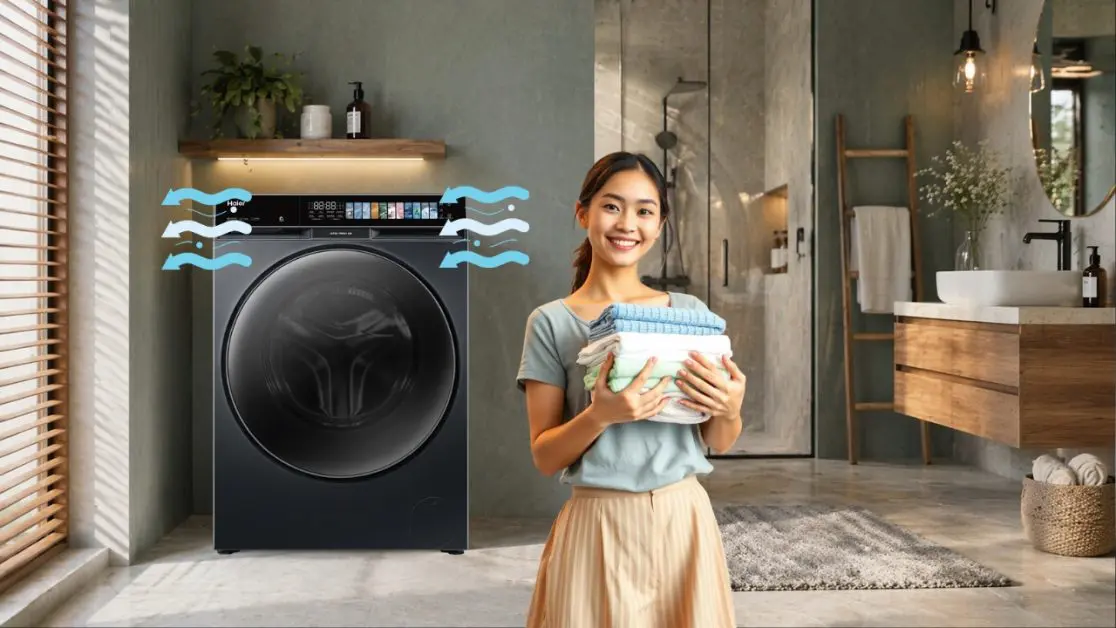
The third option is environmental control through airflow
- Reduces moisture continuously
- Prevents growth cycles
- Low effort, long-term impact
The third option is subtle. But powerful.
You do not always need to fight bacteria. You need to outsmart its environment.
Where air circulation matters the most in Indian homes
Not every space needs the same level of airflow.
Some areas demand it more than others.
High-risk zones:
- Bathrooms after hot showers
- Kitchens after cooking
- Laundry areas after wash cycles
- Bedrooms with closed AC environments
Why these areas matter:
- Higher humidity levels
- Limited ventilation in modern apartments
- Frequent use leads to faster buildup
In Indian households, where humidity levels spike during monsoon and summers, airflow becomes even more critical.
The hidden problem inside washing machines
Here is something most people overlook.
Washing machines clean clothes.
But what cleans the washing machine?
After a cycle, moisture stays trapped inside the drum.
Add detergent residue. Add fabric lint.
Now pause.
That is a perfect bacterial environment.
This is why sometimes freshly washed clothes do not feel fresh.
It is not the wash cycle.
It is what happens after.
How modern appliances use air circulation to solve this
This is where design thinking enters.
Instead of expecting users to manually maintain hygiene, some systems automate airflow.
Take the Haier 12 Kg F11 Front Load Washing Machine (HW120-DM14F11BKU1).
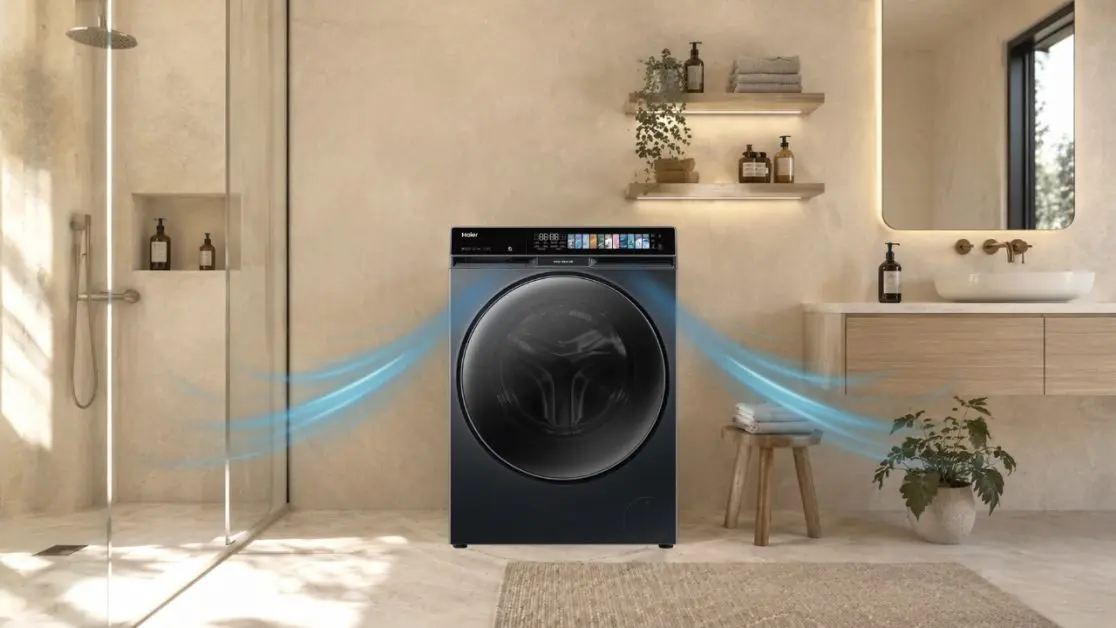
It uses Ultra Fresh Air Technology.
- 360 degree micro pressure air circulation
- Refreshes the drum every 2 minutes
- Continues airflow for up to 12 hours after the wash cycle
This changes the equation.
The machine does not just wash.
It maintains its own environment.
There is also a washer dryer variant, Haier 12 Kg F11 Front Load Washer & Dryer (HWD120-DM14F11BKU1), which applies the same airflow logic to extended drying cycles.
The shift is simple. From cleaning once to staying fresh continuously.
Why continuous airflow matters more than occasional cleaning
Most people rely on periodic cleaning.
Once a week. Maybe once a month.
But bacteria does not follow your schedule.
It grows daily.
This is why continuous airflow wins.
| Approach | Frequency | Impact |
| Manual cleaning | Weekly or monthly | Temporary hygiene |
| Chemical cleaning | Occasional | Reactive solution |
| Continuous airflow | Always active | Preventive system |
Consistency beats intensity when it comes to hygiene.
What happens when air circulation is ignored?
The signs show up slowly.
Then suddenly.
- Musty smell in clothes
- Sticky surfaces in bathrooms
- Mold spots near corners
- AC rooms feeling heavy, not fresh
None of this happens overnight.
It builds silently.
That is the real risk.
Bacteria growth is invisible until it becomes unavoidable.
How to improve air circulation in everyday life
You do not need a complete overhaul.
Small shifts change outcomes.
Practical ways to improve airflow:
- Open windows for at least 20 minutes daily
- Use exhaust fans consistently in kitchens and bathrooms
- Avoid sealing rooms completely for long hours
- Leave washing machine doors slightly open after use
- Choose appliances with built-in air circulation systems
One more layer
Smart appliances reduce the need for manual habits.
They automate what we forget.
The bigger pattern most people miss
Air circulation is not just about hygiene.
It is about system design.
Homes today are more sealed than ever.
- Better insulation
- More air conditioning
- Less natural ventilation
Comfort increased.
Air movement decreased.
And with it, new problems emerged.
Modern living solved temperature. It forgot airflow.
So, does air circulation really prevent bacteria build up?
Yes.
Not by killing bacteria instantly.
But by making survival harder.
That is a smarter strategy.
Because prevention scales.
And effort does not.
What this means for how we choose appliances
The question is no longer just performance.
It is about the sustainability of hygiene.
When evaluating appliances, think beyond features.
Think in systems.
- Does it maintain freshness after use?
- Does it reduce manual intervention?
- Does it manage its own internal environment?
Because the real upgrade is not smarter machines.
It is a self-sustaining system.
The one insight to remember
Bacteria grow where systems stay still. Freshness lives where air keeps moving.
That is the quiet difference.
And once you see it, you start designing your home differently.
Frequently Asked Questions
I keep cleaning my home, but it still smells off. What am I missing?
You’re focusing on visible cleanliness, not environmental hygiene. Even clean-looking spaces can trap moisture and stagnant air, perfect conditions for bacteria growth. Airflow is likely the missing piece.
Should I invest in better cleaning products or improve airflow in my home?
If the issue is recurring smells or dampness, airflow will give you longer-lasting results. Cleaning products kill bacteria temporarily, airflow prevents them from thriving again.
I feel like I’m constantly fighting odours. Is there a more passive solution?
Yes, shift from reactive cleaning to preventive airflow. Continuous air circulation reduces the need for constant intervention.
Do I really need to change my habits, or can appliances handle this?
A mix works best. Small habits (like opening windows) help, but appliances with built-in air circulation reduce reliance on consistency.
Do washing machines need cleaning if they already clean clothes?
Absolutely. Residual moisture, detergent, and lint create an environment for bacteria inside the drum.
How does air circulation in modern washing machines help?
It keeps the drum dry after cycles, reducing moisture buildup and preventing bacterial growth between washes.
Is something like Haier 12 Kg F11 Front Load Washing Machine HW120-DM14F11BKU1 actually useful or just marketing?
Features like continuous airflow (e.g., “Ultra Fresh Air”) provide real value by maintaining dryness inside the drum, which directly impacts hygiene and odour control.
I forget to leave my washer door open. Is there a workaround?
Machines with automatic airflow systems solve this by circulating air even when the door is closed.
Are washer-dryer combos better for hygiene?
Models like Haier 12 Kg F11 Front Load Washer Dryer HWD120-DM14F11BKU1 extend airflow into drying cycles, reducing moisture-related issues further.