
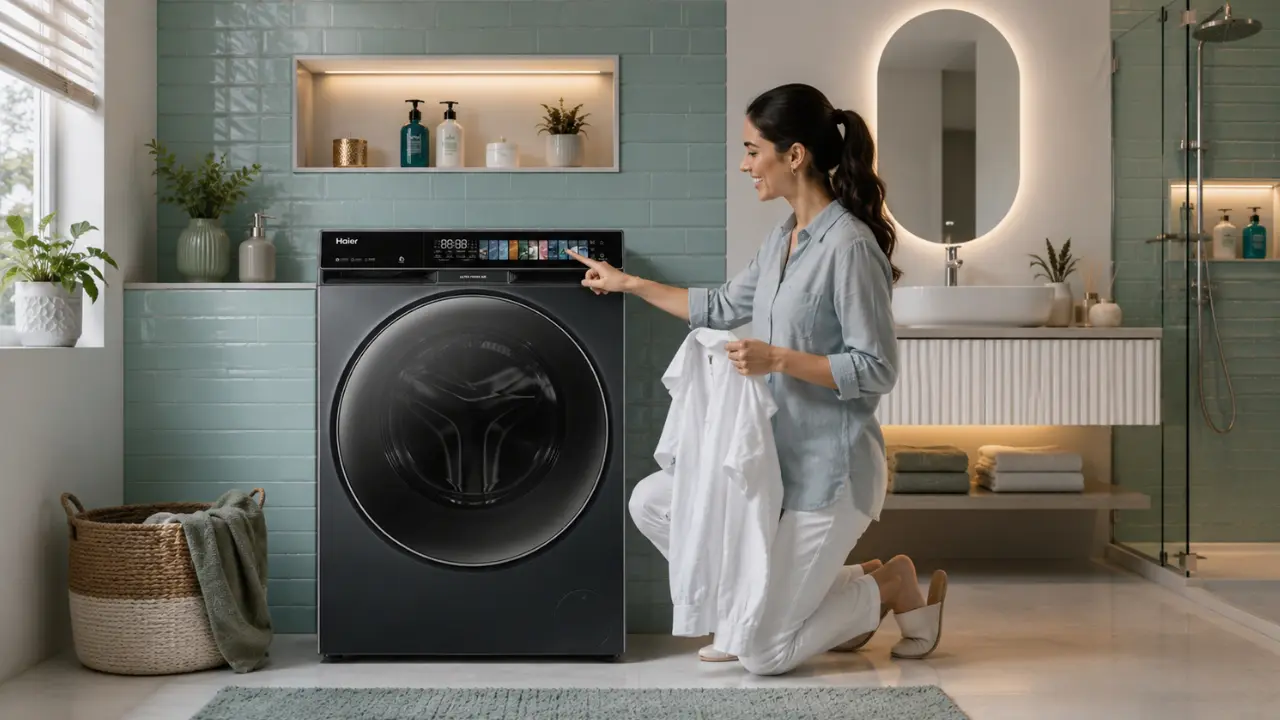

Washing machine controls evolved because life evolved.
Washing machine controls moved from mechanical knobs to digital touch panels because Indian homes changed their relationship with time, convenience, and decision-making. Earlier machines focused on function. Modern washing machines focus on interaction. Today, the control panel is not just a switchboard. It is the communication layer between people, fabric care, hygiene, energy efficiency, and smart living.
A washing machine used to ask very little from people.
Turn the knob. Start the cycle. Wait.
That was the system.
And for years, it worked.
But modern households do not run on the same rhythm anymore.
Laundry now happens between Zoom calls. During midnight baby routines. Before the morning office runs. After gym sessions. During monsoon emergencies. In homes where both partners work. In apartments where space is tight and time feels even tighter.
The machine changed because the household changed first.
Technology rarely leads to culture.
It usually responds to pressure.
And washing machine controls are one of the clearest examples of that shift.
The era of knobs solved one problem brilliantly
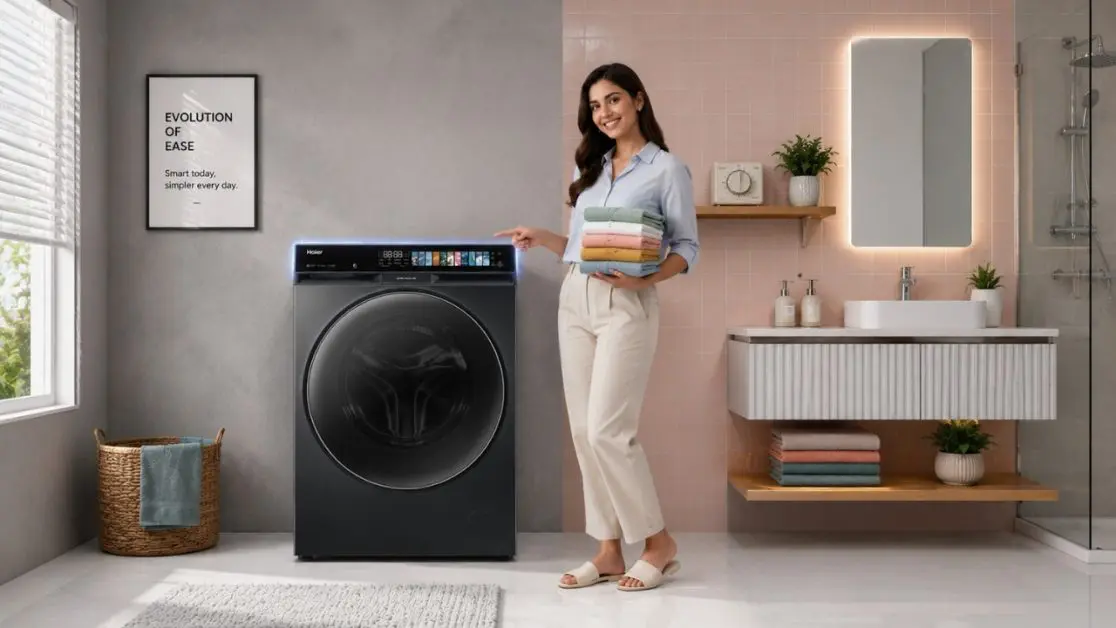
Early washing machines were mechanical systems.
Simple.
Reliable.
Predictable.
You turned a physical knob because the machine itself was mechanical. Every setting corresponded to a direct internal action.
There was clarity in that.
One knob controlled wash time.
Another handled water levels.
A separate dial adjusted spin settings.
The system mirrored how people thought about appliances then: machines as tools.
Not companions.
Not interfaces.
Not smart systems.
Just tools.
Why knobs worked for Indian households
Mechanical controls became popular because they matched the realities of Indian homes during that era.
They handled:
- Voltage fluctuations better
- Rough daily usage
- Multi-generational users
- Simpler maintenance requirements
- Lower learning curves
A grandmother could use it.
A teenager could use it.
A first-time appliance owner could use it.
Good systems reduce intimidation.
That principle still matters today.
And knobs felt trustworthy because they were visible.
You could see the setting.
Physical systems create psychological reassurance.
Like turning the pages of a real book instead of endlessly scrolling a screen.
But knobs created friction people stopped noticing
Every technology eventually reveals its limitations.
Not dramatically.
Quietly.
Mechanical controls worked well until washing itself became more complex.
Because modern laundry is no longer uniform.
Think about an average Indian household today:
- Office shirts
- Gym wear
- School uniforms
- Delicate ethnic fabrics
- Bedsheets
- Quick refresh loads
- Heavy monsoon laundry
One knob cannot intelligently manage all those variables efficiently.
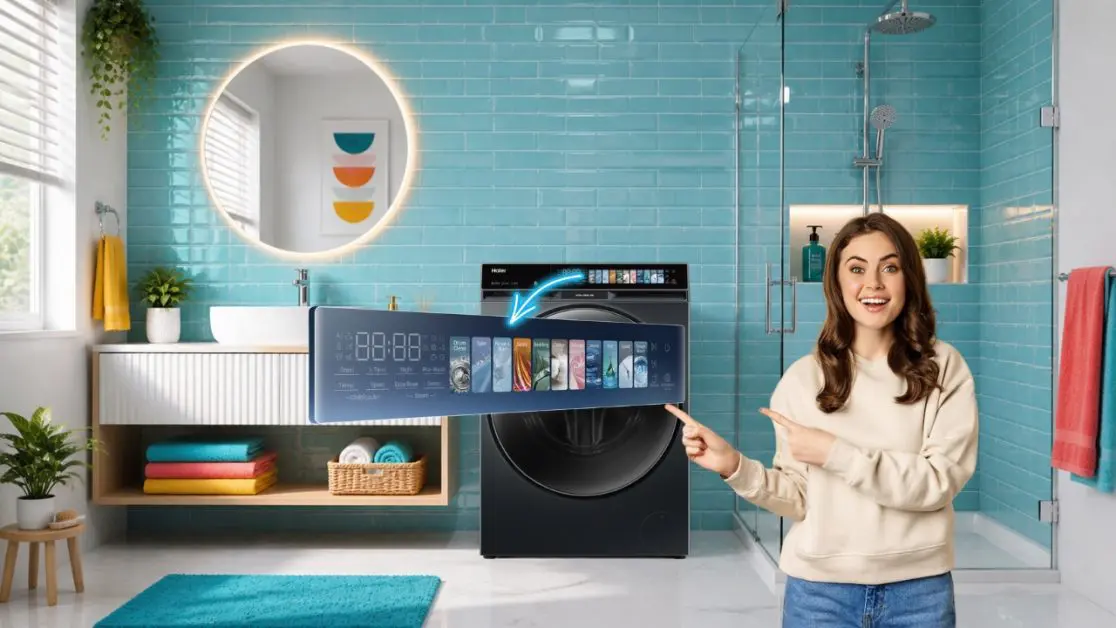
That is where digital controls entered.
Not as decoration.
As compression.
Digital interfaces compress complexity into simpler decisions.
The hidden problem with older controls
Older control systems assumed people would adapt to the machine.
Modern systems flipped that equation.
Now the machine adapts to people.
That sounds small.
It is not.
It changes the emotional relationship with appliances.
Because the best technology removes invisible effort.
A good washing machine should not make people think harder.
It should reduce decisions.
That is the real evolution.
Digital displays changed the psychology of washing machines
The first major shift was not touch controls.
It was a digital display.
Small screens transformed washing machines from mechanical devices into interactive systems.
Suddenly people could see:
- Remaining wash time
- Program stages
- Error alerts
- Water temperature
- Fabric settings
- Delay timers
Visibility creates confidence.
And confidence changes behaviour.
A person waiting blindly for laundry behaves differently from someone who understands the process.
This shift mirrors what happened in cars.
Older cars gave minimal information.
Modern dashboards explain everything in real time.
Information reduces anxiety.
Indian homes started expecting smarter interfaces
This expectation accelerated rapidly in India after smartphones became mainstream.
That is the hidden force behind touch washing machines.
Not laundry.
Phones.
Once people became comfortable using touch interfaces daily, physical buttons started feeling outdated across categories.
TVs changed.
Microwaves changed.
Air conditioners changed.
Washing machines followed..
People no longer wanted appliances that looked industrial.
They wanted appliances that felt integrated into modern homes.
Touch controls changed aesthetics as much as functionality
This is where many people misunderstand appliance evolution.
Touch panels are not just about technology.
They are about the atmosphere.
A kitchen or laundry area feels different when appliances look cleaner, quieter, and more seamless.
Modern homes increasingly value visual calm.
Fewer protruding knobs.
Smoother surfaces.
Integrated lighting.
Minimalist interfaces.
Design affects behaviour.
A cluttered interface creates mental noise.
A clean interface creates perceived ease.
That is why touch controls became popular even among users who rarely use advanced programs.
The interface itself signals modernity.
Why touch panels work particularly well in urban Indian homes
Urban Indian homes face three pressures simultaneously:
- Less space
- Faster routines
- Higher expectations from appliances
That changes appliance design priorities.
Touch interfaces help because they:
- Reduce physical clutter
- Improve cleaning convenience
- Simplify program navigation
- Enable advanced wash customisation
- Support smarter diagnostics
And increasingly, they support connected ecosystems.
A washing machine no longer exists alone.
It exists alongside smart TVs, app-controlled ACs, WiFi routers, voice assistants, and automated lighting systems.
Homes are becoming operating systems.
Appliances are becoming nodes inside that system.
The rise of AI-driven controls changes the meaning of “easy”
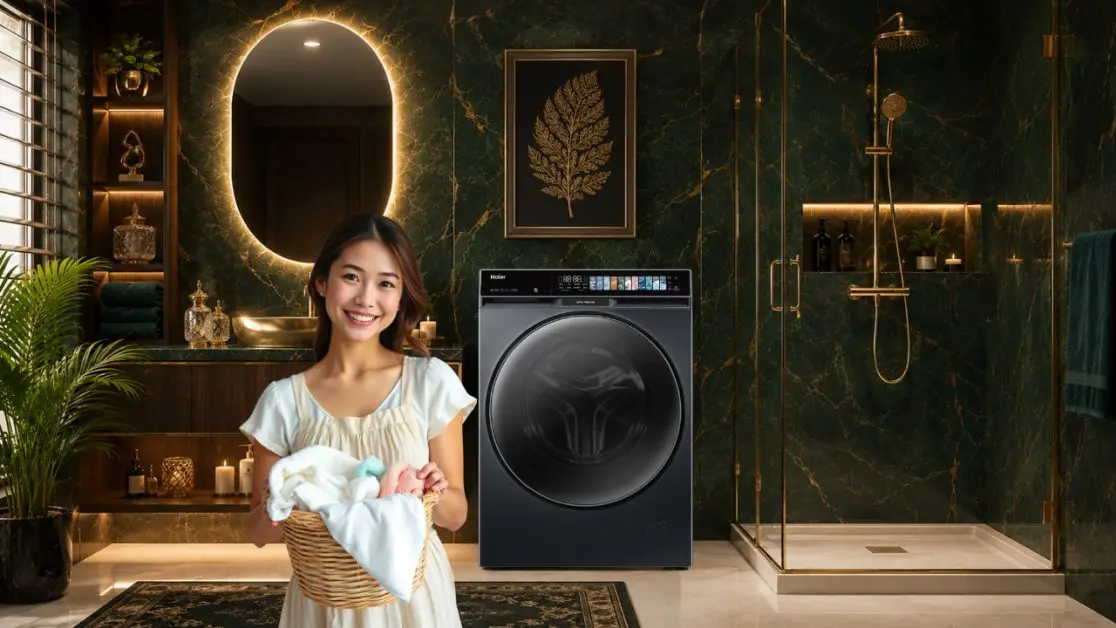
Earlier convenience meant fewer buttons.
Now convenience means fewer decisions.
That is the new frontier.
Modern premium washing machines increasingly use intelligent systems that recommend settings, optimize water usage, adjust wash cycles, and improve energy efficiency automatically.
The machine starts learning patterns.
And once appliances begin learning patterns, controls become less visible altogether.
The future of controls is paradoxical.
The smarter the machine becomes, the less interaction people need.
Machines are moving from command-based systems to responsive systems
Old system:
You instruct the machine.
New system:
The machine interprets the situation.
That is a fundamental shift.
Some modern Haier washing machines like the Haier India F11 and F9 series reflect this broader industry movement toward AI-enabled fabric care, touch-based interfaces, Fresh Air technology, and intelligent washing optimization designed around evolving Indian lifestyles.
The interesting part is not the technology itself.
It is what the technology removes.
Less guesswork.
Less overwashing.
Less energy waste.
Less mental load.
Good technology disappears into routine.
Why younger buyers now judge appliances differently
Millennial and Gen Z buyers often evaluate appliances emotionally before technically.
That surprises older industries.
But it makes sense.
People today buy appliances based on three invisible questions:
- Does this simplify my life?
- Does this fit my space aesthetically?
- Does this reduce future friction?
Specifications still matter.
But experience matters more.
A 1400 RPM spin speed sounds technical.
A quieter late-night laundry cycle feels personal.
A touch panel that responds instantly feels modern.
An interface that remembers your preferred wash mode feels thoughtful.
Technology becomes meaningful when it changes daily emotion.
Not just performance metrics.
The washing machine became part of home identity
This is the larger cultural shift.
Earlier appliances stayed hidden.
Now they shape interiors.
People post kitchens online.
They design utility balconies intentionally.
They coordinate appliance finishes with furniture palettes.
The appliance industry quietly entered the world of lifestyle design.
That changes how controls are built.
Because interfaces are no longer purely functional surfaces.
They are visual experiences.
What comes after touch controls?
Probably fewer controls altogether.
Voice integration.
Predictive washing.
App ecosystems.
Fabric recognition.
Automated detergent optimization.
The interface may eventually disappear into ambient interaction.
But every evolution follows the same principle:
Reduce friction without reducing trust.
That balance matters.
Because fully automated systems fail when users stop understanding what the machine is doing.
The best interfaces still communicate clearly.
That lesson never changed from the knob era.
The real story is not knobs versus touch
It is something deeper.
Control systems evolve whenever human routines evolve.
Knobs reflected slower homes.
Touch panels reflect connected homes.
AI systems reflect overloaded homes.
Every interface reveals what a society values at that moment.
And modern households increasingly value this:
Less effort.
More clarity.
Better living environments.
Technology that feels calm instead of demanding.
That is why washing machine controls evolved.
Not because knobs failed.
But because life became more complex.
And the best appliances quietly absorb complexity so people do not have to carry it themselves.
That is what modern home technology is really doing.
Not adding more buttons.
Reducing more friction.
Frequently Asked Questions
I get confused by too many wash modes. Are touch panels actually easier than knobs?
They can be easier if the interface is well-designed. Touch panels organize more options into guided programs, while knobs feel simpler because they are visible and direct.
My parents find digital appliances intimidating. Will a touch washing machine be difficult for them?
Not necessarily. Many modern machines use simple labels, preset cycles, and clear displays, but a knob-based or hybrid model may still feel more reassuring for older users.
I leave laundry late at night because of work. Do smart controls really help with hygiene?
Yes, features like delay timers, cycle visibility, reminders, and fresh-air functions can reduce the chance of clothes sitting damp for too long.
My gym clothes smell even after washing. Can digital controls help?
They can. Dedicated sportswear, hygiene, or intensive wash programs manage temperature, soaking, and rinse cycles more effectively, helping remove sweat and odor from activewear.