
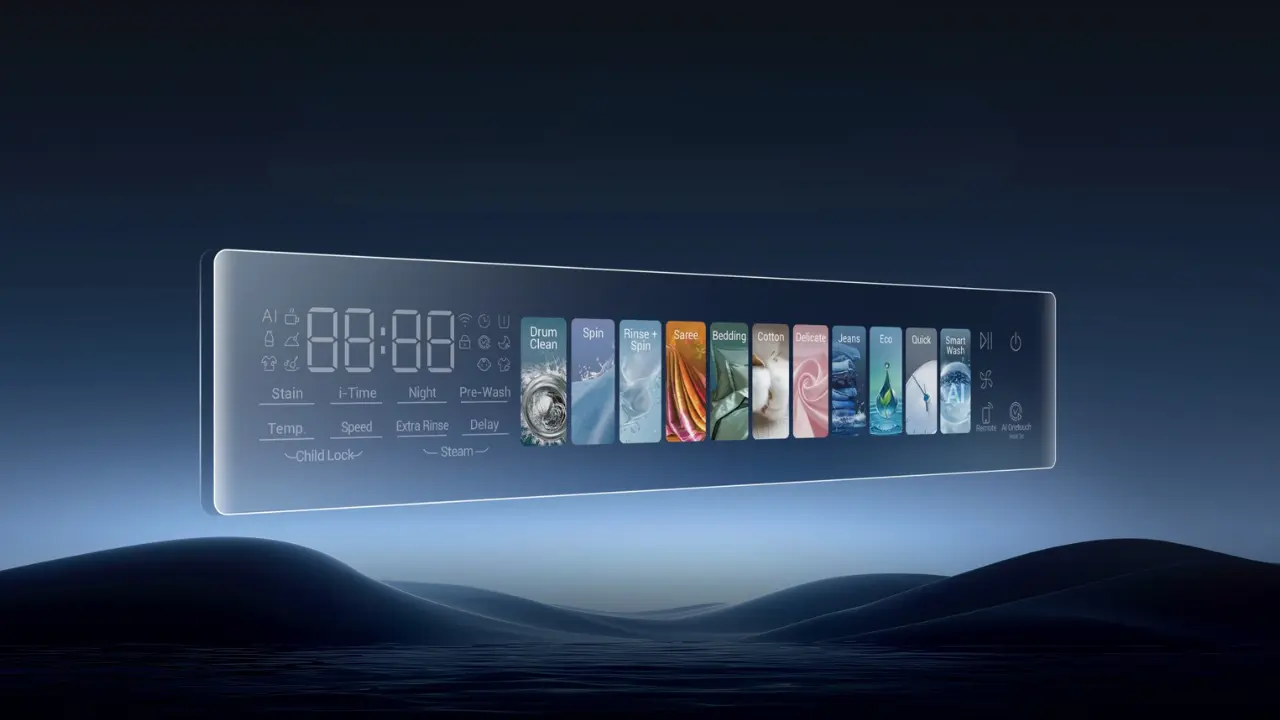

Visual displays matter because they turn complex appliance functions into simple, intuitive decisions.
They reduce guesswork, save time, and make everyday tasks feel effortless by showing exactly what is happening, what to do next, and how to do it better.
In modern homes, the display is no longer decorated. It is the control system.
The moment you realise something feels… off.
It is a Sunday morning.
A pile of laundry waits. Shirts, gym wear, bedsheets.
You press start on your washing machine.
And then you pause.
Is this the right mode?
Did I add too much detergent?
How long will this take?
The machine is working. But you are still thinking.
That is the friction.
No effort. Not time.
Uncertainty.
Modern appliances do not fail because of technology. They fail because of communication.
Every appliance today is powerful.
- Washing machines detect fabric types
- ACs adjust cooling based on room conditions
- Refrigerators manage humidity and airflow
But here is the gap.
The machine knows what it is doing.
You don’t.
And when you don’t understand a system, you hesitate.
A silent system creates loud confusion.
This is where visual displays change everything.
What does a visual display actually solve?
Let’s strip this down.
A visual display is not just a screen. I am a translator.
It translates machine intelligence into human understanding.
Three problems it quietly solves
- Decision overload
Too many buttons. Too many modes. Too many choices - Lack of feedback
You start a cycle. But you do not know what is happening next - Invisible optimisation
The machine adjusts settings, but you cannot see or trust those adjustments
Now look at what a good display does.
| Problem | Without Display | With Visual Display |
| Choosing settings | Trial and error | Guided selection |
| Understanding progress | Guesswork | Real-time clarity |
| Trusting automation | Doubt | Confidence |
Clarity is not a feature. It is a feeling.
The shift from buttons to behaviour
Earlier appliances were designed like switches.
- Press a button
- Hope it works
- Wait for the result
Now they are designed like systems.
- Understand input
- Adjust automatically
- Communicate continuously
And communication happens through the display.
Take something like a modern AI-enabled washing machine.
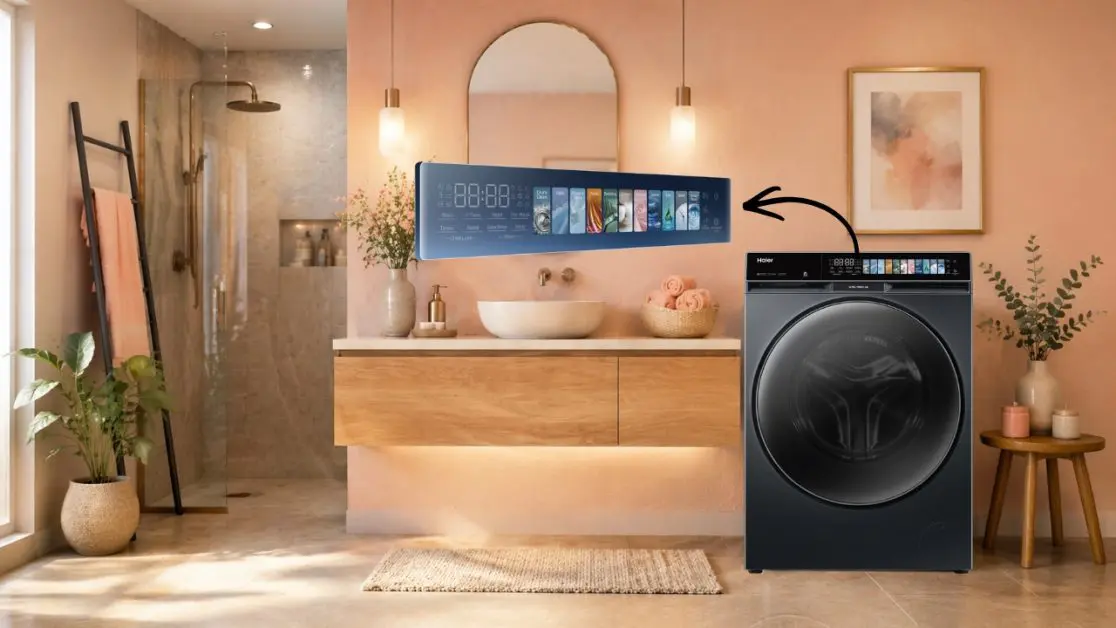
In models such as the Haier 12 Kg F11 Front Load Washer & Dryer Washing Machine (HWD120-DM14F11BKU1), the AI Colour Full Panel does something simple but powerful.
It shows you what the machine is thinking.
Not just numbers.
Not just time.
But visual cues. Fabric types. Program selections. Progress stages.
The difference is subtle.
You stop guessing. You start trusting.
Why colour and design matter more than you think
A black and white display gives information.
A colour display gives meaning.
There is a difference.
Think about how we process visuals
- Red signals urgency
- Blue feels calm
- Icons reduce reading effort
- Images trigger recognition faster than text
Now apply that to appliances.
Instead of reading:
“Cotton Wash 45 min”
You see:
A cotton icon. A timeline. A progress bar.
You don’t process. You recognise.
That saves seconds.
But more importantly, it saves mental effort.
The hidden system: reducing decision fatigue
Decision fatigue is real.
From morning to night, every small choice drains energy.
What to wear. What to eat. What to prioritise.
Appliances used to add to that burden.
Now they remove it.
Three ways visual displays reduce mental load
- Pre-decided paths
The display suggests optimal settings based on input - Real-time reassurance
You see the process unfolding, step by step - Error prevention
Alerts and prompts stop mistakes before they happen
For example, in AI-powered washing machines like the Haier 10 Kg F9 Pro Front Load Washer Washing Machine (HW100-DM14F9PBKU1), one-touch systems paired with visual panels automatically match wash settings to load and fabric.
You press once.
The display tells you the rest.
Less thinking. Better outcomes.
Where this shows up in everyday Indian homes
This is not about technology.
This is about real life.
Scenario 1: The working professional
You come home late.
You want to run a quick wash.
One option is to manually select settings.
- Takes time
- Requires attention
- Risk of wrong choice
The second option is to use an AI mode.
- Press once
- Follow the display
- Done in seconds
The cost is control.
The benefit is convenience.
Most people choose convenience.
Scenario 2: The family home
Multiple people use the same appliance.
Parents. Kids. Maybe grandparents.
Without a clear display:
- Everyone uses different settings
- Mistakes happen
- Clothes get damaged
With a visual interface:
- Icons guide usage
- Programs are clearly labelled
- Anyone can operate it
Good design reduces dependency.
Scenario 3: Festive or heavy usage days
Diwali cleaning. Wedding prep. Guests at home.
Laundry piles grow. Time shrinks.
A visual display helps you:
- Track multiple cycles
- Plan loads efficiently
- Avoid overlaps
You stop reacting.
You start planning.
Visual displays turn appliances into systems
Here is the deeper shift.
An appliance is no longer a tool.
It is a system that:
- Observes
- Decides
- Communicates
- Adapts
And the display is the interface of that system.
What changes when you see the system?
- You trust automation more
- You intervene less
- You get consistent results
For example, features like:
- Load sensing
- Smart dosing
- AI wash programs
All exist in the background.
But the display makes them visible.
And visibility creates trust.
The economics of better displays
This is not just about experience.
It is about efficiency.
Clear cost-benefit breakdown
Without visual displays
- More water usage due to wrong settings
- More detergent waste
- Rewashing due to errors
- Higher electricity consumption
With visual displays
- Optimised cycles
- Reduced resource usage
- Fewer mistakes
- Better long-term fabric care
It is economically efficient.
And environmentally smarter.
Why this matters for the future of appliances
We are moving toward smarter homes.
Homes where devices talk to each other.
Where systems predict needs.
Where automation increases.
But there is a risk.
More intelligence can create more confusion.
Unless it is explained clearly.
That is the role of visual displays.
They make advanced systems feel simple.
One insight to take with you
A powerful appliance without a clear display is like a car without a dashboard.
It works.
But you never feel in control.
So what should you look for in a modern appliance display?
Not all displays are equal.
Here is a simple framework.
Look for three things
- Clarity
Can you understand it in seconds? - Guidance
Does it help you choose the right setting? - Feedback
Does it show progress and updates clearly?
Optional but valuable
- Colour panels for faster recognition
- AI suggestions for automation
- Touch controls for ease of use
Machines like the Haier 12 Kg F11 Front Load Washer Washing Machine (HW120-DM14F11BKU1) combine these into a single interface, where the display becomes the decision layer, not just the control layer.
The bigger picture
This is not about washing machines.
Or refrigerators.
Or ACs.
This is about how we interact with systems.
In a world full of complexity, the winners are not the most powerful systems.
They are the ones that are easiest to understand.
Final thought
The future of appliances is not silent intelligence.
It is visible intelligence.
Because when you can see what a system is doing,
you stop managing it.
And it finally starts helping you.
That is when a home feels effortless.
Frequently Asked Questions
Why do I feel unsure every time I start my washing machine?
Because most machines give you control without clarity. You’re asked to choose modes, time, and settings but without guidance. A visual display reduces this uncertainty by suggesting the right options and showing what’s happening, so you don’t have to second-guess.
I just want to wash clothes quickly. Why does it feel like a decision-heavy task?
Laundry used to be mechanical. Now it’s digital. More features = more decisions. Without a visual interface guiding you, even simple tasks feel mentally draining. Displays simplify this by offering “one-touch” or AI-guided paths.
I left my laundry in the washer overnight. How would a display have helped me avoid this?
Modern displays show cycle completion alerts, reminders, and sometimes even notifications. This real-time feedback ensures you don’t forget loads, preventing odor and rewashing.
How do I know if I’ve added too much detergent?
Without a display, you guess. With one, especially in AI-enabled machines, you get prompts or auto-dosing indicators that guide correct usage, saving detergent and preventing residue buildup.
I don’t trust “AI modes”. How do I know the machine is doing the right thing?
Trust comes from visibility. When the display shows what the machine is adjusting (time, water level, fabric type), automation feels transparent instead of mysterious.
What’s the point of a colour display in appliances?
Colour adds meaning, not just aesthetics. It helps you recognise actions faster red for alerts, blue for normal operation, icons for instant understanding reducing effort and errors.