
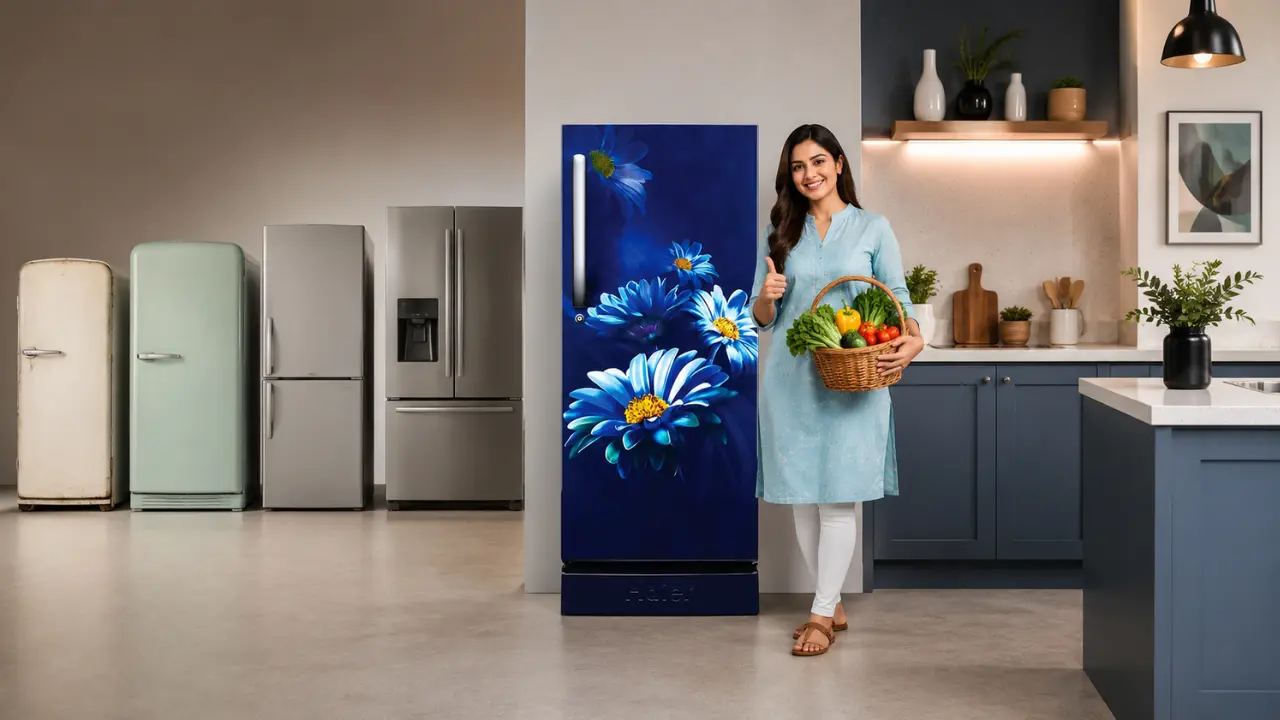

A refrigerator used to do one job.
Keep food cold.
Today, it quietly manages freshness, energy savings, kitchen aesthetics, inverter backup during power cuts, organised storage, hygiene, and even the rhythm of how modern Indian families live. The evolution of refrigerators is not really about cooling technology. It is about how homes themselves evolved.
And that changes how we should think about appliances.
The first refrigerator solved survival. Modern refrigerators solve lifestyle friction.
There was a time when refrigerators were rare inside Indian homes.
Milk spoiled quickly. Leftovers rarely survived the next day. Summers forced families into daily vegetable shopping. The ice itself felt luxurious.
The early refrigerator was mechanical, heavy, noisy, and simple. One box. One compressor. One purpose.
But something important happened over the years.
Indian households changed faster than kitchens did.
Dual-income families became common. Grocery shopping shifted from daily to weekly. Frozen foods entered middle-class homes. Working professionals started meal prepping. Parents needed safer food storage for children. Apartments became smaller, but expectations became bigger.
A refrigerator stopped being a luxury product.
It became infrastructure.
And infrastructure evolves when behaviour changes.
The real evolution happened when refrigerators started understanding Indian homes
The biggest misconception about refrigerator innovation is this:
People think cooling became smarter because technology improved.
Not exactly.
Cooling became smarter because lifestyles became more unpredictable.
Consider what happens inside a modern Indian refrigerator today:
- Midnight dessert cravings
- Bulk vegetable storage after Sunday mandi shopping
- Leftover biryani from family dinners
- Festival sweets during Diwali
- Office lunch boxes stacked every night
- Protein shakes, fruits, frozen snacks, medicines, sauces, and quick meals sharing space together
A refrigerator today handles complexity.
That is why modern cooling systems evolved far beyond basic freezing.
From direct cooling to intelligent cooling systems
Older refrigerators followed a fixed cooling cycle.
The problem?
Everything inside the refrigerator received roughly the same cooling treatment. Vegetables dried out faster. Ice buildup became common. Power consumption stayed high. Temperature fluctuations affected freshness.
Modern refrigeration systems became more adaptive.
Three major shifts changed the category completely:
1. Energy-efficient inverter compressors changed daily economics
The compressor is the heart of a refrigerator.
Older compressors worked like a switch.
Full speed or nothing.
That meant:
- Higher electricity usage
- More noise
- Inconsistent cooling
- Extra stress during voltage fluctuations
Inverter compressors changed this system entirely.
Instead of constantly turning on and off, they intelligently adjust cooling based on usage patterns and internal temperature needs.
The result feels subtle but matters daily:
- Lower power consumption
- More stable cooling
- Reduced noise
- Longer appliance life
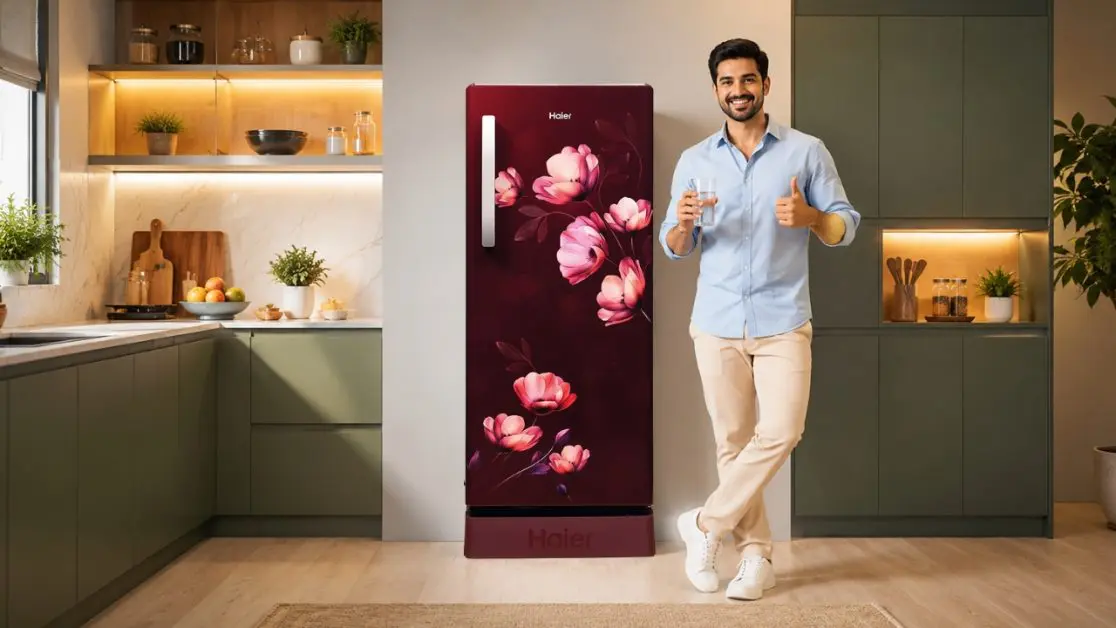
Many modern Haier refrigerators now use inverter compressors designed for efficient cooling and long-term durability. Models like the Haier 190 L 5 Star Red Hilton Single Door Refrigerator HRD-2105PRHA-P feature inverter compressor technology alongside 5-star energy efficiency.
That matters in India because appliances here do not operate in ideal conditions.
They operate during voltage fluctuations, long summers, overloaded kitchens, and frequent opening-and-closing cycles.
Systems survive when they adapt.
2. Stabilizer-free operation solved an invisible Indian problem
This feature rarely gets discussed enough.
But it changed refrigerator ownership dramatically.
Voltage fluctuations remain common across many Indian cities and towns. Older refrigerators often needed separate stabilizers for protection.
Modern refrigerators evolved to handle fluctuations internally.
That removes:
- Additional appliance costs
- Wiring clutter
- Installation complexity
- Long-term voltage damage risks
Haier’s modern single-door refrigerators now support stabilizer-free operation and home inverter connectivity for uninterrupted cooling during power cuts.
That sounds technical.
But the emotional outcome is simple.
Less anxiety during Indian summers.
The refrigerator quietly became a design object
Something else changed over the last decade.
People stopped hiding refrigerators.
Open kitchens became common. Studio apartments grew popular. Modular kitchens turned appliances into visible design elements.
A refrigerator now sits inside family photographs during festivals.
Which explains why aesthetics suddenly matter.
Walk through modern appliance stores today and you notice something fascinating.
Refrigerators no longer look industrial.
They look expressive.
Glass finishes. Floral patterns. Matte textures. Premium handles. Minimal lines.
The appliance industry learned an important truth:
People do not buy products anymore.
They buy how products make spaces feel.
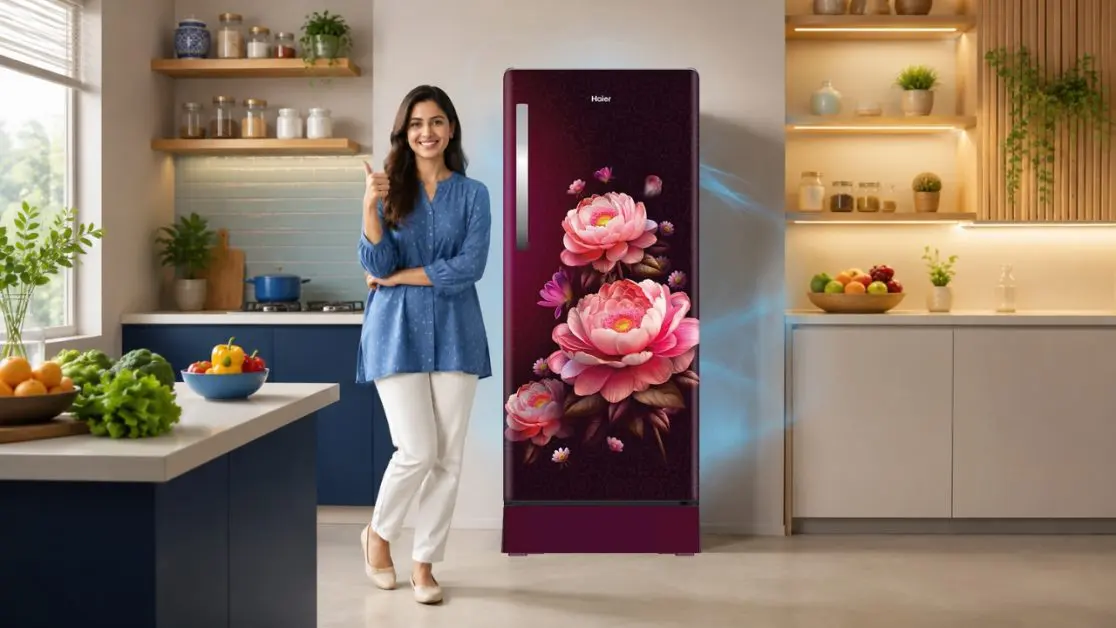
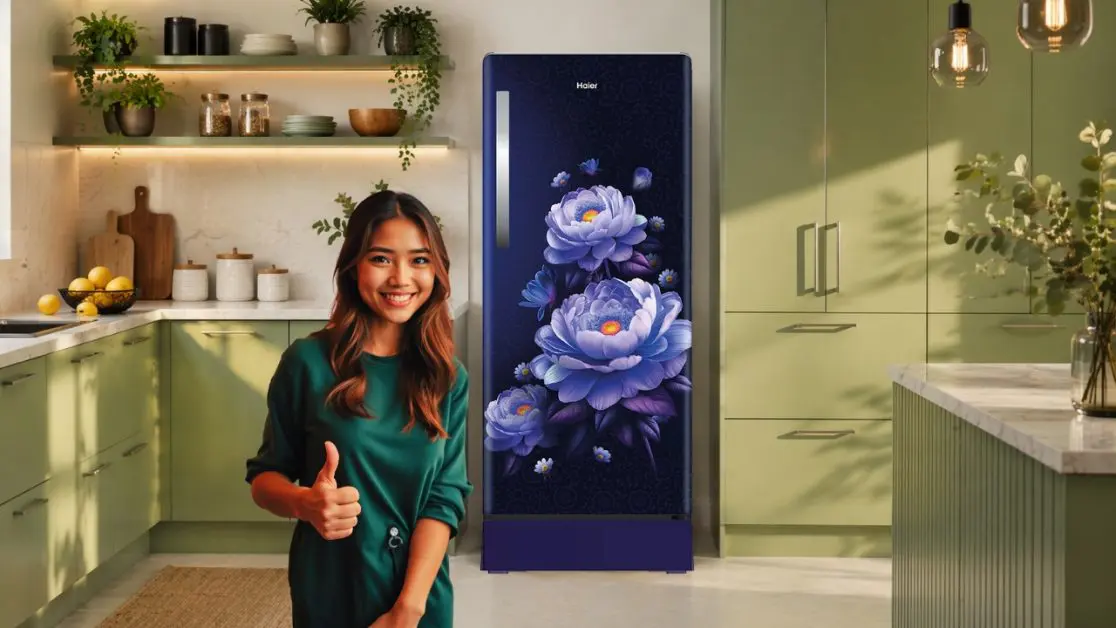
Haier’s floral-finish refrigerators reflect this behavioural shift clearly. Models like the Haier 190 L 5 Star Marine Blossom Glass Single Door Refrigerator HRD-2115PMBA-N and Red Blossom variants combine functional cooling with statement-style aesthetics designed for modern Indian kitchens.
A refrigerator today performs socially too.
It signals taste.
Storage stopped being about capacity alone
Bigger storage does not automatically mean smarter storage.
That distinction matters.
Earlier refrigerators focused heavily on litre capacity. But families often struggled with organisation inside the unit itself.
Modern refrigerators evolved through behavioural observation.
For example:
- Separate fruit boxes reduce odour mixing
- Toughened glass shelves handle heavy cookware
- Base drawers create hidden storage
- Dedicated vegetable sections preserve freshness longer
- Smart door racks optimise bottle storage
The system became modular because household behaviour became modular.
One person stores meal-prep containers.
Another stores homemade pickles.
A child fills shelves with chocolates and cold drinks.
Modern refrigeration design now anticipates these patterns instead of reacting to them.
Haier refrigerators now include additional fruit storage sections, toughened glass shelves, and base drawer storage systems built around practical Indian usage habits.
Good appliance design often feels invisible.
That is the point.
Fast cooling became more important than maximum cooling
Here is another hidden shift.
People no longer judge refrigerators only by how cold they get.
They judge how quickly they respond.
Think about Indian summers.
Guests arrive unexpectedly.
Cold drinks run out.
Ice trays empty during house gatherings.
Children want instant cooling after outdoor play.
Waiting hours for ice feels outdated now.
That behavioural shift created demand for rapid cooling systems.
Haier’s 1 Hour Icing Technology focuses specifically on faster ice production, helping refrigerators adapt to real-world daily usage instead of static laboratory conditions.
This is how appliance innovation actually works.
Not through flashy inventions alone.
Through reducing tiny daily frustrations.
Hygiene became a central cooling conversation after the pandemic
The pandemic changed how people think about kitchens.
Cleanliness became visible.
Consumers started paying attention to:
- Food contamination
- Surface hygiene
- Odour control
- Cleaning convenience
- Bacterial buildup
Refrigerators evolved accordingly.
Features like removable anti-bacterial gaskets and clean-back designs became increasingly relevant because they reduced maintenance friction.
Haier refrigerators now include removable anti-bacterial gaskets for easier cleaning and hygiene maintenance.
That may sound like a small feature.
It is not.
A difficult-to-clean appliance eventually becomes a neglected appliance.
And neglected systems always fail faster.
Smart cooling is not about Wi-Fi. It is about responsiveness.
People often misunderstand the phrase smart refrigerator.
They imagine touchscreens and app controls.
But intelligence inside appliances works differently.
True smart cooling means:
- Understanding usage patterns
- Adapting energy consumption
- Maintaining consistent freshness
- Recovering cooling faster after door openings
- Handling power interruptions intelligently
- Reducing maintenance effort
In other words:
The appliance starts doing more thinking so the household does less.
That is the real direction of modern home appliances overall.
Not complexity.
Invisible convenience.
The refrigerator became part of emotional life
This is the part most brands underestimate.
Refrigerators are deeply emotional appliances.
They hold birthday cakes before midnight celebrations.
Festival sweets before guests arrive.
Medicines during emergencies.
Late-night comfort food after difficult days.
Fresh fruit packed for school mornings.
A refrigerator sits quietly in the background of thousands of family moments.
Which means reliability matters emotionally, not just technically.
And this explains why trust matters so much in appliance buying decisions.
Because when cooling fails, routines fail with it.
What the future of refrigeration actually looks like
The next phase of refrigerators will not just focus on bigger screens or futuristic marketing.
The future will likely revolve around five things:
1. Smarter energy optimisation
Appliances that intelligently reduce electricity usage without compromising performance.
2. Better freshness preservation
Cooling systems designed around food behaviour, not just temperature.
3. More modular storage
Flexible compartments adapting to changing household needs.
4. Cleaner appliance ecosystems
Simpler maintenance. Better hygiene systems. Reduced odour mixing.
5. Design-led integration
Appliances blending naturally into modern homes instead of standing apart from them.
The most successful refrigerator brands will understand one thing clearly:
People are not buying cooling anymore.
They are calm.
The quiet truth about modern appliances
Every generation changes its appliances based on the problems it faces.
Earlier generations wanted preservation.
Modern households want preservation without friction.
That distinction changes everything.
The refrigerator evolved from a cold storage box into a behavioural system inside the home.
And perhaps that is the real story of smart cooling.
Technology becomes meaningful only when it disappears into everyday life.
A great refrigerator does not constantly remind you it exists.
It simply makes life feel more organised, fresher, quieter, and easier.
That is what evolution looks like inside modern homes.
Frequently Asked Questions
How is a modern refrigerator different from older refrigerators?
Older refrigerators focused mainly on cooling and preservation. Modern refrigerators are designed to manage freshness, energy efficiency, storage organization, hygiene, aesthetics, and power fluctuation handling, making them better suited for today’s lifestyles.
Is an inverter refrigerator worth buying for my home?
Yes. Inverter refrigerators adjust compressor speed based on cooling needs, which helps reduce electricity consumption, maintain stable temperatures, operate more quietly, and improve appliance longevity.
How do I choose the right refrigerator for my family size?
Consider your shopping habits, cooking frequency, available kitchen space, and storage needs. A larger family or weekly grocery shopper typically benefits from larger storage and more organized compartments.
Why do modern refrigerators cost more than basic models?
Modern refrigerators include advanced cooling systems, inverter compressors, improved storage layouts, hygiene features, energy-saving technology, and premium designs that enhance everyday convenience.
Should I prioritize capacity or storage organization?
Storage organization often matters more than raw capacity. Well-designed shelves, vegetable boxes, fruit compartments, and door storage can make a smaller refrigerator feel more practical than a larger but poorly organized one.