
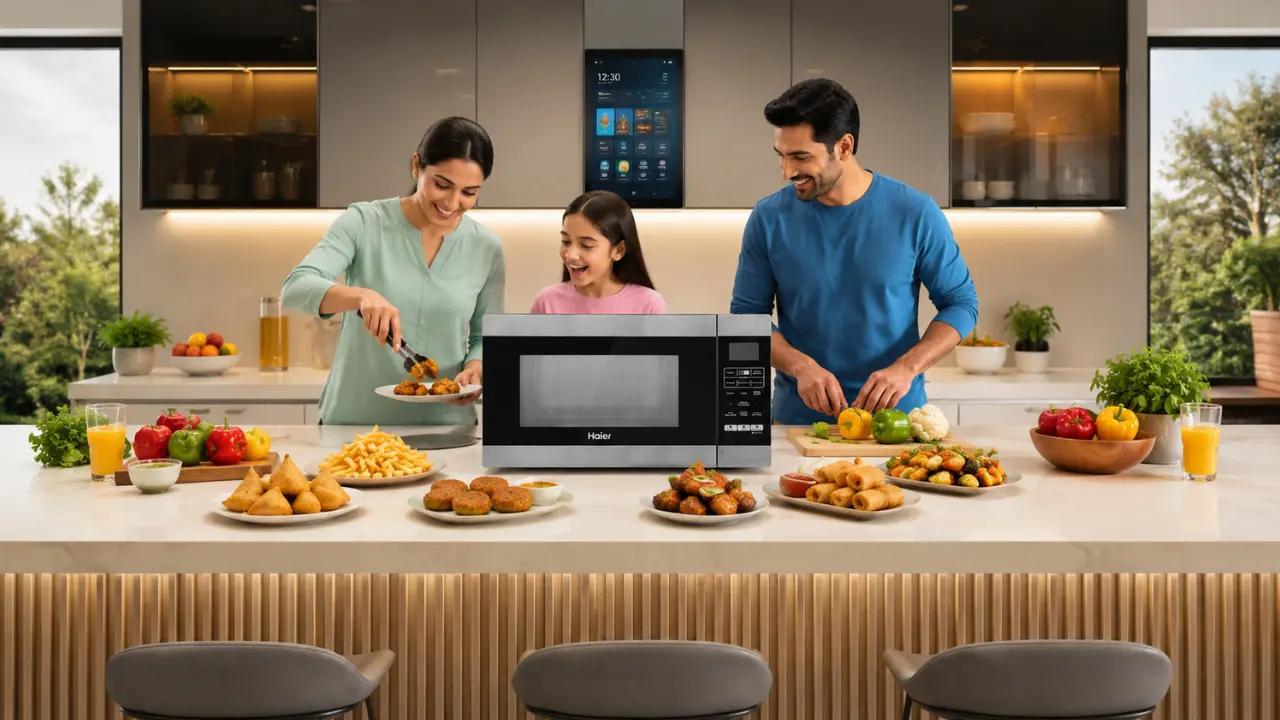

Air fry technology works by blowing hot air around food quickly. This produces a crispy layer on the outside, just like regular frying. But without large amounts of oil. Air fry cooking depends on controlled heat, airflow, and precise temperature to give you crunch, flavour and convenience without all the oil.
The benefits could not be easier.
Fewer calories from oil. Less mess in your kitchen. And no need to compromise on taste.
Which means it can completely change how everyday cooking fits into your life. Especially if you live in India.
Why do Indians think you need oil to get a crunch?
Walk into a kitchen in India around the time of “tea”. (That’s snack time for those not familiar with Indian vernacular.)
You’ll find someone frying samosas.
You’ll find someone making pakoras.
You’ll find someone warming up a package of frozen unhealthy snacks for the guests about to arrive.
Oil and crunch have gone hand in hand for centuries.
So it’s only natural to think they need each other.
But that belief is based on the limitations of old cooking methods, not the science of what food requires to get crispy.
Crispy happens when water on the surface of food evaporates and heat causes browning. Oil helps achieve that process quickly. It is a tool.
Not the destination.
That distinction matters.
Because once technology finds another way to create the same effect, the dependency on oil starts to decrease.
Air fry technology is built around that principle.
Crispiness is the outcome. Oil is only one possible path.
The Hidden System Behind Air Fry Cooking
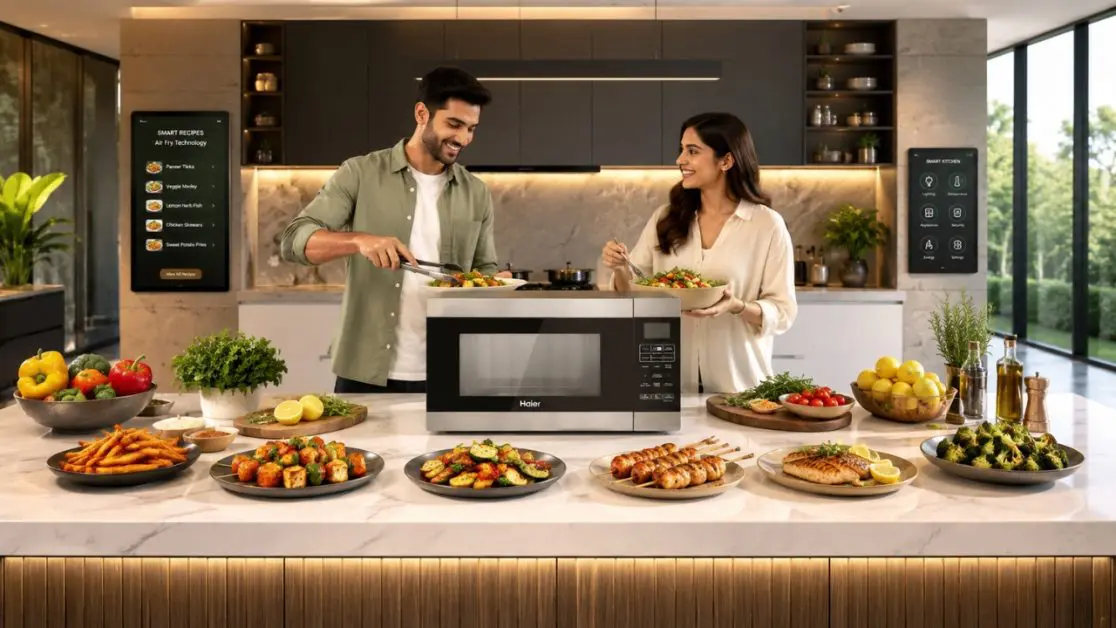
Most people see an air fryer and think it is a smaller oven.
That is only partially true.
The real difference lies in airflow.
How Rapid Hot Air Circulation Works
Traditional cooking methods often heat food from one direction.
Air fry technology works differently.
It creates a powerful stream of hot air that moves around the food continuously.
This delivers:
- Faster heat transfer
- More even cooking
- Better browning
- Crispier texture
- Reduced need for excess oil
Think of it like a strong breeze drying clothes faster than still air.
The principle is surprisingly similar.
Movement changes outcomes.
In cooking, moving hot air creates the conditions needed for crisp results.
Why Less Oil Still Delivers Great Taste
Many foods already contain natural fats.
Chicken, paneer, potatoes, peanuts, fish, and many snack ingredients release their own oils during cooking.
Air fry technology simply helps utilise those natural fats more efficiently.
Instead of adding several tablespoons of oil, many recipes require:
- No oil at all
- A light brush of oil
- A quick spray coating
That small change can significantly reduce overall oil consumption over time.
And small changes repeated daily create meaningful results.
Oil Free Cooking Is About More Than Health
Most conversations around air fry technology focus only on calories.
That misses the bigger picture.
The real benefit is often convenience.
The Modern Kitchen Has Different Constraints
Today’s households operate differently from previous generations.
One person returns from work at 8 PM.
Another attends online classes.
Parents juggle meetings and family responsibilities.
Time has become the scarcest ingredient in the kitchen.
Air fry technology solves several practical challenges simultaneously:
- Faster preparation
- Reduced monitoring
- Less splattering
- Easier cleaning
- Consistent results
The technology is not simply replacing oil.
It is reducing friction.
And good appliances often succeed because they remove friction from everyday routines.
Common Foods That Work Well with Air Fry Technology
Many Indian households are surprised by the variety of foods that can be prepared using air fry cooking.
Popular examples include:
- French fries
- Aloo tikki
- Paneer tikka
- Spring rolls
- Samosas
- Cutlets
- Chicken wings
- Fish fillets
- Roasted vegetables
- Garlic bread
One appliance. Multiple possibilities.
That flexibility matters in homes where kitchen space is valuable.
Why Air Fry Technology Fits Indian Cooking Habits
Every country cooks differently.
And technology succeeds when it adapts to culture rather than forcing culture to adapt to technology.
Indian Homes Need Versatility
A kitchen appliance may prepare breakfast in the morning, snacks in the evening, and festive treats during celebrations.
That creates a different expectation.
People do not want single-purpose devices.
They want flexibility.
This is where integrated cooking solutions become increasingly relevant.
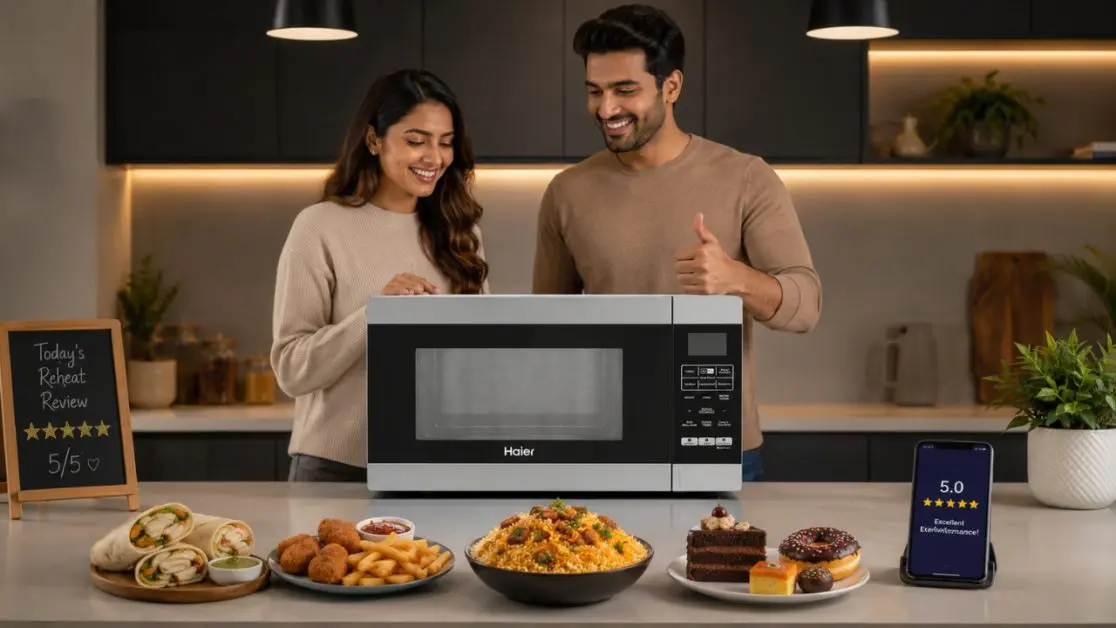
For example, Haier’s 30L Convection Microwave with In-Built Air Fryer combines multiple cooking functions into one appliance, including microwave, grill, convection, rotisserie, and air fryer capabilities. It also offers dedicated air fryer menus designed to simplify cooking decisions.
The broader trend is clear.
People increasingly prefer appliances that perform multiple roles without occupying additional kitchen space.
The Rise of Smarter Cooking Decisions
Technology has quietly shifted from mechanical assistance to decision assistance.
Older appliances required users to manage every step manually.
Modern cooking appliances increasingly guide the process.
Features such as:
- Preset cooking menus
- Touch controls
- Multiple power levels
- Automated cooking modes
help reduce guesswork.
The appliance handles complexity.
The user focuses on the meal.
That is an important shift.
The Three Choices Modern Home Cooks Face
When it comes to crispy cooking, there are generally three options.
Option 1: Traditional Deep Frying
Benefits:
- Familiar cooking method
- Fast browning
- Strong flavour profile
Costs:
- Higher oil consumption
- More cleanup
- Frequent oil replacement
Option 2: Conventional Oven Cooking
Benefits:
- Larger batch cooking
- Good for baking
Costs:
- Longer preheating
- Slower cooking cycles
- Less crispness for certain foods
Option 3: Air Fry Technology
Benefits:
- Reduced oil usage
- Faster cooking
- Crispy texture
- Easier cleanup
- Greater convenience
Costs:
- Learning curve for some recipes
- Capacity limitations depending on appliance size
Each option solves a different problem.
The right choice depends on what matters most inside a particular household.
What Makes Air Fry Cooking Feel Different?
The biggest difference is not visible.
It is behavioural.
The Appliance Changes Habits
People often cook differently when the process becomes easier.
A quick evening snack becomes less intimidating.
Roasted vegetables become more appealing.
Frozen foods become more convenient.
Experimentation increases.
The barrier to cooking decreases.
And when barriers decrease, behaviour changes.
That is the hidden system many people overlook.
Technology rarely changes outcomes directly.
It changes habits first.
The outcomes follow.
How Haier Brings Air Fry Technology Into Everyday Life
The best kitchen innovations often feel invisible.
They simply make everyday tasks smoother.
Haier’s 30L Convection Microwave with In-Built Air Fryer reflects that approach by combining multiple cooking technologies into a single appliance. Features such as 36 dedicated air fryer menus, 305 auto-cook menus, rotisserie functionality, multiple power levels, touch controls, and a stainless-steel cavity are designed to support a wide variety of cooking styles in modern homes.
The important point is not the feature list.
It is what the feature list enables.
More flexibility.
Less effort.
Greater confidence in the kitchen.
And that matters whether someone is preparing weekday dinners, festive snacks, or weekend family meals.
The Future of Cooking Is Not About More Oil
For decades, cooking innovation focused on speed.
Today, it focuses on smarter outcomes.
That is a meaningful shift.
Air fry technology represents a broader trend in home appliances. Technology is becoming less about doing more work and more about reducing unnecessary work.
The future kitchen will not ask people to choose between convenience and quality.
It will increasingly deliver both.
And that may be the most important insight of all.
The best technology does not change what people love to eat.
It changes how effortlessly they can make it.
That is why air fry technology continues to find a place in modern Indian homes.
Not because it removes oil.
Because it removes compromise.
Frequently Asked Questions
Do I really need an air fryer if I already have a microwave or oven?
It depends on your cooking habits. Air fry technology excels at creating crispy textures with little or no oil while cooking faster than many conventional ovens. If you frequently prepare snacks, frozen foods, or roasted dishes, air fry functionality can add convenience.
Is air fry cooking actually healthier than deep frying?
Generally, yes. Air fry cooking typically requires significantly less oil, which can reduce overall calorie and fat intake while still delivering a crispy texture.
Will my food taste the same as deep-fried food?
Not exactly. Deep frying and air frying produce slightly different textures and flavors. However, many people find air-fried foods satisfyingly crispy while using far less oil.
Is an air fryer worth it for an Indian household?
For many families, yes. It can prepare popular foods like samosas, paneer tikka, cutlets, aloo tikki, and spring rolls with less oil and less cleanup.
How does air fry technology make food crispy without oil?
Air fry technology rapidly circulates hot air around the food. This evaporates surface moisture and promotes browning, creating a crispy exterior similar to frying.