

Home cooking is no longer just about recipes. It is about systems.
The kitchen has quietly become one of the smartest spaces inside modern Indian homes. Appliances now remember temperatures, reduce guesswork, optimise energy use, and simplify routines that once consumed hours. Technology is not replacing cooking. It is removing friction from it.
A decade ago, “cooking at home” often meant compromise. Time versus taste. Health versus convenience. Cleanup versus creativity.
That equation is changing.
And the shift is bigger than gadgets.
The modern kitchen is becoming a decision-making system.
Walk into a typical Indian kitchen today and you’ll notice something subtle.
The kitchen is no longer designed only for cooking. It is designed for flow.
Morning tea happens alongside office calls. Kids want evening snacks before tuition. Someone reheats leftovers at midnight after a late shift. Weekend dinners turn into social events. The kitchen now supports multiple lifestyles at once.
Technology steps in exactly there.
Not to make kitchens futuristic.
To make them less exhausting.
Convenience used to mean shortcuts. Now it means control.
Older appliances solved one problem at a time.
Modern appliances solve chains of problems.
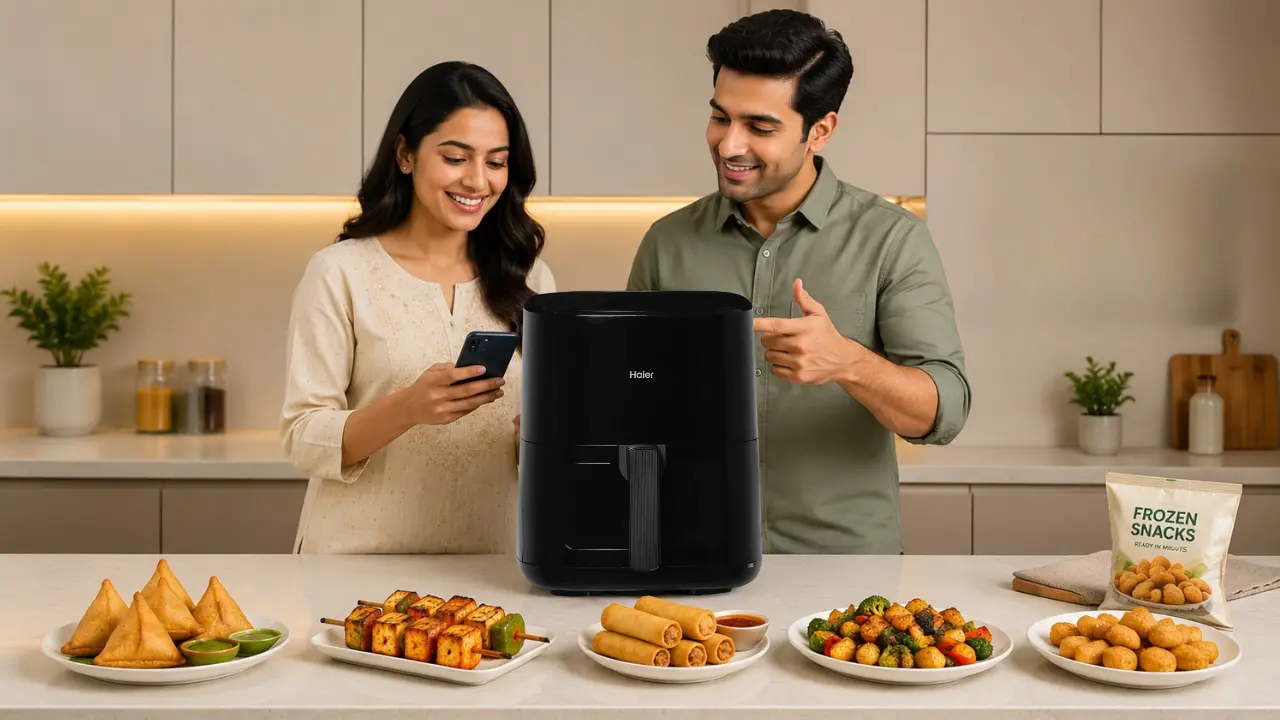
Take air fryers, for example. Earlier, making crispy snacks at home often meant deep frying, standing beside hot oil, and spending extra time cleaning greasy utensils afterwards.
Now the process changes completely:
- Faster cooking cycles
- Minimal oil usage
- Preset cooking modes
- Easier cleanup
- Consistent texture
The benefit is not just healthier food.
The benefit is reduced decision fatigue.
Because the hidden cost of cooking is rarely the recipe itself. It is the mental load around it.
Why Indian Homes Are Adopting Smart Cooking Faster Than Expected
India’s relationship with food is emotional.
That matters.
In many countries, convenience wins over tradition quickly. In India, technology succeeds only when it respects rituals already inside the home.
That is why certain categories are growing faster than others.
Three major shifts are shaping Indian kitchens
1. Health-conscious cooking is becoming mainstream
Post-2020, Indian households started paying closer attention to everyday health habits.
Not dramatic diets.
Small sustainable changes.
Less oil. Better ingredients. Faster homemade meals.
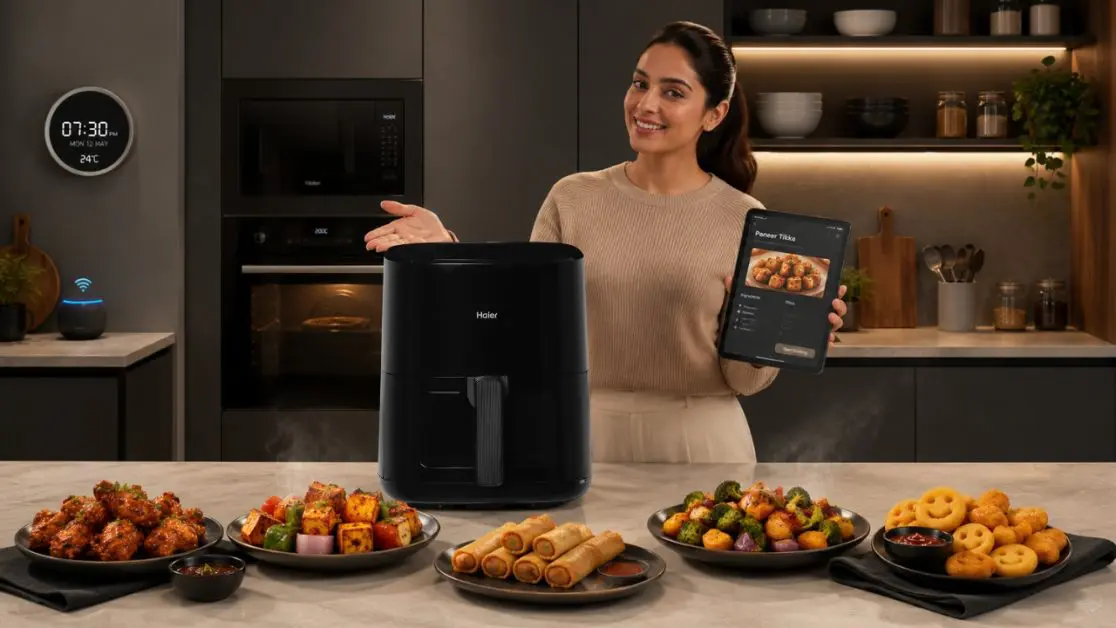
Air fryers became popular because they fit into existing food habits instead of replacing them entirely.
People still want:
- Samosas
- Paneer tikka
- Fries
- Chicken wings
- Cutlets
- Kebabs
They simply want a cleaner way to prepare them.
According to multiple consumer appliance reports, healthier cooking appliances have seen consistent growth across urban India in the last few years.
The pattern is clear.
People are not abandoning comfort food.
They are redesigning how comfort food gets made.
2. Smaller families need flexible appliances
Modern Indian households look different now.
One option is the traditional large joint family kitchen.
The second option is the compact urban apartment setup.
The third option is the hybrid household where both parents work and efficiency matters more than ever.
Technology adapts differently to each structure.
A working professional living alone may prioritise quick evening meals.
A young couple may focus on healthier weekday cooking.
Parents may prioritise consistency and safety.
The appliance ecosystem changes accordingly.
3. Time has become the most expensive kitchen ingredient
People still love cooking.
They simply do not have endless time for it.
That distinction matters.
Technology succeeds when it protects the joy of cooking while reducing repetitive effort.
That is why automation matters more than flashy features.
Preset modes. Temperature controls. Faster heating systems. Easier cleaning mechanisms.
Small improvements compound.
A good kitchen system saves minutes every day.
A great kitchen system gives mental energy back.
The Rise of Smart Cooking Appliances in Indian Homes
There was a time when premium appliances felt optional.
Today, they feel infrastructural.
Especially in urban households.
Air fryers changed one important behaviour
They made experimentation easier.
People try recipes more often when the process feels manageable.
That changes household behaviour over time.
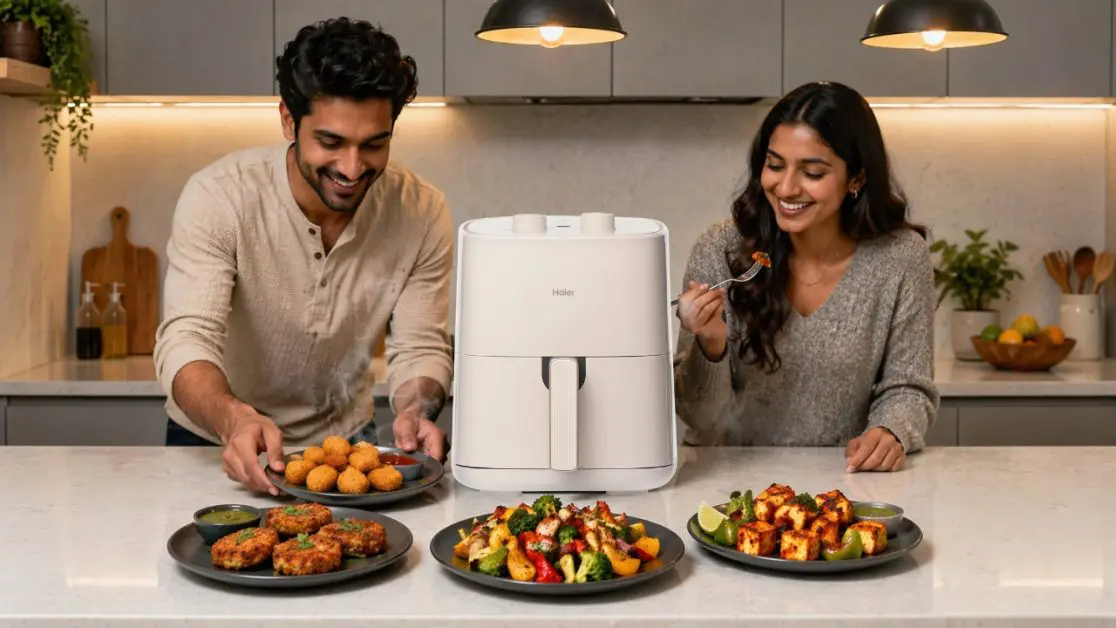
A teenager attempts peri-peri fries after school.
Parents prepare low-oil snacks during cricket nights.
Someone experiments with roasted vegetables instead of ordering food online again.
Technology lowers resistance.
And when resistance drops, creativity rises.
What makes modern cooking appliances more useful now?
Not complexity.
Clarity.
Features matter only when they simplify outcomes.
For instance, products like the Haier Ivory Air Fryer 5L Capacity and Haier Black Air Fryer 5L Capacity focus on practical usability for Indian homes.
A larger basket capacity supports family-sized portions.
Rapid air circulation helps create crisp textures with less oil.
Preset cooking functions reduce constant monitoring.
The design language also matters more today than people admit.
Modern appliances are increasingly visible parts of living spaces, especially in open kitchens. Utility alone is no longer enough. People want appliances that blend into contemporary homes naturally.
That shift mirrors something larger.
Indian consumers are no longer buying appliances only for function.
They are buying systems that align with lifestyle identity.
Technology Is Quietly Changing Family Behaviour
The biggest kitchen innovations are often invisible.
Not screens. Not apps.
Behaviour.
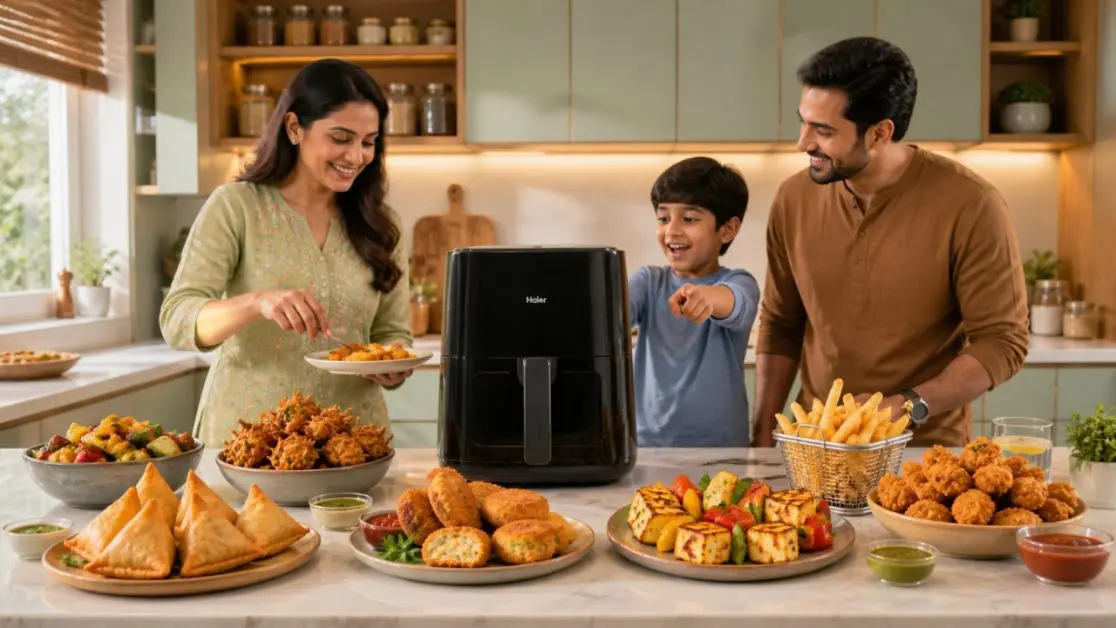
Cooking is becoming more collaborative
Earlier, one person usually managed the entire cooking process.
Now responsibilities distribute more naturally.
A child sets the timer.
A parent preps ingredients.
Someone else handles air frying.
Another person cleans up.
Technology reduces specialised dependency.
That matters because modern homes operate differently.
The kitchen is no longer isolated labour.
It is shared participation.
Even festivals are evolving differently
Think about festive cooking in Indian homes.
Large quantities. Multiple dishes. Constant reheating. Endless frying.
Technology changes the rhythm.
Smart refrigerators help organise ingredients better.
Microwaves support reheating without quality loss.
Air fryers reduce oil-heavy festive snacking.
Dishwashers reduce post-event cleanup stress.
None of this removes tradition.
It protects energy for the parts people actually enjoy.
The conversations. The hosting. The gathering.
Technology works best when it disappears into the background.
The Hidden Shift: Kitchens Are Becoming Energy-Aware
Most people notice cooking speed first.
Fewer people notice energy behaviour.
But that is becoming increasingly important.
Smart appliances optimise more than cooking
They also optimize consumption.
Modern appliances increasingly focus on:
- Faster heat circulation
- Better insulation
- Efficient power usage
- Reduced wastage
- Controlled cooking environments
That matters in Indian cities where electricity usage spikes seasonally.
An efficient kitchen is not just financially useful.
It is psychologically calmer.
Because unpredictability creates stress.
Consistent systems create trust.
Why Younger Indians Approach Cooking Differently
Millennials and Gen Z grew up during the food delivery explosion.
That shaped expectations permanently.
Convenience became the default.
But something interesting happened afterward.
People began returning to home cooking again.
Not because restaurants disappeared.
Because control became valuable.
Control over ingredients.
Control over hygiene.
Control over portions.
Control over spending.
Technology accelerated that return.
The new home cook thinks differently
Older cooking systems rewarded patience.
Modern cooking systems reward adaptability.
Recipes today spread through:
- YouTube Shorts
- Instagram Reels
- Food creators
- AI-generated recipe tools
- Community recommendations
Technology compresses learning curves.
Someone watches a 30-second video and attempts a recipe the same evening.
That would have felt intimidating earlier.
Now it feels normal.
The Best Kitchen Technology Feels Invisible
That is the paradox.
The most successful cooking technology rarely feels “technical.”
It feels intuitive.
Like a good bookstore layout.
Like automatic lighting in a theatre.
Like navigation that works without thinking.
The goal is not to impress users constantly.
The goal is to reduce friction repeatedly.
Three types of kitchen technology are emerging
1. Efficiency Technology
Focused on saving time.
Examples:
- Faster cooking systems
- Preset modes
- Smart timers
2. Wellness Technology
Focused on healthier habits.
Examples:
- Low-oil cooking
- Temperature precision
- Freshness preservation
3. Lifestyle Technology
Focused on emotional ease.
Examples:
- Cleaner aesthetics
- Compact designs
- Easier maintenance
- Multi-functional usage
The best appliances increasingly combine all three.
That combination defines modern kitchen design now.
What This Means for the Future of Indian Homes
Home cooking is not disappearing.
It is evolving.
The future kitchen will not necessarily look robotic or hyper-digital.
It will feel calmer.
More adaptive.
More intuitive.
More human.
Because good technology does not force behavioural change aggressively.
It quietly supports the life people already want.
That is the larger pattern hidden beneath modern cooking appliances.
People are not buying technology for technology’s sake.
They are buying back time.
Reducing stress.
Protecting routines.
Creating moments that feel easier to live inside.
And perhaps that is the real transformation.
The future of cooking is not about replacing tradition with machines.
It is about building systems where tradition survives modern life without exhausting the people trying to hold it together.
Frequently Asked Questions
Why does cooking feel mentally exhausting even when the recipe is simple?
The biggest challenge is often not cooking itself but the constant decisions around ingredients, timing, temperatures, cleanup, and meal planning. Modern appliances reduce this mental load through presets and automation.
How can technology help me spend less time thinking about meals?
Smart cooking appliances simplify routine decisions by offering preset modes, automatic temperature controls, and faster cooking cycles, allowing you to focus more on the food and less on the process.
I enjoy cooking, but I feel overwhelmed after work. What can help?
Appliances that automate repetitive tasks such as air fryers, microwaves, and smart ovens can make cooking feel manageable without taking away the enjoyment of preparing meals.
Is convenience making people cook less?
Not necessarily. Many households are cooking more often because technology reduces the effort required, making home cooking easier to fit into busy schedules.
Are air fryers healthier than deep frying?
Air fryers typically use significantly less oil while still producing crispy textures, making them a practical option for reducing everyday oil consumption.
Can I still make traditional Indian snacks in an air fryer?
Yes. Many people prepare samosas, paneer tikka, kebabs, cutlets, fries, and similar snacks using air fryers with less oil.
Why are more Indian families focusing on healthier cooking now?
Many households are making small, sustainable changes such as reducing oil, cooking more meals at home, and paying closer attention to ingredients rather than following extreme diets.