
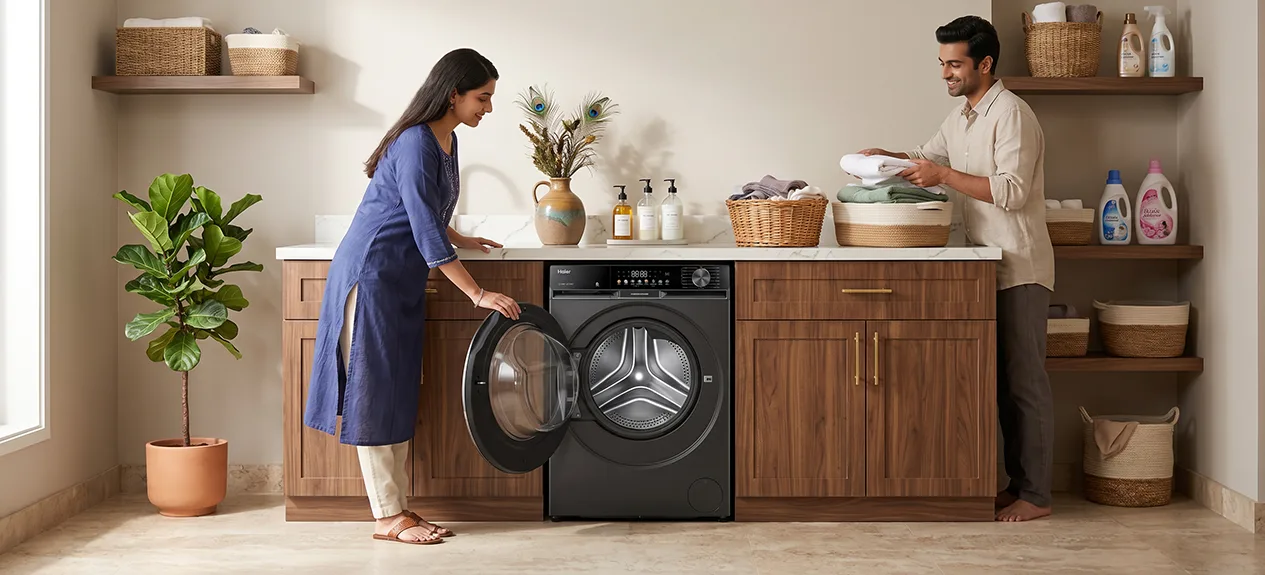

Summer doesn’t just bring heat, it quietly pushes the electricity bill higher every month. Then laundry keeps adding to it, week after week, without anyone paying much attention. A semi-automatic washing machine may look cheaper when you buy it, but five people at home means frequent loads and years of regular use. That changes the story more than most expect. Before choosing only by price, it makes sense to see whether a fully automatic washing machine saves enough over five years to make that higher cost worth paying.
The upfront price gap between semi and fully automatic is real. Washing machine fully automatic models cost more, sometimes considerably so. That difference creates hesitation, and fair enough. But the sticker price does not tell you what the machine costs to run every month, year after year, across five years of actual use.
The Purchase Price Is Only the Starting Point
Buying a washing machine is not a one-day transaction. It is five to seven years of water bills, electricity consumption, maintenance calls, and wear on your clothes. Semi-automatic machines look cheaper on the shelf, but they draw more water per cycle, carry lower energy ratings, and require manual involvement at every stage of the wash. Those costs do not appear on the tag anywhere, but they show up on your bills every single month.
A fully automatic washing machine manages water intake based on load weight, runs at higher BEE star ratings in most configurations, and completes the entire cycle without you standing there to move clothes between tubs.
Where the Two Types of Machines Actually Differ
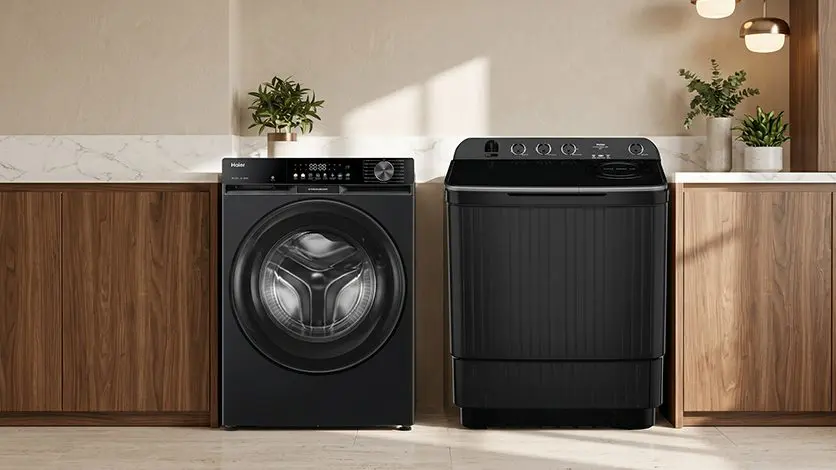
Understanding these differences helps you choose the right machine for your home.
- Semi-automatic machines need manual water filling and require shifting clothes between the wash and spin tubs at each stage of the cycle
- Fully automatic machines handle water intake, wash, rinse, and drain in one continuous cycle without any intervention needed
- Water usage in semi-automatic machines is harder to control and frequently results in overfilling each time
- Fully automatic machines use load sensors that match water intake to the actual weight of each wash load
- Front-load fully automatic models consume roughly 35-45% less water per cycle compared to semi-automatic machines
- BEE energy ratings on fully automatic machines, especially front-load models, are consistently higher, which reduces the monthly electricity consumption
Related Blogs : How to choose the right semi-automatic washing machine
What Five Years of Running Costs Look Like
- Water bills: Fully automatic machines regulate water per load. Semi-automatic machines overfill regularly because the filling is manual and unregulated. In cities where water supply is metered and billed, this difference accumulates from 1st year onward.
- Electricity: Higher BEE-rated fully automatic machines, front-load models especially, use fewer units per cycle compared to unrated or lower-rated models. Across 260-plus cycles a year, the monthly difference adds to a meaningful annual saving that repeats every year.
- Maintenance: Fully automatic machines have fewer mechanical wear points. No two-tub mechanism to maintain, no agitator parts that degrade with heavy use. Service intervals tend to stretch longer, and the total maintenance spend across five years is generally lower.
- Clothing and fabric costs: This one rarely comes up in washing machine comparisons, but it should. Front-load drum action is gentler on clothing than the agitator motion in semi-automatic machines. Clothes hold shape and texture longer, which reduces the frequency of garment replacement over five years.
- Time per wash: Unlike a semi-automatic machine that requires you to stay involved throughout different stages of the wash, a fully automatic washing machine handles the entire process on its own. This means less time spent managing laundry and more time for other tasks.
The efficiency gains do not show up dramatically in the 1st month. From around the 2nd year, those savings start narrowing the upfront cost gap in a way that becomes harder to ignore the longer you run the machine.
Fully Automatic Range at Haier
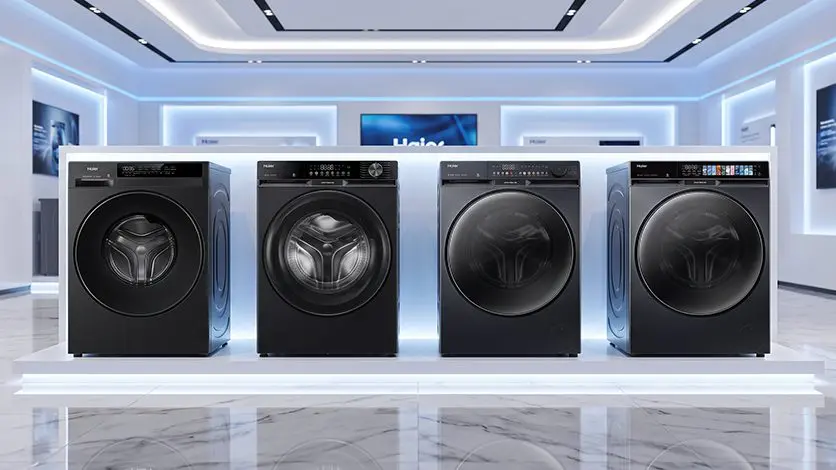
We built our washing machine range to hold up across the full years of ownership, not just on launch day.
Our front-load range starts with the F3 8Kg model, runs through the F5 series in 9Kg and 10Kg. The F9 series handles heavier household volumes in 9Kg and 12Kg variants, and the F11 series covers the top of the range, including a 12Kg Washer and Dryer combo that delivers full drying without needing a separate appliance. These models are among the best washing machine fully automatic options for households with different laundry needs, while the F11 also carries India’s only Ultra Air Fresh Technology with an AI Touch Panel.
For households that prefer top-load machines, the range opens with the 6.5Kg Ultra Air Fresh model, includes the 8Kg Advance In-Built Heater variant, and the 9Kg Anti Scaling Technology model.
What you get across our fully automatic range:
- Ultra Air Fresh Technology that keeps the drum interior fresh and hygienic between wash cycles
- In-Built Heater on select models for effective stain removal without separate pre-soak steps
- Anti-scaling technology to protect internal components and extend the working life of the machine
- Load sensors that match water intake to the actual laundry weight every cycle
- 4 years comprehensive warranty and 12 years motor warranty across the front-load series
- No/low-cost EMI options on most models to spread the upfront cost without added financial pressure
Browse our front-load washing machine range or explore the top-load collection to find the right configuration for your household.
Related Blogs : Where to Buy Haier F11 Washing Machines
Conclusion
For the best fully automatic washing machine on a five-year view, usage volume matters. For families running five or more washes a week, the savings on water, electricity, fabric, and time meaningfully close the upfront cost gap well before Year 5. For lighter users running two washes a week, the payback period is longer.
What does not change regardless of usage volume is the time efficiency. Removing manual involvement from the wash cycle delivers value from Day 1, and that benefit does not depreciate with the machine.
Frequently Asked Questions
Which is better: a semi-automatic or a fully automatic washing machine?
A fully automatic washing machine handles the entire wash cycle without manual steps and manages water and electricity more efficiently. For households doing regular laundry, it delivers better long-term convenience and lower operational costs compared to semi-automatic models over five years of consistent use.
What is the difference between a semi-automatic and a fully automatic washing machine?
A semi-automatic machine has separate wash and spin tubs and needs manual water filling and clothes transfer at every stage. A fully automatic machine completes the entire process from water intake through washing, rinsing, and draining without requiring any manual involvement at any point.
Is a fully automatic washing machine worth the extra cost?
Over five years, the savings from reduced water and electricity consumption, along with the time saved per cycle, bring the total cost gap down considerably. Front-load models deliver particularly strong long-term value due to higher energy-efficiency ratings and gentler fabric care per wash.
Does a fully automatic washing machine dry clothes?
Standard fully automatic machines spin at high RPM to remove water, leaving clothes damp rather than completely dry. Washer-dryer combo models like the Haier F11 series provide full drying functionality within a single, uninterrupted cycle.
How much electricity and water does a fully automatic washing machine use?
A front-load fully automatic machine typically uses between 0.5 and 1 unit of electricity per cycle and around 40 to 60 litres of water. Top-load fully automatic models generally use more water per wash, ranging from 70 to 100 litres, depending on the load size and settings selected.