
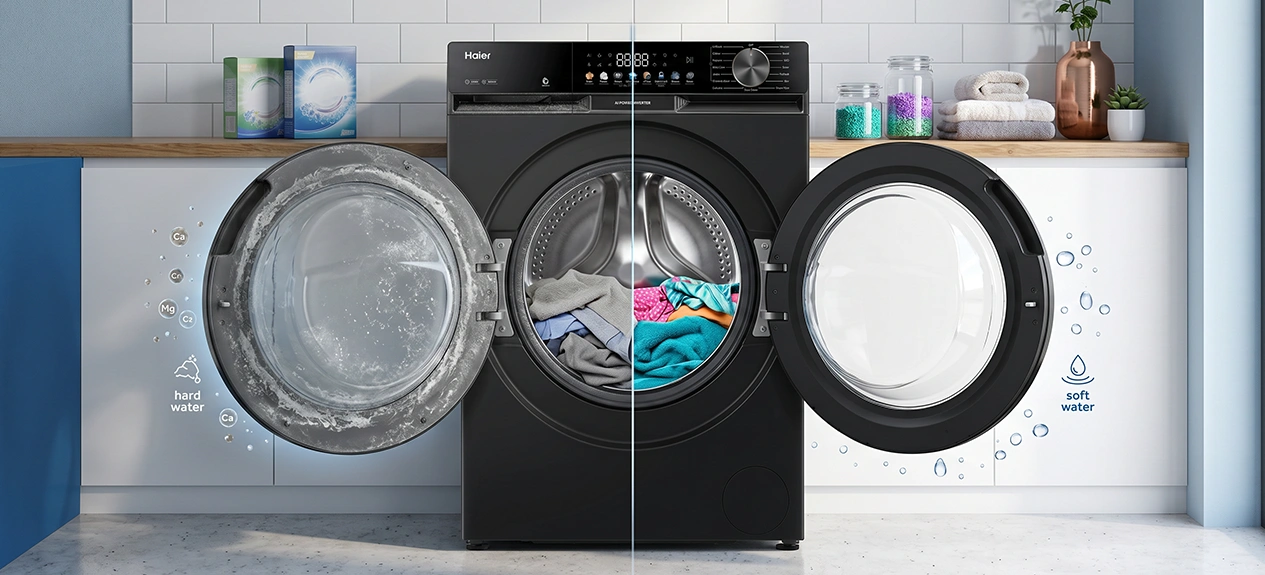

Water quality differs from one home to another, and it directly affects how well a washing machine performs. When detergent does not lather properly, or clothes feel a bit stiff after washing, hard water is often the reason. A hard-water washing machine deals with mineral buildup every wash cycle, not just dirty clothes. That extra load keeps increasing over time. Clothes lose their freshness, cycles take longer, and the machine starts wearing out sooner than most people expect.
This blog explains the effects of hard water on a washing machine over time. It also gives you the difference between hard water and soft water and gives you some easy maintenance steps to keep your machine running well for years to come.
Understanding Hard Water in Your Home
Hard water carries a higher concentration of dissolved minerals, mainly calcium and magnesium, picked up as water travels through rock and soil before reaching your home. Soft water, in comparison, carries far fewer of these minerals and behaves quite differently once detergent enters the picture.
The Difference Between Hard Water and Soft Water
Hard water changes washing results faster than expected because soap sticks inside machines with every wash. Soft water keeps detergent working better, and clothes feel cleaner, though people miss this difference.
| Aspect | Hard Water | Soft Water |
| Mineral content | High (calcium, magnesium) | Low |
| Detergent lathering | Poor, needs more detergent | Good, needs less detergent |
| Effect on fabrics | Stiff, dull over time | Soft, holds colour longer |
| Appliance scaling | Frequent limescale buildup | Minimal scaling |
| Maintenance need | Regular descaling required | Occasional cleaning only |
Effects of Hard Water on Washing Machine Performance
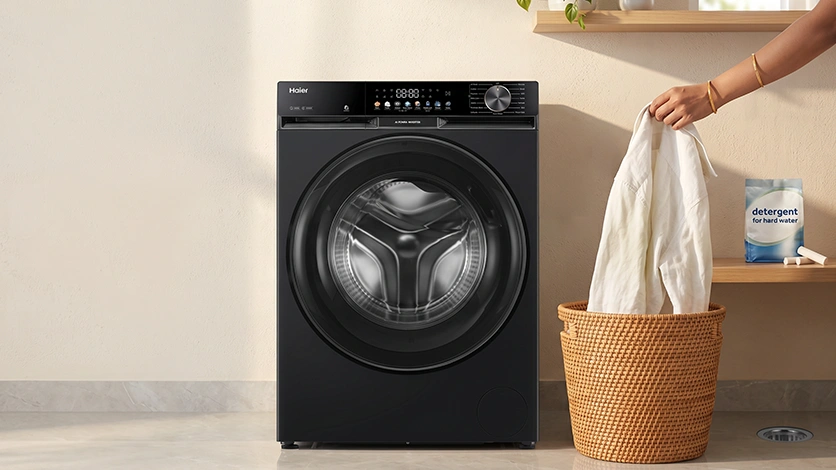
The effects of hard water on washing machine components build up slowly, which is exactly why many people miss the early signs. Minerals do not damage a machine overnight, they accumulate wash after wash until performance drops noticeably. Detergent stops working the way it should, clothes retain a rough texture, and certain parts wear out faster than the warranty period suggests they would. Models such as the Haier HWM80-H320BK top-load washing machine are built with this exact problem in mind, pairing a dedicated Hard Water Wash mode with an in-built heater to reduce mineral interference during every cycle. Understanding these effects early makes it far easier to protect your appliance and get the wash quality you paid for.
- Limescale buildup: Deposits of calcium and magnesium build slowly inside the drum, inside the pipes and inside the heating parts. Water doesn’t move as freely over time so each wash becomes a little less effective.
- Reduced detergent performance: Hard water uses some of the detergent before it reaches the clothes. Stains, sweat marks and odours may remain even after a full wash cycle.
- Rougher fabrics: The fabric fibres trap minerals with repeated washings. Clothes feel rough against the skin, and colours slowly lose the bright look they once had.
- More energy consumption: The heating element is larger, and so it takes longer to heat the water. The machine is on longer and so uses more electricity.
- Shorter appliance life: Constant mineral buildup adds additional wear on critical appliance components. Motors, valves and seals wear out faster, meaning repairs far sooner than you would expect.
Signs Your Washing Machine Is Struggling With Hard Water
Certain signs point directly toward mineral trouble inside a machine, even before the dots get connected. White or chalky residue around the detergent drawer or drum door is usually the first clue worth noticing. Scale build-up in unseen components also causes slower, noisier or less effective wash cycles than you’re used to. Mineral deposits are likely to be to blame if towels feel scratchy coming out of the machine, or whites start to look greyish despite increasing the amount of detergent used. Even a well-built hard water washing machine cannot avoid mineral buildup completely without some routine care. Catching these signs early saves both money and frustration down the road.
Washing Machine Maintenance Tips for Hard Water Areas
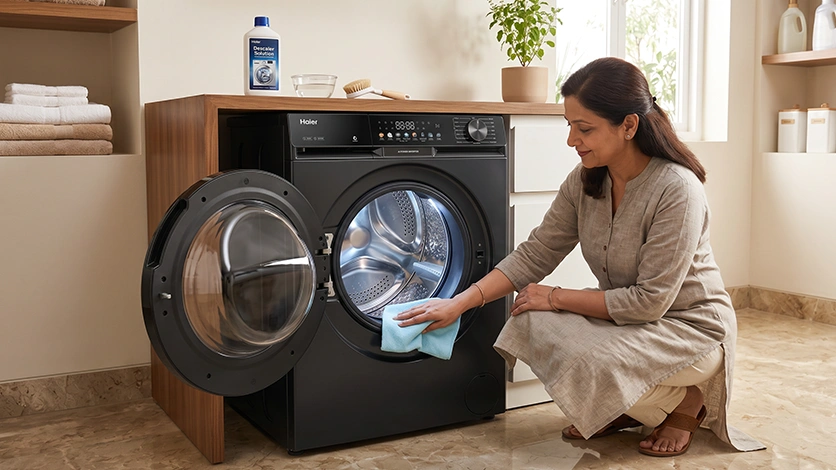
Good washing machine maintenance does not have to be complicated, even in areas where water hardness runs high. A few consistent habits go a long way toward protecting the drum, heater, and pipes from mineral damage. Building these steps into a monthly routine keeps performance steady and pushes back the need for costly repairs later.
- Run an empty hot wash cycle with a descaling agent or white vinegar once a month to dissolve limescale before it hardens further.
- Wipe the detergent drawer and door seal after every few washes, since mineral residue collects fastest in these damp corners.
- Use detergent formulated for hard water, or add a water softener to the wash if hardness is severe in the local supply.
- Leave the door open after each cycle so moisture evaporates instead of feeding mould and mineral crust together.
- Get the inlet filter and pipes checked periodically, since blocked flow is often the earliest sign of scale narrowing water paths.
- Choose a wash program suited to the fabric type rather than defaulting to the same cycle every time, which reduces unnecessary strain.
Haier’s Approach to Hard Water Washing Machine Care
Haier designs washing machines for Indian water conditions because hard water is common. Many homes deal with it every day, so the design makes sense. Across our range, from front-load washing machines to top-load and semi-automatic models, engineering choices are made specifically to reduce how mineral-rich water affects daily performance.
Our top load machines feature Anti-Scaling Technology built with twenty nano balls that move with the water flow, gently scrubbing the inner and outer tub walls during every cycle. This self-cleaning action helps prevent mineral deposits from settling permanently, keeping the tub looking close to its first use for much longer. Select top load models also carry a dedicated Hard Water Wash mode that adjusts the wash pattern to reduce salt and limescale interference with the heater and drum, so detergent performs closer to its intended strength even where water hardness runs high. Our built-in Butterfly Design Heater warms water for a more thorough wash, supporting up to 99.99 per cent germ removal, while a toughened glass lid adds durability against everyday wear and tear.
In our front-load range, features such as the Direct Motion Motor and 525mm Super Drum work alongside Essence Wash and Smart Dosing to use water and detergent more precisely, which matters even more once hardness levels climb. Dual Spray and Steam functions rinse thoroughly and help clear residue from the drum after each cycle, keeping the machine fresher between washes.
For semi-automatic users, a Magic Filter captures lint and debris efficiently, and a rust-free cabinet keeps the machine dependable through years of daily use across Indian homes. Together, these details reflect how seriously we take washing machine maintenance and long-term reliability, wherever you live and regardless of local water quality.
Want to know which specific features matter most when buying a washing machine for a hard water area?
Read this blog: The Best Washing Machines for Hard Water Areas
Conclusion
Hard water rarely gets much attention until a washing machine starts showing problems. The effects keep building with every wash, and clothes, detergent, and even the machine take the hit. Knowing the difference between hard water and soft water helps you catch those small signs before they turn bigger. A little cleaning routine every few weeks makes more difference than many expect.
Picking a washing machine designed to handle hard water also helps in the long run. It keeps washing performance steady, fabrics feeling better, and the appliance working properly for years, even if water quality never really changes.
Frequently Asked Questions
How do I know if my area has hard water?
You can check municipal water reports, use a home hardness test strip, or look for white limescale marks near taps and geysers. Soap that lathers poorly and clothes that feel stiff after washing are also common indicators of hard water.
Does hard water damage a washing machine?
Yes, over time, hard water can cause limescale buildup on heating elements, drums, and pipes, reducing efficiency and shortening the appliance’s working life. Regular descaling and mindful maintenance help minimise this gradual wear considerably.
Why do clothes feel rough or look dull after washing in hard water?
Minerals in hard water react with detergent to form residue that clings to fabric fibres instead of rinsing away completely. This buildup leaves clothes feeling stiffer and looking less vibrant after repeated washing cycles.
Do I need a water softener for my washing machine?
A water softener is not mandatory, but it helps significantly if the local water is very hard. Machines with built-in anti-scaling or hard water wash features can also reduce mineral impact without one.
Does hard water increase detergent usage?
Yes, hard water reduces how well detergent dissolves and lathers, so many people end up using more product to get the same cleaning result. This raises both cost and residue buildup over time.
How do I remove limescale from a washing machine drum?
Run an empty hot cycle with white vinegar or a dedicated descaling agent once a month to dissolve mineral deposits. Wiping the drum, seal, and detergent drawer regularly also prevents buildup from hardening further.