
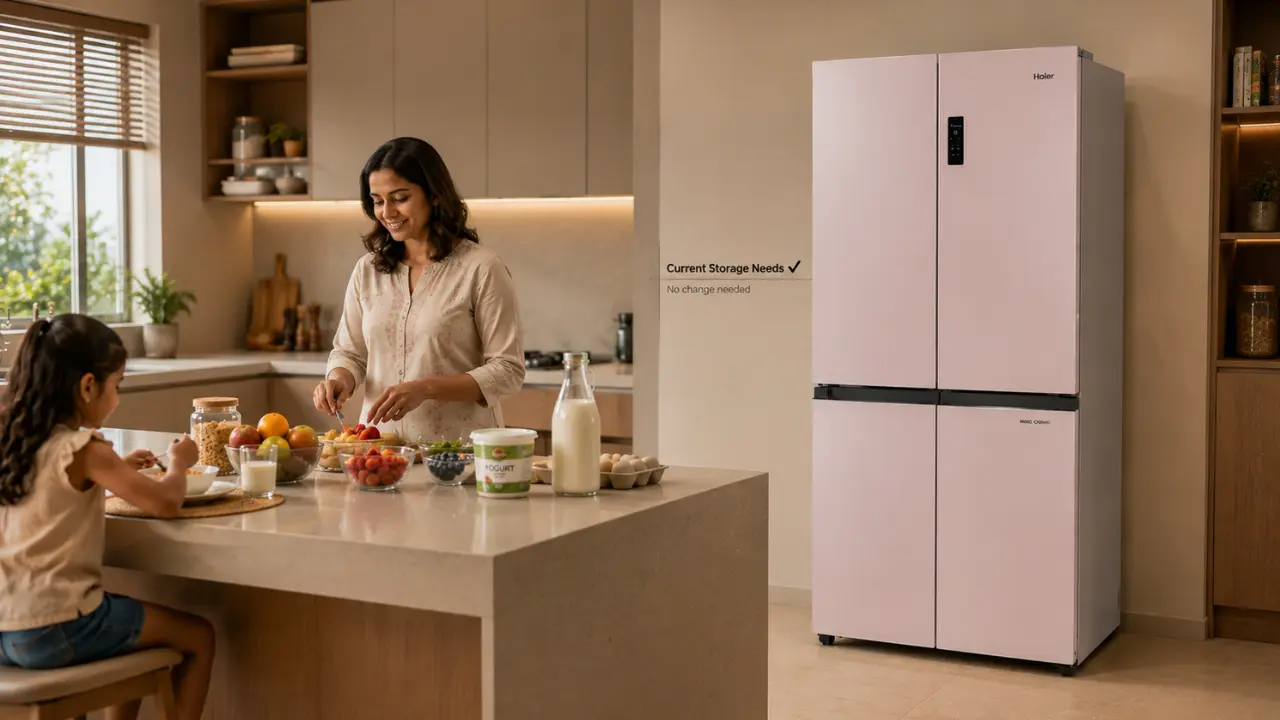

Convertible refrigeration sounds simple: if your food-storage needs change, adjust the compartment to suit them. More fresh-food space before a family gathering? Useful. Extra frozen storage after a large grocery run? Equally useful.
But there is one mistake worth avoiding: convertible mode should not be treated as a setting that needs to be changed simply because it is available.
The better approach is to match the compartment temperature to what is actually being stored. Some foods require consistently frozen conditions. Others belong at normal refrigeration temperatures. And sometimes, your existing configuration is already doing the job perfectly well.
So, when should you not use convertible mode? That is where understanding the feature becomes more important than merely having it.
First, What Does Convertible Mode Actually Do?
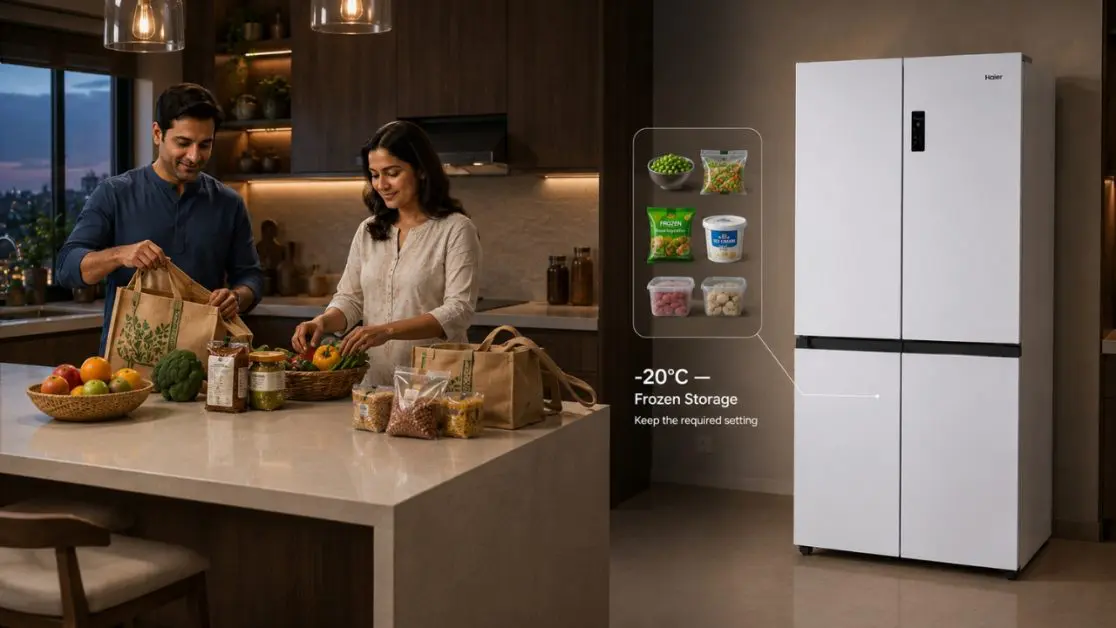
In a convertible refrigerator, a designated compartment can operate across different temperature settings instead of remaining permanently limited to one role.
The Haier Lumiere 520L 3 Star French Door Refrigerator, for instance, has a 90L Magic Convertible Zone with an adjustable temperature range from -20°C to 5°C. Depending on the selected configuration, the refrigerator can provide up to 440L of fridge space, while another configuration provides up to 170L of freezer space.
That flexibility can be genuinely useful in Indian households where storage patterns change from one week to another.
Still, flexibility does not mean every food should move between temperature zones.
1. When Your Frozen Food Needs to Stay Frozen
This is perhaps the clearest situation.
If a compartment currently contains foods that need frozen storage, converting that space to a warmer refrigeration setting would obviously change their storage environment.
Think of a typical freezer after the monthly grocery run:
- Frozen foods
- Ice cream
- Frozen peas and other vegetables
- Meat or seafood intended for frozen storage
- Prepared foods being kept frozen for later use
If you still need that freezer capacity, there is little reason to sacrifice it merely to create more refrigerator space.
The practical rule is uncomplicated: check what is already inside before changing the mode.
2. When Your Existing Storage Configuration Already Works
Not every feature needs constant intervention.
Suppose your regular refrigerator compartment comfortably holds the week’s vegetables, fruits, milk, leftovers, bottles and other everyday items. Meanwhile, your freezer has enough room for everything that belongs there.
What problem would conversion solve?
Probably none.
Convertible mode becomes valuable when there is a mismatch between the space you have and the space you currently need. Without that mismatch, changing settings can simply add unnecessary complexity.
A useful question before touching the controls is:
“Do I actually need more fridge or freezer space right now?”
If the answer is no, leave the configuration alone.
3. When You Have Not Checked the Food’s Storage Requirement
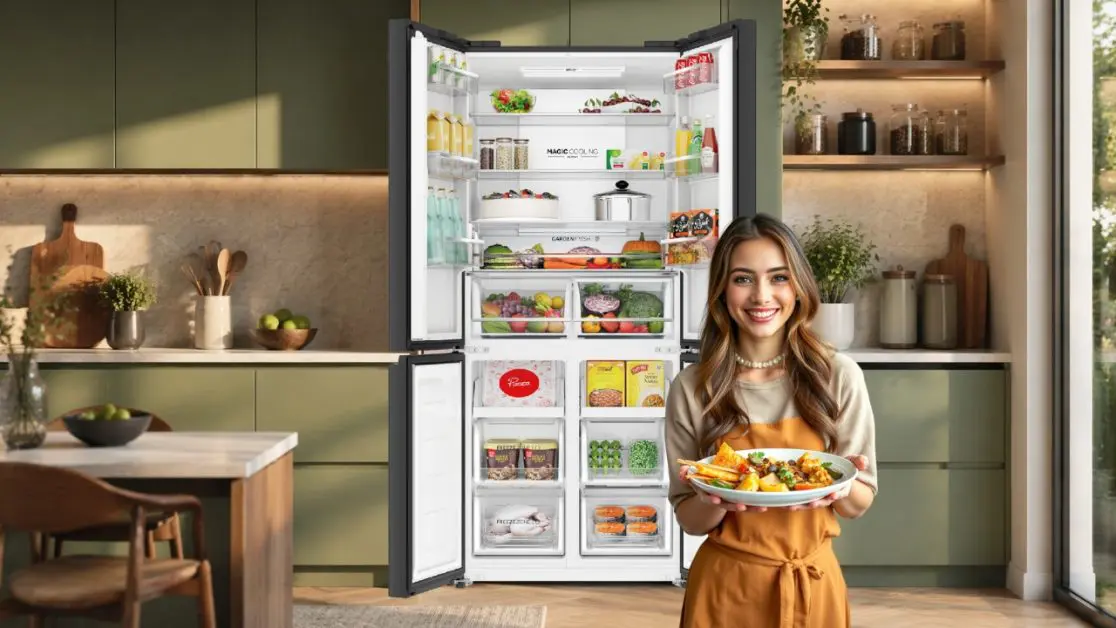
A refrigerator compartment is not simply “cold”, and a freezer is not merely “colder”. Different foods can call for different storage conditions.
That distinction matters particularly with a wide temperature range.
Haier’s 90L Magic Convertible Zone supports adjustment from -20°C through to 5°C, creating scope for different storage requirements rather than a single fixed temperature. The product information illustrates settings across this range for different food and beverage categories.
That does not mean one temperature suits everything.
Before selecting a setting:
- Check the storage instructions on packaged foods.
- Consider whether the item needs refrigeration or freezing.
- Avoid choosing a temperature merely because you want to create extra room elsewhere.
- Organise the compartment according to foods with compatible storage needs.
Storage decisions should come first. The mode should follow.
4. When You Are Changing Modes Just for a Few Small Items
Here is where convenience can become overthinking.
You bought two extra bottles of juice. Or there is one container of leftover biryani that does not immediately fit where you wanted it.
Does the refrigerator configuration really need changing?
Maybe not.
Try reorganising the available storage first. The Haier Lumiere range is designed with organised storage in mind, including multiple storage zones, movable storage elements and toughened glass shelves.
Sometimes the simpler answer is simply to rearrange what is already inside.
Convert when the storage requirement is meaningful
Convertible space becomes more relevant when the change is substantial for example:
- Guests are arriving and fresh-food storage has increased noticeably.
- Festival preparations require considerably more refrigerated ingredients.
- A large grocery purchase has increased freezer requirements.
- Your family’s storage pattern has changed for several days rather than a few hours.
That is a better use of flexibility than repeatedly adjusting the compartment for minor changes.
5. When You Are Frequently Switching Without a Storage Plan
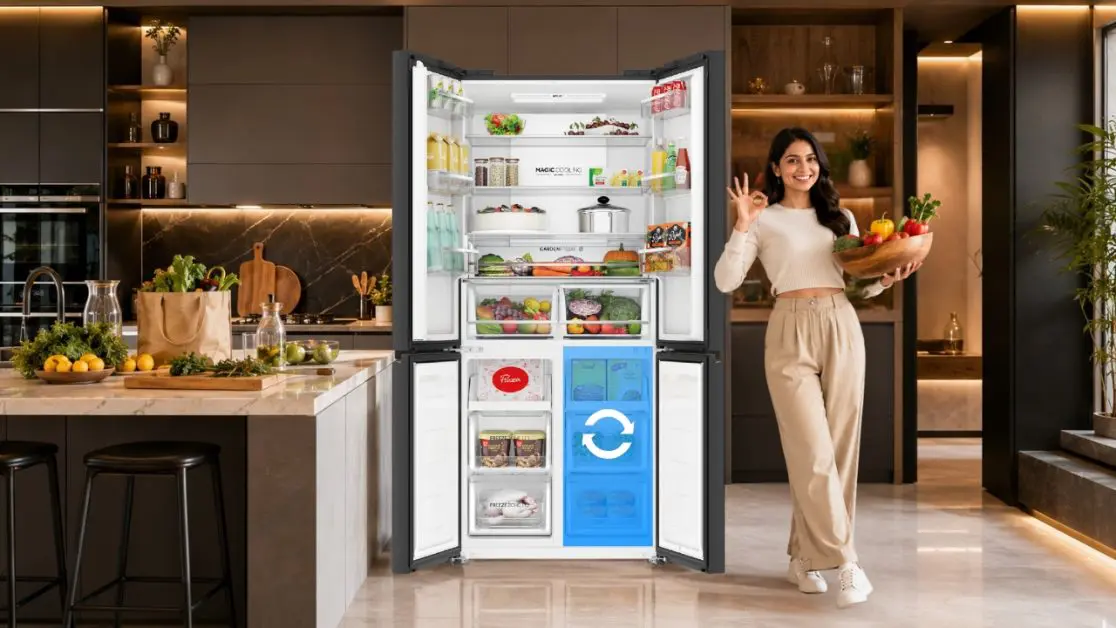
One day freezer. Next day fridge. Then back again.
Technically having adjustable storage does not mean random switching is useful.
A better habit is to look ahead. Indian kitchens often have fairly predictable peaks: weekend grocery shopping, festive cooking, family visits, meal preparation or seasonal stocking.
Plan the compartment around those requirements.
For example, if relatives are staying for several days and the kitchen will need substantially more vegetables, dairy products, beverages and prepared dishes, additional fridge capacity may make sense. If you are stocking frozen foods instead, retaining or expanding freezer capacity may be the better choice.
The feature works best when the setting follows the household.
Not the other way around.
6. When the Selected Temperature Does Not Suit Everything Inside
This is easy to overlook.
Imagine using the convertible compartment for several different foods simply because they physically fit. Space-wise, everything looks fine. Temperature-wise, perhaps not.
The Haier Lumiere’s adjustable zone spans -20°C to 5°C, which is a broad range. Choosing one point within that range means the contents should be appropriate for that selected temperature.
Before changing the setting, quickly review the compartment.
A simple pre-conversion check
Ask yourself:
- What foods are already inside?
- What foods am I planning to add?
- Do they require similar storage conditions?
- Am I replacing useful freezer capacity with fridge space, or vice versa?
- Is the change necessary for more than a handful of items?
Thirty seconds of checking can make the feature much more purposeful.
The Smarter Idea Is Not “More Fridge”. It Is the Right Space at the Right Time
This is where Haier’s approach to convertible refrigeration becomes interesting.
The Haier Lumiere 520L 3 Star French Door Refrigerator offers 520L total capacity, with a 350L fresh-food section, 80L freezer and 90L convertible capacity listed for the model. Its convertible arrangement can deliver up to 440L of refrigerator space or up to 170L of freezer space depending on how that adaptable section is being used.
Beyond capacity, the refrigerator includes features such as Deo Fresh Technology, toughened glass shelves and adjustable storage elements. Selected Lumiere product information also highlights 360° Surround Cooling and inverter-based cooling technology.
In practical terms, the appeal is not that owners must constantly change settings. Quite the opposite.
It is having the option when household requirements genuinely change.
Convertible Refrigeration Should Follow Your Routine
A refrigerator is used every single day, which makes practical flexibility far more valuable than flexibility for its own sake.
Do not convert a compartment because there is a button waiting to be pressed. Do it because your storage requirement has changed and the new temperature setting is appropriate for what you intend to keep there.
For households looking for that kind of adaptable storage, the Haier Lumiere 520L 3 Star French Door Refrigerator brings together a 90L Magic Convertible Zone, generous overall capacity and organised storage in a four-door format.
Some weeks you may need more fresh-food room. Other weeks, freezer space wins.
And on perfectly ordinary weeks? Leave it exactly as it is.
That, really, is the point of convertible refrigeration: choice when you need it, without forcing you to change anything when you don’t.
Frequently Asked Questions
1. What is convertible mode in a refrigerator?
Convertible mode allows a designated compartment to operate at different temperature settings depending on storage requirements. In the Haier Lumiere 520L 3 Star French Door Refrigerator, the 90L Magic Convertible Zone offers an adjustable temperature range from -20°C to 5°C, allowing the space to accommodate different refrigeration or freezing needs.
2. When should I not use convertible mode?
Avoid changing the convertible mode when your existing refrigerator and freezer arrangement already meets your needs, when the compartment contains food that requires its current temperature, or when the new setting would not suit everything stored inside.
3. Can I use convertible mode for frozen food?
Yes, provided the selected temperature is appropriate for the food being stored. The Haier Lumiere’s Magic Convertible Zone can be adjusted down to -20°C, while the exact setting should always be chosen according to the food’s storage requirements.
4. Can convertible space be used as normal refrigerator space?
Yes. The Haier Lumiere 520L offers a 90L convertible section, and its configuration can provide up to 440L of fridge space when additional fresh-food storage is required.
5. Should I keep changing convertible mode frequently?
There is usually no need to change it frequently unless your storage requirements genuinely change. It makes more sense to plan the compartment around situations such as larger grocery runs, family gatherings, festive cooking or periods when extra freezer or refrigerator capacity is needed.
6. What should I check before changing convertible mode?
Check what is already stored in the compartment, what you intend to add and whether all those items are suitable for the temperature you plan to select. Also consider whether reorganising your existing shelves could solve the space issue without changing the mode.