
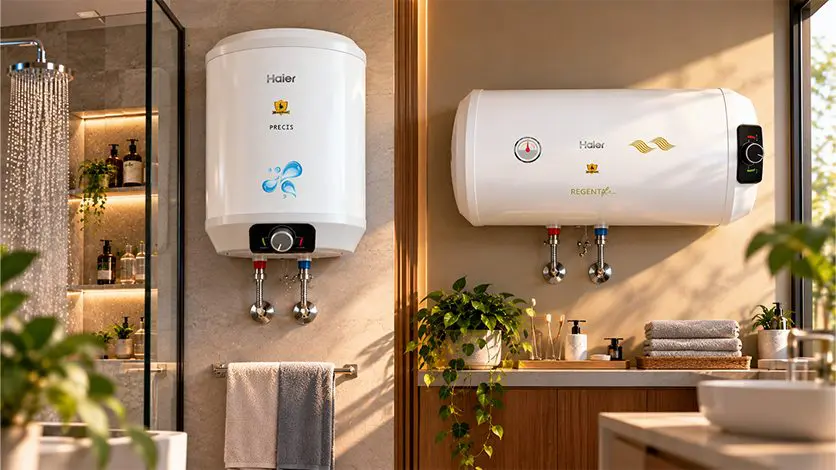

When buying a water heater, it is not only about how much it can hold, how quickly it can heat or how energy efficient it is. The size of your bathroom is also important, particularly when the walls are taken up by fixtures, overhead cabinets or plumbing connections. This is where the vertical vs horizontal geyser analogy comes in.
Both of these designs do the same job; however, the size & how they are installed may affect how they fit into different bathroom designs. If you have limited space or you are planning a new bathroom installation, it is important to know the differences before deciding on a water heater.
To understand what makes each type of geyser different, we can look more closely at how both are built and how they operate.
What Are Vertical and Horizontal Geysers, and How Do They Work?
A vertical geyser is a type of storage water heater with a vertical tank, which heats water using an internal heating element. As water warms, it naturally rises to the top of the tank, and cooler water stays below. This temperature segregation means that when hot water is required, it can be drawn off from the upper outlet. Vertical geysers are usually available in varied storage capacities and are designed for upright wall mounting.
A horizontal geyser, however, has a tank laid in a lengthwise position rather than a vertical position. It works on the same basic heating process: a heating element and thermostat that heats water to the temperature you select. The heating element and the inlet and outlet arrangements for the water are, however, so disposed as to be suitable for the horizontal tank. This makes the geyser efficient in heating and supplying water in the position it is meant to be mounted.
Vertical vs Horizontal Geyser: How Do They Compare?
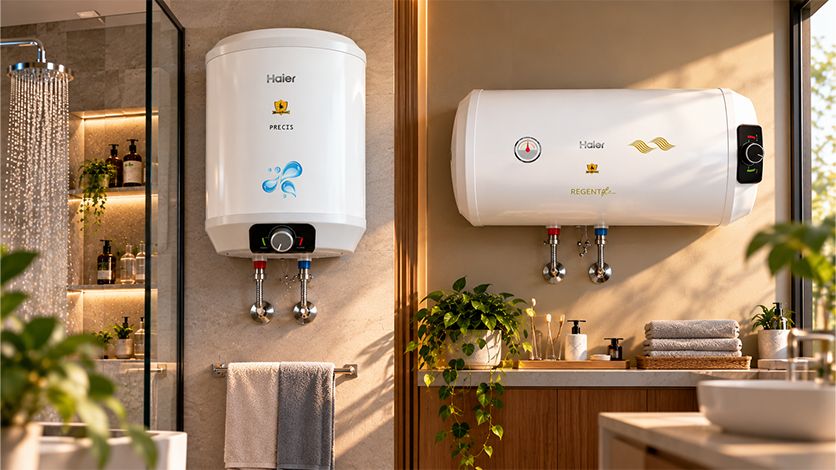
The differences between a vertical vs horizontal geyser are not just limited to their shape and position of mounting. Both will give you hot water, but the space they take up, the way they heat and how they are installed can be different. The table below lists seven practical differences worth considering when deciding on a water heater.
| Points of Comparison | Vertical Geyser | Horizontal Geyser |
| Tank Design | Has an upright tank with greater height than width | Has a lengthwise tank with greater width than height |
| Space Requirements | Requires sufficient vertical wall space for installation | Needs more horizontal wall space but generally less height |
| Ceiling Clearance | May be difficult to accommodate below low ceilings or overhead fixtures | Can fit more easily beneath beams or false ceilings, provided adequate clearance is available |
| Heating Efficiency | Its upright design generally supports better natural temperature separation | Heating performance depends more on internal tank design and water circulation |
| Hot-Water Delivery | Maintains a distinct layer of hot water near the upper outlet | May experience greater mixing of hot and cold water, depending on its construction |
| Installation Requirements | Requires manufacturer-approved upright mounting and suitable wall support | Requires dedicated horizontal mounting arrangements and correctly positioned connections |
| Maintenance Accessibility | Servicing depends on clearance around the unit and access to its components | Requires adequate side and service-panel clearance, depending on the model |
How Does Geyser Orientation Affect Heating and Everyday Use?
The effect of the orientation of the geyser is not just on the way water heats up inside the tank. It can also affect regular use, especially in terms of water pressure, temperature control and heating uniformity. Here are four things to understand.
- Pressure of water and rate of flow. Geyser orientation does not determine water pressure directly. But the location of inlet and outlet connections must be suitable for the plumbing configuration to allow for proper water flow. The pressure rating of the heater must also match the water supply of the household.
- Thermostat reaction. The thermostat measures the temperature of the water and switches the heating element on or off as required . Its position is determined by the tank construction, allowing the geyser to maintain the required temperature during normal use.
- Time for recovery after using hot water. Once the stored hot water is consumed, the geyser needs some time to heat the incoming cold water. The time it takes to recover depends more on the wattage of the heating element, the tank capacity and the temperature of the incoming water than on orientation alone.
- Repeated use performance. If more than one person uses hot water in a row, the geyser may not have time to bring the tank temperature back to full. Selecting the correct storage capacity and heating power contributes to a more reliable supply, whether the geyser is vertical or horizontal.
When Does a Horizontal Geyser Make More Sense for Your Bathroom?
Not every bathroom has sufficient space for a standard upright water heater. In some layouts, a horizontal geyser is a good way to make better use of the wall space and not get in the way of existing fixtures. Here are four scenarios where this design might be worth considering.
- Low ceiling bathrooms. A geyser can be helpful in a bathroom where the ceiling is low, and there is very little space between the ceiling and the existing fixtures. A horizontal model requires less vertical clearance if there is enough width for installation.
- Bathrooms with beams overhead. Tall appliances may be limited by structural beams, especially over shower areas. A horizontal geyser can be fitted into the available space beneath or next to these beams, with no alterations to the bathroom structure.
- Narrow bathroom vertical gaps. Some bathrooms have windows, ventilation openings or built-in shelves that break up the available wall height. Provided mounting clearances are observed, a horizontal water heater can be installed on an adequate continuous section of wall.
- Bathrooms with larger wall sections. A bathroom may be short in height but wide enough above the bathing area. In these instances, the wider wall section can be exploited by the use of a horizontal geyser, while still enabling plumbing connections and future servicing.
What Should You Check Before Installing a Vertical or Horizontal Geyser?
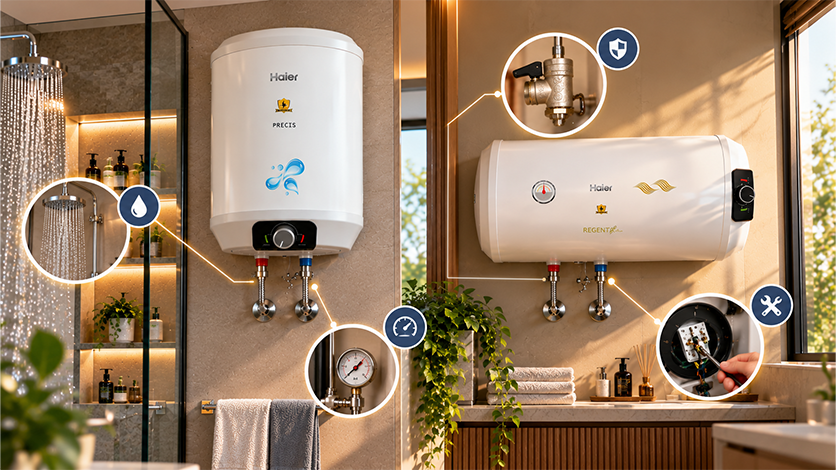
Even after selecting the right geyser orientation, a few installation details deserve attention. These can affect how conveniently the water heater operates, how safely it handles pressure and how easily it can be serviced in the future. Here are four things worth checking.
- Distance From Water Outlets. Installing the geyser closer to frequently used taps or showers can reduce heat loss through long pipelines. This may also shorten the time it takes for hot water to reach the outlet, helping minimise water wastage.
- Water Pressure Compatibility. Check whether the geyser’s rated operating pressure suits your home’s water supply, especially in high-rise apartments or buildings with pressure pumps. A model with an unsuitable pressure rating may face unnecessary strain during operation.
- Provision for Pressure Relief. Storage geysers require appropriate safety arrangements to manage excess pressure during heating. Make sure the recommended safety valve has a suitable discharge route and remains accessible for inspection. Its outlet should never be blocked.
- Accessibility for Future Repairs. Consider whether technicians can reach the thermostat, heating element and other serviceable components without dismantling nearby bathroom fittings. Sufficient working space can make routine inspections, descaling, and future repairs easier.
How Can You Choose the Right Geyser Shape for Your Bathroom?
The choice of having a vertical or a horizontal geyser is also based on the ease of fitting the water heater into your bathroom’s daily routine. Besides the basic installation requirements, there are some practical details that can help you select a model that works well with your existing setup.
- Check the movement of the bathroom door and window. Check if the position of the geyser might be an obstruction to doors, window shutters or other movable fittings. The appliance should be kept away from these areas so that normal activities in the bathroom are not impeded.
- Placement of existing bathroom accessories. Shower rods, mirrors, towel racks and exhaust fans can determine where a geyser can be installed. Think about where they are going before choosing a shape and don’t move fixtures needlessly.
- Think about the geyser’s projection from the wall. Besides height and width, think about how far the appliance sticks out into the bathroom. In a small space, a deeper model can feel intrusive, especially near areas of high usage.
- Look for an easy control Location. On various models, temperature controls and displays may be located in different places. Select a geyser whose controls will be visible and accessible after installation, without requiring awkward reaching or interfering with other fittings.
Confused between two types of geysers?
Read through Instant or Storage Water Heater: How to Choose Your Perfect Match
How Do Haier Water Heaters Fit Different Bathroom Requirements?
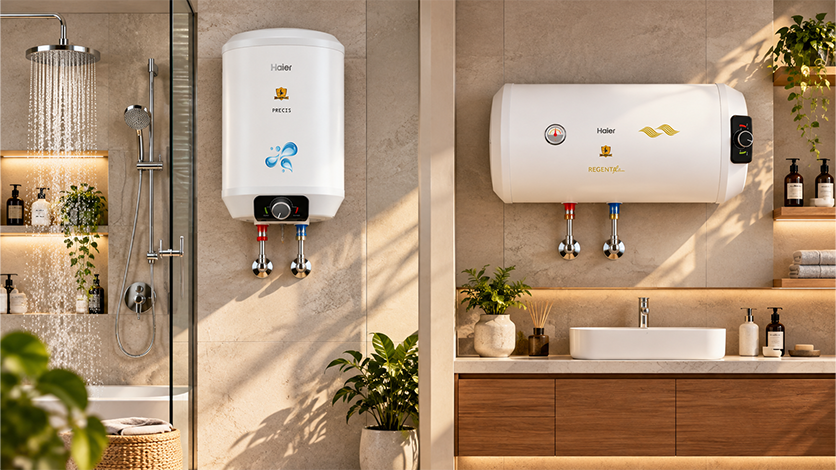
At Haier, we take a practical approach to the requirements of bathroom heating, with different designs, capacities, and daily use. Whether you’re looking for a horizontal water heater for your home or a compact storage model, we have options to fit your exact space and hot water needs.
- Our REGENTA SLIM is suitable for bathrooms with low wall height.
The Haier REGENTA SLIM 25L Water Heater that we offer is for horizontal mounting only. It has a storage capacity of 25 litres, which can meet higher hot water needs, and the tank design in the lengthwise direction allows you to install it in places that are wider.
- Our Spa Ivory range is designed for a range of storage needs
Haier Spa Ivory 10L Square Water Heaters are available in different sizes. This allows householders to consider the storage capacity and the available bathroom space in conjunction rather than unnecessarily buying a bigger tank.
- AQUALAD Digi makes temperature monitoring easy
The Haier AQUALAD Digi 15L Square Water Heater has a digital temperature display and a 2.2 kW heating element. The heating element takes care of regular hot-water needs, while users can monitor the water temperature on the display.
- The tank protection performance for the long term
We retrofit select water heaters with titanium-coated tanks, magnesium anode rods and PUF insulation. Tank coating & anode rod help to prevent corrosion & insulation minimises heat loss during storage. All these features together solve the problem of durability and heat retention regardless of the layout of the bathroom.
Conclusion
The choice of vertical or horizontal geysers depends on bathroom size, installation conditions and hot water needs. A vertical application may be appropriate for a traditional wall, but a horizontal configuration may be advantageous in areas where there’s limited ceiling clearance.
Whichever shape you like, check the manufacturer’s mounting instructions before you install.
Frequently Asked Questions
What is a horizontal geyser?
A horizontal geyser is a storage water heater designed for installation horizontally along a wall. The wider, low-height design is ideal for bathrooms with false ceilings, overhead beams or limited vertical installation space.
Which is better, a vertical or horizontal geyser?
A vertical geyser is normally suitable for bathrooms with sufficient wall height and allows for natural stratification of hot water. Ceiling clearance limitations make horizontal geysers the better option. The right selection depends upon the available space, storage capacity and the installation requirements.
Can a geyser be installed horizontally?
Yes, but only if the geyser is designed or approved for horizontal installation. The installation of a vertical-only model on its side can affect water circulation, heating element operation and safety. Always follow the manufacturer’s mounting instructions and recommended clearances.
Is a horizontal geyser good?
Yes, a horizontal geyser is an ideal option for bathrooms where the height of the ceiling is less. Properly installed, it will reliably deliver hot water. The performance depends on the heating element’s capacity, the tank’s insulation and the internal circulation of water.
Which is better vertical or horizontal geyser?
Effective temperature layering is often achieved using a vertical geyser, and wall height limitations may make a horizontal geyser more useful. Before you make a decision, check a model’s heating capacity, dimensions, energy efficiency and installation requirements.
Does geyser orientation affect heating?
Yes, the orientation of a geyser can affect hot and cold water circulation in the tank. The vertical models inherently have the ability to separate temperatures. The horizontal models rely on the internal structure to control the water distribution. Performance is also affected by insulation and where the heating element is placed.
How big is a 15-litre horizontal geyser?
A horizontal geyser of 15 litres capacity is usually wider and shorter than a vertical geyser of the same capacity. Exact dimensions vary by manufacturer, so check the product’s width, height and depth, along with the space needed for plumbing and servicing.