
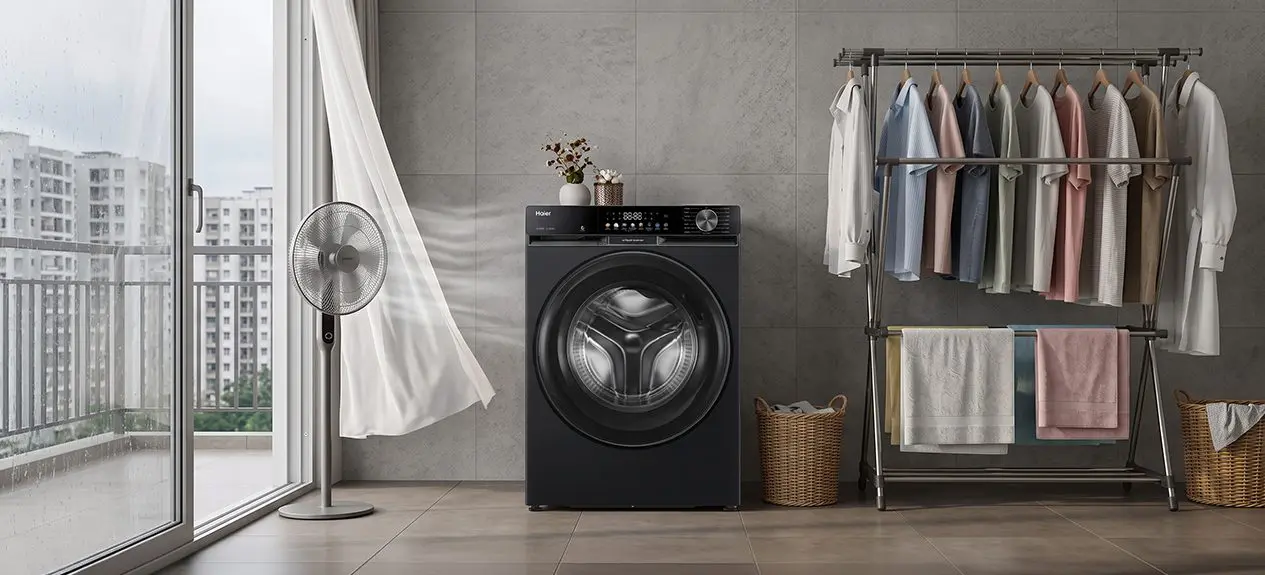

In many urban households, drying clothes indoors is no longer limited to monsoons. Apartment living, winter weather, small balconies and busy schedules often mean that an indoor drying rack is the practical choice. Problems may occur if clothes remain damp too long, and rooms with poor air circulation are a factor in this. They may look dry in the morning but still smell sour or musty.
If moisture is left trapped in fabric for too long, it creates the ideal conditions for bacteria and mould to grow more easily. Better airflow helps a lot. Good washing, good moisture removal and a cleaner washing machine also make indoor drying easier to manage, even in humid weather.
Why Do Clothes Start Smelling Musty When Dried Indoors?
Wet fabric needs surrounding air to remove its moisture efficiently. The moving air and the sun outside generally hasten this process. However, damp laundry can leave moisture in the room, especially if the windows are closed, or if a large amount of laundry is drying at the same time. The fabric dries more slowly.
This creates conditions for bacteria and mould spores to flourish more easily. These microorganisms are present in household environments, but prolonged exposure to dampness gives them a better chance to grow on fabric. That is often what creates the musty smell clothes develop after a slow indoor drying process.
The drying rack itself can make things worse. When shirts, trousers, towels, and other garments hang too close together, air cannot move properly between them. A thick waistband or the inside of a folded shirt may stay wet even after the outside feels almost dry. This uneven drying often gets overlooked.
Humidity adds another problem. As more water evaporates from the laundry, the surrounding air becomes more humid. If that humid air cannot escape, drying slows down further. It becomes a cycle where damp clothes increase room humidity, while higher humidity makes the clothes take longer to dry.
Best Indoor Drying Methods for Clothes
Effective indoor drying begins with the manner in which laundry is arranged rather than with costly equipment. Several practical adjustments can meaningfully reduce drying time and lower the likelihood of unpleasant odours developing.
The best indoor drying methods for clothes are generally understood to include the following measures:
- Maintain adequate spacing between garments so that air is able to circulate each item individually.
- Position the drying rack near an open window or doorway through which fresh air may pass.
- Employ a ceiling fan or table fan to improve air circulation around heavier garments during humid conditions.
- Use a dehumidifier where indoor humidity remains elevated for extended periods, particularly within smaller, poorly ventilated rooms.
- Dry towels, jeans, and other heavy fabrics separately, as these items release considerably more moisture during the drying process.
- Spread shirts, trousers, and similar garments out fully rather than allowing thick sections to remain folded over the rack.
- Begin the laundry process earlier in the day wherever feasible, thereby allowing more hours of drying before humidity increases in the evening.
There is no requirement to complicate this process further. The primary objective remains the removal of moisture from the fabric before bacteria and mould are afforded sufficient time to develop.
How to Stop Damp Smell in Clothes Before Drying
The drying stage represents only one portion of the overall issue. Where clothes are removed from the washing machine while still retaining excessive moisture or detergent residue, the process of indoor drying becomes considerably more difficult from the outset.
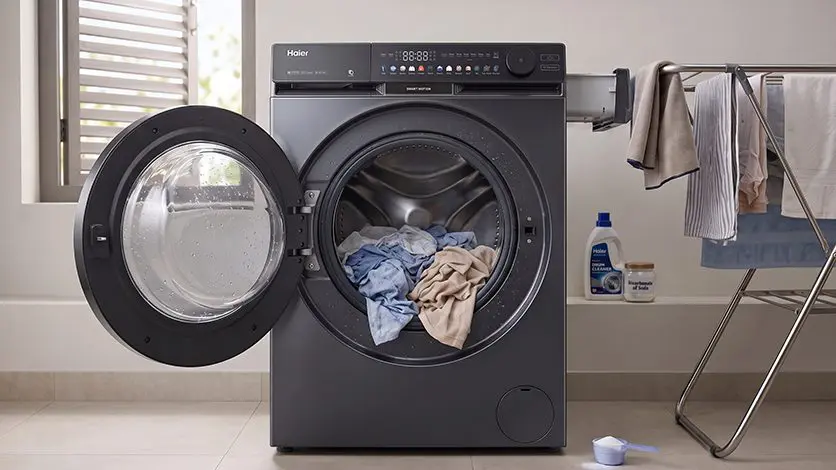
In order to stop damp-smelling clothes from developing, garments should be removed from the machine promptly once the wash cycle concludes rather than left standing. Wet clothing left within a closed drum may begin to develop an unpleasant odour before it is even transferred to the drying rack. A stronger spin cycle can also assist by extracting additional water beforehand, thereby reducing the overall drying time required indoors.
The cleanliness of the washing machine itself is a factor that is frequently underestimated. Moisture, detergent residue, lint, and dirt tend to accumulate around the drum, the door seal, and the detergent drawer over time. These areas may, in turn, develop their own odour, which is subsequently transferred to freshly washed laundry.
The use of detergent beyond the recommended quantity should be avoided. Additional detergent does not necessarily improve cleaning outcomes, and any residue that remains may linger within the fabric or inside the machine itself. Regular cleaning of the gasket, detergent drawer, and drum helps to preserve a cleaner washing environment.
How Haier Washing Machines Help With Damp and Musty Laundry
At Haier, the approach to laundry care extends well beyond the washing and spinning stages. The manner in which a washing machine manages airflow, moisture, residue, and fabric hygiene has a direct influence on how clothing subsequently performs on an indoor drying rack.
The Front Load range, which includes the F11 (12 Kg) and F9 (9 Kg) models, incorporates Ultra Fresh Air Technology, circulating fresh air through the drum following a wash cycle and thereby reducing the conditions associated with unwanted odour when garments remain inside the machine longer than intended. Dual Spray directs water around the door and gasket area to clear away foam and residue that might otherwise contribute to mould formation near the seal, while the Steam function employs higher water temperatures to address bacteria and dust mites. Essence Wash pre-mixes detergent prior to application, distributing it more evenly across the load and reducing the need for excessive detergent use.
The Top Load range offers a comparable set of features. The 6.5 Kg Ultra Air Fresh model combines air circulation with a built-in heater for hot washing, and its Magic Filter captures lint during the wash cycle. The 9 Kg Anti Scaling model employs water flow to reduce buildup on the tub walls, given that residue of this kind retains moisture and contributes to unpleasant odours over repeated use. The Semi-Automatic 196BK (12 KG) model applies Oxyi Dry spin technology to reduce the amount of water retained within clothing prior to drying, a feature of particular value when laundry must be dried indoors.
| Washing Machine Range | Feature | How It Helps |
| Front Load | Ultra Fresh Air Technology | Circulates fresh air through the drum after washing |
| Front Load | Dual Spray | Helps clean the door and gasket area |
| Front Load | Steam Function | Uses higher water temperature for fabric hygiene |
| Top Load | Ultra Air Fresh | Supports airflow and freshness after washing |
| Top Load | In-built Heater | Enables hot washing for improved hygiene |
| Top Load | Magic Filter | Captures lint during the wash cycle |
| Semi-Automatic | Oxyi Dry Spin | Helps reduce moisture retained in clothes |
Across each of these ranges, the underlying objective remains consistent: clothing should leave the washing machine cleaner and with reduced retained moisture, while the machine itself should not become an additional source of unpleasant odour.
Simple Daily Habits to Keep Indoor-Dried Clothes Fresh
Certain daily habits can substantially ease the process of indoor laundry care. Washed clothing should be removed from the drum shortly after the cycle concludes rather than left inside for extended periods. The machine should not be overloaded, as tightly packed garments are washed and spun with reduced effectiveness.
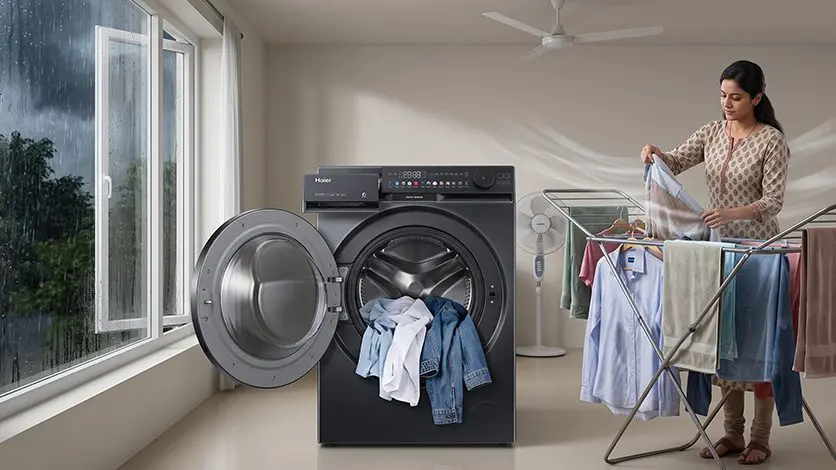
The door gasket and detergent drawer should be cleaned on a regular basis, particularly where the machine is used frequently. Where the design permits, the door or lid should be left open following use, allowing any remaining moisture to escape rather than remain trapped inside.
For further anti-mould laundry tips, freshly washed garments should not be placed in a dark corner where air movement is minimal. Heavier fabrics should be given additional space and turned periodically during drying where one side remains noticeably wetter than the other.
Attention should also be given to the room itself. Condensation forming on windows, or air that feels persistently humid, indicates that improved ventilation is required. Drying laundry under such conditions, without adequate airflow, will considerably prolong the process.
Conclusion
Indoor laundry need not result in permanently damp fabric or recurring unpleasant odours. The underlying issue is generally moisture that remains trapped within the clothing, the surrounding air, or the washing machine for too long a period. Improved spacing, stronger airflow, timely removal from the drum, and proper machine maintenance can considerably reduce this problem.
Where clothes smelling damp becomes a recurring difficulty, adjusting the drying routine alone is unlikely to resolve the matter entirely. The washing and spinning stages are of equal, and arguably greater, importance. A washing machine equipped with airflow, hygiene, and moisture management features can provide meaningful support in this regard, particularly where outdoor drying is not a practical option on most days.
With a number of considered habits and an appropriately equipped laundry setup, households can achieve more effective indoor drying and maintain fresher clothing even throughout periods of monsoon humidity.
FAQs
How do Haier washing machines eliminate indoor drying challenges right from the wash cycle?
Haier machines eliminate moisture at the source through Ultra Fresh Air Technology, Dual Spray, and strong spin performance. These reduce residual water and bacteria before clothes reach the rack, limiting the conditions that cause musty odour indoors.
Why do clothes develop a musty smell and mould growth when dried indoors?
Without airflow or sunlight, moisture stays trapped in fabric for hours, creating a damp environment where bacteria and mould spores multiply. Overcrowded racks and poor ventilation worsen this, since released moisture has nowhere to escape and resettles onto nearby garments.
What is the benefit of Haier’s Steam Wash and Anti-Bacterial technologies for indoor-dried laundry?
Steam Wash raises water temperature to address bacteria and dust mites within fabric, while Anti-Bacterial Technology on select Front Load models supports hygienic washing. Together, they help clothes begin drying cleaner, reducing the chance of odour developing indoors.
Are there natural agents that can help neutralise musty odours from clothes dried indoors?
Household staples such as baking soda in the wash, white vinegar in the rinse, or a few drops of lemon juice can help offset mild odours. These work best alongside proper ventilation, not as a standalone fix.