
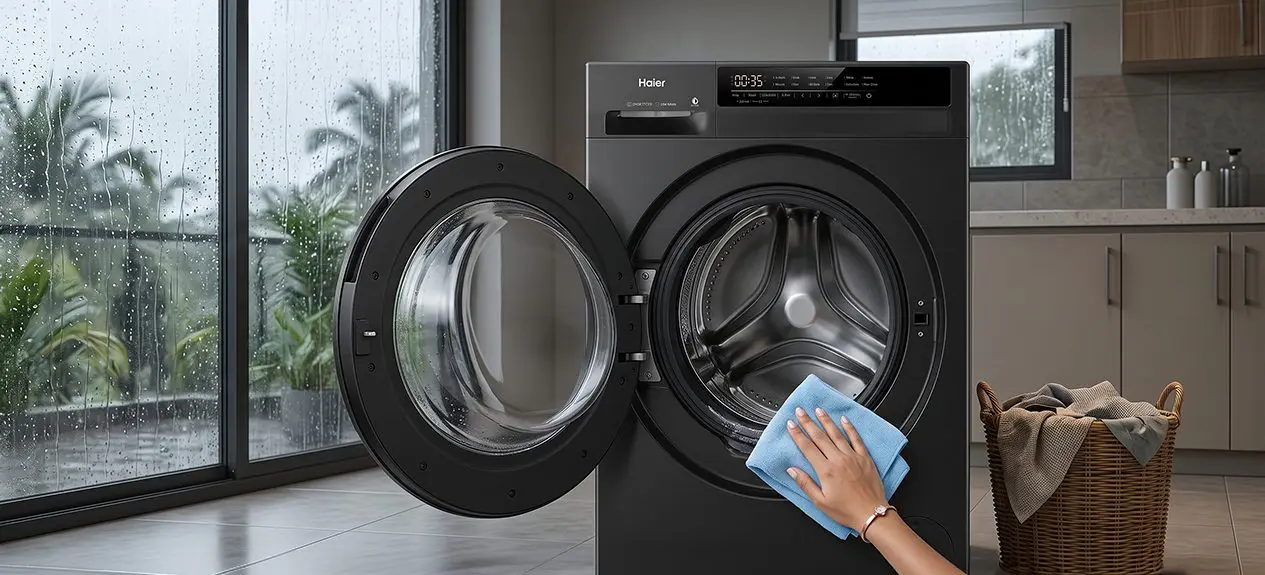

A washing machine that has been opened after a week of rain often carries a faint odour even before any inspection takes place. Many owners assume the cause lies in the drum or the detergent, when in fact it usually traces back to a component rarely examined: the rubber fold around the door.
Wash loads tend to increase during monsoon, since wet weather makes line drying impractical, and that fold ends up retaining water for longer stretches than it does through the rest of the year. Washer door seal care generally receives attention only after the odour appears, though a few consistent habits are sufficient to prevent it from developing at all.
Why Water Gets Trapped Inside the Door Seal
Every front-load machine relies on a circular rubber gasket to retain water inside the drum during a wash. This gasket folds inward, forming a lip that presses against the glass door. The fold serves a functional purpose and seals the drum effectively. However, it also collects lint, detergent residue, and droplets of water once a cycle ends. Gravity draws that moisture toward the lowest point of the fold, where it remains until someone wipes it away.
This is not a defect specific to any one brand. It is simply how a front-load washing machine rubber seal is designed to function. The issue becomes more severe during monsoon, since ambient humidity remains elevated and trapped moisture takes longer to evaporate. A seal that would dry within a few hours in summer can stay damp for a full day when the surrounding air carries this much moisture. Left unattended across repeated cycles, that dampness becomes the starting point for mildew. Consistent washer door seal care through these months prevents that starting point from forming.
The Monsoon Problem: Moisture, Mould, and Odour
Mould generally requires three conditions to grow: moisture, warmth, and an organic substance to feed on. A damp door seal following a humid month provides all three. Detergent residue and lint supply the organic matter, the gasket folds retain the moisture, and a poorly ventilated utility area maintains temperatures warm enough for spores to multiply.
The consequences tend to appear gradually. A faint musty odour is usually the first sign, noticeable when the door is opened after the machine has remained closed for a day. Small dark spots along the folds of the seal often follow. Neither issue develops overnight, and neither requires drastic intervention to prevent. Consistent airing and wiping, practised over weeks rather than as a one-time fix, keeps the seal in the condition it ought to remain in.
Washing Machine Door Rubber Cleaning Tips
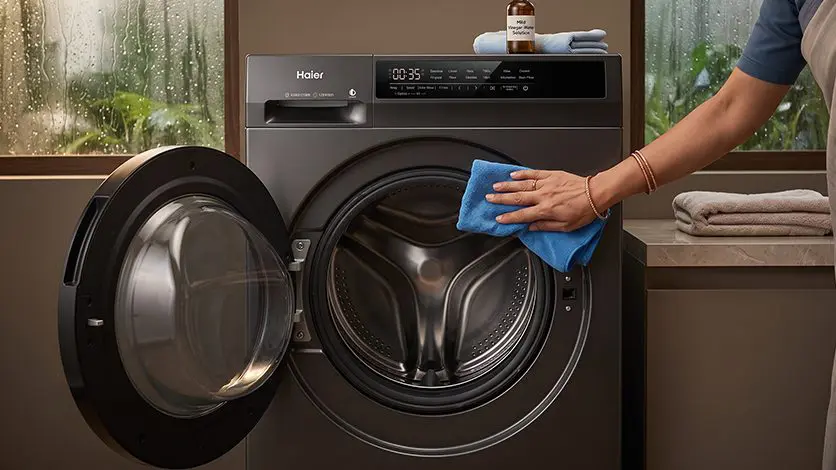
A handful of small routines, repeated after most washes, prevent the buildup that leads to smell and staining. These washing machine door rubber cleaning tips apply to nearly any front-load machine.
- Wipe the rubber fold with a dry cloth after every wash, running a finger gently along the inside crease where water tends to collect.
- Leave the door open for at least thirty minutes after a cycle finishes, allowing trapped moisture to evaporate instead of sitting against the rubber.
- Once a week, wipe the seal with a cloth dampened in a mild vinegar and water solution to loosen any early film before it hardens into a stain.
- Check the detergent drawer and drum opening together, since residue in one area often travels to the other during a wash.
- Run an empty hot wash cycle roughly once a month, which helps clear residue that a normal wash at lower temperatures may not fully remove.
None of these steps takes more than a minute. The value comes from doing them consistently, particularly through months when the air itself works against a quick dry.
Is a Front Load Washing Machine Waterproof Enough for Monsoon?
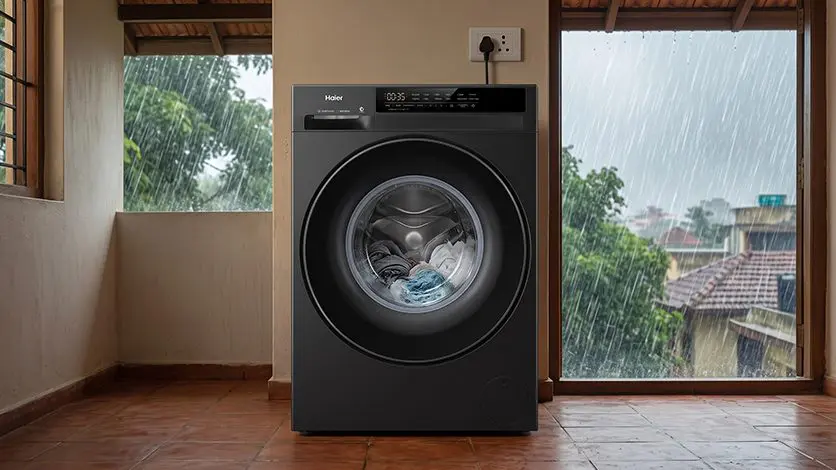
This is a reasonable question, and the answer calls for a distinction. The front load washing machine rubber seal is designed to remain watertight during operation, ensuring water stays inside the drum throughout a wash or spin cycle. This differs from the machine itself being waterproof against external conditions, such as splashing rain or a flooded utility floor.
A front load washing machine waterproof claim, where applicable, generally refers to internal seals and drainage designed for the water used during washing, not exposure to standing water from outside. Placement is a relevant factor in this regard. A machine positioned in a covered, ventilated space, with the power socket kept away from splash zones, withstands monsoon conditions without additional risk.
Anti-Mould Washing Machine Gasket Care: Habits That Help
Beyond wiping and airing, a few additional habits reduce the likelihood of mould establishing itself. Effective anti-mould washing machine gasket care begins with managing indoor humidity around the machine, not just within the drum. A small exhaust fan or an open window near the utility area helps maintain air circulation and prevents moisture from settling for extended periods.
It is also advisable to avoid leaving wet clothes inside the drum once a cycle ends. A forgotten load left in a closed, humid machine overnight creates precisely the conditions mould favours. Transferring laundry to a drying rack promptly prevents the drum and seal from turning into a closed, damp environment for hours at a stretch.
Want to know exactly how Haier’s front load range keeps moisture and odour in check through monsoon?
Explore the F-Series range and its hygiene features on our front load washing machines page.
How Haier Washing Machines Are Built for Door Seal Hygiene
At Haier, we designed our front load range with the understanding that hygiene around the door seal cannot depend on memory alone. Monsoon habits slip. A busy week means the door does not always get wiped, and that is why we built several features directly into the machine.
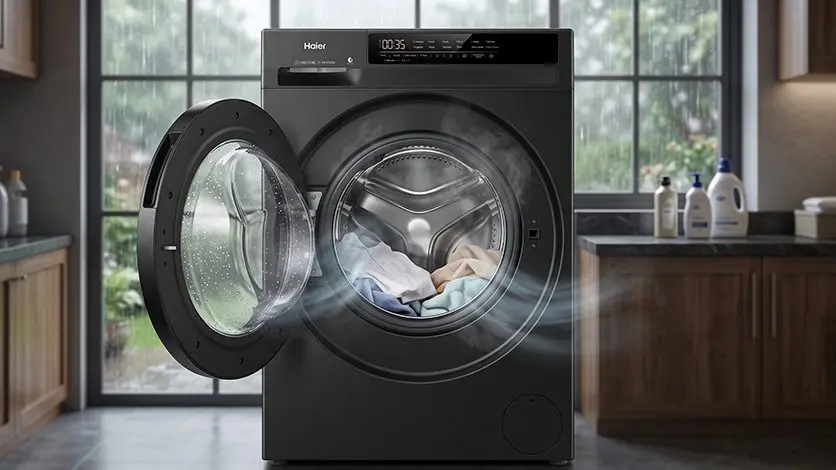
Our Ultra Fresh Air technology blows fresh air inside the drum after a wash cycle ends. This active ventilation step addresses the exact problem a damp, closed drum creates, stopping bad smells and moisture from settling in even if clothes sit inside a little longer than planned. Alongside this, our Dual Spray system flushes the drum door to prevent foam residue and flushes the gasket itself to avoid mould spots, working through the wash cycle instead of waiting for a manual wipe afterwards.
We have also built in Anti-Bacterial Technology and a Steam function that uses high temperature to address bacteria and mites within fabric and around the drum interior, alongside a Self Clean cycle. Our tempered glass door adds a further layer of practical care, resisting scratches better than plastic while making it easier to check on a load. Smart Dosing calculates the right detergent amount for each load based on weight and fabric type, which reduces the excess foam residue that often collects along the seal folds. Each feature supports the same care routines described above, rather than replacing the value of a quick wipe now and then.
Quick Reference: Monsoon Door Seal Care Checklist
| Task | Suggested Frequency |
| Wipe rubber seal dry with a cloth | After every wash |
| Leave door open to air out | After every wash |
| Deep clean with mild vinegar solution | Once a week |
| Check gasket folds for lint or residue | Once a week |
| Run an empty hot wash cycle | Once a month |
| Ensure utility area ventilation | Ongoing, especially in monsoon |
Conclusion
A front-load washing machine rewards small, regular attention far more than occasional deep cleaning. The door seal, exposed to trapped water after every cycle, needs the most consistent care of all through monsoon. Wiping it dry, airing the drum, and watching for detergent residue are simple habits to build into a weekly routine.
Machines like Haier’s front-load range, built around ventilation, spray flushing, and steam-based hygiene, support that routine rather than replace it. Thoughtful habits paired with sound machine design are what keep a door seal free of odour and mould well beyond a single monsoon season.
FAQs
Can I replace the rubber door gasket on my washing machine?
Yes, a door gasket can usually be replaced if it tears or develops permanent mould staining. This typically requires a trained technician, since the gasket sits under a metal clamp ring that needs careful handling during removal and refitting.
What role do Haier’s high-spin cycles and drum hygiene features play in reducing moisture buildup?
Higher spin speeds remove more residual water from laundry before the cycle ends, leaving less moisture to linger in the drum. Combined with Ultra Fresh Air ventilation, this reduces how much dampness settles around the door seal afterwards.
How do Haier front-load washing machines protect against mould and bacteria in the door seal?
Haier machines use Dual Spray to flush the gasket and prevent mould spots, Ultra Fresh Air to ventilate the drum after washing, and Anti-Bacterial Technology alongside Steam to address bacteria and mites within the drum and fabric.
Why does water get trapped inside front-load washing machine door seals?
The rubber gasket folds inward to create a watertight seal during washing. This same fold naturally collects small amounts of water, lint, and detergent residue after each cycle, which can linger longer in humid monsoon conditions unless wiped away.