
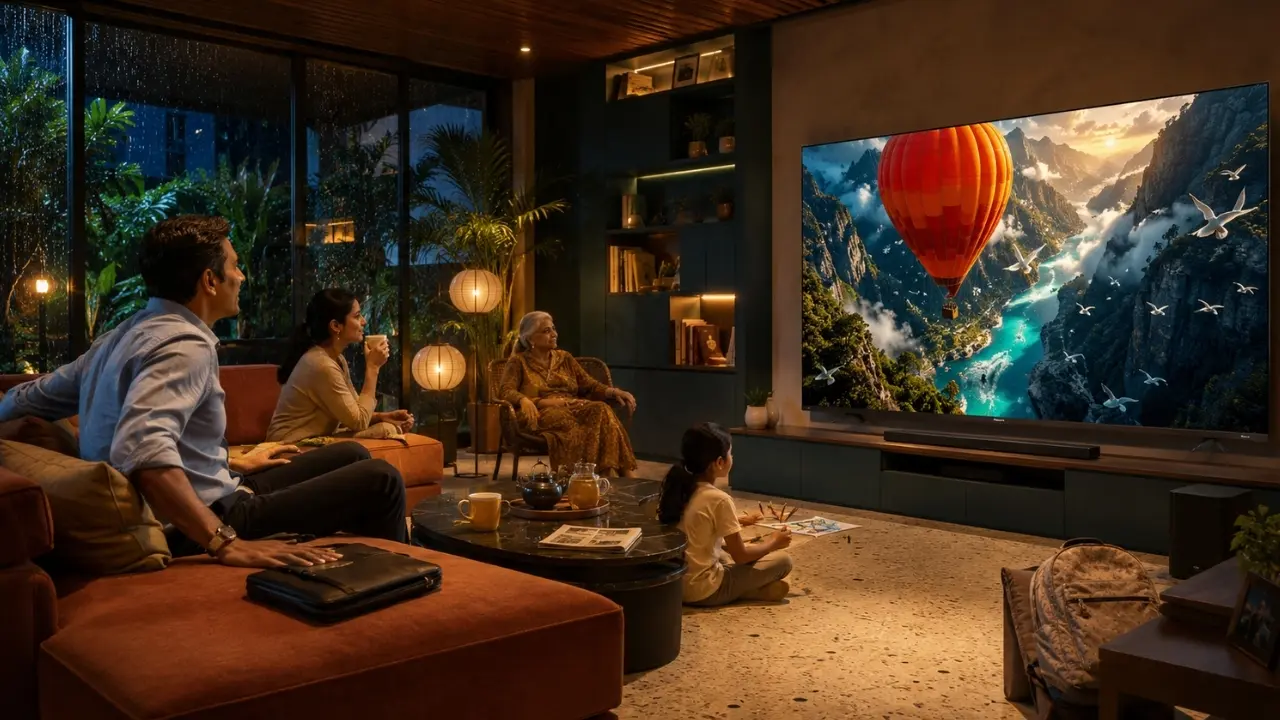

At 7:30 in the evening, the television comes on. One person wants the news. Someone else is halfway through a web series. The children are searching for videos. Later, when the house becomes quieter, a film or gaming session takes over.
Same television. Completely different expectations.
That is why the next stage of the smart TV is less about simply putting streaming apps on a large screen and more about making everyday interaction easier. A modern smart TV can organise entertainment around viewing preferences, offer personalised recommendations, respond to voice commands and optimise the viewing experience according to the content being played.
It is important, though, not to confuse personalisation with mind-reading. A TV does not magically know the household timetable. Its usefulness comes from the smart platform, viewing preferences, account settings and AI-enabled features working together.
And that distinction matters when choosing one.
What Does It Mean When a Smart TV “Learns” Your Routine?
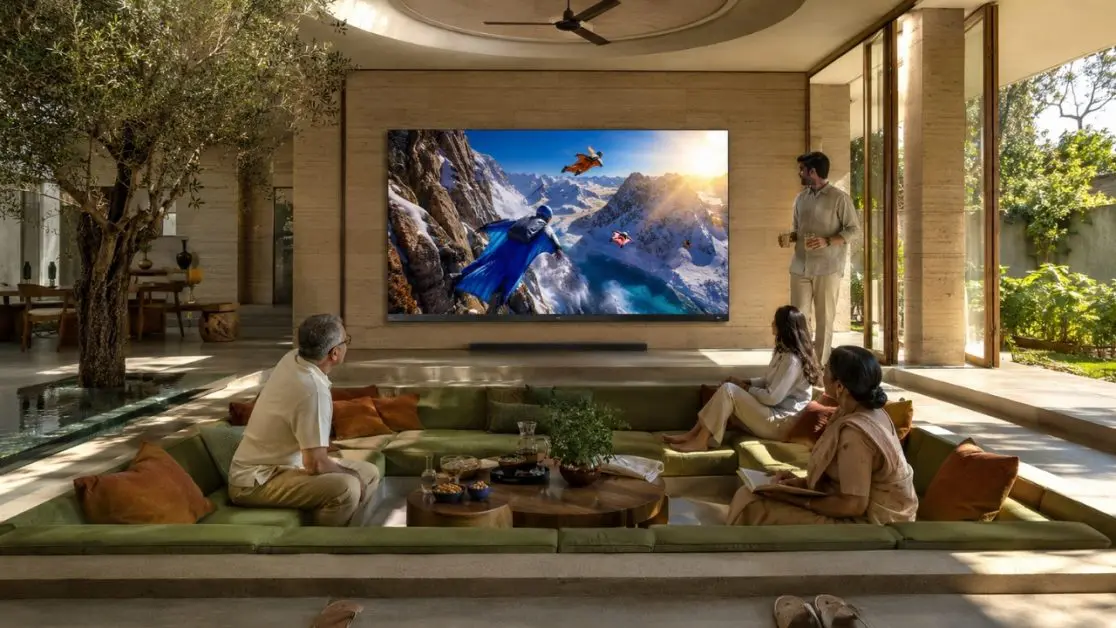
In practical terms, a smart TV becoming familiar with your routine generally means its software can make the interface and content discovery more relevant over time.
Think about an Indian household where television use changes throughout the day. Morning viewing might involve news or music. Afternoons could mean children’s entertainment. Prime time is often reserved for OTT content, while weekends may bring cricket, films or console gaming.
Rather than treating every viewing session as completely new, a personalised smart TV experience can make frequently relevant content easier to discover.
The benefit is straightforward: less time searching, more time watching.
That may involve:
- personalised entertainment recommendations;
- easier access to frequently used streaming services;
- voice-assisted content discovery;
- casting content from a smartphone;
- picture optimisation based on what is playing;
- dedicated viewing or gaming modes.
This is where AI becomes useful rather than merely decorative.
The Screen Can Adapt Even When Your Schedule Changes
There is another side to smart television intelligence that deserves more attention: picture optimisation.
A television does not only need to help you find something to watch. It also needs to display very different types of content properly.
A dark thriller demands different visual handling from a bright cricket match. Animation has different colour characteristics from a documentary. Gaming introduces fast movement and responsiveness into the equation.
The Haier New M70 Series MiniLED 189 cm (75) AI Smart Google TV with Gemini, HDR10+, 2.1 Ch with Subwoofer and Gaming 120Hz (75M70UHMINI LED) brings AI Picture Quality into this equation. Haier specifies that the technology intelligently optimises brightness, contrast, colour and clarity in real time for different content types.
That is a meaningful form of intelligence because it works in the background of the viewing experience.
Mini LED Makes Those Adjustments More Visible
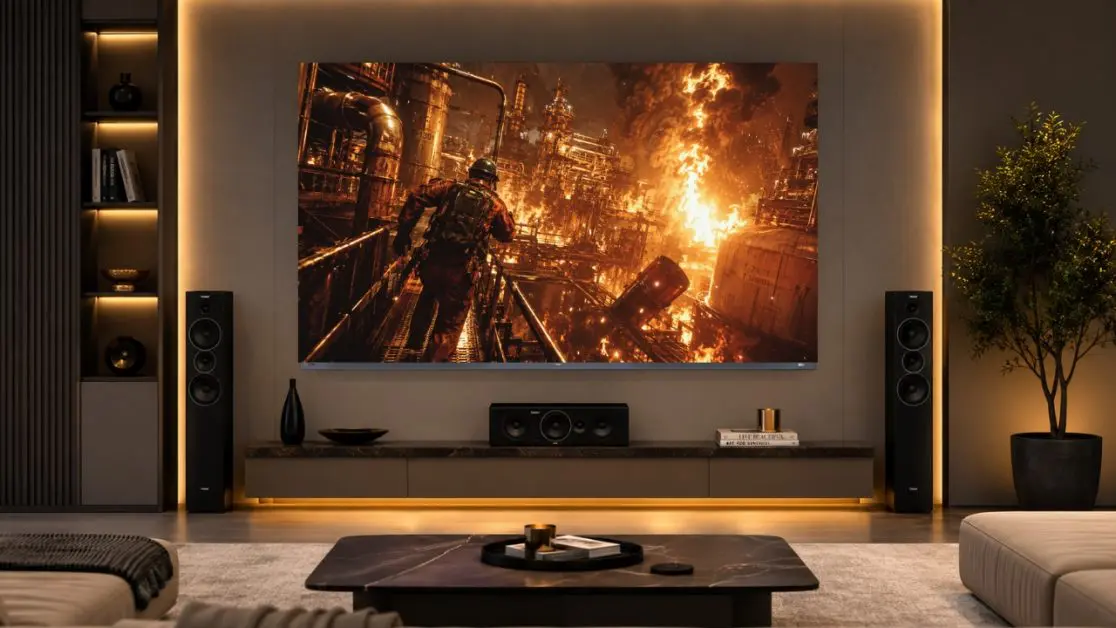
Picture intelligence still needs capable display hardware behind it.
The 189 cm (75) M70 uses Mini LED technology with intelligent dimming designed to provide precise light control, deeper blacks, brighter highlights and stronger contrast. HDR10+ further adjusts contrast and detail scene by scene, while the television covers 93% of the DCI-P3 colour space.
The result is particularly relevant for households that watch a mixed content diet rather than one specific genre.
One evening: a film.
Next afternoon: cricket.
Later: gaming.
The screen has to keep up.
Your TV Home Screen Should Reduce Decisions, Not Add More
Remember when switching on a television meant choosing between a relatively small number of channels? OTT entertainment changed that completely.
Now the bigger problem can be deciding what to watch.
Google TV brings entertainment into one interface, with smart recommendations intended to make content discovery more personalised. For a household using several entertainment services, this can reduce some of the endless scrolling that has become strangely familiar.
There is also a practical lesson here for buyers.
Before buying an AI smart TV, ask four questions:
- Does its smart platform make content genuinely easier to find?
- Can different types of entertainment be accessed without complicated navigation?
- Is voice control available for moments when using the remote feels unnecessarily tedious?
- Does the hardware complement the software experience?
The last question is easily overlooked.
A personalised recommendation is useful. A personalised recommendation displayed with capable picture and sound technology is considerably more compelling.
Sometimes the Smartest Interface Is No Interface at All
You are comfortable on the sofa. The remote is somewhere underneath a cushion. Nobody wants to look for it.
A small problem, admittedly. But good technology often earns its place by removing precisely these tiny annoyances.
The Haier M70 supports Hands-Free Voice Control, allowing compatible television functions and entertainment searches to be accessed through voice commands without relying on the remote every time.
There is also Chromecast built-in for sending compatible movies, music, photos and apps from a smartphone to the television.
So entertainment does not necessarily have to begin on the TV.
Find something interesting on your phone? Move it to the bigger screen.
Want to search without navigating through menus? Use voice.
It is this reduction of friction not technology for technology’s sake that makes smart features worthwhile.
Evening Movie, Weekend Match, Late-Night Game
A genuinely versatile television has to change roles surprisingly often.
For cinema-style entertainment, the M70 combines Dolby Vision with Dolby Atmos. Its audio system provides 50W output through a 2.1-channel arrangement with an inbuilt subwoofer, adding deeper bass and greater impact to films and other entertainment.
Fast-moving content introduces another requirement.
MEMC is designed to reduce blur and judder during motion-heavy scenes. That becomes useful when watching sports, action sequences or other rapidly moving visuals.
Gaming brings yet another set of demands. The M70 supports Gaming 120Hz for smoother gameplay, along with Game Mode. The product material also highlights VRR and ALLM functionality for compatible gaming scenarios.
In other words, the television does not have to belong to one kind of viewer.
That is particularly relevant in India, where the living-room television often remains a genuinely shared screen.
Bigger Rooms Can Take the Experience Further
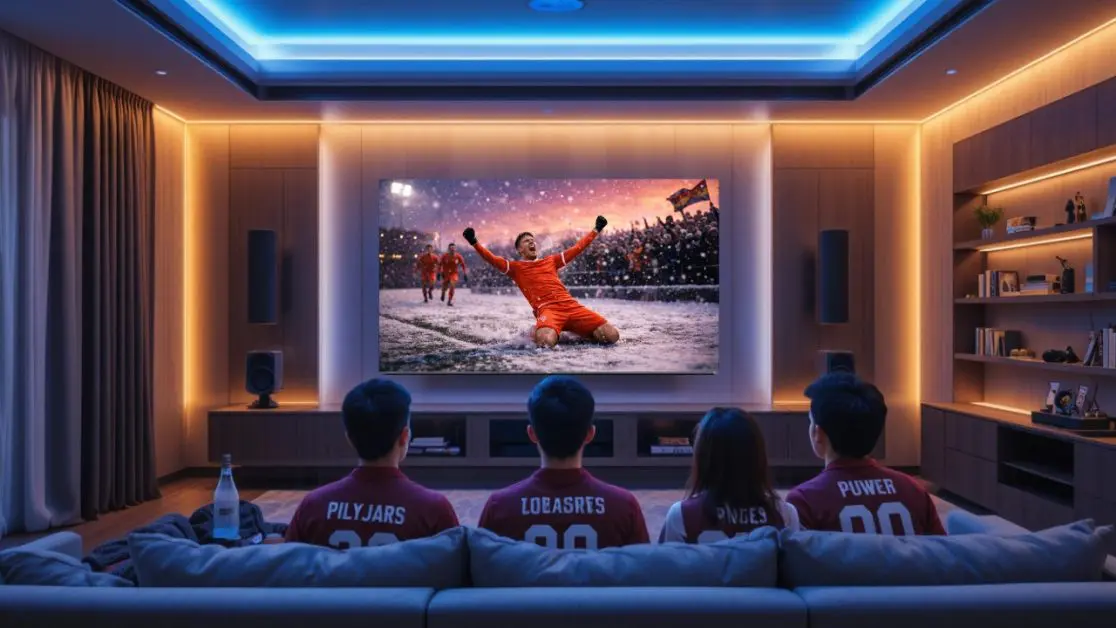
Some homes simply need more screens.
For larger living spaces, Haier also offers the Haier New M70 Series MiniLED 215 cm (85) AI Smart Google TV with Gemini, HDR10+, 2.1 Ch with Subwoofer and Gaming 120Hz (85M70UHMINI LED).
The 215 cm (85) version carries many of the experience-focused features of the series, including AI Picture Quality, HDR10+, Wide Colour Gamut, Dolby Vision and Atmos, 50W audio, hands-free voice control, Chromecast built-in and 2GB RAM with 32GB storage.
Choosing between the 189 cm (75) and 215 cm (85) versions should therefore not be reduced to “bigger is better”. Room dimensions, seating distance and how prominently the television will occupy the living space still matter.
The Real Test of a Smart TV Is What You Stop Doing
Perhaps this is the easiest way to judge smart television technology.
Do you spend less time digging through menus?
Can you find entertainment more naturally?
Does the picture adapt effectively across different content?
Can your phone and television work together without a complicated process?
Can different members of the household use the screen without making the experience cumbersome for everyone else?
When the answers begin becoming “yes”, smart functionality stops feeling like a specification sheet and starts becoming part of everyday convenience.
Haier India’s M70 Series approaches that idea from both sides: Google TV and Gemini-enabled smart entertainment on one side, and Mini LED picture technology, AI Picture Quality, Dolby audiovisual technologies and gaming-oriented features on the other.
The television may not know that Sunday evening is movie night before you do. But increasingly, the screen can make getting from “What should we watch?” to actually watching it much simpler.
And for a television used every day, that is intelligence with a purpose.
Frequently Asked Questions
1. What does it mean when a smart TV learns your viewing routine?
It generally refers to personalisation features that make entertainment discovery more relevant based on viewing preferences, account activity and the capabilities of the smart TV platform. It should not be interpreted as the television literally knowing a household’s daily schedule.
2. How does AI Picture Quality work on the Haier M70 Series?
AI Picture Quality intelligently optimises brightness, contrast, colour and clarity in real time according to the type of content being displayed, helping maintain an appropriate viewing experience across films, sports and other entertainment.
3. Does the Haier M70 Series support hands-free voice control?
Yes. The Haier M70 Series supports Hands-Free Voice Control, allowing users to control compatible TV functions and search for entertainment using voice commands without always reaching for the remote.
4. Is the Haier M70 Series suitable for gaming?
Yes. The series includes Gaming 120Hz for smoother gameplay and reduced motion blur. The supplied product information also highlights gaming-oriented features including Game Mode, VRR and ALLM.
5. What entertainment features are available on the Haier M70 Series?
The M70 combines Google TV with features such as Chromecast built-in, hands-free voice control, Dolby Vision and Dolby Atmos. It also provides 2GB RAM and 32GB storage for apps, games and entertainment content.