
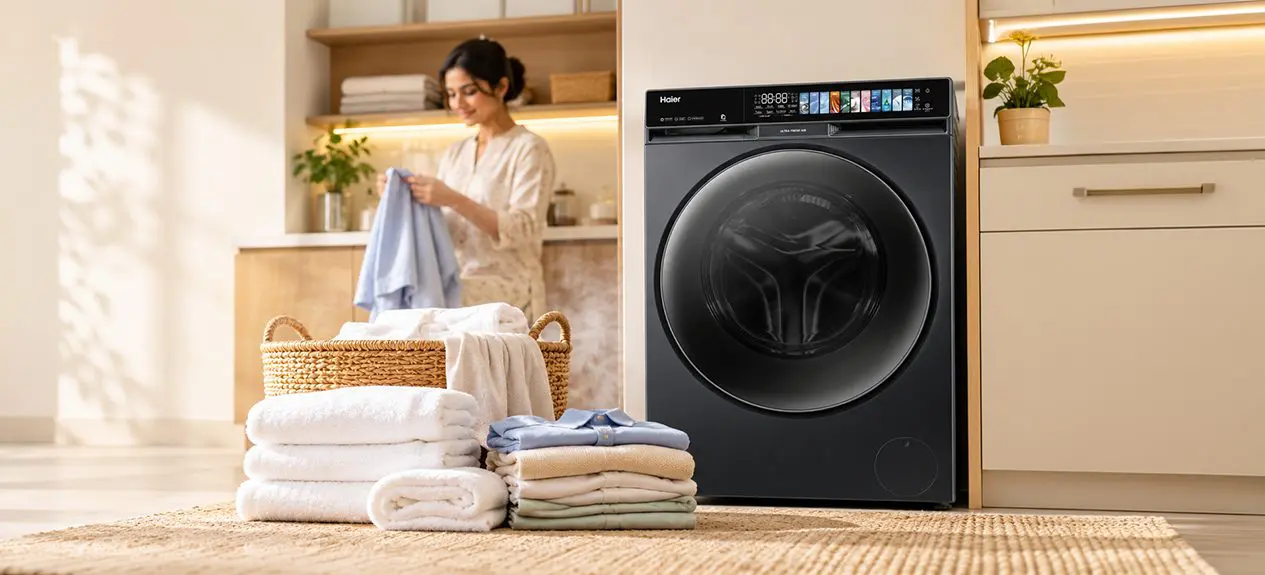

A steam wash washing machine uses hot vapour to help loosen dirt and reduce some germs on clothes. But how much of a difference does it really make? This article looks at how well steam works against bacteria and dust mites, how it affects everyday clothing care, and which laundry loads are most likely to benefit from a steam wash.
What Is Steam Wash?
Steam in a washing machine is water vapour generated by a heating element and injected into the drum during the wash cycle. It is used in addition to the normal wash cycle, not instead of it, so clothes still get detergent, water and mechanical action of the rotating drum. Because of the extra heat and moisture, a steam wash is different from a normal cycle. This feature is found mainly in front-load washing machines, where steam can be incorporated into the wash programme to support the machine’s usual cleaning process.
How Steam Wash Works
The heating element warms a small amount of water until it turns to steam. That vapour moves through the drum and into the fabric, which softens dirt and body oils so detergent reaches them faster. Haier’s front loaders, such as the F11 12 kg and the F9 10 kg, pair steam with anti-bacterial treatment. Dual spray then clears lint and foam after the wash.
Does Steam Wash Sanitise Clothes?
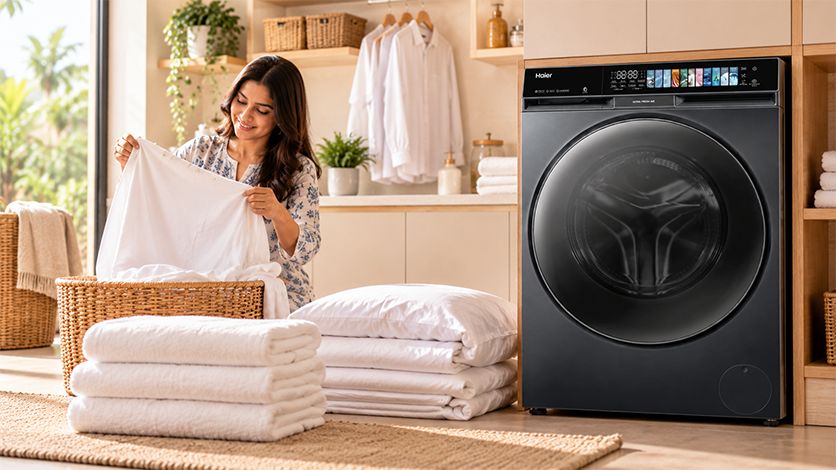
It helps, as long as the heat is high enough and the cycle runs long enough. Sanitising brings germ numbers down to a safer level, which is different from a fully sterile result. Detergent still does the cleaning, while steam and temperature add to it. A useful benchmark is 60°C, the temperature an NHS leaflet on dust mites gives for killing them. The F9 10 kg and the F11 list wash temperatures up to 90°C on their product pages, so both clear that mark.
- Bacteria, Allergens and Dust Mites
Heat is the common thread across all three. Warm and hot water reduce many common bacteria, which is why towels and bedsheets suit hotter cycles. For dust mites, the NHS leaflet advises washing sheets, pillowcases and duvet covers at 60°C or higher at least every two weeks. The droppings of mites are what set off symptoms, so a good rinse counts as much as the temperature. Steam softens whatever clings to the fibres, and the rinse then carries it away.
Steam vs Normal Wash: Where Hot Wash Fits In
In a steam vs normal wash comparison, the biggest difference is how heat reaches your clothes.
| Steam wash | Normal wash | |
| How heat arrives | Steam is released into the drum on top of the wash | Water is heated to the temperature you set |
| Best suited to | Cottons, bedding, baby clothes, innerwear | Everyday loads, cold to hot as the label allows |
| Cycle time | Longer, as heating takes time | Shorter on cold or warm, longer on hot |
| Where you find it | Selected front loaders | Every machine type, with an in-built heater on selected top loaders |
Hot wash falls between the two. The machine heats the water itself, through an in-built heater on selected top loaders or the temperature setting on front loaders.
Want to know which fabrics can take a hot wash and which need a gentler cycle?
Read this blog: Using Hot Water Wash Cycles Safely During Monsoon for Hygiene
Benefits and Best Uses
Steam wash suits cotton items that touch skin or collect sweat and dust, such as towels, bedsheets, pillow covers and innerwear. It also relaxes creases, so shirts come out easier to iron. Heavy stains still do better on the stain removal modes.
- Steam Wash for Allergies, Baby Clothes and Bedding
Homes dealing with dust allergies usually start with bedding, because mites collect there. A steam wash for allergies works well with a 60°C setting for sheets and pillow covers, followed by an extra rinse so no detergent stays behind. The Haier F9 10 kg lists both an extra rinse function and a Baby Care program. For baby clothes, cotton handles heat well, but the care label has the last word.
Things to Watch Before You Use Steam
A few habits keep steam cycles gentle on clothes and effective for hygiene:
- Read the care label first. Silk, wool, zari sarees, embellished pieces and heavily dyed clothes suit gentler settings.
- Allow for a longer cycle, since heating the water takes time.
- Keep the drum moderately loaded so steam and water reach every item.
- Add detergent as usual, because steam works with it and not instead of it.
- Check the model page, as steam appears on selected front loaders while top loaders use an in-built heater.
How Haier Brings Steam and Heat to Your Laundry
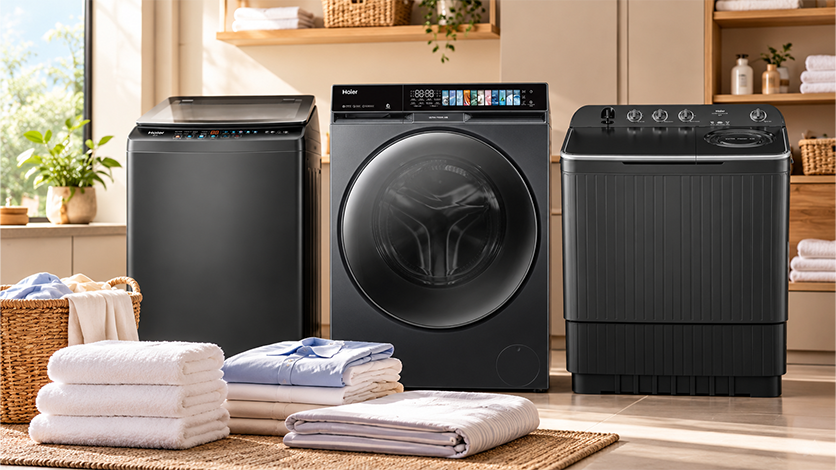
At Haier, we build heat into our washing machines in two ways. Our front loaders, including the F11 12 kg and the F9 10 kg, offer steam with anti-bacterial treatment and dual spray. The F11 also carries Ultra Fresh Air, which keeps clothes fresh for up to 12 hours after the cycle. Our top-load machines, such as the HWM80-H320BK and the HWM110-H688BK, use an in-built heater, and the 8 kg model adds a hard water wash that protects the heater and drum from scale. Our semi-automatic users can fill the tub with warm water directly. Each front-load page lists the programs for that model, so you can pick a steam wash washing machine that fits your laundry.
Is Steam Wash Worth It?
It depends on what goes into your drum. For homes with infants, dust allergies, or heavy towel and bedding loads, steam adds a useful layer of hygiene. For light everyday wear, a normal wash with the right detergent already does the job. Matching the cycle to the load matters more than using steam every time.
Conclusion
Steam wash raises the hygiene level of a regular wash by adding heat, and that heat is what reduces bacteria and dust mites. Choose it for bedding, towels, baby clothes and allergy-prone homes. Check the care label, and let the program suit the load.
FAQs
What is steam in a washing machine?
Steam in a washing machine is water vapour made by an internal heating element and released into the drum during a cycle. It warms the fabric, loosens dirt and helps detergent work alongside the regular wash.
Does steam wash sanitise clothes?
It reduces bacteria and dust mites when the heat and cycle length are enough, with 60°C or higher as a useful benchmark. It lowers germ numbers rather than making clothes sterile, and detergent still does the cleaning.
What are the disadvantages of a steam washer?
Steam cycles run longer than quick washes and suit heat-tolerant fabrics, so silk, wool, and delicate pieces need a gentler setting. Steam also appears on selected models, so check the product page.
Is steam wash good for allergies?
It can help, since heat of 60°C or above reduces dust mites in bedding and towels. Pair it with an extra rinse to clear detergent, and follow your doctor’s advice for any specific allergy.
What is the difference between steam wash and normal wash?
Steam wash releases vapour into the drum on top of the regular cycle, while a normal wash relies on water at the temperature you set. Steam adds hygiene support but takes more time.
Is steam wash worth it?
It is worth it for homes with infants, dust allergies, or heavy towel and bedsheet loads. For light daily wear, a normal wash with a suitable detergent covers most laundry needs well.