
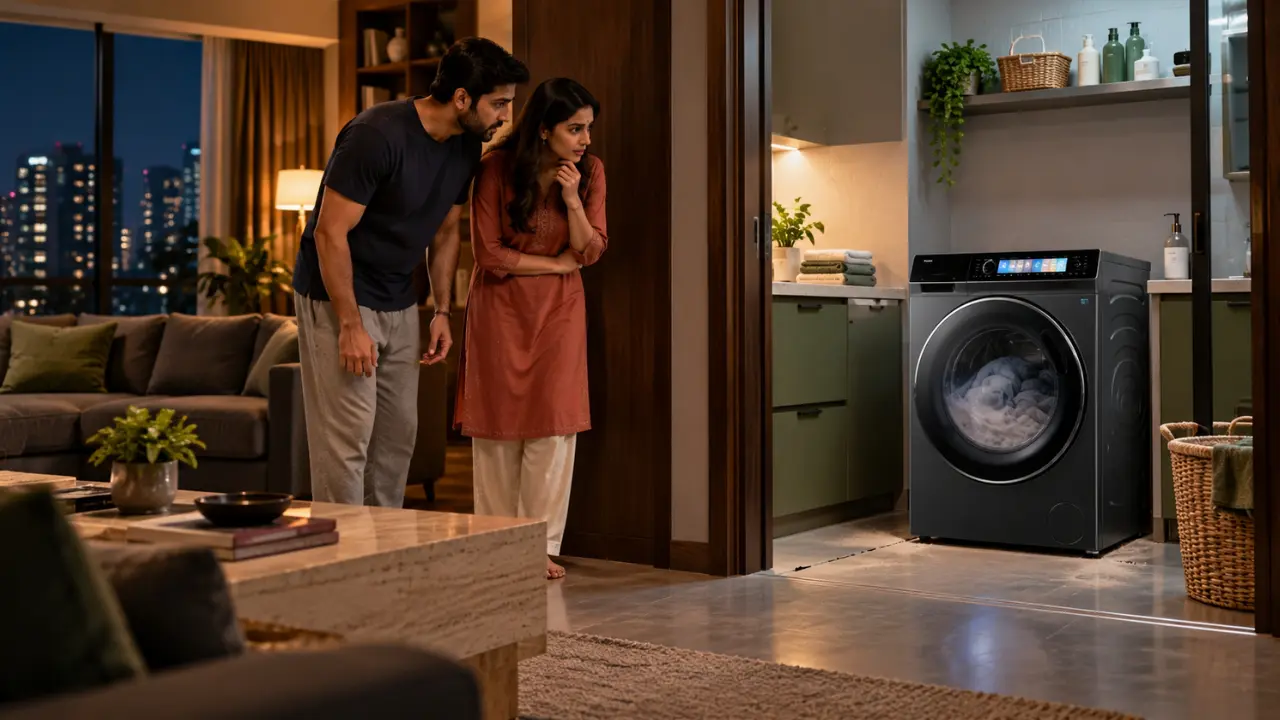

You put the clothes in the washing machine, set the wash cycle and move on. All is well until the spin cycle begins.
Suddenly, there’s a loud thumping sound from the laundry area. The machine starts vibrating, rattling against the wall or moving slightly from its original position.
You think to yourself, “Is there something broken in here?”
The good news? A washing machine shaking during the spin cycle doesn’t necessarily mean there’s a major problem. The answer can be a very simple one. An imbalance in the load or an unstable floor can lead to noticeable movement, even if it’s just a single heavy bedsheet.
But there’s a difference between normal vibration and excessive shaking.
Understanding the difference can help you ensure your washing machine remains in good shape, avoid unnecessary wear and tear, and enjoy an easier laundry experience.
Does It Seem Normal for a Washing Machine to Vibrate When It’s Spinning?

Sure, some shaking is perfectly normal.
A washing machine spins at high speed during the spin cycle to remove excess water from clothes. The centrifugal force removes water from the fabrics and helps them dry faster afterwards.
There’s something to understand, though.
A washing machine doesn’t spin an empty, perfectly balanced drum when doing regular laundry. It spins clothes soaked with varying amounts of water.
For example, a cotton bedsheet behaves differently from a lightweight polyester T-shirt.
As these fabrics tumble inside the drum, their weight distribution continues to change. This generates forces that the machine’s suspension system has to handle.
Modern washing machines are engineered to deal with typical spinning vibrations. However, excessive movement, repeated banging or the appliance moving across the floor means it’s time to do something about it.
When Is It Time to Worry?
Look out for these warning signs:
- The washing machine moves away from its original position.
- Banging or knocking is heard every time the washing machine spins.
- The appliance wobbles significantly from side to side.
- The vibrations become more vigorous with successive washes.
- Scraping or grinding noises occur.
- Unusual movement is accompanied by water leakage.
If symptoms persist after simple troubleshooting, discontinue use of the appliance and schedule a professional inspection.
Why Does a Washing Machine Shake So Much During the Spin Cycle?
There are various things that can upset the balance of a washing machine. Some relate to laundry loading, while others involve installation or mechanical parts.
1. Clothes Are Unevenly Distributed Inside the Drum
Imagine washing one large blanket and two thin pillow covers.
The blanket absorbs water and becomes quite heavy. During spinning, it can accumulate on one side of the drum.
The result?
An unbalanced load, causing the washing machine to vibrate more than normal.
This is a frequent occurrence when washing:
- Large bedsheets
- Heavy cotton towels
- Thick blankets
- Denim jeans
- Bathroom mats
- Bulky winter clothing
The answer is generally simple.
If the machine allows it, pause the programme, wait until the drum stops completely and redistribute the laundry.
If the item is large, follow the manufacturer’s loading recommendations instead of trying to fit everything into one washing cycle.
2. The Washing Machine Is Not Properly Levelled
There’s one thing that many homeowners don’t consider.
Even a small difference in the height of the washing machine’s feet could affect its stability.
A machine may look perfectly straight from the front. However, if one foot isn’t resting firmly on the floor, the appliance may rock while it’s spinning.
This is particularly evident in Indian homes where laundry areas may have slightly sloping floors to drain away water.
How to Check Whether Your Washing Machine Is Level
Do a basic check.
- Turn off the washing machine before checking its position.
- Make sure the appliance doesn’t rock when pressed at opposite corners.
- Check its level with a spirit level.
- Ensure that all four feet rest firmly on the ground.
- Adjust and secure the levelling feet according to the manufacturer’s instructions.
Do not put loose cardboard, wooden blocks or folded fabric under the machine.
These are temporary solutions that can shift during operation and exacerbate the issue.
3. When the Drum Is Overloaded, It Adds Additional Pressure

After a hectic weekend, it’s easy to throw everything into the washing machine.
A week’s supply of clothes, bedsheets, towels and children’s clothes can become one big load of laundry.
But if you put more than the washing machine’s capacity into the drum, it may affect the drum’s movement.
Overloading may:
- Prevent clothes from spreading out evenly.
- Increase strain on mechanical parts.
- Reduce washing effectiveness.
- Make rinsing less effective.
- Add to excessive vibrations during spinning.
Keep in mind that the capacity of a washing machine refers to the manufacturer’s specified dry laundry load.
This does not mean that all the available space inside the drum should be occupied.
Select a load size appropriate for the programme and fabric type to achieve good washing performance.
4. Transportation Bolts Have Not Been Removed
This is especially important for those who have just bought a front-load washing machine.
Transportation bolts are often included with front-load machines to hold the drum assembly in place while the machine is being transported.
These bolts are designed to keep the appliance’s internal components safe during transit.
However, they need to be removed according to the installation instructions before operating the machine.
When the transportation bolts are still in place, the drum suspension cannot work properly.
This can result in the washing machine shaking violently or emitting more noise than usual.
Transportation bolts should be among the first things to check if a newly installed washing machine begins to shake excessively during its initial wash.
Wait until the installation is verified before continuing to use the appliance.
5. The Floor Is Not Suitable for Stable Operation
All floors are not created equal when it comes to the effects of a washing machine spinning.
A stable, level surface usually offers greater stability than an uneven or flexible surface.
For instance, if the washing machine is on a weak wooden platform, it could experience greater vibration than when it’s positioned on a suitable, solid floor.
Loose tiles or an unstable raised base can also accentuate the movement.
What Makes a Suitable Installation Surface?
The washing machine should preferably be set on a surface that is:
- Firm and structurally stable.
- Level enough to allow the appliance to be properly adjusted.
- Free from loose tiles or supports that could shift.
- Capable of supporting the appliance during operation.
- Suitable for the installation requirements specified by the manufacturer.
If the washing machine is installed on a raised platform, make sure the arrangement follows the manufacturer’s instructions.
Whether the appliance is high-tech or not, a stable foundation is essential.
What If the Washing Machine Continues to Shake After These Checks?
In some cases, the problem isn’t just the distribution of laundry or the installation.
Internal parts may wear out over time, especially if an appliance is subjected to frequent heavy loads or excessive stress.
Potential causes include worn shock absorbers, damaged suspension components, loose counterweights or bearing problems.
These components contribute to regulating the washing machine’s movement.
If they fail to operate properly, the drum may move more violently during spinning.
However, a precise diagnosis can only be made by a professional.
Do not service or open the appliance without the proper training.
How Haier F5 Front Load Washing Machines Meet Modern Laundry Needs
The washing machine ought to simplify chores, not complicate them.
If your home is looking for an upgrade, Haier has its F5 Front Load Washing Machine range available in two convenient sizes:
- Haier F5 9KG Front Load Washing Machine (HW90-IM14F5BKU1)
- Haier F5 10KG Front Load Washing Machine (HW100-IM14F5BKU1)
Both models combine contemporary washing technology with features designed around everyday fabric care, convenience and efficient operation.
Inverter Motor for Quieter Operation
Both Haier F5 models are equipped with an advanced Inverter Motor.
This technology aims to support quieter operation, improved energy efficiency and long-lasting performance.
If the laundry area is located near the kitchen or living room, operating noise is a factor to take into account.
Having an inverter motor can contribute to a more comfortable washing experience.
Even an inverter washing machine, however, must be installed correctly and loaded evenly. Motor technology alone cannot prevent vibrations caused by uneven floors or unbalanced loads.
The 525mm Drum for Improved Fabric Movement
The Haier F5 9KG and 10KG washing machines have a spacious 525mm drum.
The larger drum features enhanced fabric movement, allowing clothes to circulate as they are washed while helping minimise tangling.
This is helpful when handling household laundry that contains a mix of cotton fabrics, everyday clothes and larger fabric items.
Appropriate fabric movement also assists in effective cleaning.
However, the recommended load capacity and programme instructions should always be followed.
AI Wash for Intelligent Washing
Different fabrics require different washing procedures.
A lightly soiled office shirt may not require the same level of cleaning as heavily soiled children’s clothing.
Haier’s AI Wash technology automatically adjusts the washing process to support cleaning performance and efficiency.
This provides a convenient option for washing clothes regularly.
Most importantly, AI Wash is not a solution for mechanical vibration or incorrect installation.
1400 RPM Spin Speed With Adjustable Settings
Both Haier F5 models are capable of a maximum spin speed of 1400 RPM.
Higher spin speeds help remove more water from suitable fabrics, potentially reducing the moisture remaining after washing.
The machines also have speed adjustment functionality.
This enables users to choose appropriate settings according to the available programme and fabric requirements.
When it comes to delicate items or garments that require gentler handling, it’s crucial to follow the clothing care label and select the right spin setting.
14 Washing Programmes for Different Laundry Needs
Indian households seldom wash only a single type of clothing.
There’s regular cotton, denim, delicate garments, sarees and children’s wear.
The Haier F5 washing machine range features 14 washing programmes, which include:
- AI Wash
- Cotton
- Hygiene
- Baby Care
- Jeans
- Delicate
- Saree
- Quick
- Eco
- Drum Clean
These options allow users to choose washing conditions suitable for different laundry requirements.
Both models also come with a colour full-touch display and Wi-Fi connectivity for added convenience.
Which Haier F5 Washing Machine Should You Choose: 9KG or 10KG?
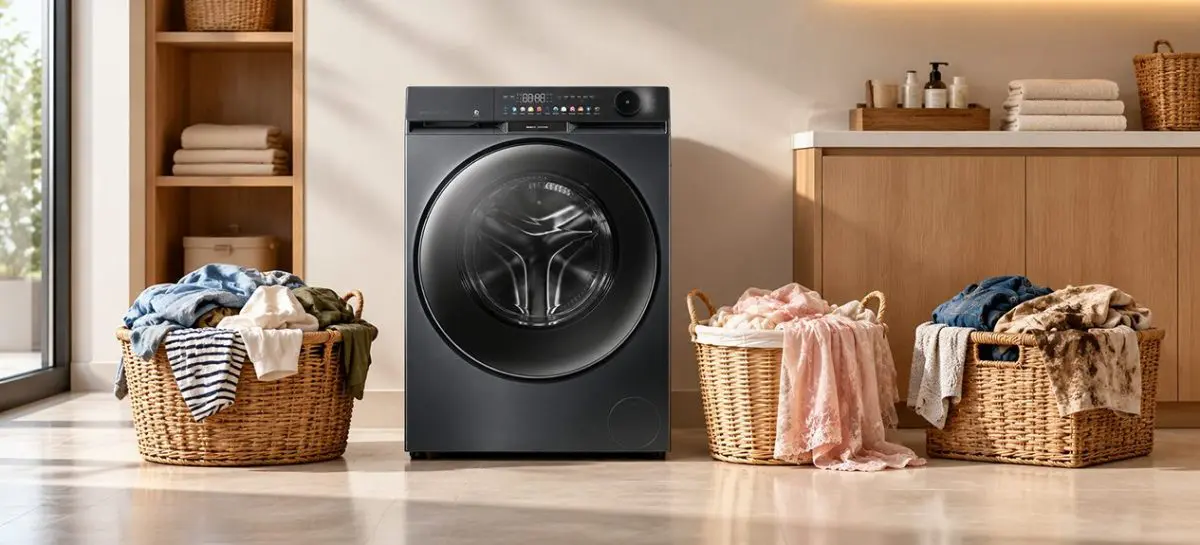
The right capacity is important because laundry needs differ from household to household.
Haier F5 9KG Front Load Washing Machine
The Haier F5 9KG (HW90-IM14F5BKU1) offers a convenient washing capacity for homes with regular laundry needs, including clothes, towels and occasional larger loads.
Its combination of AI Wash, a 525mm drum, an inverter motor and various washing programmes makes it worth considering for everyday family laundry.
Haier F5 10KG Front Load Washing Machine
The Haier F5 10KG (HW100-IM14F5BKU1) is suitable for households that need greater laundry capacity.
It could be a good option for families who regularly wash larger quantities of laundry.
Both models feature a 5-star energy rating and a 4-year comprehensive warranty with a 12-year motor warranty, subject to applicable terms and conditions.
The final decision depends on the amount of laundry, types of fabrics and available installation space in the house.
Everyday Habits That Can Help Reduce Washing Machine Vibration
There are some good habits that can be developed in the laundry room that will make a difference.
Before Starting the Wash
- Look in pockets for coins and other small items.
- Do not overfill the drum.
- Follow the appliance instructions for washing large items.
- Use the correct programme for the fabric.
- Check that the washing machine is stable on the floor.
During the Spin Cycle
Listen for unusual noises.
Generally, the sound of spinning with slight vibration is expected.
Repeated, violent shaking, heavy knocking or movement across the floor is not.
If the machine moves too much, stop the programme safely and investigate the reason for the excessive movement.
After Completing the Wash
Inspect the washing machine to see if it has moved away from its original position.
If the appliance keeps moving even when it’s loaded and levelled properly, book a professional service.
If the vibration continues across wash cycles, don’t dismiss it as a minor problem.
The Right Washing Machine Can Make Laundry a More Comfortable Experience
If your washing machine shakes excessively while spinning, there is likely to be a problem with loading, levelling or installation. Addressing these factors early can help prevent unnecessary mechanical stress and maintain the smooth running of everyday laundry.
Households looking to upgrade can consider Haier India’s F5 9KG and 10KG Front Load Washing Machines, which combine AI Wash, inverter motor technology, a spacious 525mm drum and user-friendly washing programmes.
Discover the Haier F5 range and select a washing machine that best meets your family’s laundry needs and offers greater convenience in your laundry routine.
Frequently Asked Questions
Why Does a Washing Machine Vibrate Only During the Spin Cycle?
Because the spin cycle operates at higher speeds, uneven laundry loading, installation issues and worn suspension parts become more noticeable.
Can Too Small a Load of Clothes Cause the Washing Machine to Vibrate?
Yes. One heavy item can gather on one side of the drum, resulting in an unbalanced load during spinning.
Does an Increased RPM Increase Vibration?
Higher spin speeds can make an existing imbalance more noticeable. However, excessive shaking is not necessarily normal simply because a machine operates at high RPM.
Can I Use a Washing Machine That Moves During Spinning?
If the appliance physically walks across the floor or shakes violently, stop using it until the cause is identified and corrected.
Can Haier F5 Washing Machines Be Adjusted to Different Spin Speeds?
Yes. Haier F5 9KG and 10KG Front Load Washing Machines have speed adjustment functionality and support a maximum spin speed of 1400 RPM.