
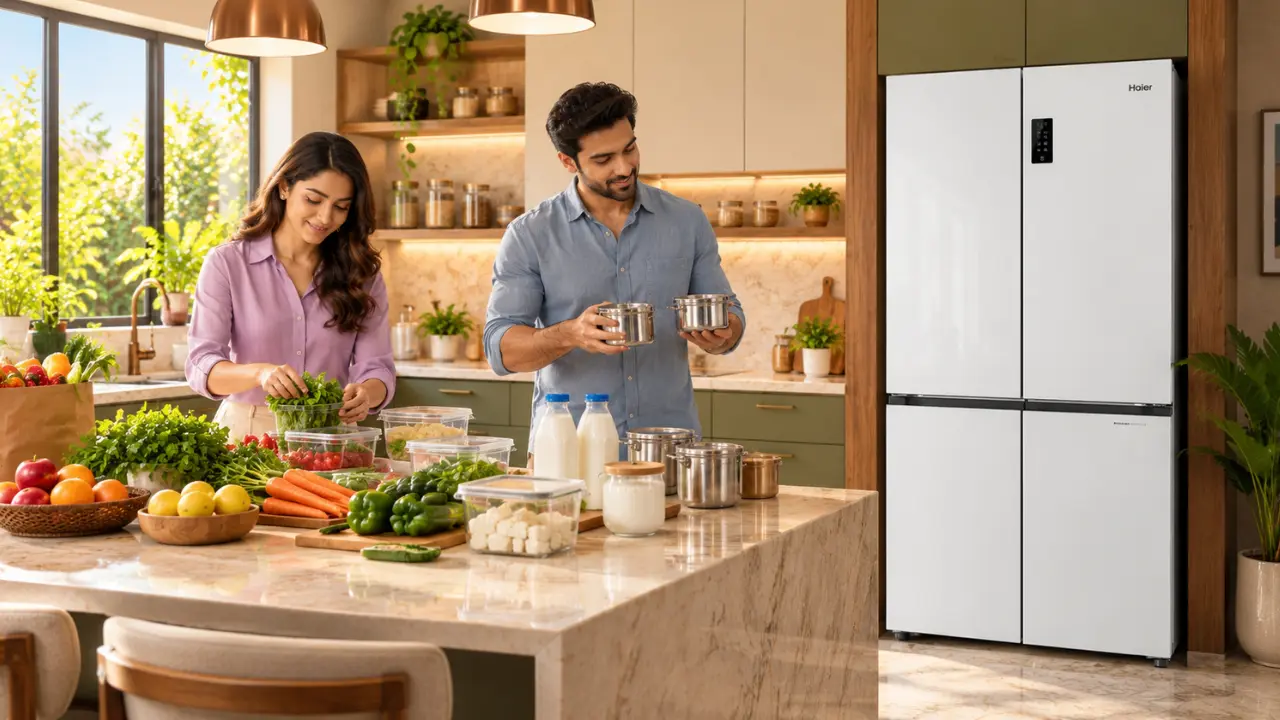

You open the refrigerator to take out a bottle of water. It’s perfectly chilled. But the food kept down there doesn’t seem to be quite as cold. Or maybe, the opposite occurs: One of the shelves of milk is not cold enough, and the other shelf of paneer is very hard.
Strange? Not necessarily.
Many homeowners may not be aware of how much cooler the refrigerator is on one side than the other. With a properly operating refrigerator, the temperatures on different shelves may differ due to air patterns, placement of food, door openings and refrigerator cooling design.
It’s not always a bad thing when there’s a little temperature difference. But, there are some visible discrepancies which can impact the freshness of food, especially in a home where every family has a refrigerator that holds fresh vegetables, milk products, cooked food, and even frozen goods.
To achieve optimal storage, it is important to understand the cause of these differences. At times it is as easy as flipping a few bins over.
Is the Refrigerator Shelf With the Most Food Hottest or Coldest?
A refrigerator does not always keep the same temperature throughout the refrigerator’s cabinet.
How the cooling flows to the individual shelves depends on the design of the refrigerator, but its cooling system removes heat from the storage compartments.
1. Cold Air Doesn’t Always Circulate Evenly
There is a natural tendency for cold air to descend as it has a higher density than warm air. This does not, however, imply that the bottom shelf of all refrigerators will always be the coldest.
Frost-free refrigerators use fans to move cold air around throughout specific passages. The vents can be located in varying spots to provide more direct cooling to some areas than others.
For instance, foods near an air outlet can cool off significantly from foods farther away.
The difference will be more pronounced when airflow is limited.
2. Food Containers Can Prevent Air From Flowing Through Them
Consider the typical way that refrigerators are stocked after a weekend grocery shopping.
Large steel containers are placed in the middle shelf. Milk packets are squeezed into any space that is available. There are some still left in the back of the kitchen.
Before long, there’s hardly any space between them.
If the refrigerator has blocked air passages in the containers, the refrigerated air will not flow properly.
This can leave some parts of the property cooler and some parts warmer.
3. Door Openings Have an Effect on Temperature Distribution
There is a loss of cool air when the refrigerator door is opened.
Kitchen doors open more often in Indian summers as kitchen temperature can get very high.
The refrigerator will then have to dissipate the extra heat.
Foods that are closer to the door, usually have more temperature changes than those located in the back of the refrigerator.
That’s why it’s better to keep some condiments on door shelves as opposed to foods that have a short shelf life.
Why Do There Exist Too Big Temperature Differences Within a Refrigerator?
Not all cooling inconsistencies are due to the cooling unit. Multiple daily routines can help.
Overloading the Refrigerator
An overfilled fridge might appear tidy, but too much can be a problem with air circulation.
In cases where containers are pushed against the back wall or are packed tightly together, chilled air has a difficult time reaching every part of the container.
What helps?
- Leave adequate spacing between large containers.
- Don’t cover internal air vents.
- Make some food items easily accessible.
- Do not have tall bottles and utensils in the way of airflow.
It is not a requirement to have half of the fridge empty. Only provide adequate ventilation.
Immediate Hot Food Storage
When you cook the dal, rice or sabzi right after you put it in, it can add a lot of heat to the refrigerator.
The cooling load increases if a large hot food container is used and it can introduce temporary changes in the cooling requirements of adjacent items.
Let food cool until it has stopped steaming and place large portions in small, shallow containers and cool quickly in the refrigerator. Do not leave perishable foods at room temperature more than two hours or one hour if the temperature is above 32°C.
Incorrect Temperature Settings
At times, the temperature setting is just not matching the refrigerator’s storage conditions.
The fresh-food compartment should be kept at or below 4°C, while the freezer should be approximately -18°C when it comes to safe food storage.
A refrigerator thermometer can be used to detect if the refrigerator temperatures are correct.
Remember, a control dial’s number doesn’t necessarily indicate the actual internal temperature.
Damaged Door Gaskets
A rubber gasket is fitted around the refrigerator door to keep warm air out.
Loose, damaged or dirty components can cause the refrigerator to have trouble maintaining the cool temperature.
Make sure that the door closes and test the gasket for gaps or damage.
If the seal is damaged, seek out the help of a professional servicing and do not try to repair it with an inappropriate method.
What Are the Signs of Abnormal Uneven Cooling?
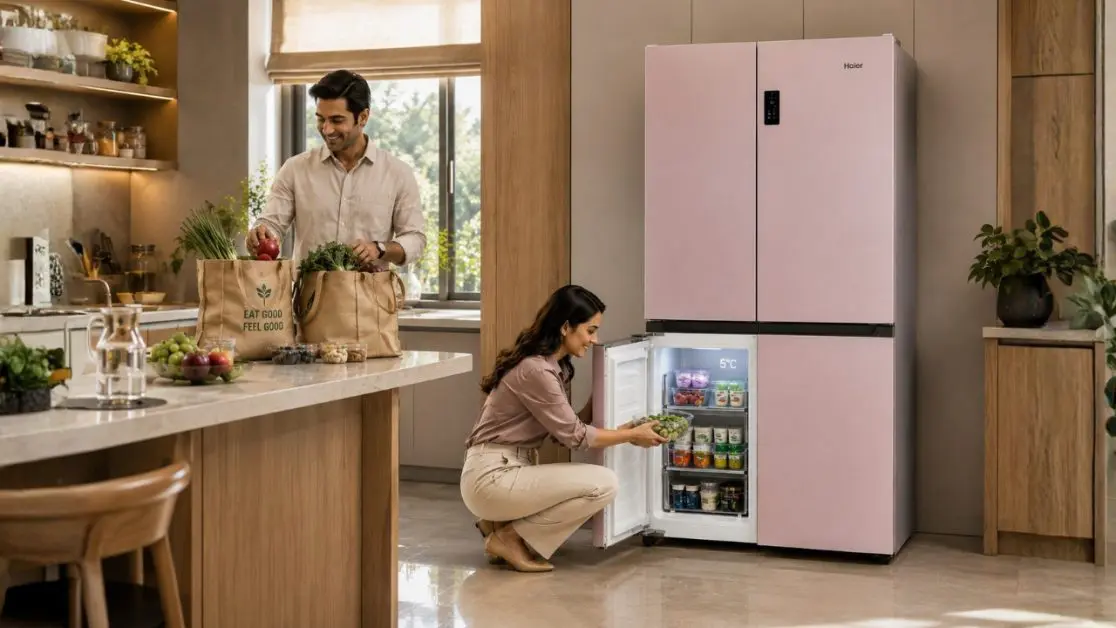
Just a cool shelf doesn’t necessarily indicate a problem.
The true worries are that food is not being stored properly and/or that the refrigerator is no longer capable of providing the cooling that it was intended to provide.
Let’s look at a practical investigation.
Step 1: Measure the Temperature
Put a refrigerator thermometer on a middle shelf and let the reading settle for a while.
Repeat measurement at various locations on the shelf and under similar conditions.
Step 2: Identify the Pattern
Is there a consistent difference in temperature between one shelf and the other? Is there any freezing next to air outlets?
The pattern is more informative than one reading immediately after the door is opened.
Step 3: Check the Arrangement
Keep the containers away from vents and don’t overcrowd them.
Step 4: Wait for the Temperatures to Even Out!
Let the appliance react to the change in food or a change in temperature before taking another measurement.
If the refrigerator has not kept these temperatures even after these tests, a professional inspection might be required.
What Is the Difference Between Refrigerator Cooling Technology?
Different methods are applied in modern refrigerators to distribute the cooling inside the compartments.
In contrast, the traditional direct-cool models are mostly based on natural air circulation, while the frost-free refrigerators are mostly based on the fan circulated chilled air.
More sophisticated designs might have specific airflow configurations and temperature-control mechanisms.
Its aim is simple, to decrease unwanted temperature fluctuations and to keep food stored at suitable temperatures.
But cooling technology is best suited to good storage practices.
When the vents are blocked, even the most advanced refrigerator can have problems with airflow.
What Makes Surround Cooling a Consideration?
Whereas, instead of focusing the cooling on a specific space, the purpose of surround-cooling designs is to spread the chilled air out more widely over the compartment.
This can help minimize the differences in storing positions.
Large families that store an abundance of food can especially find an effective cooling distribution system to be helpful.
Think of a common weekly shopping trip. Leafy vegetables, milk products, liquid and ready to-eat products require space but not necessarily the same storage conditions.
The refrigerator with a good cooling distribution and flexible storage compartments can help make organization a lot easier, every day.
How Does the Haier Lumiere 520L Refrigerator Meet the Cooling Needs?
Capacity is not the only factor to consider when buying a refrigerator.
It certainly helps to have a big cabinet, but you don’t need it. However, how well that space will serve a variety of foods is just as important.
Combining ample storage and flexible compartments and cooling systems for an organised food preservation experience, the Haier Lumiere 3 Star French Door Refrigerator is designed to merge the best in refrigerator technology.
It is a four-door design for practical use in Indian households for various food categories.
Magic Cooling With 360° Surround Cooling
The Lumiere series is one of those that has a Magic Cooling feature with 360° Surround Cooling.
The system is developed so that it circulates cool air to the food that is stored, not just to the concentrated food area.
This is especially important for refrigerator temperature differentials, e.g. between refrigerator shelves.
The technology is designed to help distribute cooling to facilitate food storage in a variety of locations.
Moreover, the refrigerator features Triple Inverter technology, which plays a key role in ensuring accurate temperature control and energy-efficient performance.
Obviously, the correct placement of food and a clear path for the air to flow through the food is vital for getting the desired performance.
520 Litres of Storage With Flexible Use
One of the many issues faced in Indian kitchens is the week-to-week variation of the refrigerator storage demands.
On some days, extra room is required in the refrigerator for vegetables and dairy products. Frozen foods might be preferred during festivals or family events.
The Haier Lumiere does so with its 520 litre capacity, and 90 litre Magic Convertible Zone.
The convertible portion can be set to -20°C to + 5°C depending on the storage needs.
It enables the household to modify the compartment for various food categories, instead of around a fixed one.
When set up, the fridge has a capacity of up to 440 litres.
This is especially important if the demand for fresh foods rises.
Helpful Storage Solutions for Indian Cooking
Chilling or warming needs is not just a matter of the cool.
Another factor of refrigerator effectiveness is the manner of food placement.
The Haier Lumiere has a well-organised Multi-Zone storage system, which allows for grouping of various food categories.
Adjustable shelving and door-rack options offer extra flexibility in storing everyday utensils and containers.
Some of the other practical things include:
- Toughened glass shelves: These are intended to carry higher amounts of kitchen utensils and containers.
- Anti-tipping door racks: 95° anti-tipping bottle and jar holders keep bottles and jars stable while in use.
- Deo Fresh Technology: Absorbs odours and impurities, helps maintain freshness.
- Frost free: No need to defrost manually.
These features combine to make it easier to organise food without sacrificing flexibility for storing food items within the household.
What Haier Lumiere Refrigerator Should You Select?
The Lumiere 520L French Door Refrigerator comes in three unique color options, which can be chosen based on the requirements of the buyers according to the interior and exterior of the kitchen.
Haier Lumiere 520L Mauve Pink – HRB-600MP.
The Mauve Pink variant will give a unique look for those who want to choose an appliance with a modern look.
It’s a 520-litre capacity with convertible storage and Magic Cooling technology in one.
Haier Lumiere 520L Pearl White – HRB-600PW
The Pearl White option is for those who prefer a more subtle look.
With four doors and a generous storage space, it is ideal for families who want flexible refrigeration.
Haier Lumiere 520L Rosetyte White – HRB-600RW
In addition to the Rosetyte White finish there is another finish in the same series, which is the Rosetyte White.
It is also 520-litre with frost-free operation and offers a convertible compartment to suit ever evolving storage needs, similar to the other variants.
All three models come with a 3 Star energy rating and are covered by a 2-year warranty for the entire product and a 10-year warranty for the compressor (as per applicable warranty terms).
Which Storage Methods Would Allow Food to Stay Cooler?
There are a few useful refrigeration tips that can make a significant difference even with the best refrigerator design.
Store Different Foodstuffs in Appropriate Areas
Not all items should be placed on the same shelf.
- Milk and dairy products: Keep in a section of the main compartment that is always cold, not the door.
- Clean vegetables: Store in vegetable compartments.
- Cooked food: Store in covered containers and refrigerate quickly.
- Frozen items: Keep in the freezer at the recommended temperature.
- Condiments: Store in door racks as applicable; per individual instructions.
Always use the refrigerator manufacturer’s instructions for specific rooms.
Don’t Make Repeated Temperature Changes
Adjusting the setting of the temperature several times during the day usually doesn’t fix the problem of uneven cooling.
Instead, choose the correct setting and let the refrigerator cool down.
If there is a problem, use a thermometer to check the real temperature.
Notice Signs of Early Warning
If there is too much frost, compressor operation is unusual, and/or condensation or food spoiling happens when it shouldn’t, there’s a cooling problem.
These symptoms should be considered and, especially, when food temperatures are not within the recommended range of food storage.
Understanding When to Call a Refrigerator Tech for Assistance
In some instances, re-arranging food can fix the problem. Others need to be helped by professionals.
If you think you have a problem and you aren’t sure, you should consider scheduling a service inspection if:
- The refrigerator always runs out of the safe range.
- Frequent re-freezing of food in food refrigeration spaces or areas.
- Cooling is still not uniform with no obstruction in the air flow.
- Damaged or improperly fitting door gasket.
- Unusual noises are heard and cooling is not so good.
Do not take apart any internal cooling parts.
A professional technician can determine if it’s an airflow issue, sensor, fan or defrost system or another issue.
The Right Refrigerator Can Make All the Difference in a Better Cooling Experience
A refrigerator shouldn’t be constantly moved around just to ensure that everyday groceries are kept cool.
Similarly, temperature differences are acceptable but large temperature differences can have an impact on food quality and storage.
The key is using the right refrigeration settings, sensible food placement and using a refrigerator with efficient cooling distribution.
The Haier Lumiere 520L French Door Refrigerator features a 360° Surround Cooling, Triple Inverter technology and convertible storage, making it an attractive choice for Indian households looking to upgrade.
The series features three sizable doors and practical refrigeration features in Mauve Pink, Pearl White and Rosetyte White.
Explore the Haier Lumiere 520L Refrigerator Collection and unlock the ease and efficiency of smart cooling and flexible storage.
Frequently Asked Questions
1. Why is the upper shelf of my refrigerator colder than the lower shelf?
The upper shelf may receive more direct airflow from a cooling vent, depending on the refrigerator’s design. Blocked air passages and food placement can also create temperature differences.
2. Is uneven cooling inside a refrigerator normal?
Small temperature variations are normal. However, significant differences that cause food to freeze unexpectedly or remain above safe storage temperatures may indicate a problem.
3. What temperature should a refrigerator maintain?
The fresh-food compartment should generally remain at or below 4°C, while the freezer should maintain approximately -18°C for safe frozen-food storage.
4. Can overloading a refrigerator cause uneven cooling?
Yes. Excessive food storage can obstruct internal airflow, preventing chilled air from reaching certain sections effectively.
5. Does the Haier Lumiere 520L Refrigerator have surround cooling?
Yes. The Haier Lumiere 520L French Door Refrigerator features Magic Cooling with 360° Surround Cooling, designed to distribute chilled air around stored food.
6. What is the convertible capacity of the Haier Lumiere 520L Refrigerator?
The refrigerator features a 90-litre Magic Convertible Zone with adjustable temperatures ranging from -20°C to 5°C, allowing flexible storage according to household requirements.