

There is a small refrigerator habit that can make a surprisingly big difference: checking the temperature setting instead of simply leaving the dal or controlling exactly where it was on installation day.
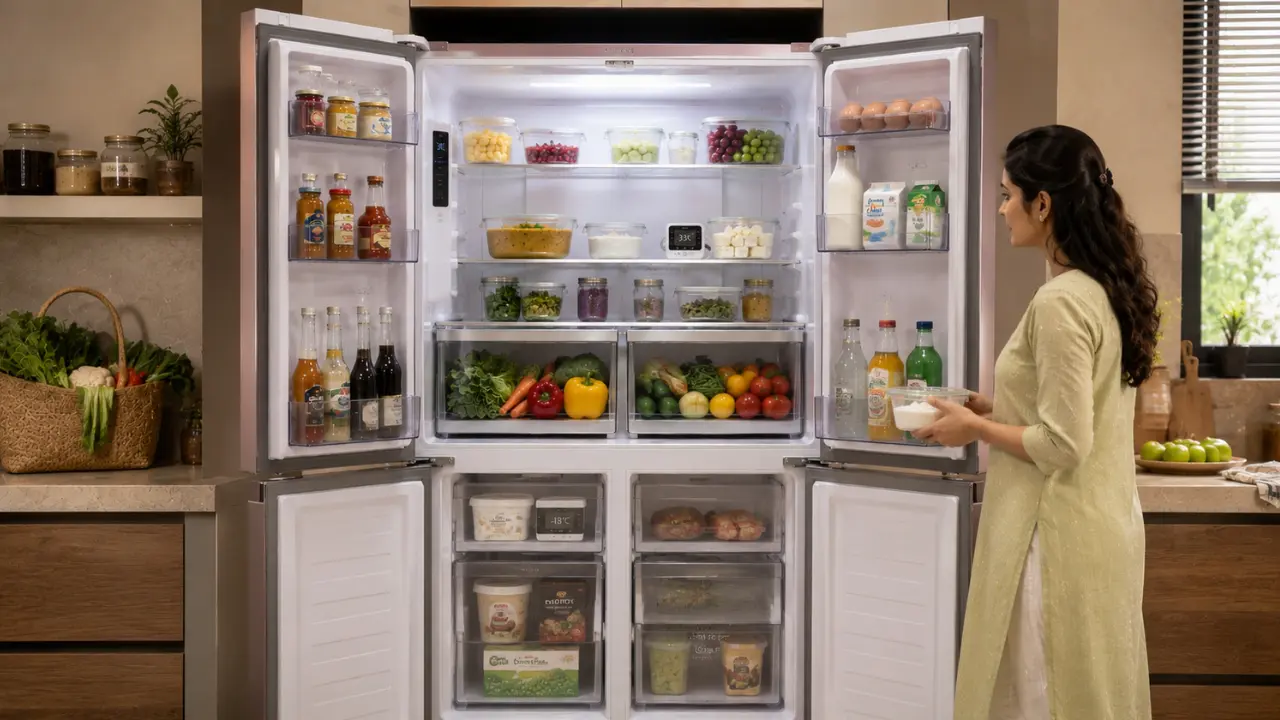
Think about a typical Indian refrigerator on a Sunday evening. There is leftover dal from lunch, a bowl of curd, vegetables bought for the week, milk packets, chutneys, fruit, perhaps paneer, a few cold drinks and something waiting in the freezer. All of these foods are sharing one appliance, but they do not necessarily need identical storage conditions.
So, what is the best refrigerator temperature setting?
For the main refrigerator compartment, around 3°C to 4°C is a practical target for most households, while the freezer is generally best kept at around -18°C for frozen food storage.
Simple enough. But there is more to getting refrigerator temperature right than choosing one number and forgetting about it.
Refrigerator Temperature at a Glance
For everyday home use, these are useful reference points:
- Main refrigerator: approximately 3°C to 4°C
- Freezer: approximately -18°C
- Fresh fruits and vegetables: use the designated produce compartments where available
- Highly temperature-sensitive foods: store in appropriately chilled sections rather than warmer door racks
- Adjustable convertible compartments: select the temperature according to what you intend to store and the refrigerator manufacturer’s guidance
The important bit? A refrigerator is not equally cold in every corner.
Temperature can vary with shelf position, how often the door opens, how much food has been loaded and even where different items are placed.
Why the Right Refrigerator Temperature Matters
A refrigerator does not merely make food feel cold. Its job is to maintain suitable storage conditions consistently.
Set it unnecessarily cold and certain fresh foods may partially freeze or lose their preferred texture. Keep it too warm and chilled foods may not remain under suitable refrigeration conditions.
In Indian households, this becomes particularly relevant because refrigerators frequently hold an unusually varied mix of foods at once.
One shelf may contain cooked sabzi and dal. Another has a dairy. The vegetable compartment is full after the weekly grocery run, while the freezer is packed with frozen foods and ice cream.
That is why good refrigeration is partly about temperature and partly about organisation.
One Setting, Different Parts of the Refrigerator
Here is where people often get caught out.
Setting the refrigerator to 4°C does not mean every tomato, milk packet and bottle inside is sitting at precisely 4°C at every moment.
Cold air has to circulate through the cabinet. Opening the door introduces warmer outside air. Placing a large quantity of groceries inside can also temporarily affect the internal conditions.
A few habits help:
- Avoid blocking internal air circulation with tightly packed containers.
- Allow hot cooked food to cool appropriately before refrigeration rather than placing a steaming vessel straight inside.
- Keep frequently used bottles and condiments organised so the door does not remain open unnecessarily.
- Use designated drawers and compartments for the foods they are designed to hold.
- Avoid overloading shelves simply because another container can somehow be squeezed in.
That last one is familiar territory in Indian kitchens. There is always room for one more dabba until there isn’t.
When Should You Adjust the Refrigerator Setting?
You do not necessarily need to keep changing the temperature every few days. Consistency is generally more useful.
Still, household requirements change.
After a Large Grocery Run
A refrigerator suddenly loaded with vegetables, dairy products, beverages and other groceries has considerably more contents to cool than it did an hour earlier.
Give the appliance time to stabilise and avoid repeatedly opening the doors immediately afterwards.
During Hot Indian Summers
Higher ambient temperatures and frequent door opening can make the refrigerator work harder. Rather than randomly choosing the coldest possible setting, follow the appliance’s recommended controls and pay attention to how food is being stored.
When the Refrigerator Is Lightly Loaded
A nearly empty refrigerator behaves differently from one filled for a family gathering. There is usually no reason to keep turning the cooling to an extreme merely because there are fewer items inside.
When Storage Needs Change
This is where flexible refrigeration becomes particularly useful.
You may need substantial fresh-food space after buying vegetables for the week, then additional frozen storage before a family occasion. A fixed compartment arrangement does not always fit that changing routine.
A More Flexible Approach: Haier Lumiere 520L
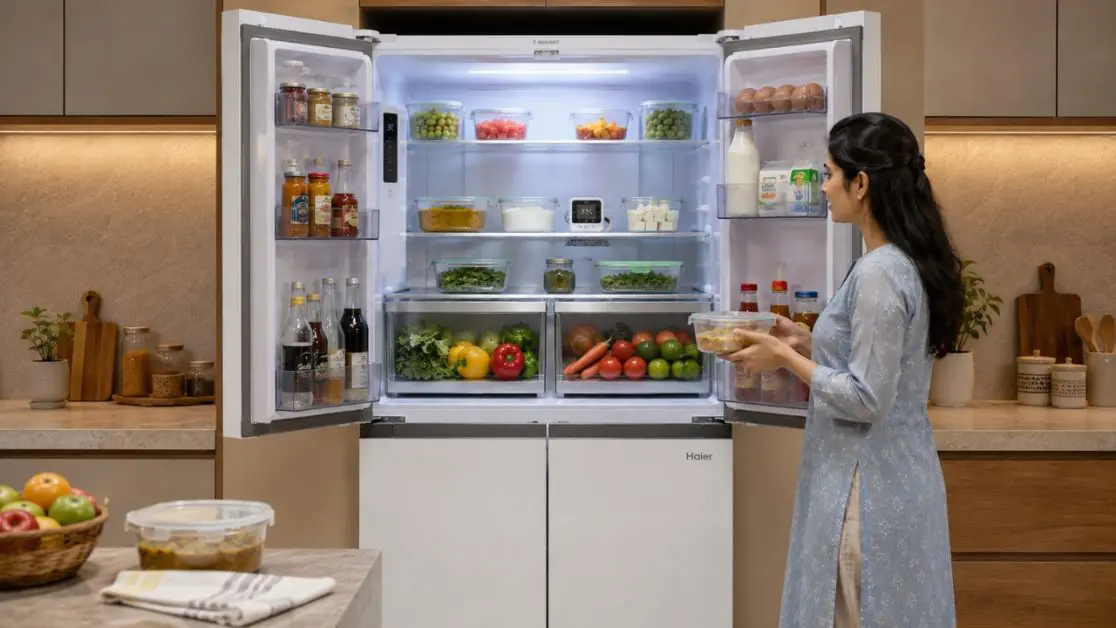
The Haier Lumiere 520L 3 Star French Door Refrigerator approaches temperature and storage with flexibility built into its four-door design.
Its Magic Convertible Zone provides 90 litres of customised storage with an adjustable temperature range from -20°C to 5°C. Rather than dedicating that space permanently to one purpose, households can configure it according to changing storage requirements.
That range opens up considerably more flexibility. Depending on the selected setting and storage requirement, the zone can accommodate different categories of food from frozen items at lower temperatures to beverages, fruits and vegetables at higher settings.
The Lumiere can also offer up to 85% fridge space, with up to 440 litres of refrigerator space when configured accordingly.
For an Indian family, that flexibility is not simply another feature on a specification sheet. It becomes useful in everyday situations: storing extra vegetables after a large grocery trip, keeping more beverages chilled when guests arrive, or adjusting the available space when your storage needs change.
With 350L of dedicated fridge space, a 90L Magic Convertible Zone, and 80L of dedicated freezer space, the refrigerator can be configured around what your family needs most at any given time.
Storage needs change. The refrigerator can change with them.
Cooling Is Only Half the Story
Temperature control works best when cold air reaches stored food effectively.
The Lumiere range features Magic Cooling with 360° Surround Cooling, designed to support even cooling throughout the refrigerator. Its inverter-based cooling system further supports temperature management while the frost-free design removes the routine need for manual defrosting.
Then there is organisation.
The 520L capacity is divided into multiple storage areas, helping families separate different types of food rather than stacking everything wherever space happens to appear.
Useful features include:
- Toughened glass shelves suited to heavier utensils
- Movable shelves and door racks for flexible organisation
- 95-degree anti-tipping door racks to help keep bottles and jars secure
- Dedicated fruit and vegetable storage
- Deo Fresh Technology, designed to absorb odour and impurities and help maintain freshness
Temperature matters, certainly. But a well-organised refrigerator makes that cooling capacity far easier to use properly.
Small Mistakes That Can Undo a Good Temperature Setting
You can select an appropriate temperature and still get poor results if everyday habits work against the refrigerator.
Packing Food Too Tightly
Air needs room to circulate. Turning shelves into a wall of containers can interfere with effective cooling around stored food.
Keeping the Door Open While Deciding What to Eat
We have all done it.
Opening the refrigerator and staring at its contents while deciding between yesterday’s dessert and today’s fruit lets warm air enter. Know what you want, take it out and close the door.
Putting Everything in the Door
Door storage is convenient, but it is also exposed to temperature changes whenever the refrigerator opens. Use it for suitable items rather than automatically putting every small packet there.
Choosing the Coldest Setting “Just to Be Safe”
Colder is not automatically better. Fresh produce can suffer if it is exposed to temperatures unsuitable for it. The goal is controlled refrigeration, not turning the fresh-food compartment into another freezer.
Getting More From Every Degree
The best refrigerator temperature settings are not really about chasing a magic number. Around 3°C to 4°C for the refrigerator and around -18°C for the freezer provide useful starting points, but good results also depend on storage position, airflow, food type and everyday usage.
And increasingly, flexibility matters too.
The Haier Lumiere 520L 3 Star French Door Refrigerator, available in Rosetyte White (HRB-600RW), Mauve Pink (HRB-600MP) and Pearl White (HRB-600PW), brings together a large 520L capacity with convertible storage and a Magic Convertible Zone adjustable from -20°C to 5°C.
For households whose refrigerator contents rarely look the same from one week to the next, that ability to adapt can be far more useful than simply having more litres.
Because ultimately, good refrigeration is not about making everything as cold as possible.
It is about giving different foods the conditions and the space they actually need.
Frequently Asked Questions
1. What is the best refrigerator temperature setting for everyday use?
For most households, keeping the main refrigerator compartment at approximately 3°C to 4°C provides a practical starting point for everyday chilled food storage. The exact setting may vary depending on the refrigerator model, food load and usage conditions.
2. What temperature should a freezer be set at?
A household freezer is generally kept at approximately -18°C for frozen food storage. Always follow the storage instructions provided with packaged frozen foods and the recommendations in your refrigerator’s user manual.
3. Should I change my refrigerator temperature during summer in India?
Not necessarily. Avoid automatically selecting the coldest setting simply because outdoor temperatures have risen. Instead, follow the manufacturer’s recommended settings, minimise unnecessarily long door openings and allow sufficient space for cold-air circulation.
4. Why are some parts of my refrigerator colder than others?
Cooling conditions can vary across different areas because of airflow, shelf position and frequent door opening. Food placement therefore matters. Using designated fruit, vegetable, freezer and other specialised compartments can help you organise foods according to their storage requirements.
5. What is the temperature range of the Haier Lumiere 520L Magic Convertible Zone?
The Haier Lumiere 520L 3 Star French Door Refrigerator features a 90L Magic Convertible Zone that can be adjusted from -20°C to 5°C. This allows households to configure the compartment for different storage requirements rather than keeping it permanently assigned to a single purpose.