


The first person gets in their shower and is comfortable. The second gets just enough hot water. When the third family member enters the bathroom, the water is lukewarm.
Sound familiar?
If the hot water is not lasting very long, the first thing that springs to mind is the geyser. Perhaps it isn’t heating properly. Perhaps the thermostat is broken. Or does the storage capacity just not get the job done?
Sometimes, it’s not a technical problem.
The amount of hot water a geyser can provide is influenced by a number of factors, such as the capacity of the geyser, the temperature at which the water is heated, the water pressure, the length of time the shower runs and the quantity of cold water flowing into the system.
Knowing what these factors are can help you determine the true cause of the issue and avoid wasting money on repairs or replacing a perfectly good appliance.
Why Does Your Geyser Run Out of Hot Water So Fast?
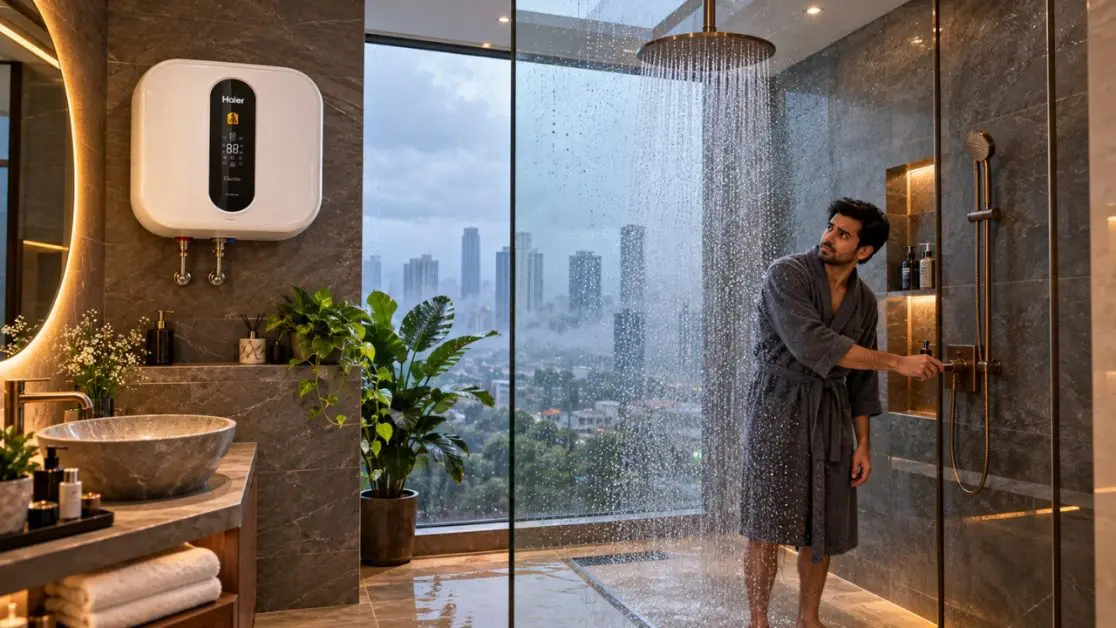
A storage geyser stores a fixed amount of water in its tank. Hot water is released from the tank and cold water is drawn into the tank when the hot-water tap is turned on.
As more hot water is used, naturally, the hot water temperature decreases.
But in certain cases, this occurs much sooner than one would expect.
1. Your Geyser Capacity Doesn’t Match Your Family’s Needs
One person’s moderate bathing may be comfortable using a 15-litre geyser. However, if multiple family members require hot water in succession, the same capacity might not be enough.
Imagine a typical winter morning.
Four people are getting ready for work and school. A warm shower is a must for everyone, and no one can afford to wait between baths.
A smaller geyser may not be able to meet that demand without reheating.
You don’t necessarily need a more powerful heating element. At other times, you just need more storage.
2. You’re Using More Water in the Shower Than You Think
If a shower is on at 8 litres per minute, then it uses about 80 litres of mixed water in 10 minutes.
Not all of this comes directly from the geyser, as hot water is mixed with cold water at the shower outlet.
However, it does add up when it comes to consumption.
The available hot water can be used up pretty quickly if it is used for rain showers or showers with high flow rates.
One way to address this is to:
- Minimise the length of showers.
- Use a water-efficient showerhead.
- Turn off running water while showering.
- Avoid excessively high water flow.
- Allow adequate time for reheating between successive baths.
Small changes can make an appreciable difference without compromising everyday comfort.
3. The Thermostat Temperature Is Set Too Low
In some instances, the geyser heats the water properly but cannot reach a temperature that provides enough usable hot water.
For instance, water stored at 45°C has less potential for mixing with cold water than water stored at 60°C.
This means you might use up the hot water faster.
But it’s not recommended to raise the thermostat setting without taking safety into account. Hot water can lead to serious scalding injuries, especially to children and older family members, if it is too hot.
Follow the manufacturer’s specified temperatures and temperature-control recommendations.
Is Your Geyser’s Heating Element Failing?
Yes, especially in locations with high dissolved mineral content in the water.
Hard water is a problem in many households in India, but its severity varies from one place to another and from one water source to another.
Minerals may build up on the heating element and other parts of the heating chamber when hard water is used.
This scaling may eventually disrupt heat transfer.
How Can You Identify Heating Element Issues?
Be aware of any deviation from normal operation.
- It takes significantly longer for water to warm up.
- The geyser makes strange rumbling or crackling noises.
- Hot-water availability is reduced with no change in consumption.
- The appliance repeatedly trips its electrical protection.
- The temperature of the water is inconsistent.
The symptoms do not necessarily indicate a damaged heating element. Similar behaviour can be caused by thermostat faults, electrical issues and sediment buildup.
Before replacing any part, a qualified service technician should check the appliance.
Do not try to open or repair an electrically operated geyser without the assistance of a qualified person.
Does Your Geyser Cool Down When Nobody’s Using It?
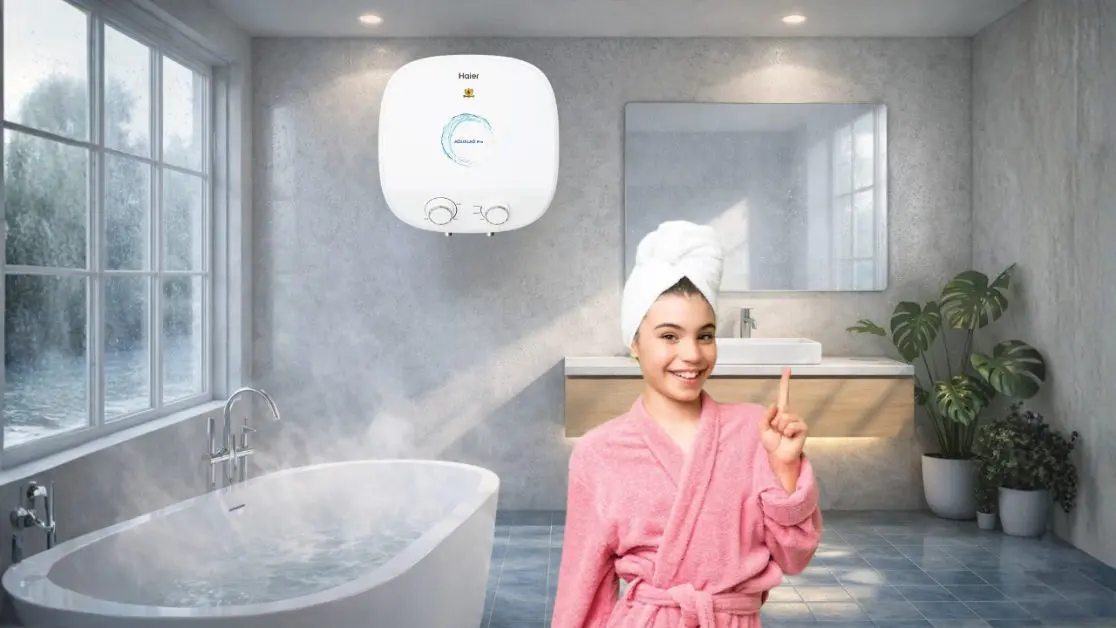
Suppose you heated water at 7 AM but didn’t use it until 9 AM.
During those two hours, some heat is lost through the storage tank and the plumbing leading from the tank.
The amount will depend on insulation, ambient temperature and installation conditions.
Poor insulation results in greater heat loss during standby time, and the water might need to be reheated before use.
Why Is Tank Insulation Important?
Insulation keeps stored water at a more consistent temperature between heating cycles.
A well-insulated storage geyser can:
- Minimise unnecessary heat loss.
- Help retain the stored water temperature.
- Reduce unnecessary reheating.
- Make hot water more convenient when it isn’t used immediately.
This is particularly important in colder months, when the temperature gap between the stored water and the ambient temperature is greater.
Haier India provides PUF/EPS-insulated storage water heaters that help retain heat and minimise reheating.
Households experiencing rapid cooling should consider insulation in addition to storage capacity and heating capabilities.
What Happens When Cold Water Enters the Geyser?
There’s one thing many homeowners miss out on.
A storage geyser does not wait until the tank is empty before admitting cold water.
Hot water goes out, and cold water comes in.
The temperature of the hot water delivered through the outlet is affected by the interaction between incoming cold water and the hot water already in the tank.
Excessive mixing can reduce the amount of hot water available at the desired temperature.
Can Water Circulation Technology Help?
Carefully planned water flow within a geyser can facilitate water circulation and help manage stagnant water.
Selected Haier storage water heaters are equipped with RSC U-turn Flow Technology, which promotes water circulation and helps prevent stagnant water deposition.
This technology is integrated into the appliance’s water-management system.
But there is no technology that can produce endless hot water. Availability still depends on tank size, heating temperature and consumption.
Hence, it is still vital to select the right size of geyser.
How Can You Prevent Hot Water From Running Out Too Fast?

Identify when the problem occurs before considering replacement.
If Hot Water Runs Out During Long Showers
Check the showerhead’s water flow and your bathing duration.
A shower with a high flow rate may use up more hot water than anticipated.
If Hot Water Runs Out Between Family Members
You might not have enough storage for continuous use.
Allow the geyser to reheat between baths, or consider getting a bigger one that will better suit your family.
If Water Never Gets Properly Hot
Verify the set temperature and check whether the geyser has completed its heating cycle.
If the problem continues, arrange a professional inspection.
If Hot Water Runs Out Faster Than It Used To
An unexpected reduction in performance may indicate mineral scaling, thermostat problems or deterioration of internal components.
It’s better to service the appliance than to keep raising the temperature setting without determining the cause.
Which Haier Water Heater Is Right for Your Home?
If hot water is a regular problem, it is important to select a storage geyser of the correct size to make everyday activities easier.
Haier India provides various storage options and styles to meet the needs of different households.
There are three possibilities to consider.
Haier 15L Square Ivory 5 Star Water Heater (ES15V-SDI)
The Haier 15L Square Ivory Water Heater is a good choice for moderate hot-water needs.
It is square in shape and offers an alternative to traditional cylindrical geysers.
Notable features include:
- 15-litre storage capacity for moderate hot-water needs.
- 5-star energy efficiency rating.
- PUF insulation for better heat retention.
- RSC U-turn Flow Technology for water circulation.
- Shock Proof technology for electrical safety.
- Dual Thermal Proof overheating protection.
- Glass-lined tank for better corrosion resistance.
- 8-bar rated working pressure.
This model is also fitted with a Bacteria Proof System that heats the water to 80°C through a dedicated heating mode to inhibit bacteria.
This model may be considered for individual users or households that can reheat between uses, as long as bathing schedules permit.
But if a larger family is using several showers in a row, they may require more capacity.
Haier 25L Square Ivory 5 Star Water Heater (ES25V-SDI)
If a 15-litre geyser is often insufficient, a 25-litre storage tank may prove better by providing a greater supply of hot water.
The Haier 25L Square Ivory Water Heater offers increased storage capacity and features focused on heating convenience and appliance protection.
Its specifications include:
- 25-litre storage capacity.
- 5-star energy efficiency rating.
- RSC U-turn Flow Technology.
- PUF/EPS insulation for heat retention.
- Incoloy 800 heating element.
- Glass-lined storage tank.
- 8-bar rated working pressure.
- Dual Thermal Proof and Shock Proof protection.
The model also has an LED display, smart timer, smart memory and remote-control functionality.
These controls provide extra convenience when managing heating schedules and daily operation.
Depending on shower flow and family usage, the extra capacity can help minimise interruptions for families that frequently use hot water in succession.
Haier 25L PRECIS PRO ABS 5 Star Cylindrical Water Heater
Love the old-fashioned cylindrical look?
The Haier 25L PRECIS PRO Water Heater is a 5-star energy-efficient water heater with a storage capacity of 25 litres.
Its features include:
- PUF/EPS insulation for reducing heat loss.
- Incoloy 800 heating element for durability.
- RSC U-turn Flow Technology.
- Corrosion-resistant glass-lined tank.
- Shock Proof and Dual Thermal Proof protection.
- IPX4 water resistance.
- 8-bar rated working pressure.
For households that want more hot-water storage but don’t want to select a square-shaped appliance, the 25-litre capacity is an option.
The first thing to consider when comparing the three models is expected consumption and capacity. Next, think about the design, controls and protective features that are important to your installation.
Does a Bigger Geyser Always Solve the Problem?
Not necessarily.
A bigger tank will provide more hot water, but it will not fix a broken thermostat, a shower that uses too much water or a damaged heating element.
Likewise, a high-power heating element will reduce reheating time, if conditions are right, but it will not increase the physical storage capacity of the tank.
A better idea would be to assess your home’s actual consumption.
Ask yourself:
- How many people use the bathroom consecutively?
- Does everyone prefer bucket baths or showers?
- What is the duration of each shower?
- Does the incoming water get really cold in winter?
- Does the geyser heat water normally before the first bath?
These answers can help differentiate between inadequate capacity and problems with the appliance’s performance.
When Do You Need to Call a Technician?
Some troubleshooting symptoms require professional attention.
If you notice:
- Water leaking from the tank or electrical parts.
- Repeated electrical tripping.
- Unusual overheating or burning odours.
- Persistent heating failure.
- Unusual noises accompanied by decreased performance.
- Hot water reaches dangerously high temperatures despite normal settings.
Turn off the appliance and do not use it if there is a possibility of an electrical fault or leakage.
Proper maintenance, especially in hard-water areas, can help detect scaling and component deterioration early, before they become major issues.
Choose the Right Haier Geyser to Make Every Morning More Comfortable
Running out of hot water halfway through a shower is annoying. If you’re experiencing this every morning, there’s a problem.
In some cases, water consumption can be adjusted or enough time can be allowed for the geyser to reheat.
Otherwise, the household may have outgrown its existing geyser.
Haier India’s 15L Square Ivory, 25L Square Ivory and 25L PRECIS PRO storage water heaters come in various sizes and shapes, with added features such as heat-retaining insulation, RSC water circulation technology and multiple protective systems.
To choose a water heater model that better suits your bathing habits, installation requirements and household hot-water usage, explore Haier India’s water heater range.
A comfortable shower should be independent of who gets to use the shower first.
Frequently Asked Questions
1. Why does my geyser run out of hot water after five minutes?
The storage capacity may be too small for your shower’s water flow. Low thermostat settings, incomplete heating and excessive cold-water mixing can also reduce usable hot-water duration.
2. Is a 15-litre geyser enough for a family of four?
It depends on bathing habits. A 15-litre geyser may require reheating between consecutive baths, particularly when family members use showers. A 25-litre model offers greater storage capacity.
3. Why is my geyser water getting cold even when the power is on?
Possible causes include an incomplete heating cycle, thermostat malfunction, mineral scaling or hot-water consumption exceeding the appliance’s reheating rate. Persistent problems require professional inspection.
4. Does hard water reduce geyser heating efficiency?
Yes. Mineral deposits can accumulate on heating elements and internal surfaces, potentially reducing heat-transfer efficiency and increasing heating time.
5. How long should a 25-litre geyser provide hot water?
There is no fixed duration. It depends on the stored water temperature, incoming cold-water temperature, shower flow rate and desired bathing temperature.
6. Can better insulation prevent hot water from running out?
Insulation helps reduce heat loss while water remains stored. However, it cannot prevent the tank from cooling as hot water is used and replaced by incoming cold water.