
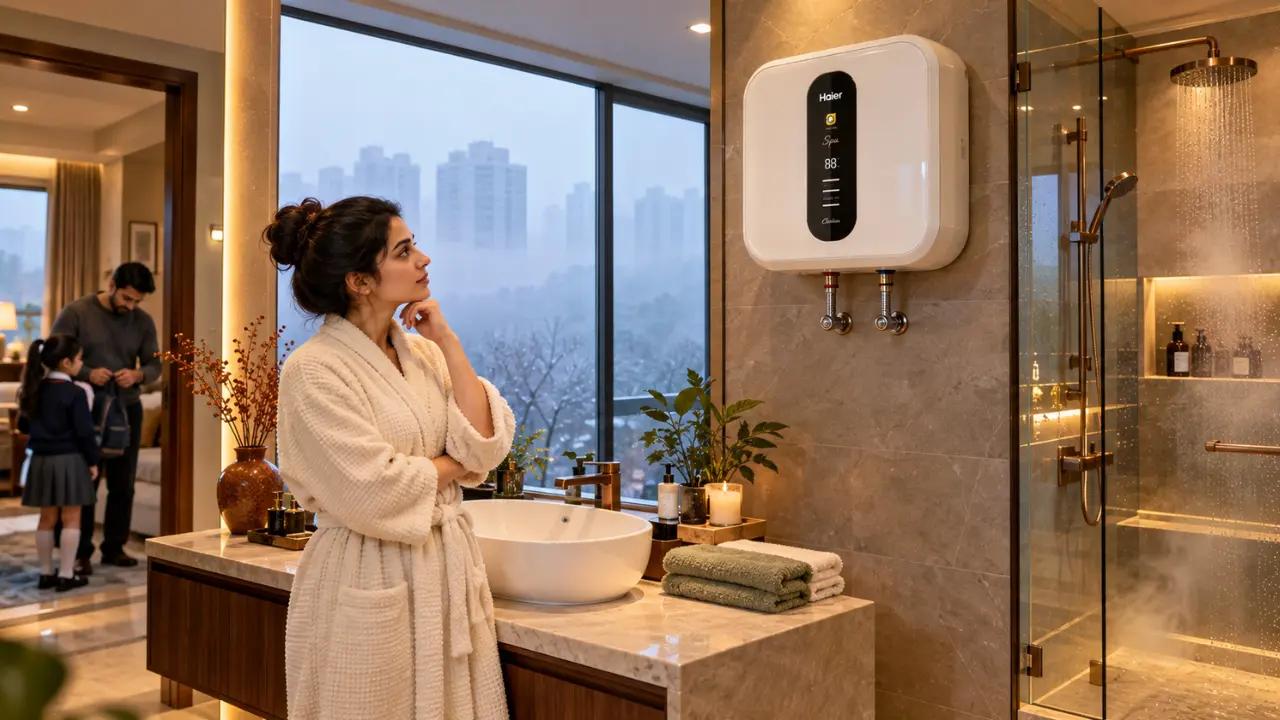

The geyser was working perfectly fine in October. Fifteen minutes, and the water was ready. Then December arrived, temperatures dropped, and suddenly, the same geyser seemed to take forever.
Sound familiar?
Many Indian households experience this during winter, particularly in cities such as Delhi, Chandigarh, Jaipur and Lucknow, where the temperature difference between summer and winter can be considerable.
Naturally, the first suspicion falls on the appliance. Is the heating element getting weaker? Does the geyser need servicing? Or is it time to replace it?
Not necessarily.
A geyser taking longer to heat water in winter is often behaving exactly as expected. The explanation comes down to water temperature, heating capacity and how effectively the appliance retains heat.
Understanding these factors can help you distinguish normal seasonal changes from problems that require attention.
Why Does Cold Weather Increase Geyser Heating Time?
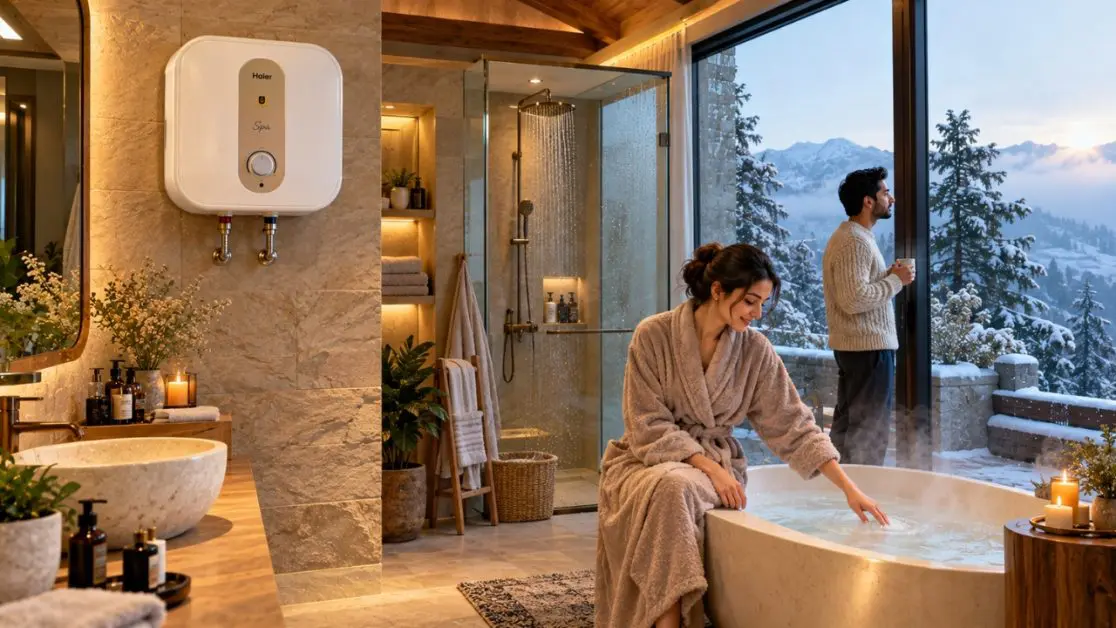
The simplest explanation is that winter water starts much colder.
An electric geyser uses a heating element to raise the temperature of the water stored inside its tank. The greater the difference between the incoming water temperature and the desired temperature, the more energy the appliance needs.
Consider a typical 15-litre storage geyser.
During summer, the incoming water might already be around 30°C. If the geyser needs to heat it to 60°C, the required temperature increase is 30°C.
Now imagine the same appliance operating during winter, when incoming water is 15°C.
To reach 60°C, it must increase the temperature by 45°C.
That’s 50% more temperature rise.
Under otherwise identical conditions, the geyser would require approximately 50% more heating energy.
The appliance hasn’t necessarily become slower. It simply has more heating to do.
How Much Longer Can a Geyser Take in Winter?
Actual heating time depends on tank capacity, heating-element wattage, incoming water temperature and heat loss.
For example, a 15-litre geyser with a 2,000W heating element would theoretically require approximately:
| Water Temperature | Target Temperature | Approximate Heating Time |
| 30°C | 60°C | 16 minutes |
| 20°C | 60°C | 21 minutes |
| 15°C | 60°C | 24 minutes |
| 10°C | 60°C | 26 minutes |
These are illustrative calculations based on the energy required to heat 15 litres of water. Actual heating times may be longer because of heat loss, thermostat behaviour and operating conditions.
The important point? A few extra minutes during winter don’t automatically indicate a malfunction.
What Else Makes a Geyser Heat Slowly During Winter?
Cold inlet water is the main reason, but it isn’t always the only one.
Several factors can make the difference more noticeable.
1. Heat Escapes From the Storage Tank
Once water reaches the desired temperature, the geyser’s insulation helps retain that heat.
However, some heat naturally escapes into the surrounding environment.
During winter, the temperature difference between the stored hot water and the surrounding air becomes greater. This can increase heat loss, particularly in appliances with inadequate or deteriorated insulation.
A well-insulated storage geyser can reduce unnecessary reheating.
For instance, Haier’s 15L Square Spa Ivory 5 Star Water Heater features PUF/EPS insulation designed to retain water temperature for longer and reduce reheating requirements.
This becomes particularly useful when family members use hot water at different times throughout the morning.
2. Hard Water Affects the Heating Element
Hard water is common in several parts of India, especially where households depend on borewell or groundwater supplies.
Over time, dissolved minerals can form deposits on the heating element and inside the tank.
These deposits may interfere with efficient heat transfer.
You might notice:
- Heating takes longer than it did previously.
- The geyser makes unusual popping or rumbling sounds.
- Hot water availability becomes inconsistent.
- The appliance requires more frequent reheating.
Winter doesn’t directly cause mineral deposits. However, existing scaling problems may become more noticeable when the geyser already needs additional energy to heat colder water.
A qualified technician can inspect the heating element and recommend appropriate maintenance.
3. The Tank Capacity Doesn’t Match Household Demand
Imagine four people getting ready for work and school on a cold January morning.
The first person enjoys a comfortable shower. The second gets reasonably warm water. By the third shower, everyone is waiting for the geyser to heat again.
This doesn’t necessarily mean the appliance is defective.
A storage geyser has a limited quantity of heated water. As hot water leaves the tank, cold water enters, and the heating cycle begins again.
During winter, that replacement water is colder, so recovery takes longer.
Households should consider their bathing habits, shower duration and the number of consecutive users when selecting geyser capacity.
Does Higher Wattage Mean Faster Water Heating?
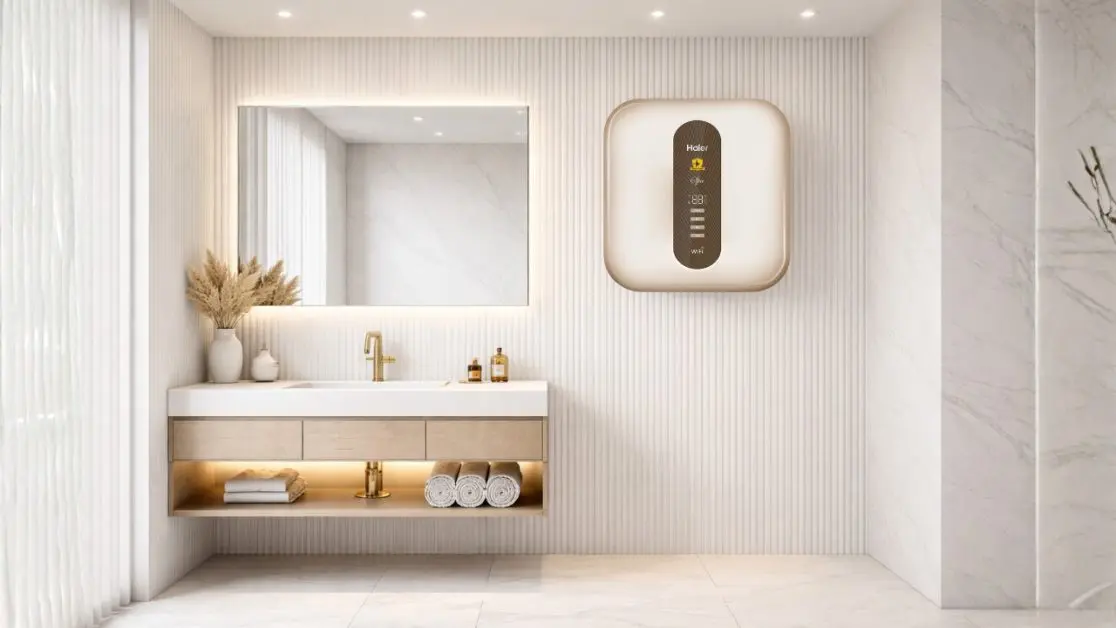
Generally, yes.
For the same quantity of water and temperature increase, a higher-powered heating element can heat water faster, provided the electrical supply and appliance design support that output.
A 2,000W heating element supplies approximately 2kW of heating power, while a 3,000W element supplies approximately 3kW.
Under comparable conditions, the higher-powered element can complete the heating process sooner.
However, faster heating doesn’t automatically mean lower electricity consumption.
The energy required to raise a given quantity of water by a particular temperature remains approximately the same. Insulation quality, heat loss and usage habits also influence electricity consumption.
When purchasing a geyser, consider:
- Heating-element capacity
- Tank insulation
- Storage capacity
- Energy-efficiency rating
- Built-in safety mechanisms
- Compatibility with household electrical infrastructure
A balanced combination of these features matters more than wattage alone.
How Do Haier Water Heaters Address Everyday Winter Heating Needs?
For Indian households looking beyond basic water heating, Haier India offers storage water heaters designed with features supporting heat retention, durability and convenient operation.
Three 15-litre models worth considering are the Square Spa Ivory, Square Ivory and PRECIS cylindrical water heaters.
Haier 15L Square Spa Ivory 5 Star Water Heater (ES15V-S1I)
Winter mornings become particularly inconvenient when hot water loses its temperature before everyone has finished using it.
The Haier 15L Square Spa Ivory Water Heater addresses heat retention through its PUF/EPS insulation, which helps maintain stored water temperature and reduce repeated heating.
Its features include:
- 15-litre storage capacity for household hot-water requirements.
- 5-star energy-efficiency rating.
- Incoloy 800 heating element designed for durability.
- Glass-lined tank offering corrosion resistance.
- RSC U-turn Flow Technology supporting water circulation.
- Dual Thermal Proof technology for overheating protection.
- Shock Proof technology for additional electrical safety.
- 8-bar rated working pressure suitable for high-pressure installations.
The model also features a Bacteria Proof System that heats water to 80°C in its designated mode to help inhibit bacteria.
For households seeking an energy-rated storage water heater with heat-retention and protective features, this model offers a practical combination.
Haier 15L Square Ivory 5 Star Water Heater (ES15V-SDI)
Some households want greater control over their water-heating routine, particularly when several family members use the bathroom at different times.
The Haier 15L Square Ivory Water Heater offers additional convenience through its electronic controls.
Its specifications include:
- LED display for convenient operation.
- Smart Timer functionality.
- Smart Memory feature.
- Remote-control support.
- Voltage Fluctuation Proof feature.
- 5-star energy-efficiency rating.
- PUF insulation for heat retention.
- Dual Thermal Proof and Shock Proof technologies.
The Smart Timer feature is particularly relevant for households with predictable morning schedules, allowing users to manage heating according to the appliance’s supported settings.
Rather than repeatedly checking whether the water is ready, users can make better use of the available controls.
Haier 15L PRECIS ABS 5 Star Cylindrical Water Heater (ES15V-PRECIS)
Not every bathroom has the same installation space.
For households considering a cylindrical storage geyser, the Haier 15L PRECIS offers a different design while retaining several practical features.
These include:
- 15-litre storage capacity.
- 5-star energy-efficiency rating.
- PUF/EPS insulation.
- Incoloy 800 heating element.
- Glass-lined tank construction.
- 8-bar rated pressure capability.
- IPX4 water-resistance rating.
- RSC U-turn Flow Technology.
- Dual Thermal Proof and Shock Proof features.
Its insulation helps reduce heat loss, while the glass-lined tank and heating-element construction are designed to support durability.
For buyers comparing geysers before winter, the PRECIS offers an option that combines storage capacity, insulation and protective features in a cylindrical design.
How Can You Reduce Geyser Heating Time During Winter?
A few changes to everyday usage can make hot-water availability more predictable.
Avoid Using Hot Water Before the Heating Cycle Finishes
Opening the hot-water tap while the geyser is still heating introduces colder replacement water into the tank.
This can delay the point at which the stored water reaches the desired temperature.
Where practical, allow the heating cycle to finish before starting a bath.
Don’t Set the Temperature Unnecessarily High
Higher temperature settings require additional heating energy.
Choose an appropriate setting according to the appliance manual and household requirements.
Remember that very hot water can cause scalding, particularly for children and elderly family members. Always check the temperature before bathing.
Schedule Periodic Maintenance
If your geyser is several years old, professional maintenance can help identify issues affecting performance.
A technician may inspect:
- Heating-element condition
- Mineral deposits
- Thermostat operation
- Electrical connections
- Tank condition
- Safety and pressure-relief components
Never open or attempt to repair an electric geyser yourself.
Reduce Unnecessary Hot-Water Consumption
Long showers and excessive hot-water flow can empty a storage tank quickly.
Using water thoughtfully helps reduce the frequency of reheating, especially when several people share one bathroom.
When Should You Worry About Slow Geyser Heating?
A moderate increase in heating time during winter is normal.
However, certain symptoms deserve professional attention.
Contact an authorised service technician if:
- The geyser suddenly takes substantially longer than usual.
- Water remains lukewarm even after a complete heating cycle.
- The appliance repeatedly trips the electrical supply.
- Unusual noises become frequent or severe.
- Water leaks from the tank or electrical components.
- There is a burning smell or visible electrical damage.
Switch off the appliance safely if you notice electrical faults or signs of overheating.
Also, remember that a geyser’s heating time should be compared under similar conditions. A difference between summer and winter is less concerning than a sudden deterioration during the same season.
Make Winter Mornings More Comfortable With Haier India
A geyser taking longer to heat water during winter isn’t always a warning sign. Colder incoming water naturally increases the heating requirement, while insulation, appliance condition and daily consumption determine how convenient the experience feels.
Choosing a water heater with suitable capacity and effective insulation can make a meaningful difference.
Haier India’s 15-litre Square Spa Ivory, Square Ivory and PRECIS water heaters bring together heat-retention features, durable tank construction and built-in protective technologies for everyday household requirements.
Explore Haier India’s water heater range to find a model that suits your bathroom, family size and winter hot-water routine.
Frequently Asked Questions
Is It Normal for a Geyser to Take 20–30 Minutes in Winter?
Yes. Depending on tank capacity, wattage and incoming water temperature, a storage geyser may take 20–30 minutes or longer. Check the manufacturer’s specifications and monitor unusual changes.
Does a 5-Star Geyser Heat Water Faster?
Not necessarily. A 5-star rating primarily indicates energy-efficiency performance under applicable testing conditions. Heating speed depends more directly on wattage, water quantity and temperature difference.
Should You Keep Your Geyser Switched On Throughout Winter?
Continuous operation isn’t necessary for every household. Storage geysers can reheat water automatically when temperatures fall, but this may increase standby energy consumption. Follow the manufacturer’s operating guidance and use timer features where available.
Can Hard Water Increase Geyser Heating Time?
Yes. Mineral deposits can affect heat transfer and contribute to slower heating. Periodic professional inspection can help identify scaling.
Which Haier Geyser Is Suitable for Winter?
The Haier 15L Square Spa Ivory, Square Ivory and PRECIS models offer insulation, energy-efficiency ratings and protective features. The appropriate choice depends on household water demand, preferred controls and installation requirements.