
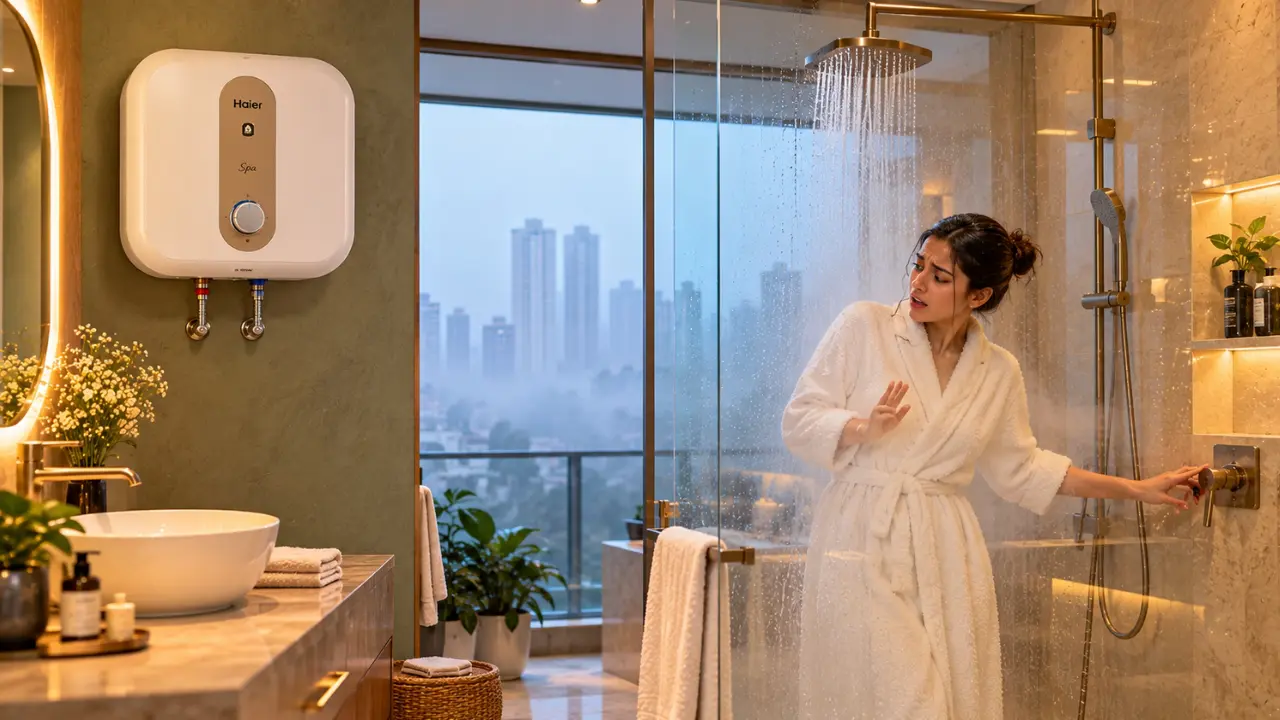

When you turn on the shower, you want to get a nice, warm stream. Rather, the first splash is too hot to take and you quickly go for the cold water tap.
A slight temperature difference may not be of great concern. However, if your geyser is always giving you too hot of water, you need to get it fixed.
The problem could be as straightforward as an incorrect thermostat setting. Other times, it could be due to a faulty temperature sensor, mineral deposits or an old heating element.
It’s important for Indian homes, which have to run geysers more frequently on winter mornings. Excessively hot water isn’t merely uncomfortable. It can lead to scalding injuries, especially in children and elderly family members.
Then, why does your geyser keep getting hot and how can you get the temperature back down?
Does Your Geyser Overheat?
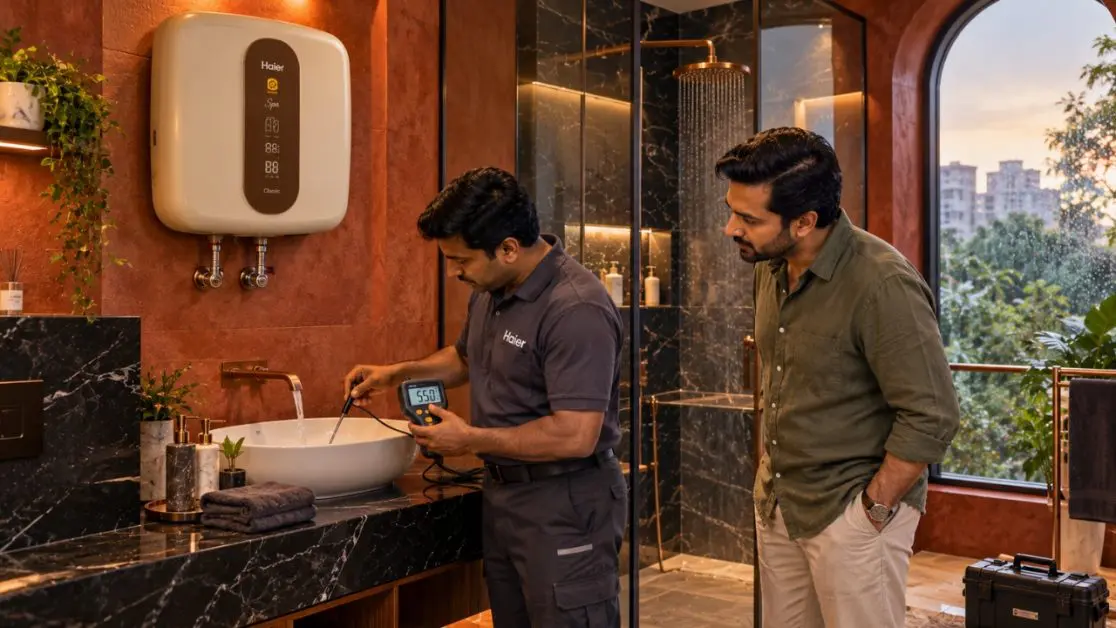
Rather than assuming that something is wrong with the appliance, think about how hot the water should be.
Storage water heaters usually heat water to a desired temperature and keep it hot by cycling the heating process under the control of a thermostat. Water in the tank can be much hotter than the bath water temperature.
The temperature of the bathing water that most people find comfortable is between 37°C and 40°C, but for some people the temperature may be warmer or colder.
Water at this temperature or higher may be too hot for some to handle. Exposure at significantly higher temperatures can result in severe burns in seconds.
There’s another difference to be understood.
A geyser that produces hot water does not necessarily mean that it is overheating. The concern starts when the appliance heats up beyond its intended temperature, does not stop heating or produces hotter water than expected.
The Signs That Should Be Observed
Keep an eye out for these changes:
- Water is still too hot even when the temperature setting is lowered.
- The geyser remains hot for more than its normal period.
- The temperature of the water suddenly changes to a much higher level.
- The safety protection is triggered repeatedly by the appliance.
- There are abnormal sounds with overheating.
- Steam or very hot water comes out at the outlet.
If these symptoms are present, do not use the hot-water supply until the issue is determined.
Why Does Your Geyser Make Water Too Hot?
The water heater’s temperature control is dependent on several factors. If one goes out of order, it can cause the water to be hotter than intended.
1. The Thermostat Is Set Too High
At times, the answer is simply right on the temperature control.
A lot of storage geysers provide the flexibility to set the desired heating level. When the thermostat is set close to the highest setting, the water may be hot enough to need a lot of mixing with cold water to get ready for bathing.
This can be especially apparent if there are temperature differences within the family.
For instance, it is possible for someone to raise the setting on a chilly December morning, and then not lower the setting afterwards.
The solution?
Read the manufacturer’s suggested operating parameters and choose an appropriate temperature for normal use.
Keep in mind that the thermostat setting is not necessarily the actual shower temperature, but rather the water temperature that is stored.
2. A Thermostat That Is Faulty
The temperature control device in your geyser is called a thermostat.
When the water reaches the desired temperature, the thermostat should stop the heating. If the temperature drops low enough, the heating starts again.
The thermostat can malfunction and not turn the heating system off at the desired temperature.
This can lead to:
- Water heating up above the set temperature.
- Inconsistent heating cycles.
- Excessive heating occurs before the safety cut-off activates.
- Unexpected temperature changes during normal use.
The thermostat must be professionally inspected for faults. Self-repair or bypassing the component can result in serious electrical and overheating hazards.
3. Mineral Deposits Have Accumulated
Hard water is a common problem in many Indian cities, especially those that rely on borewells or groundwater for their water needs.
Dissolved minerals can build up in the geyser tank and around the heating element over time.
These deposits can disrupt heat transfer and cause heating or temperature-control issues.
But the buildup of minerals does not necessarily mean the geyser will overheat. It is more commonly associated with reduced heating efficiency, unusual sounds and additional strain on components.
If there is excessive temperature along with slow heating or popping sounds, then it is possible that the mineral deposits are worth investigating.
If recommended for the model, professional descaling may be a solution to the buildup.
4. Incorrect Readings From the Temperature Sensor
Certain water heaters have temperature-sensitive elements that help determine when the water should be heated no further.
The control system could get false temperature data if a sensor fails.
Suppose that the water is already at the desired temperature but the sensing mechanism shows that the water needs more heating.
The appliance can keep running until another control or protection device comes into play.
Since symptoms may be confused with thermostat failure, diagnosis is crucial.
Changing parts without knowing the specific cause of the problem can result in no solution.
Maybe Your Bathroom Plumbing Is to Blame?
Not all hot-water temperature issues are due to problems within the geyser.
Sometimes the appliance is working fine, but the water that comes to your shower is hotter than you’d like.
Faulty Mixer Taps
Mixer taps are used to mix hot and cold water to a comfortable temperature.
When the cold-water supply is low or the mixer cartridge is faulty, the outlet can provide more hot water.
It may be noticed that the temperature is hard to control or fluctuates when the other tap is opened.
Changes in Water Pressure
Hot and cold water balance can also be influenced by pressure fluctuations.
This is especially true in buildings with multiple bathrooms connected to a single plumbing system or in buildings with fluctuating water pressure during busy periods.
A licensed plumber can determine the condition of the mixer and water supply.
If the issue is only with one shower and the rest of the plumbing is fine, it could be a plumbing issue instead of a geyser problem, which could save on needless geyser repairs.
What to Do When the Water From the Geyser Is Too Hot?
The first thing to be done is to avoid accidental burning.
Do not use your hands to test the temperature of unusually hot water or stand under the shower to determine how hot it is.
Rather, take these precautions.
Step 1: Discontinue Use of the Hot-Water Supply
If water is hotter than expected, discontinue the use of the outlet.
Until the temperature problem is addressed, keep children and elderly family members away from it.
Step 2: Turn Off the Geyser if Overheating Is Suspected
If the appliance is obviously heating up excessively, turn it off at the external power switch, if it is safe to do so.
Avoid touching electrical controls with wet hands.
If steam is present, there is leakage near electrical components, a burning odour or another immediate danger, maintain a safe distance and call for professional help.
Step 3: Check the Temperature Setting
If the geyser has an accessible user temperature control, see if it is set too high for normal operation.
Adjust it as per the product manual.
Do not open the geyser casing or try to access the internal controls.
Step 4: Arrange a Professional Inspection
If, after an appropriate adjustment, the water is still too hot, call an authorised service professional.
A technician will be able to check the thermostat, heating element, temperature-sensing elements and protective cut-off mechanisms.
Overheating should never be considered a normal operating characteristic.
How Does Haier Water Heater Solve the Problem of Overheating?
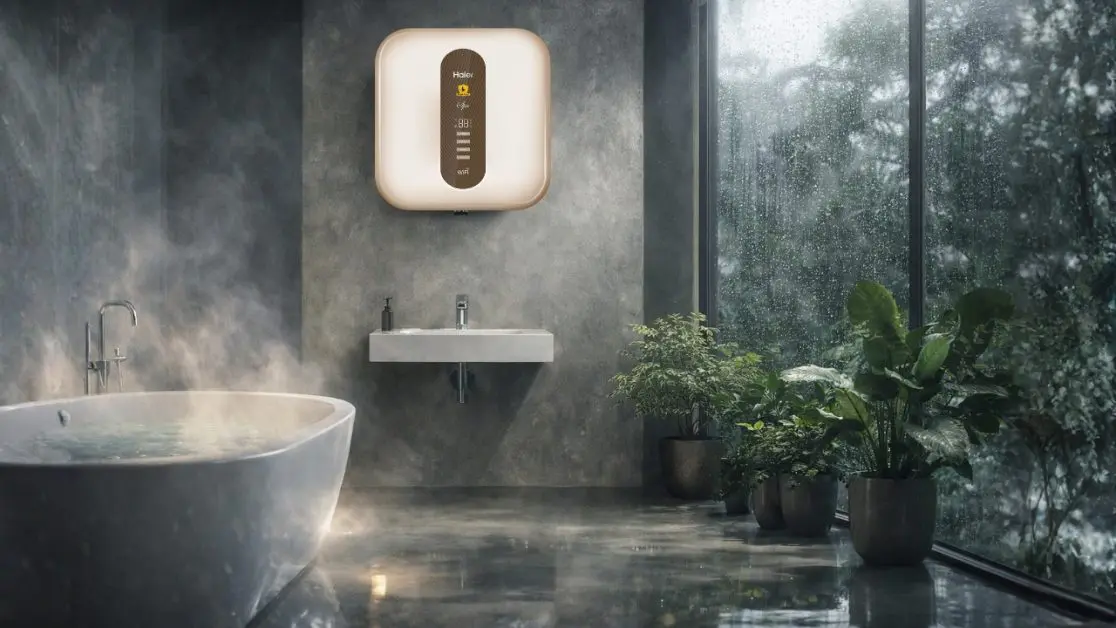
One of the key factors that you should consider when selecting a water heater is temperature regulation, especially if there are multiple family members using the same bathroom.
Haier India has storage water heaters with temperature-activated protection systems that facilitate the safe functioning of the water heater.
One of these is Dual Thermal Proof (TTS) technology, which is offered in some Haier models.
Dual Thermal Proof (TTS) Technology
Haier’s TTS technology has two levels of overheating protection.
The first protection feature is designed to stop the heating if the water reaches around 75°C.
A secondary thermal mechanism is provided to isolate power when the temperature is about 95°C, if the primary thermal protection fails.
These are protection cut-off temperatures, not recommended bathing temperatures.
The technology offers an extra barrier to abnormal heating situations. It does not replace the requirement for proper installation, maintenance or safe water-temperature control.
Shock Proof Protection
Some Haier water heaters are equipped with Shock Proof technology, which is designed to reduce the electrical shock risk caused by leakage conditions.
This is not directly involved with water temperature control, but electrical protection is an important factor to consider with bathroom appliances.
Bacteria Proof System
Some Haier models have a Bacteria Proof System (BPS) mode which raises the water temperature to about 80°C to inhibit bacterial growth.
This is a specific high-temperature setting and not a regular bathing temperature setting.
Scalding can occur when water is heated in this mode. Allow the water to cool sufficiently and mix it properly before use.
Which Haier Water Heater to Choose?
When it comes to replacing an old geyser or upgrading a bathroom, Haier India’s 15-litre storage water heater range has a few options to explore.
Haier 15L Square Spa Ivory 5 Star Water Heater
The Haier Square Spa Ivory (ES15V-S1I) offers a compact square design that also includes features designed to help ensure reliable heating and convenient use.
It has the following main features:
- Overheating protection with Dual Thermal Proof technology.
- Shock Proof protection from electrical leakage hazards.
- A container with a glass lining to prevent corrosion.
- An Incoloy 800 heating element.
- An 8-bar pressure rating for compatible high-rise installations.
- PUF/EPS insulation to minimise heat loss.
- A 5-star energy-efficiency rating.
The tank is also fitted with RSC U-turn Flow Technology, which promotes water movement in the tank.
If you are searching for a small storage geyser that is also energy-efficient and has thermal protection, then this is the one to consider.
Haier 15L PRECIS ABS 5 Star Cylindrical Water Heater
Like a traditional cylindrical shape?
Haier PRECIS (ES15V-PRECIS) has a storage capacity of 15 litres and an energy-efficiency rating of 5 stars.
It is designed with Dual Thermal Proof technology, Shock Proof protection, a glass-lined tank and an 8-bar rated working pressure.
The model also features an Incoloy 800 heating element and PUF/EPS insulation.
This is one choice for homes that want to have a cylindrical storage water heater that has protective features and good heat retention.
Haier 15L Square Spa Wi-Fi 5 Star Water Heater
Haier Square Spa Wi-Fi (ES15V-SD WIFI) is worth considering for those who wish for a more modern design and digital temperature display.
It has a digital display that shows the current heating temperature, allowing for easier viewing.
Additional features include:
- Dual Thermal Proof technology.
- Shock Proof protection.
- A corrosion-resistant, titanium-coated tank.
- A heating element made of titanium.
- Bacteria Proof System mode.
- An 8-bar pressure rating.
- PUF/EPS heat-retention insulation.
The model is also energy-efficient, with a 5-star rating.
For those who want to see the heating-temperature information rather than just use a conventional indicator, its digital temperature display is significant.
What Are the Ways to Avoid Overheating Geysers?
Some simple practices can help with daily water-heater use.
Ensure Appropriate Temperatures Are Used
Don’t set the thermostat at the highest temperature unless it is needed.
Follow the manufacturer’s instructions and check the water temperature before using it for bathing.
Schedule Periodic Maintenance
Follow the manufacturer’s instructions for servicing, especially if hard water is supplied to your home.
Professional maintenance can aid in the detection of mineral deposits, worn parts and emerging temperature-control issues.
Never Ignore Safety Cut-Off Problems
Do not work around the safety features of the geyser if it keeps tripping or suddenly turns off while it’s hot.
A protective cut-off could be reacting to an underlying fault.
Make Sure the Shower Mixer Is Working Properly
Make sure hot and cold water are mixed properly.
If applicable, a professionally fitted thermostatic mixing valve can be used to help limit hot-water outlet temperatures and reduce scalding risks.
Follow the Installation Requirements
Proper electrical connections, grounding, water-pressure compatibility and approved safety fittings are required.
Always follow the directions for installation of your specific water heater.
Comfortable Hot Water Begins With Better Temperature Management
Your daily needs should be easier with a geyser, not stressful because you’re afraid of being scalded by suddenly hot water.
If the water temperature gets too high, early diagnosis not only helps to protect your family but also can stop a small temperature-control problem from escalating into a bigger problem.
For those who want to upgrade their existing water heater, Haier India’s storage water heater collection features water heaters that come with Dual Thermal Proof technology, Shock Proof protection and are built to deliver reliable everyday performance.
Check out Haier India’s Square Spa Ivory, PRECIS and Square Spa Wi-Fi water heaters and choose the one that best meets the needs of your home, bathroom and preferred features.
The right water heater is more than just a fast water heater. It’s also a matter of responsibly controlling that heat.
Frequently Asked Questions
1. Why is my geyser water suddenly too hot?
Sudden overheating may result from an excessively high thermostat setting, a faulty thermostat or a temperature-sensing problem. A malfunctioning mixer tap can also make outlet water unexpectedly hot.
2. What is the ideal geyser temperature for bathing?
Bathing water around 37°C to 40°C is generally comfortable for many adults. The geyser’s stored-water setting may differ, so always check the outlet temperature before bathing.
3. Can a faulty thermostat cause geyser overheating?
Yes. A faulty thermostat may fail to interrupt heating at the selected temperature. The appliance should be inspected by a qualified technician.
4. Does hard water make a geyser overheat?
Hard water can cause mineral deposits around the heating element and inside the tank. These deposits may affect heating efficiency, although they don’t necessarily cause overheating directly.
5. Do Haier water heaters have overheating protection?
Selected Haier water heaters, including the Square Spa Ivory, PRECIS and Square Spa Wi-Fi models, feature Dual Thermal Proof technology with two levels of overheating protection.
6. Should I replace my geyser if the water becomes too hot?
Not necessarily. Some problems can be resolved through correct settings or professional component repairs. Replacement may be appropriate when the appliance is ageing, repeatedly malfunctioning or no longer economical to repair.