
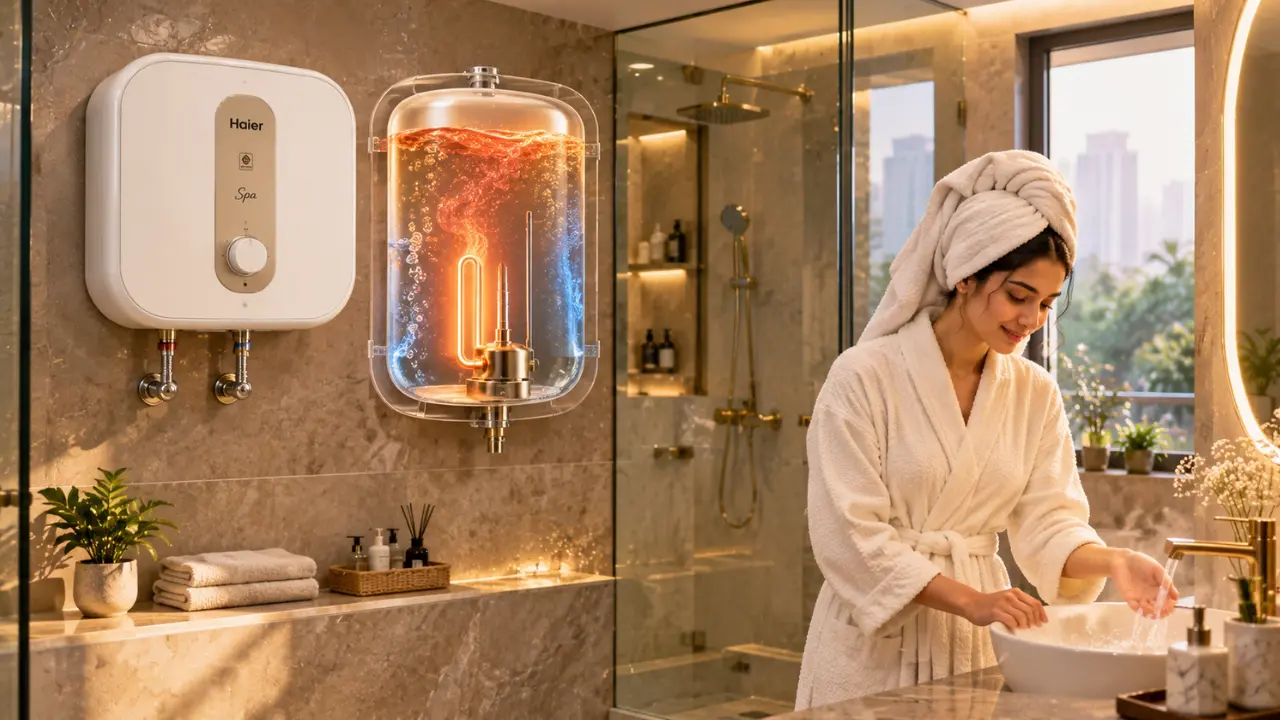

Your geyser appears to be in good condition from the outside. The power light is on, water is running and there’s nothing amiss. However, the water coming from the tap isn’t very hot.
What’s the issue?
Often, the issue is with a part that you can’t see: the heating element.
A heating element in a geyser is used to transform electrical energy into heat that is responsible for heating the water in the geyser. Even if the water heater is equipped with the best water storage tank and sophisticated controls, it cannot do its basic job without it.
However, there is one thing to be understood. All heating elements are not created equal. The material, the wattage, its resistance to corrosion and its resistance to repeated heating cycles can affect the performance of your geyser with time.
Let’s learn about what is going on in your water heater and why the heating element is more important than it is given credit for.
So what is a Heating Element of a Geyser?
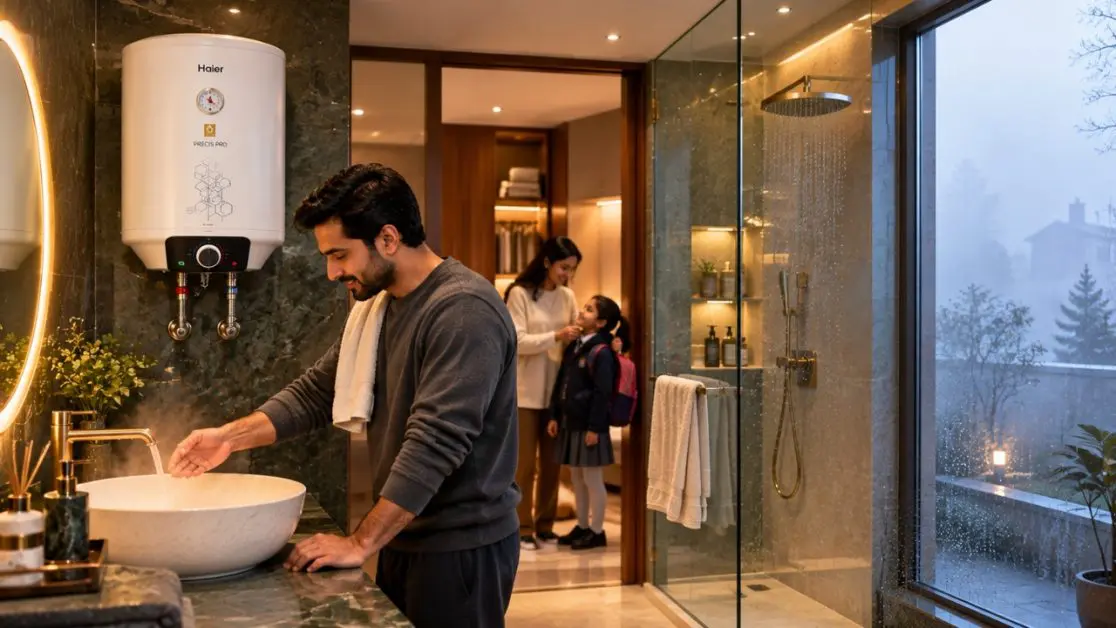
A geyser heating element is an electrical device which produces heat when current flows through the resistance wire inside it. This heat is conducted through the element’s outer sheath to the water surrounding the element.
Most electric storage geysers have the heating element located in the water storage tank, typically in the bottom part.
The electric kettle is used for repeated heating to heat water over and over again, but a geyser is used to store water for a house and repeatedly heat it.
A sheathed heating element is made up of the following:
- Resistance wire: Heats up when electricity flows through it.
- Electrical components covered by protective metal sheath: Prevents direct contact with water.
- Insulating material: Insulates but conducts heat; electrically separates resistance wire.
- Electrical terminals: Plug the element into the geyser’s power circuit.
All these elements combine to heat water and provide electrical insulation.
The heating element is used to perform the heating. The thermostat, in turn, controls the power to the element, maintaining the temperature.
They are both important but do different work.
How Does a Geyser Heating Element Work?
Imagine a typical winter morning in Delhi. The water that you are getting in your geyser is a lot cooler than in summer.
Obviously, the machine takes longer and more energy to heat that water to a “comfortable temperature.
What’s going on inside.
Step 1: Electricity is delivered to the heating element.
Switching on the geyser sends electricity through the heating circuit provided the thermostat is demanding heat and the safety devices allow it.
When current passes through the resistance wire in the heating element, it creates heat due to the resistance of the wire.
The process is called Joule heating.
Step 2: Heat transfers into the water.
The heat produced is conducted through the protective sheath of the element and into the water.
When the water is allowed to heat up, natural convection aids in the distribution of the heat throughout the storage tank.
Hot water tends to float up and cold water sinks down to where it can be warmed more.
Step 3: The thermostat is in charge of the temperature.
When the water has reached the desired temperature, the thermostat cuts off the electricity to the heating element.
If the water stored cools down enough, the thermostat could turn on the element once more.
The automatic cycling maintains the water temperature.
Step 4: Hot Water Is Available
When the hot-water tap is turned on, the hot water flows out of the tank, and cold water flows into the tank.
The heating element is then used to re-heat the tank when needed.
Simple in principle. The construction of the element, however, is a crucial factor in the continuity of this process over the years.
What is the significance of the material of a heating element?
The challenge for water heaters in India is that water quality differs from city to city and neighbourhood to neighbourhood and even within the same neighbourhood from building to building.
Relatively soft water is provided to some homes. Others rely on borewell water with a higher mineral content.
These differences can have an impact on the heating element.
Copper Heating Elements
Copper is a good conductor of heat and is widely used in electrical heating applications.
Its advantages include:
- Good thermal conductivity
- Effective heat transfer
- The suitability for different domestic applications of water heating systems.
But under certain water chemistry and operating conditions, the copper elements may experience corrosion or mineral deposits.
Stainless Steel Heating Elements
Corrosion resistance is also provided by stainless steel, but it is dependent on the type of alloy and the water conditions.
A well designed stainless steel heating element can provide:
- Resistance to corrosion in appropriate working conditions.
- Structural durability
- Repeatability on repeated heating cycles
The material alone doesn’t determine how long an element will last. Other factors include water quality, operating temperature, installation, and maintenance.
Incoloy Heating Elements
Incoloy is a group of nickel based alloys for challenging heating applications.
The alloys are useful because they are resistant to oxidation and corrosion when they are used in the proper conditions.
Haier’s water heaters with an Incoloy 800 heating element are selected, such as the 15L Square Spa Ivory and 15L PRECIS.
This is especially important for those homes who are not only concerned about the heating performance of the appliance, but also its longevity.
Why Haier Heating Element Technology is Worth Considering?
Most buyers compare the storage capacity, price and energy rating of the geyser they are buying.
Fair enough. Those are important factors to keep in mind.
However, a water heater is also an appliance that heats water over and over again in harsh operating conditions. The internal components are equally as important.
Haier India’s water heater range features models with durable heating elements that offer reliable heating.
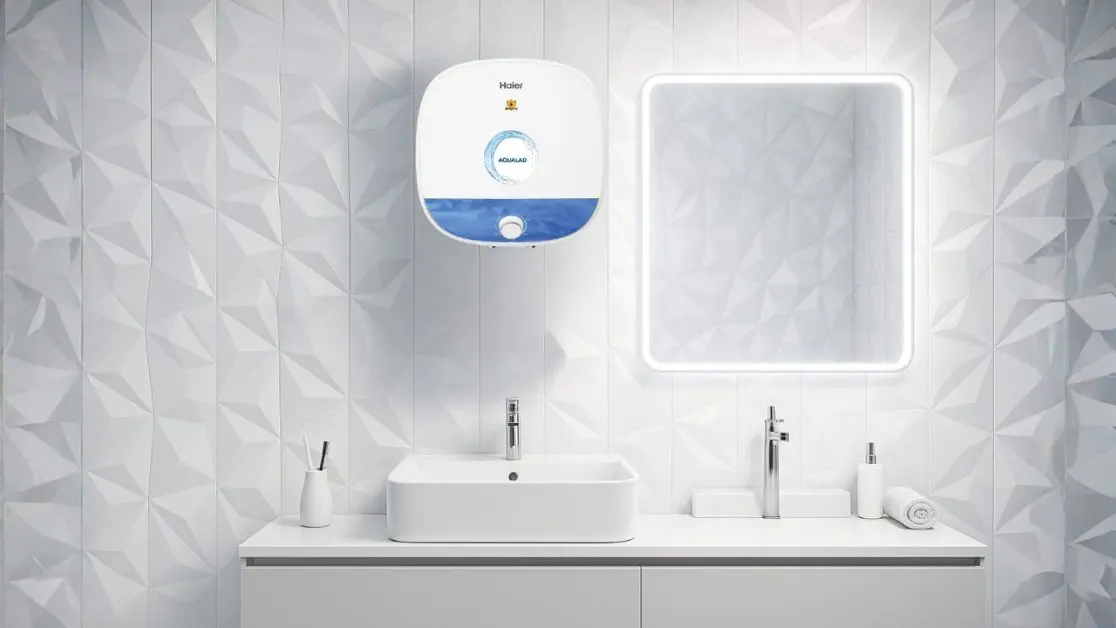
Haier 15L Square Spa Ivory 5 Star Water Heater
The Haier 15L Square Spa Ivory Water Heater (ES15V-S1I) is a 15 litre water heater with a few features to assist in daily water heating needs.
Its Incoloy 800 heating element is designed to offer durability and a longer service life.
Other highlights are:
- Efficient water-heating performance with a 5-star rating.
- Dual Thermal Proof (TTS) Technology to prevent overheating.
- A glass-lined tank that is designed to be more corrosion resistant.
- High rated working pressure of 8 bar, suitable for compatible high-rise installations.
- PUF/EPS insulation which aids in the retention of stored heat and less reheating.
- Shock Proof technology designed to provide additional protection against electrical leakage.
For families that require a 15 litre storage geyser, which also prioritises heating element durability and thermal protection, the Square Spa Ivory model is worth considering.
Haier 15L PRECIS ABS 5 Star Cylindrical Water Heater
Opt for a cylindrical water heater?
The Haier 15L PRECIS ABS 5 Star Cylindrical Water Heater (ES15V-PRECIS) offers another option.
It has an Incoloy 800 heating element with a glass lined tank for storage.
The model also features:
- 15 litre water storage capacity.
- 5-star energy rating.
- Dual Thermal Proof technology.
- Working pressure of 8 bars.
- IPX4 water-resistance rating.
- Designed by RSC U-turn Flow Technology, to enhance water circulation.
Cylindrical in shape, it offers an option for those who are comparing the shape and space requirements of different geysers.
Both models illustrate the importance of considering the heating element in conjunction with the tank and temperature-control system, rather than separately.
Which heats water quicker, a higher-wattage heating element?
Generally, yes.
A higher watt heating element will shorten heating time for the same amount of water and temperature rise.
For instance, a 3,000W element can provide heat at a higher rate than a 2,000W element under the same conditions.
But it’s not all about wattage.
The actual heating time will vary depending on:
- Initial water temperature.
- Quantity of water being heated.
- Heating-element power.
- Loss of heat from the tank.
- Thermostat settings.
- Mineral deposits on the element.
There’s another misconception that needs to be sorted out.
It is not the case that the bigger the wattage of the element, the more electricity the heater consumes when it is used to heat the same amount of water to the same temperature.
It consumes more power during operation, but it could run for a shorter period of time.
The actual energy used will vary with the amount of heat needed and losses of the system.
How Does Haier’s 3L Instant Water Heater Fit In?
If families need less hot water on demand, Haier has the 3L Instant Water Heater EI3V-C1(W)-P.
This model has a 3kW heating system for fast water heating.
The product’s characteristics also highlight the extended service life and structural stability provided by its Incoloy 800 heating element.
The small 3-litre volume is an alternative to consider if smaller storage is desired but rapid heating is more important.
How Does Hard Water Affect a Geyser Heating Element?
If your geyser is increasingly taking longer to heat the water, the accumulation of minerals could be one of the possible reasons.
Hard water is water that has minerals in it, especially calcium and magnesium.
At high temperatures these minerals may deposit on the inside surfaces, such as the heating element.
Scale can cause a number of issues over time.
Reduced Heat Transfer
Mineral deposits provide an extra layer of insulation between the element and the water.
It may have to run for a longer period of time to provide the necessary heat.
Higher Operating Temperatures
If the scales are allowed to build up to a large size, they can become a hindrance in heat dissipation, resulting in localised overheating.
Reduced Heating Efficiency
This means that the appliance may require more power to heat the water to the desired temperature when heat transfer is not as efficient.
Premature Component Failure
Ongoing overheating, corrosion or excessive deposits can help cause heating element damage.
This does not imply that all households with hard water are bound to have issues.
It does imply that regular checks and maintenance are more significant.
How to Determine if the Geyser Heating Element is Faulty?
A damaged heating element doesn’t always stop working without warning.
In some cases, symptoms may develop slowly.
Look out for the following symptoms:
- Even with the geyser turned on, the water is still cold.
- Heating is noticeably slower than normal.
- The RCCB or Circuit breaker keeps tripping on a regular basis.
- Popping and crackling noises are heard when heating.
- The availability of hot water is interrupted.
But these symptoms do not necessarily indicate heating element failure.
A similar behavior can be caused by a faulty thermostat, electrical connection, safety cut-out or other internal component.
If the geyser keeps tripping its electrical protection or if it is leaking, turn off the geyser and have it professionally inspected.
Do not test an exposed heating element when the appliance is plugged in.
How to Make a Geyser Heating Element Last Longer?
Yes, with proper use and care, unnecessary wear can be minimised.
Some simple routines can make a difference.
Avoid Unnecessarily High Temperatures
Heating water many times to very high temperatures may also increase the precipitation of minerals and heat loss.
Follow the appliance manufacturer’s instructions and household needs and use the correct temperature setting.
Schedule Periodic Maintenance
If your home has hard water, have a professional check the heating element for scale build-up.
The maintenance period will vary depending on water quality and use.
Do not use the Geyser when it is not filled with water.
The immersion-type heating element should never be used without adequate water level.
Dry heating can be very harmful and pose a safety risk.
Pay Attention to Electrical Protection
Install the geyser with proper earthing and electrical protection as per the manufacturer’s instructions.
Do not make unauthorized changes to the heating circuit or thermostat.
The right water heater
If a household will need to take multiple showers in a row, then they may need the storage water heater with adequate capacity.
If the hot water needs are small and infrequent, an instant water heater might be a better choice.
The right appliance can help eliminate needless operating cycles and make life easier.
So why should the heating element matter when buying a geyser?
While it may be obvious that the external appearance of a geyser is what attracts you, the internal structure is what really dictates how it will operate on a day to day basis.
One of the most important factors to consider is the heating element, which plays a key role in the transfer of heat to the water.
Don’t just consider the wattage listed on the product specification when comparing electric water heaters.
Take into account the type of material, tank construction, thermal protection, insulation, and appropriateness for your home’s water supply.
Haier India’s Square Spa Ivory, PRECIS and 3L Instant Water Heater are different types of configurations to suit different hot water needs.
They emphasize the heating-element technology, in addition to their corrosion resistant tank construction and thermal protection.
These details are more informative for Indian households for comparison than appearance.
Visit Haier India’s water heater collection and discover a water heater that fits your bathroom, water heating needs, and lifestyle.
Frequently Asked Questions
1. What is the main function of a heating element in a geyser?
The heating element converts electrical energy into heat and transfers that heat to the water inside the geyser. It is the primary component responsible for raising water temperature.
2. Which heating element is better for a geyser?
The appropriate heating element depends on its material, construction, water quality, and operating conditions. Copper, stainless steel, and Incoloy elements each have different properties. Selected Haier water heaters use Incoloy 800 heating elements designed for durability.
3. Can a geyser work without a heating element?
An electric resistance geyser cannot heat water without a functioning heating element. Other components may continue operating, but the appliance will not perform its intended heating function.
4. How long does a geyser heating element last?
There is no universal lifespan. Heating-element durability depends on material quality, water hardness, operating temperature, usage frequency, and maintenance.
5. Does a 3kW heating element consume more electricity than a 2kW element?
A 3kW element draws more power while operating. However, it may heat the same quantity of water faster. Total electricity consumption depends on the energy required, heating duration, and system losses.
6. Can a damaged geyser heating element be repaired?
A failed heating element generally requires replacement rather than repair. A qualified service technician should inspect the appliance, identify the fault, and determine the appropriate replacement component.