
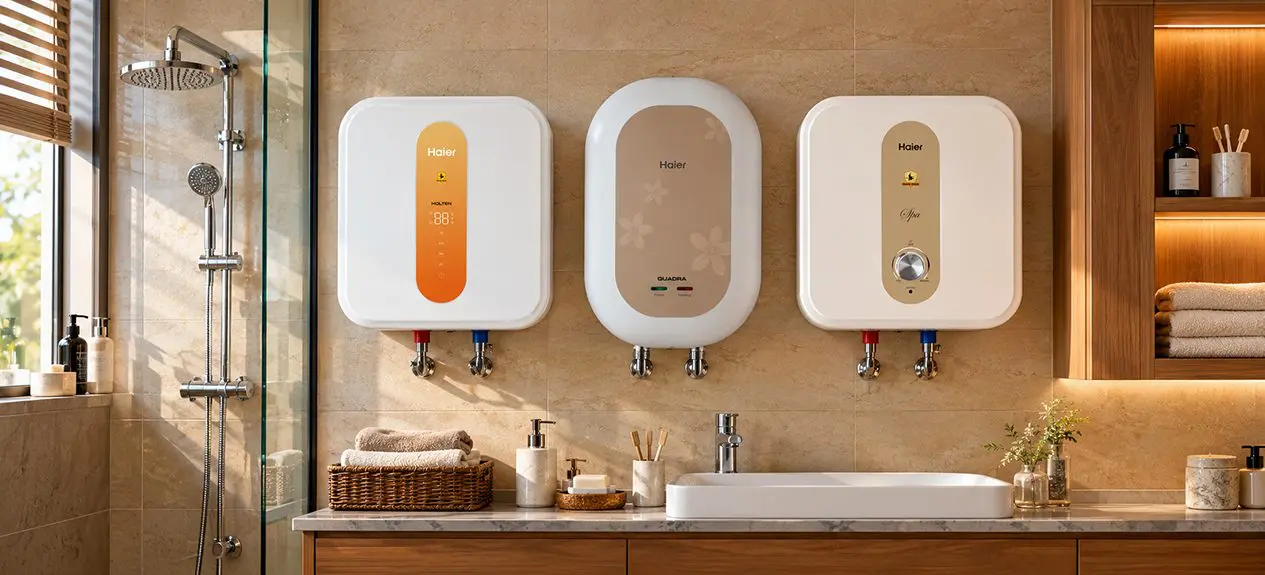

A geyser’s capacity is one of the first things people look at, but the power rating is just as important. The Geyser wattage can affect how the appliance will be used for hot water on a daily basis and is an important specification to know before choosing a model.
There are 2kW, 3kW and 4.5kW options, so the numbers may look simple at first glance. But it’s not only about the watts printed on the product. To learn more about your heating needs, understanding your home’s electrical configuration and electricity use can help you see the difference between these options.
First, know what the wattage number really means, and a better comparison begins to emerge.
What Does Geyser Wattage Actually Tell You?
Geyser wattage is the amount of electrical power that the heating element is designed to draw when operating. For example, a 2kW geyser is rated at 2,000 watts, whereas a 3kW geyser is rated at 3,000 watts. This figure provides an approximate indication of the amount of power available for heating by the appliance at any time, but it should not be confused with tank capacity or total power consumption. Wattage is just one part of understanding how a geyser works and fits into a home’s electrical system.
2kW vs 3kW vs 4.5kW Geyser: What Changes in Everyday Use?
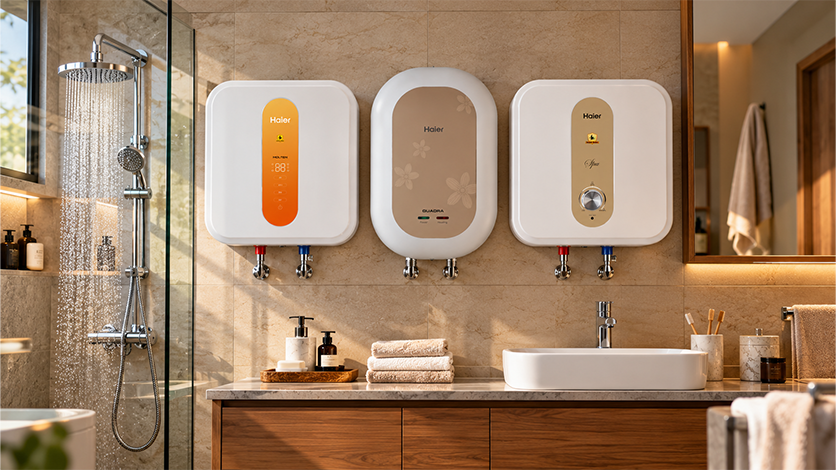
The difference between a 2kW, 3kW and 4.5kW geyser becomes more apparent when you consider how each one performs in everyday use. In a 2kW vs 3kW geyser comparison, speed of heating is just one part of the story. Power draw, electrical load and use are also a factor in determining what wattage make sense for a home.
| Points of comparison | 2kW Geyser | 3kW Geyser | 4.5kW Geyser |
| Rated power | 2,000 watts | 3,000 watts | 4,500 watts |
| Heating speed | Relatively slower under comparable conditions | Faster than 2kW under comparable conditions | Can provide still faster heating where the model is designed for it |
| Instantaneous power draw | Lowest of the three | Higher than 2kW | Highest of the three |
| Approx. current at 230V | Around 8.7A | Around 13A | Around 19.6A |
| Electrical load | Comparatively lower | Moderate compared with 2kW and 4.5kW | Highest among the three |
| What it may mean in use | Longer heating time may be acceptable where quick recovery is not essential | Can reduce waiting time compared with a similar 2kW unit | Useful where rapid heating is required, and the appliance is designed for higher power |
| Installation consideration | Circuit still needs to match the model requirements | Requires appropriately rated wiring and protection | Electrical compatibility becomes especially important because of the higher current draw |
How Much Difference Does Wattage Make to Geyser Heating Speed?
The wattage directly affects the heating speed of a geyser, but it is not the only factor. A more powerful heating element will heat the water up faster . But the time it takes to heat up will depend on how much water you are heating , how cold it is to start and how hot you want to make it.
| Points of comparison | What It Means for Heating Speed |
| Heating element wattage | Higher wattage can transfer more energy to the water in a given time, so heating can be quicker when the other conditions remain similar |
| Tank capacity | A larger tank contains more water to heat, so it generally takes longer than a smaller tank at the same wattage |
| Incoming water temperature | Colder inlet water needs a greater temperature rise, which increases the time needed to reach the set temperature |
| Thermostat setting | A higher target temperature requires the element to heat the water for longer before the thermostat cuts it off |
| Heat retention and insulation | Insulation does not speed up the initial heating cycle, but it helps retain heat and can reduce the amount of reheating needed later |
Does a Higher-Wattage Geyser Consume More Electricity?
A bigger-wattage geyser consumes more power when the heating element is on, but it doesn’t necessarily follow that it will always use more electricity overall. The power consumption of a geyser depends on the wattage of the appliance and the amount of time the appliance needs to run. A 3kW or 4.5kW geyser may draw more power at a given time, but it will also heat the same amount of water faster than a 2kW geyser, given the same conditions. Actual use of electricity will therefore depend on the time of heating, water temperature, size of the geyser, thermostat setting and how often the geyser re-heats the water.
Confused about which watt geyser is the best while comparing?
Read through 2000 Watt or 3000 Watt Geyser: Which One Is Better for Your Home?
What Electrical Load Does a 2kW, 3kW or 4.5kW Geyser Put on Your Home?
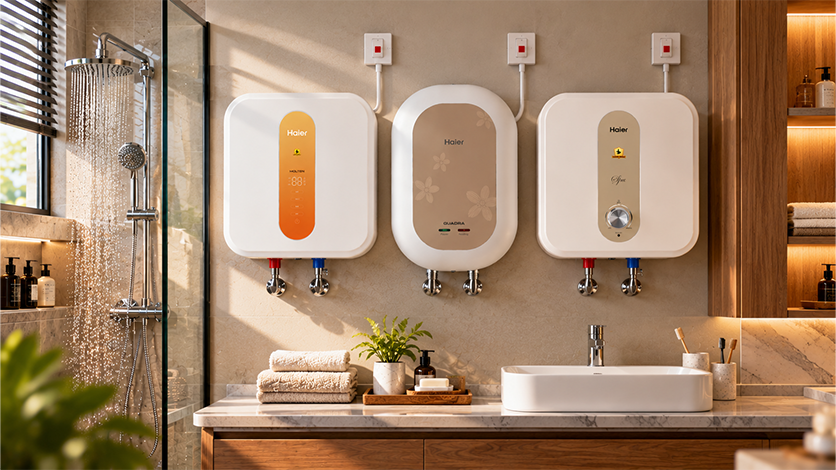
The wattage of the geyser electrical load will be higher. This is because of the fact that the power rating of the heating element is higher , the current passing through it while it is on will be higher . This makes the home’s wiring, circuit protection and overall electrical capacity important factors in the decision, especially when moving to a 4.5kW model.
- The least load on the circuit is a 2kW geyser. For example, a 2kW geyser draws approx. 8.7 A at 230V supply. This is less than the current drawn by the 3kW and 4.5kW models. The circuit still needs to meet the appliance manufacturer’s installation requirements.
- A 3kW geyser needs a good electrical installation. A 3kW unit is around 13 Amps at 230 Volts. The wiring, switch, MCB and earthing should therefore be adequate for the appliance and installed as specified in the electrical requirements.
- A 4.5kW geyser is a much heavier load on the circuit. A 4.5kW geyser will draw close to 20A at 230V. Due to the higher load, existing wiring and circuit capacity must be carefully checked before installation, preferably by a qualified electrician.
What Is the Best Wattage for a Geyser in Your Home?
The best wattage for a geyser depends on how the appliance will be used rather than just picking the highest rating available. Household size, hot water demand, tank capacity and existing electrical setup all help to narrow down which option is likely to make more sense.
- Choose the wattage based on the usual speed with which you need hot water. If the household can afford to wait a bit between switching the geyser on and using the water, then a lower wattage may be sufficient. If faster access is important, a more powerful option might be more useful.
- Think about how much water you need to heat at any one time. The bigger the storage tank the more water to heat so the power of the element vs tank size is important . Looking at both together gives a better picture than just wattage alone.
- Think about how often the geyser is used during the daytime. A bathroom that sees several people using it in quick succession may need the water heater to recover faster between uses. That requirement may be less critical in a home that is used lightly or less often.
- Choose a wattage that fits the home’s electrical configuration. The final selection should also be compatible with the circuit capacity and the supply available. Higher wattage is only good if the home electrical installation can safely handle it.
How Haier Water Heaters Approach Different Heating and Power Needs
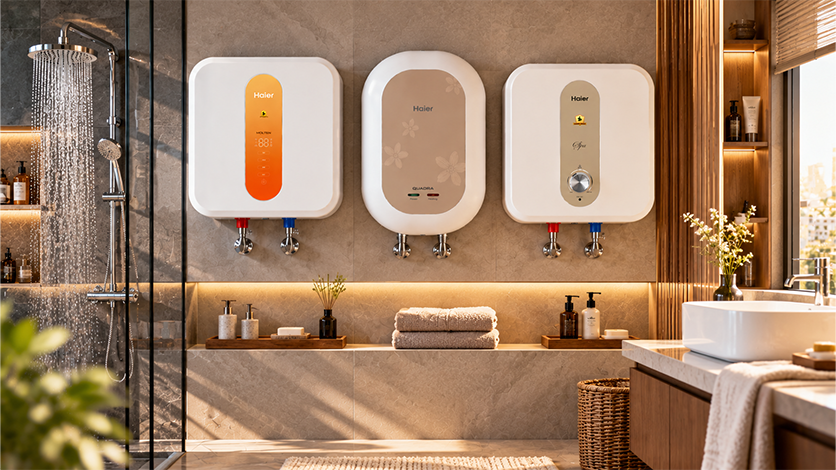
Different homes use hot water differently, so we do not treat one wattage or one heater type as suitable for every situation. Across selected Haier water heaters, we bring together different power ratings, insulation, temperature control and safety features to support different heating needs.
- We offer different power options for different heating needs
With the Haier 25L Square 5 Star Water Heater ES25V-Molten, we support both 2kW and 3kW rated power. We also pair this with PUF insulation, a bi-capillary dual thermostat, an Incoloy 800SS heating element and shock-proof protection, so wattage works as part of a broader heating and safety setup.
- We use 3kW power where quicker heating is useful
The Haier 3L Instant ISI Water Heater EI3V-C1 uses a 3kW heating setup for instant hot-water use. Its compact 3-litre capacity and pressure-rated construction show how we match the heating element to the type of use rather than looking at wattage in isolation.
- We step up to 4.5kW for higher heating demand
For users who need higher heating power, the Haier 3L Instant ISI Water Heater EI3V-C2 is rated at 4.5kW. We combine that higher geyser wattage with an Incoloy 800 heating element, an 8-bar rated tank and water-resistance features, making the electrical setup and installation requirements just as important as the power rating itself.
- We also focus on retaining and controlling heat
The Haier 25L Square 5 Star Water Heater ES25V-S1I uses a 2kW heating element along with PUF insulation, shock-proof protection, overheat protection and a bi-capillary dual thermostat. This helps us address not only how water is heated, but also how that heat is retained and managed during everyday use.
Conclusion
The choice between 2kW, 3kW and 4.5kW comes down to more than geyser heating speed. Higher wattage can reduce waiting time, but it also increases the amount of electrical power drawn while the heating element is operating.
Before choosing, consider the amount of hot water required, how quickly it needs to be available and the electrical capacity of the home. The right geyser wattage is ultimately the one that meets the household’s hot-water needs without overlooking installation and electrical-load requirements.
FAQs
Which is better, a 2000 watt or 3000 watt geyser?
A 3000W geyser would heat the water faster, while a 2000W geyser would put less instantaneous load on the circuit. It comes down to how quickly your home heats up and your electrical setup.
How much electricity does a 15 ltr geyser consume per month?
That depends on how often you use it, the temperature setting and how often you reheat it. So, as a rough estimate, heating 15 litres of water up by about 40°C once a day would require, say, around 21 kWh a month before heat losses are taken into account.
Does online geyser consume more electricity?
No. Buying a geyser on the internet does not influence its power consumption. Electricity usage depends on wattage, capacity, heating time, insulation and use.
How much electricity does a 2000 watt geyser consume?
A 2000W geyser that runs constantly for an hour will use roughly 2kWh. 30 minutes of runtime is ~1 kWh.
Can my home wiring handle a 4.5 kW geyser?
A 4.5kW geyser will pull almost 20A at 230V. Therefore, check wiring, MCB, earthing and circuit capacity by a qualified electrician.
How much electricity does a 15-litre geyser use per month?
It’s not a hard number. Your monthly consumption depends on how often you run the geyser, the temperature rise, the insulation of the tank and how much hot water you use.
Which geyser takes less electricity?
A lower wattage geyser uses less power at any one time but may take longer. Total electricity use depends on both wattage and time of heating.