
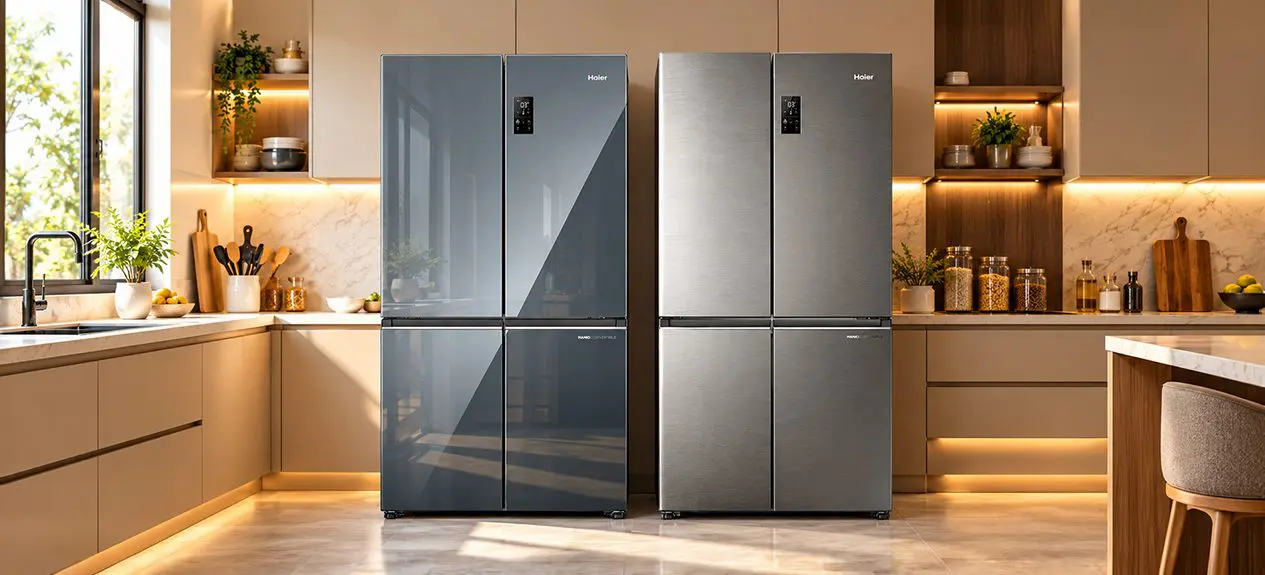

Refrigerator finishes have become a buying decision in their own right. A few years ago, most people picked based on capacity and star rating. Today, the exterior finish gets as much attention as the features inside. Whether to go with glass or steel is one of those questions that comes up regularly, and the answer is not as clear as most buying guides suggest. Both have real strengths, and which one performs better depends largely on the kitchen it goes into.
Glass-Door vs Steel-Finish: Quick Overview
The glass door vs steel refrigerator question comes down to three things: how the fridge looks in your kitchen, how it holds up to daily handling, and how much effort it takes to keep clean. A glass finish fridge is typically made with a tempered glass panel over the exterior doors, available in matte, gloss, or mirror variants. A stainless steel finish fridge uses either actual brushed steel or a steel-effect coating that replicates the industrial look of bare metal.
Here is a quick side-by-side before going into detail:
| Factor | Glass Finish | Steel Finish |
| Visual style | Premium, reflective, design-forward | Industrial, neutral, widely compatible |
| Scratch resistance | High surface hardness, resists fine abrasion | Resistant to deep impact marks |
| Fingerprint visibility | High on gloss/mirror, lower on matte | High on brushed, lower with nano-coating |
| Cleaning effort | Quick wipe with glass cleaner | Grain-direction wiping required |
| Kitchen suitability | Contemporary, designed kitchens | Most kitchen types |
Glass-Door Refrigerators
Looks, Durability & Cleaning
Are glass door refrigerators durable? The answer is yes, with some context. Glass-finish doors use tempered glass rather than ordinary glass, which makes them resistant to most everyday impact. The panel does not dent, and that is one area where glass holds a clear advantage over metal. A sharp knock might leave a mark on a steel door. On a tempered glass door, the same knock is far less likely to leave a permanent impression.
The visual result of a glass finish fridge is what draws most buyers in. Mirror glass reflects light and can make a kitchen feel more open. Matte and frosted variants offer a quieter, more understated look that ages well as interior trends shift. Both styles tend to work well in modern or open-plan kitchens where the refrigerator is visible as part of the overall space rather than tucked away.
On cleaning, glass doors are quick to maintain. A damp cloth or glass cleaner removes most marks in a single pass. The surface does not react to cleaning products the way some coated metals can. Which refrigerator finish is easiest to clean? For regular upkeep, glass is generally the easier surface. The challenge is smudges: on mirror or gloss variants, fingerprints are visible after every touch. Households with children or high kitchen traffic will find themselves cleaning the surface more frequently than with a matte alternative.
Steel-Finish Refrigerators
Looks, Durability & Cleaning
A stainless steel finish fridge has spent the last decade as the default choice for buyers who want a premium-looking appliance without committing to a specific colour palette. The brushed texture breaks up reflections and gives the surface a consistently clean appearance at a distance. Steel finishes work across most kitchen styles, from modern to transitional to more traditionally designed spaces.
Do steel finish fridges show fingerprints? Yes, particularly on standard brushed finishes. The grain of brushed steel reflects at a slight angle, and oils from hands interact with the surface in a way that leaves clearly visible smudges. High-traffic households find this a constant maintenance point. Many manufacturers now apply nano-coatings or fingerprint-resistant treatments that reduce this significantly. The improvement in daily use is real and noticeable.
On fridge finish durability, brushed steel and steel-effect coatings hold up well over the years. They tolerate most cleaning chemicals and do not show impact marks as prominently as high-gloss glass might under certain lighting. Scratches behave differently on steel. Fine surface scratches tend to blend into the overall grain texture over time, which is a genuine practical advantage. Deep scratches that run against the grain are harder to conceal.
Fingerprints, Scratches & Maintenance
Which fridge finish scratches less? This depends on the type of scratch. Glass has higher surface hardness and resists fine abrasion better than most steel coatings. Steel coatings are more forgiving of heavy impact and surface scratching because the grain absorbs and disguises minor marks. Both finishes benefit from regular maintenance with the right tools.
For glass:
- Use a microfibre cloth and glass cleaner for daily maintenance
- Avoid scouring pads or anything gritty
- Apply an anti-smudge glass spray on gloss and mirror variants for better daily performance
For steel:
- Always wipe in the direction of the grain to avoid cross-grain marks
- Use a dedicated stainless steel cleaner for stubborn grease
- Dry the surface completely after cleaning to prevent water streaks
A fingerprint proof fridge in either category is more accurately described as fingerprint-resistant. The technology has improved considerably, and matte glass and nano-coated steel are the two most practical daily-use choices for busy kitchens.
Which Finish Suits Your Kitchen?
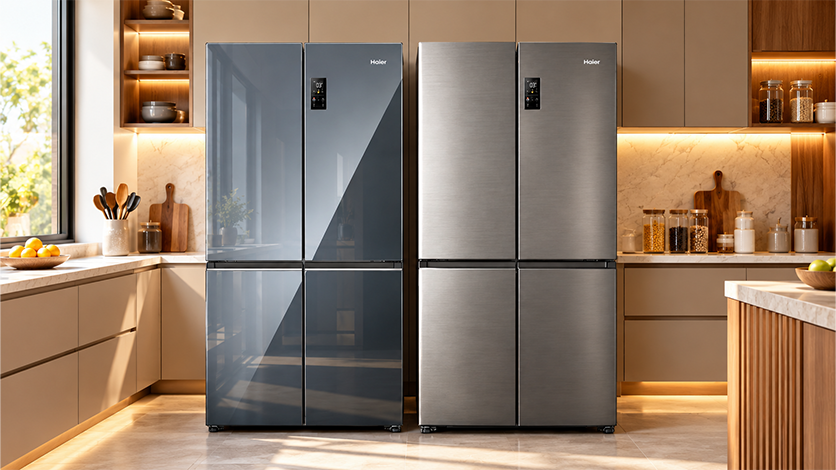
Glass door vs steel finish refrigerator: which is better is really a question about priorities. Glass finishes tend to suit kitchens designed around specific materials and colours, where the fridge needs to complement or accentuate the space. Steel finishes work more broadly and are a safer choice for kitchens that mix styles or may be redesigned in the future.
Households with young children or high traffic should weigh the cleaning frequency carefully. Matte glass and fingerprint-resistant steel are the two most practical finishes for daily use without constant wiping.
Price & Resale Considerations
Glass-finish models, particularly mirror and premium gloss variants, tend to sit toward the upper end of the market. Steel-finish options cover a wider price range. On resale value, which fridge finish is best to preserve long-term worth is not fixed: both hold value when well maintained, and buyer preference in the used market follows current design trends more than any rules about finish type.
Haier’s Glass and Steel Finish Range
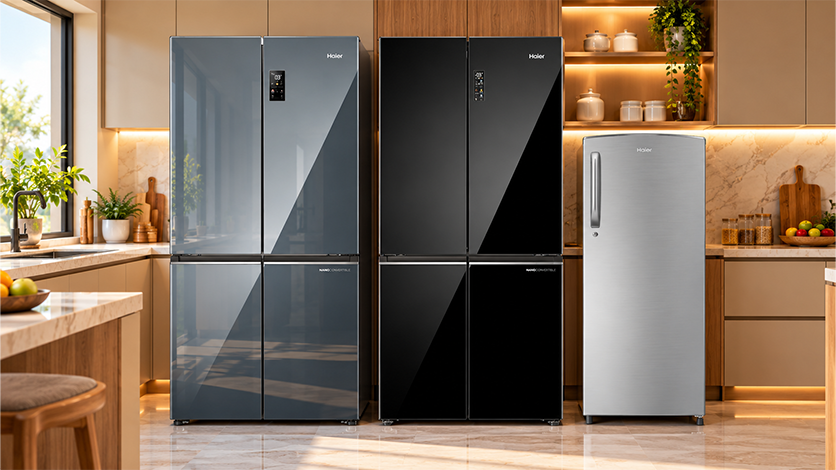
At Haier, we offer both finishes across our refrigerator range because a great refrigerator should fit the kitchen it goes into, not the other way around.
For buyers drawn to glass, the Haier Lumiere 520L Mirror Glass (HRB-600MGU1) brings a reflective glass exterior to a 4-door convertible refrigerator. It carries 440 litres of fresh food capacity, the Colorful Digital Display, Sun Lit Interior with IPX5 waterproof LED, ABT Technology that eliminates up to 99.99% bacteria, Smart Sense AI, Smart Food Management, and a My Zone customisable compartment. The Haier Lumiere 520L Black Glass (HRB-600KGU1) delivers the same technology in a darker, more understated glass finish for kitchens that call for depth over reflection.
For households preferring a steel exterior, the Haier 190L 3 Star Nickel Steel Single Door refrigerator provides a clean steel finish with stabilizer-free operation, toughened glass shelves, Diamond Edge Freezing Technology, and a 10-year compressor warranty. It is a practical option for smaller households or a secondary kitchen placement.
Both finishes come with the same engineering standards and warranty coverage across our range.
Conclusion
Glass and steel finishes each make a reasonable case depending on what you are looking for. Glass offers visual impact, quicker cleaning, and resistance to denting, though it demands more attention to smudges on reflective surfaces. Steel is more versatile in terms of kitchen compatibility and has improved considerably with nano-coating technology. The right choice comes from understanding your kitchen style, your household’s cleaning habits, and how visible the refrigerator will be in daily life. Both finishes, chosen well and maintained properly, hold their quality across the full lifespan of the appliance.
FAQs
Which is better, a glass-door or steel-finish fridge?
Neither is universally better. Glass-door fridges suit modern, designed kitchens and clean quickly. Steel-finish fridges work across a wider variety of kitchen styles and are less prone to denting. Choose based on your kitchen design and how much cleaning you want to do.
Are glass-door fridges durable?
Yes. Tempered glass-finish doors resist everyday impact and do not dent under normal use. They hold up well over years of daily handling, making them a sound long-term choice alongside any steel option.
Which fridge finish is easiest to clean?
Glass surfaces wipe clean faster with a damp cloth or glass cleaner. Steel finishes require grain-direction wiping and a dedicated cleaner to avoid streak marks. Matte glass and nano-coated steel are both low-maintenance options for busy kitchens.
Do steel-finish fridges show fingerprints?
Standard brushed steel shows fingerprints clearly. Most modern steel-finish fridges include nano-coatings or fingerprint-resistant treatments that reduce visibility, making daily maintenance less frequent without requiring a different finish entirely.
Is a glass-door fridge worth the extra cost?
For kitchens where aesthetics are a clear priority, yes. Mirror and premium gloss glass finishes add a design quality that steel cannot replicate. The additional investment is justified when the refrigerator is a focal point of the kitchen rather than a background appliance.
Which finish scratches less?
Glass resists fine surface abrasion due to its higher hardness. Brushed steel handles deep surface marks better because minor scratches tend to blend into the grain texture over time. Both finishes benefit from gentle cleaning tools and regular maintenance.