
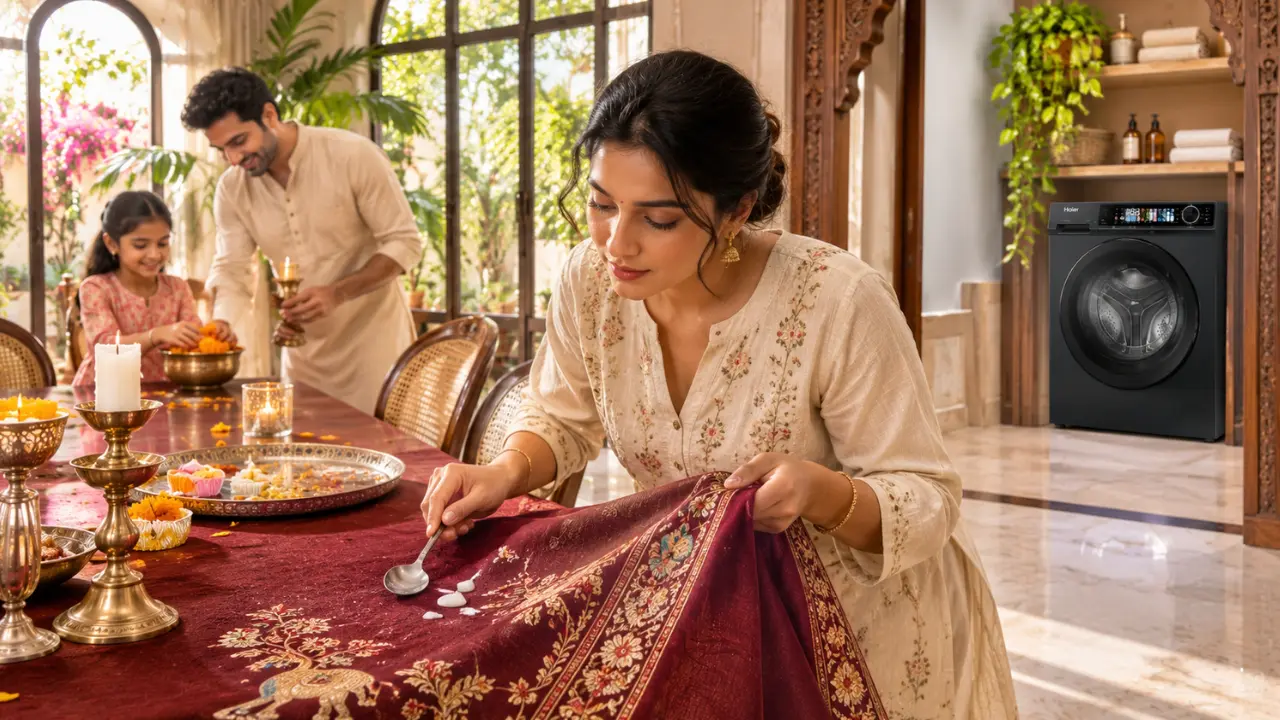

The Diwali decorations are packed away, the guests have gone home, and the dining table is finally clear. But there’s one small problem. That beautiful tablecloth you brought out for the celebrations now has hardened candle wax stuck to it.
Maybe someone moved a candle while serving sweets. Perhaps a few drops fell from a decorative candle holder. Either way, the wax has settled into the fabric, leaving a stubborn patch that doesn’t look easy to remove.
Your first instinct might be to put the tablecloth straight into the washing machine.
Don’t. Not yet.
Candle wax behaves differently from ordinary food stains. It contains waxy substances that resist water, and washing the fabric without removing the residue can leave greasy marks behind.
Fortunately, removing candle wax from tablecloths isn’t particularly complicated. You just need to follow the right sequence before starting your regular laundry cycle.
Why Candle Wax Needs Special Treatment Before Washing
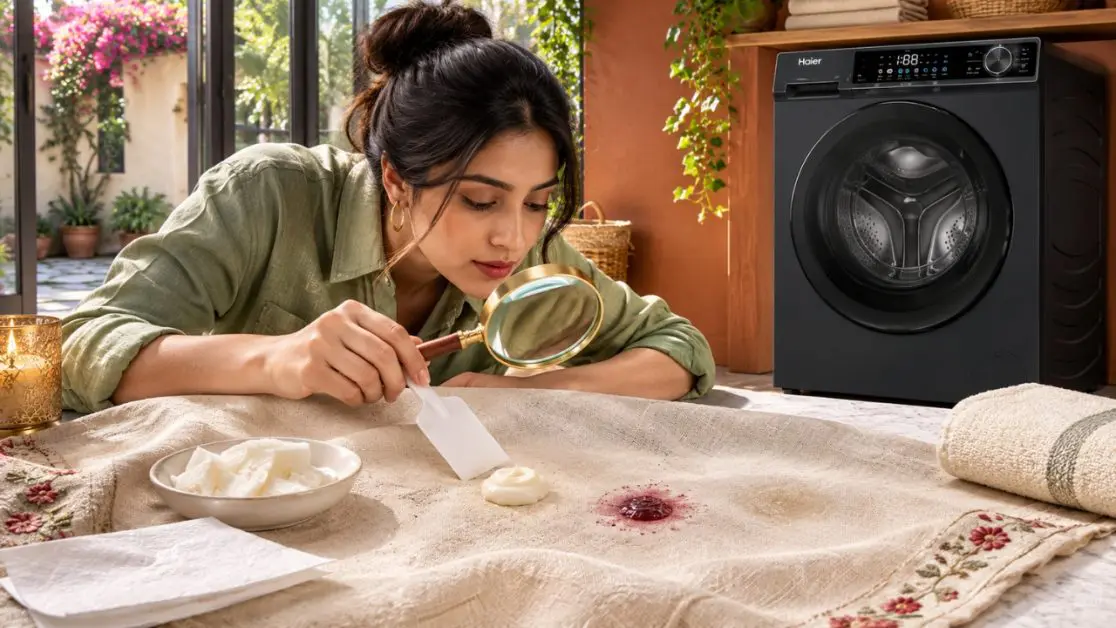
Most household stains respond to water and detergent. Candle wax is different because it is largely water-repellent.
When hot wax lands on a tablecloth, it initially sits on the surface. As it cools, it hardens and may become embedded between the fabric fibres.
The problem becomes more noticeable with materials such as cotton, linen and blended fabrics commonly used for festive dining arrangements.
Three things make candle wax particularly troublesome:
- Solid wax can cling to fabric fibres and resist ordinary washing.
- Coloured candles may leave dye marks even after the wax has been removed.
- Oily residue can remain on the tablecloth, creating a visible patch.
Putting a heavily wax-covered tablecloth directly into the machine may also transfer loosened wax to other garments or leave deposits inside the drum.
The better approach? Remove as much wax as possible before washing.
First Things First: Let the Candle Wax Harden
It sounds slightly strange, but trying to remove candle wax while it’s still warm usually makes matters worse.
Soft wax spreads easily. Rubbing it with a cloth can push it further into the fabric.
Instead, allow the wax to cool completely.
How to Remove Hardened Wax Safely
Follow these simple steps:
- Place the tablecloth on a clean, flat surface.
- Allow the candle wax to become completely solid.
- Gently lift the thicker deposits using a blunt spoon or plastic scraper.
- Work from the outer edges towards the centre.
- Remove loose wax particles before treating the remaining stain.
Avoid sharp knives, aggressive scraping or pulling at the fabric.
For delicate embroidered tablecloths, use even less pressure. Decorative threads can get caught during scraping.
What If the Wax Is Still Soft?
Place the affected portion of the tablecloth inside a clean plastic bag and keep it in the freezer briefly, provided the fabric can tolerate this treatment.
Once the wax hardens, gently remove the deposits.
This method can be particularly useful when several candle droplets have fallen across a larger tablecloth.
However, freezing only helps remove the solid wax. It doesn’t necessarily eliminate the greasy residue underneath.
That requires another step.
The Part Most People Miss: Removing the Remaining Wax
Once the thicker wax pieces have been lifted, you may notice a faint, slightly translucent patch.
That’s usually residual wax embedded within the fibres.
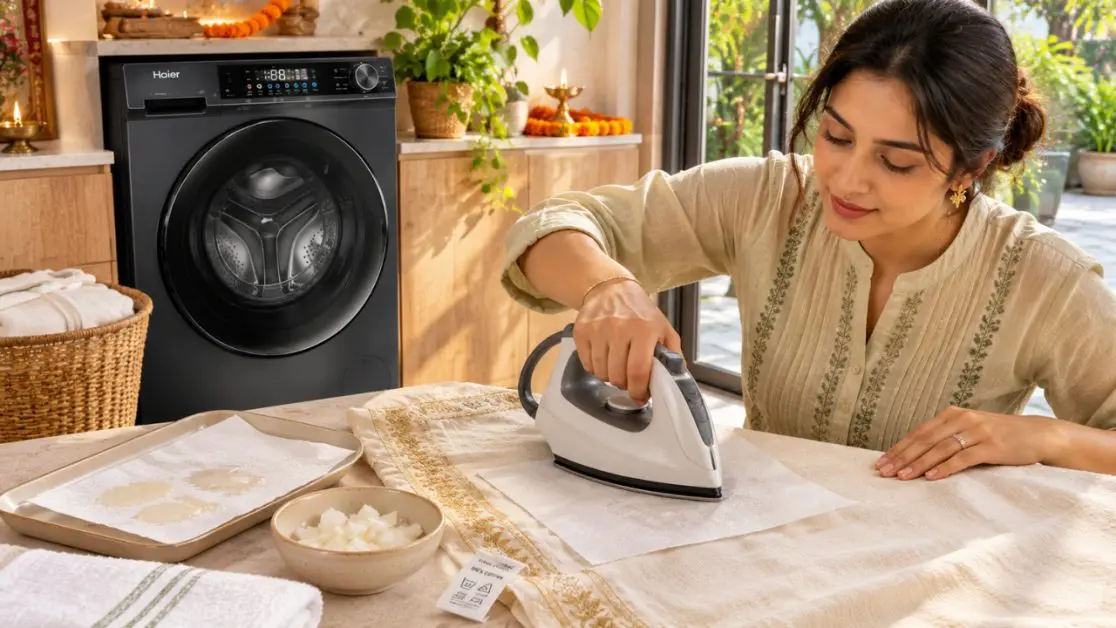
For suitable, heat-tolerant fabrics, controlled heat can help transfer this residue onto absorbent paper.
Using Absorbent Paper and Gentle Heat
Before attempting this method, check the tablecloth’s care label.
If ironing is permitted:
- Place plain, absorbent, unprinted paper beneath the affected area.
- Cover the wax residue with another sheet of absorbent paper.
- Set the iron to a low temperature appropriate for the fabric.
- Switch off the steam function.
- Briefly press the covered area without sliding the iron.
- Replace the paper as wax transfers onto it.
Repeat carefully until little or no wax transfers.
Never place a hot iron directly onto candle wax.
Also, avoid this method on fabrics that cannot tolerate ironing or heat. Coloured candle wax may contain dyes that become more difficult to remove when heated.
For expensive silk, heavily embroidered fabrics or uncertain material blends, professional cleaning is generally the safer option.
What About the Greasy Mark Left Behind?
Here’s where the cleaning process changes.
Even after removing the solid wax, a faint oily stain may remain. This happens because candle wax can contain paraffin, vegetable-based waxes or other oily ingredients.
A suitable liquid laundry detergent can help loosen some of the remaining residue.
How to Pre-Treat the Stain
Check the care label and detergent instructions before proceeding.
For washable fabrics:
- Apply a small quantity of suitable liquid laundry detergent to the affected area.
- Gently work it into the fabric without aggressive rubbing.
- Allow it to sit for the duration recommended on the detergent label.
- Rinse if directed by the product instructions.
- Inspect the stain before placing the tablecloth in the washing machine.
Always test stain-treatment products on an inconspicuous section first, particularly when dealing with coloured or printed fabrics.
And one more thing. Don’t combine household cleaning chemicals or experiment with strong solvents.
A tablecloth is hardly worth damaging just to remove a stubborn patch.
Before Machine Washing, Check These Four Things
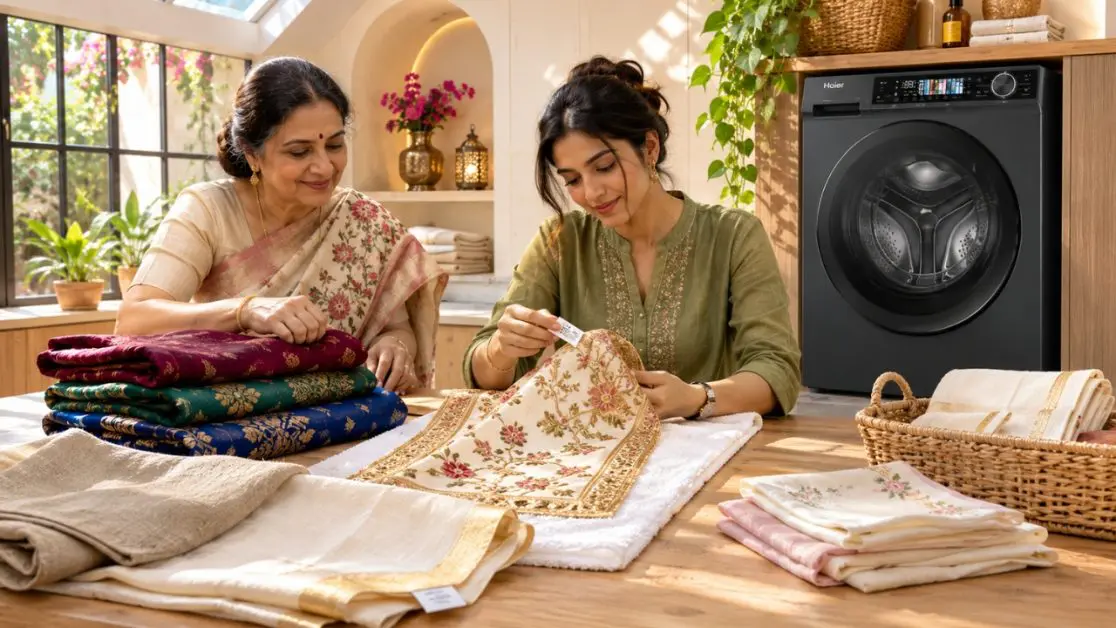
The wax may be gone, but that doesn’t mean every tablecloth should receive the same wash treatment.
Fabric composition, colour and decorative details matter.
1. Identify the Fabric
Cotton tablecloths are generally easier to maintain than delicate silk or heavily embellished materials.
Linen may require gentler handling to manage creasing and preserve its appearance.
Synthetic blends should be washed according to their care labels, particularly because some fibres are sensitive to heat.
2. Separate Coloured Tablecloths
Diwali tablecloths often feature deep maroon, royal blue, green or gold patterns.
If you’re washing them for the first time, colour bleeding can be a concern.
Separate dark and light fabrics, and check whether the material is colourfast.
3. Don’t Overload the Drum
Large dining tablecloths need sufficient room to move during washing.
Stuffing them into an already crowded drum can restrict fabric movement and reduce cleaning effectiveness.
4. Select the Right Washing Programme
A cotton tablecloth and an embroidered festive table cover may need very different wash settings.
Use the care label to determine the appropriate programme, temperature and spin speed.
For delicate fabrics, choose a suitable gentle cycle rather than automatically selecting an intensive wash.
Making Post-Diwali Laundry Easier With Haier Washing Machines
Removing candle wax is a manual pre-treatment task. However, once the residue has been addressed, a capable washing machine can make the remaining cleaning process considerably more convenient.
This is particularly relevant after Diwali, when households often have more laundry than usual.
Dining tablecloths, cotton napkins, cushion covers and everyday clothes can quickly add up.
Haier India’s F5 Series Front Load Washing Machines bring together intelligent washing technology, multiple programmes and convenient controls to support different household laundry requirements.
Two models worth exploring are the Haier F5 10KG Front Load Washing Machine (HW100-IM14F5BKU1) and the Haier F5 9KG Front Load Washing Machine (HW90-IM14F5BKU1).
Both offer features designed to make routine fabric care more manageable.
AI Wash for Intelligent Laundry Care
Selecting suitable wash settings can sometimes feel confusing, particularly when dealing with different fabric types and laundry requirements.
The Haier F5 Series features AI Wash technology, designed to intelligently optimise wash cycles for cleaning performance and efficiency.
For households managing frequent laundry loads, this provides a convenient washing option.
However, remember that AI Wash does not eliminate the need to remove hardened candle wax beforehand.
Proper stain preparation remains essential.
A Spacious 525 mm Drum
Large tablecloths can become bulky once wet.
Both the 9 kg and 10 kg Haier F5 models feature a 525 mm drum designed to support enhanced fabric movement, effective cleaning and reduced tangling.
This can be particularly useful when washing larger, machine-washable household fabrics.
Of course, drum capacity should never be treated as permission to overload the appliance.
Dedicated Programmes for Different Fabrics
Not every Diwali tablecloth is made from ordinary cotton.
Some have decorative borders, delicate stitching or blended materials requiring additional care.
The Haier F5 models offer 14 washing programmes, including:
- Cotton for suitable everyday cotton fabrics.
- Delicate for garments and fabrics requiring gentler washing.
- Eco for appropriate laundry loads.
- Quick for compatible items requiring a shorter wash.
- Rinse+Spin for additional rinsing and spinning when appropriate.
These options allow users to select programmes according to fabric requirements rather than treating every laundry load identically.
The machines also feature adjustable temperature and spin settings, providing additional control where the selected programme permits.
Convenient Controls for Busy Households
Both models feature a full-colour touch display, Wi-Fi connectivity and an inverter motor.
The touch display supports intuitive programme selection, while Wi-Fi connectivity provides remote laundry-management convenience.
The inverter motor is designed to support quieter operation and energy-efficient performance.
Together, these features make the F5 Series an option worth considering for households seeking modern laundry functionality.
Choosing Between the Haier F5 9KG and 10KG Models
Both washing machines share several core technologies, but their capacities differ.
The Haier F5 9KG Front Load Washing Machine (HW90-IM14F5BKU1) offers a 9 kg washing capacity, making it an option for households whose regular laundry requirements fit within that limit.
Meanwhile, the Haier F5 10KG Front Load Washing Machine (HW100-IM14F5BKU1) provides a 10 kg capacity for households requiring additional room for suitable laundry loads.
Both models feature:
- AI Wash technology.
- A 525 mm drum.
- 14 washing programmes.
- A full-colour touch display.
- Wi-Fi connectivity.
- An inverter motor.
- Up to 1400 RPM spin speed.
- A 5-star energy rating.
The appropriate choice depends on household laundry volume, fabric requirements and washing frequency.
Neither machine should be used to wash tablecloths marked as dry-clean-only.
Don’t Make These Mistakes While Removing Candle Wax
A little impatience can turn a manageable stain into a permanent mark.
Here are some common mistakes worth avoiding.
Washing Before Removing the Wax
Detergent alone may not remove hardened wax deposits.
Remove the solid material and pre-treat the remaining residue first.
Using Excessively Hot Water
Hot water isn’t automatically better.
It can damage certain fabrics, affect colours and make some dye stains more difficult to remove.
Always follow the garment care label.
Scrubbing Embroidered Areas
Aggressive rubbing can damage decorative threads and weaken delicate fibres.
Treat embellished sections carefully.
Tumble Drying Before Checking the Stain
Heat from a dryer may make remaining oily or coloured marks more difficult to remove.
Inspect the tablecloth after washing and before drying.
If the stain remains, repeat an appropriate treatment or seek professional assistance.
Keep Your Festive Tablecloths Ready for the Next Celebration
A few candle wax stains shouldn’t mean retiring your favourite Diwali tablecloth.
Allow the wax to harden, remove the solid deposits carefully, treat any remaining residue and choose a washing programme suited to the fabric. That sequence can make a noticeable difference to the final result.
For households looking to simplify everyday laundry care, Haier India’s F5 9KG and F5 10KG Front Load Washing Machines offer AI Wash technology, spacious drums and multiple fabric-care programmes.
Explore the Haier F5 Series and discover washing solutions designed to make household laundry more convenient, long after the festive celebrations are over.
Frequently Asked Questions
Can candle wax be removed in a washing machine?
A washing machine can help clean washable fabric after pre-treatment, but hardened candle wax should be removed manually first. Washing alone may leave waxy or oily residue behind.
Does hot water remove candle wax from tablecloths?
Hot water may soften certain waxes, but it isn’t a reliable standalone solution. Excessive heat can also damage fabrics or affect coloured stains. Follow the fabric care label.
How do you remove coloured candle wax from fabric?
First remove the hardened wax carefully. Then assess the remaining dye stain and use a suitable fabric-safe stain remover according to its instructions. Persistent coloured marks may require professional treatment.
Can embroidered Diwali tablecloths be machine washed?
Some embroidered tablecloths are machine washable, while others require hand washing or professional cleaning. Always check the care label and select an appropriate gentle programme if machine washing is permitted.
Which Haier washing machine is suitable for larger tablecloths?
The Haier F5 10KG Front Load Washing Machine offers a 10 kg capacity and a 525 mm drum. It may be suitable for larger machine-washable household fabrics, provided the load fits comfortably and the care label permits machine washing.