
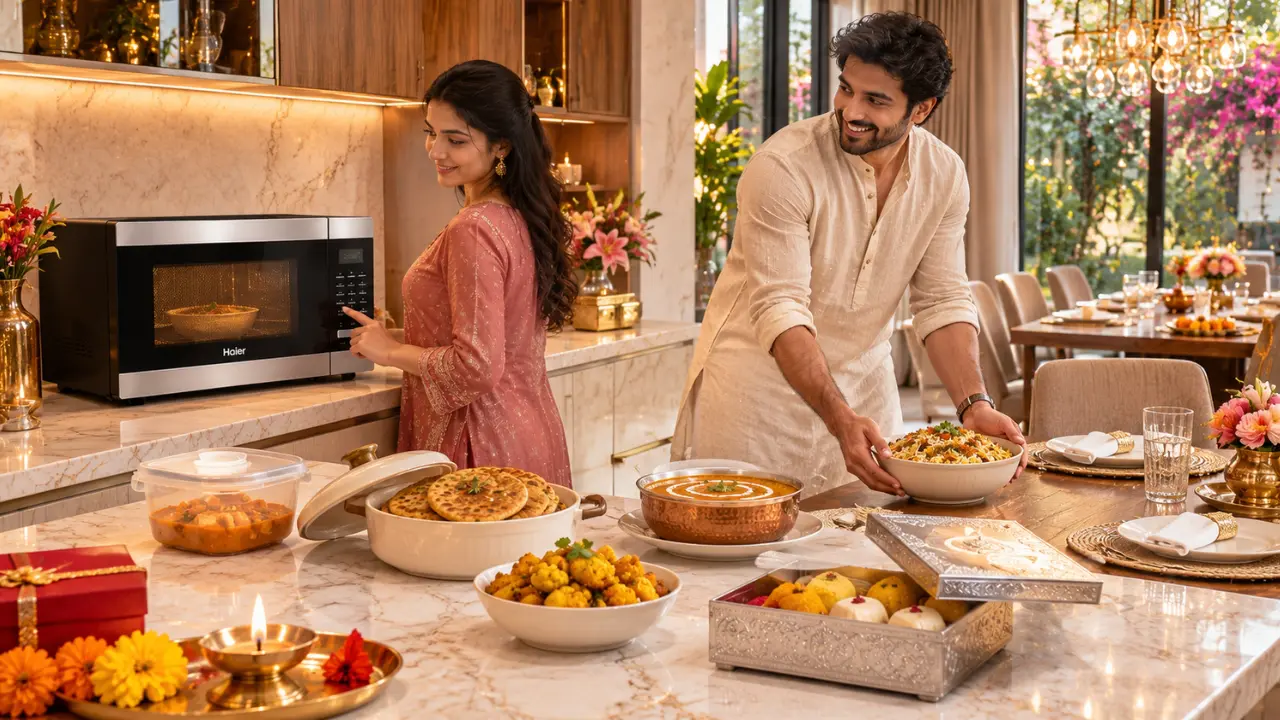

If you want to reheat Bhai Dooj Lunch Leftovers without it being dry, here are the tips to follow.
Now the guests have gone, the sweets have been stored and the Bhai Dooj festival is pretty much over. Open the fridge, though, and there’s still a lot more holiday food in the house to enjoy
Some vegetable pulao, a few stuffed parathas, a bowl of shahi paneer and maybe that mouth watering dal makhani that was served for lunch.
The problem? Reheated food is not always as tasty as when it was first made. Rice dries out, paneer gets as rubbery as a wad, and at times rotis are so hard you can only save them with copious amounts of gravy.
Luckily, you can re-heat the leftover Bhai Dooj Lunch without it getting dry. The key is to keep the moisture in, select the right cooking technique and not overcook. There are a few tips and tricks to help you still enjoy your festive favourites without sacrificing texture with the proper microwave oven.
Why Does Food Become Dry When Reheated?
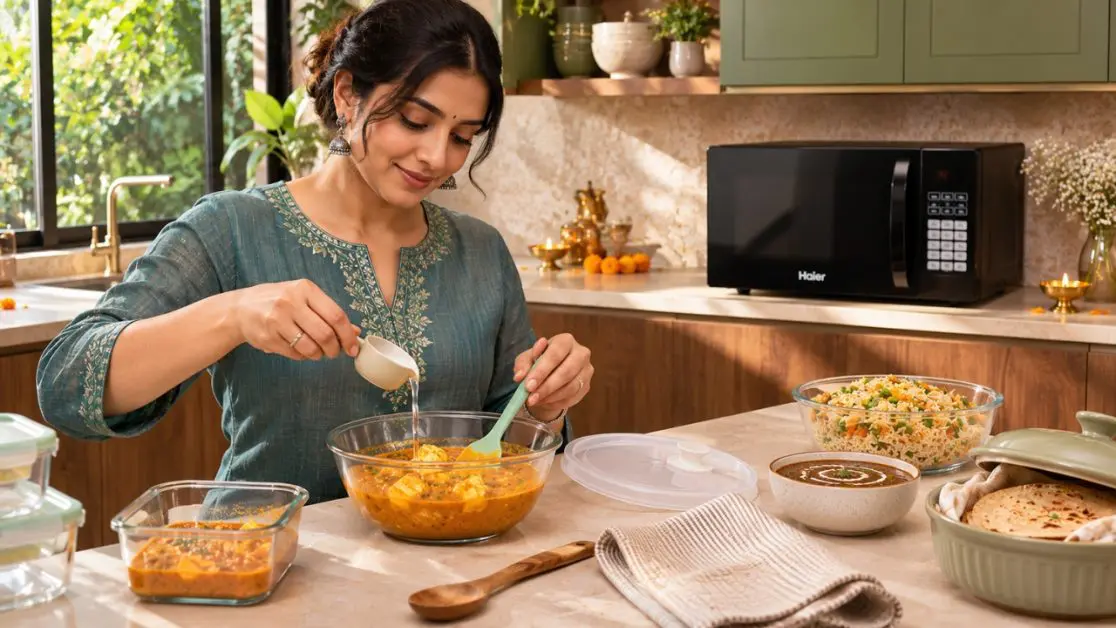
Ever prepare the paneer curry for the next day and find the gravy has hardened up quite a bit by then?
This is because a continuous loss of moisture occurs during heating. Pumping water causes its temperature to increase, which leads to evaporation, especially from the exposed surface.
Some foods get better after being reheated, others not so much.
- Rice dries out, and can turn hard or unevenly cooked.
- Excessive heat causes roti and parathas to become chewy.
- Excessive cooking can cause paneer to get rubbery.
- The thicker the gravies, the more water evaporates.
- Fried foods tend to lose their crispness when stored.
- If food is not placed evenly, it can cause hot or cold spots during microwave reheating.
But, that doesn’t mean microwave ovens aren’t good for holiday leftovers. Quite the opposite. The correct power setting, proper covering and stirring during the heating periods can make a difference.
How to Reheat Different Recipes of Bhai Dooj in the Right Way?
All foods are not created equal.
The pulao in your refrigerator will need a different method than yesterday’s crispy samosas. It is important to recognize these differences so as to keep the flavor and consistency of your holiday feast.
1. Make Pulao and Biryani Without Overcooking
Reheating rice is likely one of the more difficult leftovers to reheat.
Vegetable pulao might appear just fine in the refrigerator but over heating may cause the grains to break apart and become dry.
Here are things you can do:
- Place the frozen rice in a microwave bowl.
- Add some water to the rice.
- Place on a microwave-safe cover with an adequate vent for the steam.
- Cook briefly, stirring in between.
- Repeat until the rice is steamy all the way through.
These additional grains of water decrease the drying out of grains.
Don’t cook too much at a time. Smaller amounts heat up more evenly.
An important note: cooked rice should be refrigerated quickly after cooking. Rice is not safe if it has been standing at room temperature for an excessive amount of time.
2. To Ensure Paneer Curries Remain Soft and Flavourful
Paneer butter masala, kadai paneer and shahi paneer are popular favorites especially when it comes to celebrating in India.
Unfortunately, the firmness of paneer can occur if it is subjected to a lot of heat.
To prevent this:
- Pour the curry into an appropriate container for the microwave.
- If gravy has thickened add a little water.
- Loosely cap to minimize splattering and moisture loss.
- Use a medium power level in the microwave.
- Reheat gently, stirring to distribute heat.
- Avoid boiling the curry for longer than necessary.
The purpose is to warm up the dish, not to re-cook the paneer.
3. How to Reheat Rotis and Parathas Without Getting Them Hard
Even if you have leftover paratha, it can be a delicious evening snack.
However, if it is reheated improperly, the soft layers can become rather chewy.
When making plain roti, put them between slightly moist and microwaveable paper towels and briefly heat them. Regularly check to avoid overheating.
There is a slightly different method to make Parathas.
They can be initially warmed with a microwave covered plate. For a light crispness on the outside, cook them on a preheated tawa.
Keep it in mind that there is a point at which you add too much moisture to make the parathas soggy. Do not use more than what is required.
Properly Reheating Dal, Sabzi and Festive Gravies
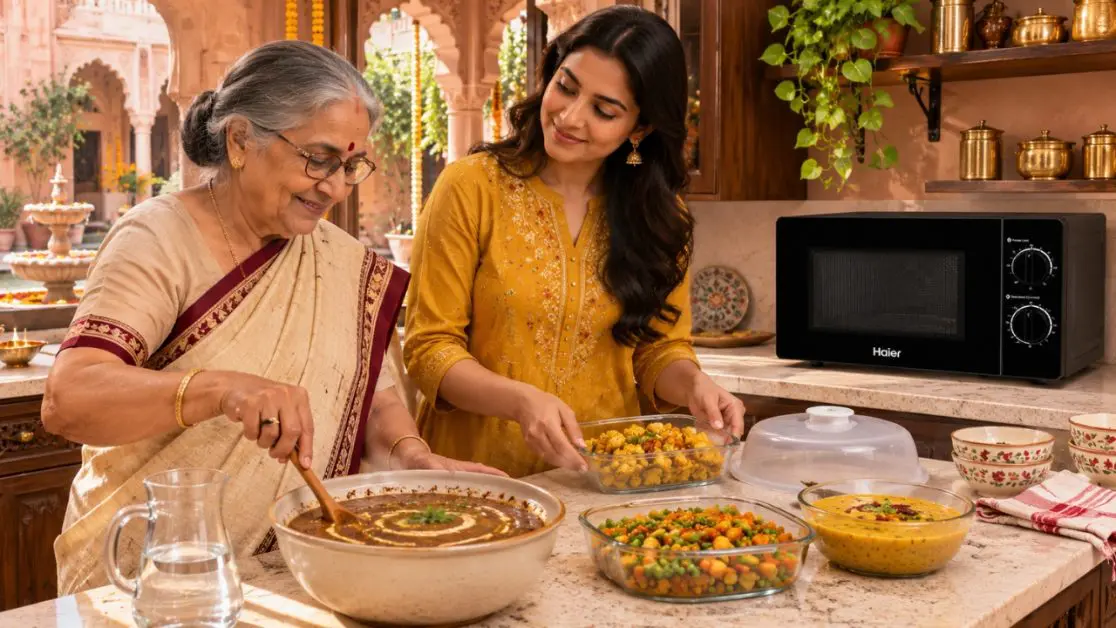
In fact, some Bhai Dooj dishes get more flavor after they have rested overnight
One such instance is Dal makhani. The spices sink to the bottom of the gravy, adding more flavor to the gravy. Refrigerated dal, however, usually thickens up upon refrigeration, sometimes more than what it was when first cooked.
For Dal Makhani and Dal Tadka
If it is too thick, add a bit of water before reheating.
Mix well and cook in small bursts until dal is heated all the way through.
Moderate heating can be helpful to prevent the product from splattering and bubbling too much for dishes that include cream or butter.
For Dry Vegetable Preparations
Due to the varying moisture content, special care must be taken with reheating Aloo gobhi, beans sabzi, and mixed vegetables.
Here are some actionable measures you can take:
- Dry vegetables and sprinkle a couple of drops of water on them.
- Microwave cover recommended.
- Cook in small amounts not big bowls.
- Stir or turn the vegetables half way.
- Stop when the food is well-heated.
Some vegetables, which are crisp in their raw state, might become soft when reheated. This is normal, but can be aggravated by excessive heating.
Does a Haier Microwave Oven Make Festive Food Easier to Reheat?
With various leftovers in the refrigerator, it can be cumbersome to repeatedly heat it up on the gas stove.
This is where a versatile microwave oven can come in handy.
Haier India has introduced convection microwave ovens that have been equipped with various features that cater to different cooking needs, such as microwave heating, grilling, convection cooking or even cooking programmes that can be selected.
These equipment provide convenience to large families that regularly cook elaborate meals for their holiday celebrations, but can’t reheat them at home.
28L Convection Microwave Oven With Dual Heating Element (HIL2801DBSJ)
The Haier 28L Convection Microwave Oven With Dual Heating Element (HIL2801DBSJ) is a hit for households that wish to reheat their food in addition to baking and grilling.
The Easy Jog Control is one of its helpful features as it lets you control it through a rotary dial.
This is great for serving dal, curry or rice individually from the container.
Additionally, the appliance provides:
- Convection cooking with dual heating elements, placed at the top and back.
- A fan that circulates hot air.
- Multi-cook (microwave + grill).
- A cavity made of stainless steel.
- A 28-litre capacity.
The microwave heating function is a better choice than extended dry convection heating for moisture sensitive leftovers.
The dual heating elements and convection fan also are significant for baked or roasted foods, when they should be prepared or reheated with a browned texture.
Haier 30L Convection Microwave With In-Built Air Fryer (HIL3001ARSB)
Then what about the leftover Bhai Dooj lunch items such as cutlets and samosas?
The same is not true of these foods.
You are looking for them hot on the inside, but a bit crispy on the outside.
The Haier 30L Convection Microwave With In-Built Air Fryer (HIL3001ARSB) is a microwave with in-built air fryer.
Its features include:
- An integrated air fryer equipped with 36 special air-fryer programs.
- Microwave, grill, convection, air-frying, and rotisserie features.
- 5 power levels for the microwave.
- 305 preset auto-cook menus.
- A motorised rotisserie.
- A cavity formed in stainless steel.A hole in a stainless steel structure.
The air-frying setting may be useful for drying out suitable fried items and restoring crispiness, but depends on the moisture content of the food and settings used.
Cooking rice or gravies-based leftovers in the microwave on the proper power setting is still the better way to go.
When both are present in a single appliance, it’s easier to cook a variety of holiday fare without switching from one appliance to another.
Haier Convection Microwave Oven (25L) HIL2501CBSH
The Haier 25L Convection Microwave Oven (HIL2501CBSH) is another model that can be used for households which regularly prepare Indian breads and traditional dishes.
It has a bread basket for cooking Indian breads like naan, paratha, tandoori roti and kulcha.
Other features include:
- 305 auto-cook menus.
- Combination cooking functions.
- A memory function.
- A non-reactive cavity made of stainless steel.
- A deodoriser function.
- Low-oil cooking capability.
The Bread Basket feature is designed to make breads and not to ensure that refrigerated rotis can be softened.
The microwave heating mode can be used to reheat appropriate leftovers, though, and the extra cooking modes provide other options for preparing meals.
What Should Be the Microwave Setting to Heat Up Leftovers of Bhai Dooj?
Choosing the best heating mode is as significant as choosing the appliance itself.
| Food item | Suitable heating method | What to remember |
| Vegetable pulao | Microwave mode | Add small amount of water and place a lid on it |
| Paneer curry | Microwave mode | Mix gently and don’t overheat |
| Dal makhani | Microwave mode | Adjust the consistency before cooking it. |
| Roti | Microwave mode | Use short periods of moisture at a low rate |
| Paratha | Heat in microwave, however if desired, heat on tawa | Avoid excessive moisture |
| Samosa | Air-fry or use appropriate convection mode. | Turn to the light frequently to ensure it doesn’t dry out. |
| Cutlets | Air-fry or on convection mode (appropriate). | Layer 1″ (single layer). |
Cooking times vary with the amount of product, initial temperature and power of the microwave oven.
Also, use accessories appropriate for the selected mode. Do not put metal objects on metal racks or air-frying trays unless otherwise stated in the appliance’s instructions; do not use them in regular microwave mode.
Food Safety Is as Important as Flavor
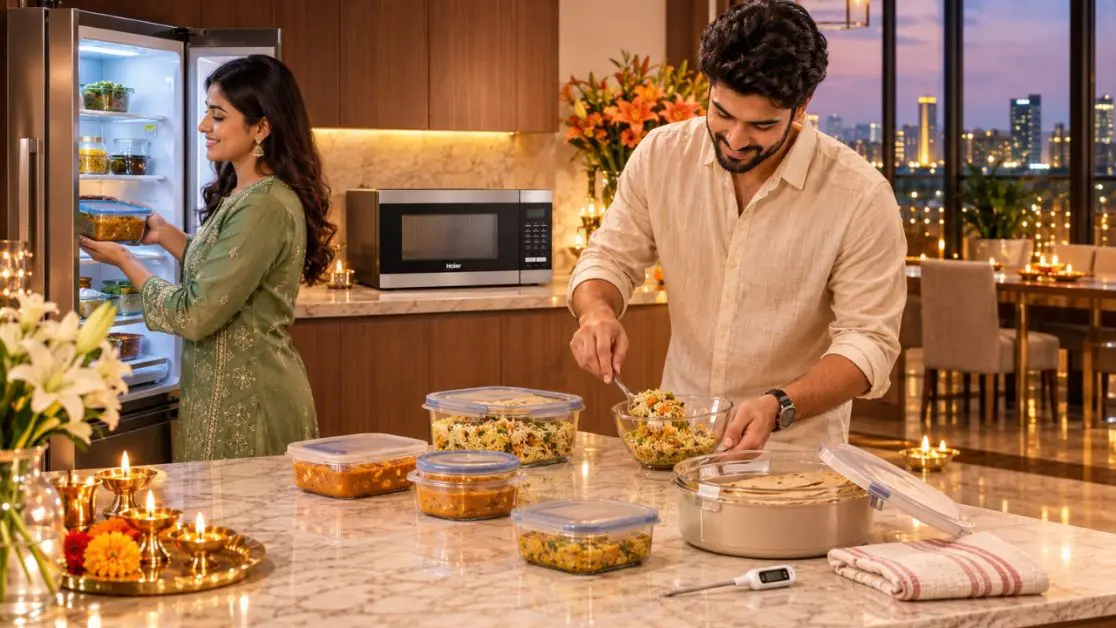
The only time a meal is really enjoyable is when the leftovers have been safely stored.
Events can go on for hours and hours, and sometimes food is left on the dining table after everyone has eaten.
This can pose a food safety issue.
Follow these precautions:
- If the temperatures are very hot, refrigerate perishable cooked food within two hours of cooking or serving.
- Refrigerate leftovers in shallow covered containers.
- Store refrigerator at 4°C or below.
- Refrigerate leftovers within 3-4 days of preparation.
- Reheat leftovers to 74°C or to an internal temperature if possible; use a food thermometer.
- Throw away any food that has not been refrigerated for a long time.
- Do not continually switch a large container of food between hot and cold. Rather, just cut off the parts you will use.
- Most importantly, do not use smell or appearance as a guide to whether or not food is safe to eat.
Some of the Smaller Heating Mistakes That Can Spoil Your Favourite Dishes
With some second servings, the difference between satisfaction and disappointment can be just a few common pitfalls.
Heating Everything at Maximum Power
Sometimes it’s more suitable to use less power for food that is sensitive to overpowering.
Creamy gravies and soft breads might be better suited to more careful heat.
Don’t Forget to Cover the Food
It is best to leave food covered so it will not lose moisture and will not splatter.
An appropriate microwave cover is recommended for keeping steam in, while providing ventilation.
Sautéing Uneven Portions Together
The thick curry and paneer in a large bowl might not heat evenly.
A short standing time and stirring can ensure more even distribution of heat.
Cooking a Whole Dish with Convection Mode
Convection heating is good for browning and crisping food, but should not be used for moisture dishes unless it is necessary.
Don’t use the same setting for every food item to heat it.
Enjoy Bhai Dooj Festival the Next Day, Too
Bhai Dooj feasts are nothing like common. Before anyone knows it, the dinner table is covered with a variety of sabzi (vegetables) prepared by someone else in the family, some parathas being freshly made by another member of the family, and before long the table is just too full.
The well-prepared meals shouldn’t be so unappetizing the next day.
With a bit of extra moisture, the right cooking temperatures and safe storage methods you can keep the flavors and textures of your holiday treats.
Haier India convection microwave ovens come with various cooking functions and capacities like 25L HIL2501CBSH, 28L HIL2801DBSJ and 30L HIL3001ARSB to cater to different cooking needs of the home.
From cooking the dal to warming the pulao for festivals to adding a touch of crunch to old snacks, making the process easier and more convenient can be achieved by selecting the right appliance and technique.
Visit Haier India and discover their microwave range of products to cater to the cooking and festive food preparation needs of the family in everyday life.
After all, a special Bhai Dooj lunch is meant to be savored over the course of a meal.
Frequently Asked Questions
How do you reheat Bhai Dooj leftovers in a microwave without drying them out?
To reheat Bhai Dooj leftovers without drying them out, add a little water to moisture-sensitive dishes, cover them with a microwave-safe lid, and heat in short intervals. Stir the food occasionally to distribute heat evenly. Avoid excessive heating, especially for rice, paneer curries, and rotis.
Can you reheat leftover paneer curry in a microwave oven?
Yes, leftover paneer curry can be reheated in a microwave oven. Transfer it to a microwave-safe bowl, add a little water if the gravy has thickened, and cover loosely. Heat at moderate power, stirring between intervals until thoroughly hot. Avoid overheating, as paneer can become rubbery.
Which Haier microwave oven is suitable for reheating festive leftovers?
The Haier 28L Convection Microwave Oven With Dual Heating Element (HIL2801DBSJ) is a practical option for reheating festive leftovers. Its Easy Jog Control allows convenient operation, while its microwave heating function is suitable for warming dishes such as dal, rice, and vegetable curries. It also offers grilling and convection cooking functions.
How can you make leftover samosas crispy again?
Leftover samosas can regain some of their crispiness when reheated using an appropriate air-frying or convection setting. The Haier 30L Convection Microwave With In-Built Air Fryer (HIL3001ARSB) offers an air-frying function suitable for preparing crispy snacks. Arrange samosas in a single layer and check frequently to avoid overheating or drying out the filling.
How long can you store Bhai Dooj lunch leftovers in the refrigerator?
Most properly refrigerated cooked leftovers can be stored for three to four days at 4°C or below. Refrigerate perishable dishes within two hours of preparation or serving, or within one hour in very hot conditions. Reheat leftovers thoroughly to 74°C before eating, and discard food that has been stored improperly.