
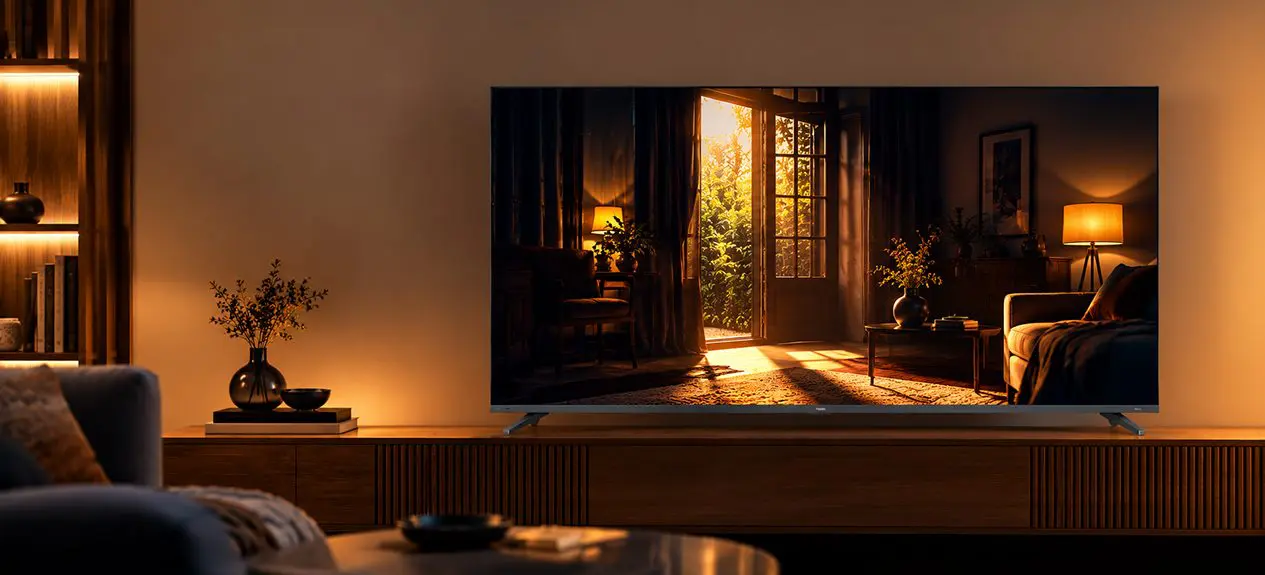

Ever watched a thriller where a character steps into a dark room, and the shadows come out a washed-out grey instead of black. Or a late-night movie where bright subtitles seem to glow at the edges. Little details like these change how a scene feels, even on a sharp, high-resolution screen. A big part of the reason is TV backlighting. 4K and HDR get most of the attention, but how a TV produces and controls light matters just as much. Once you know the main LED backlight types, it’s much easier to pick a TV that suits your room and viewing habits.
What Does a TV Backlight Do?
The best way to understand how an LCD works is to imagine it as a wall of windows. The liquid crystals turn them on and off in order to determine how much light passes through and that’s what forms the picture. The backlight creates that light needed for colors and shapes to appear.
The position and control of this light influence brightness, contrast and how evenly the picture appears across the screen. Imagine a shadow-puppet show: even with detailed puppets, the effect changes depending on how the light behind the screen is directed.
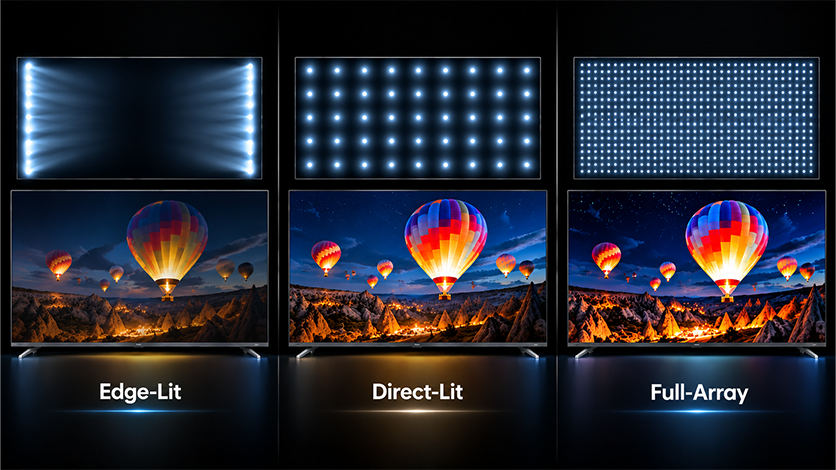
What does a backlight do on a TV? It illuminates the LCD panel so it can display an image. Common LED backlight types include edge-lit, direct-lit and full-array configurations, each with different approaches to distributing light.
Edge-Lit LED TVs
In an edge-lit TV, the LEDs run along the edges of the screen, and a light guide spreads their glow across the panel. This setup is what lets manufacturers make such slim designs.
It’s useful in a compact living room, especially if the TV is wall-mounted and a big screen would look out of place. Edge-lit models can also work well for everyday viewing, whether you’re catching the evening news or streaming a comedy after work.
Pros and Cons of Edge-Lit LED TVs
Pros
- Slim design for wall-mounted setups.
- Often an affordable option for everyday viewing.
- Takes up less visual space in a room.
Cons
- Brightness may be less uniform across the screen.
- Dark scenes can reveal clouding or brighter patches, depending on the panel.
- Black levels depend on the display’s overall contrast performance.
Direct-Lit LED TVs
In direct-lit models, LEDs are placed behind the display screen of an LED TV rather than on its sides. LEDs are installed behind the screen and provide illumination from behind.
Think of the difference between lighting a room with lamps spread across the ceiling and relying on a single light source near the doorway. The source of light plays an important role in the distribution of light in different directions. Direct-lit models, for instance, provide more even distribution of light, depending on the type of the model.
Pros and Cons of Direct-Lit LED TVs
Pros
- Can offer more uniform screen illumination.
- A practical choice for everyday entertainment.
- Often provides a useful balance between cost and performance.
Cons
- The TV may be thicker than some edge-lit models.
- Direct-lit does not automatically mean the TV supports local dimming.
- Contrast depends on the panel and backlight controls.
What is the difference between edge-lit and direct-lit LED TVs? In edge-lit TVs, LEDs are located along the edge of the screen, whereas, in direct-lit, LEDs are located behind the screen. It makes differences in designs and light distribution, however, the picture quality will be affected by the complete screen design.
Full-Array LED TVs and Local Dimming TVs
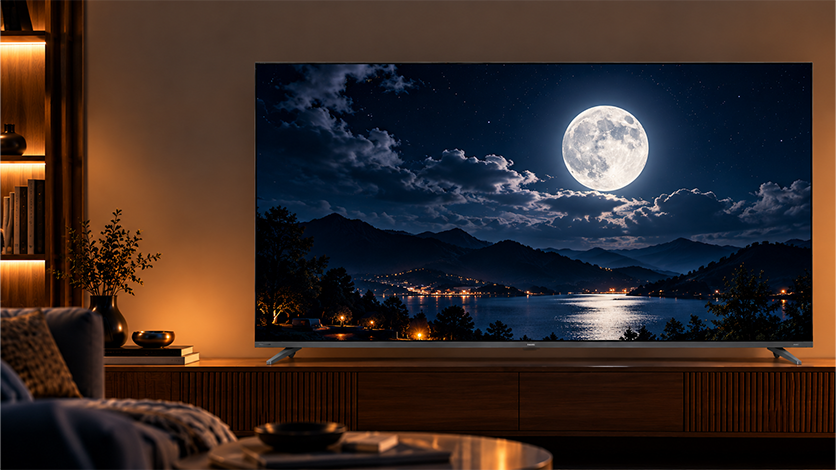
A full-array LED TV has LEDs arranged behind the screen across its surface. In models with full-array local dimming (FALD), these LEDs are grouped into zones that can be dimmed independently.
This is where backlighting gets more precise. Imagine a bright moon in a dark night sky: the TV can turn down the light in the darker zones while keeping the moon glowing, so you keep detail in both parts of the picture.
How Local Dimming Improves Contrast
The contrast is the difference between the lightest whites and the darkest blacks that can be produced by the display. Using local dimming, the television can reduce the backlighting in dark regions of the picture without compromising the entire picture.
This can help to create a more vivid experience of the night scenes and also bring out the HDR highlights. However, light can spill around bright objects against dark backgrounds, thereby causing a halo effect called blooming. The result depends on factors like the number of dimming zones and the TV’s image processing.
Edge-Lit vs Direct-Lit vs Full-Array: Which is Better?
There’s no single winner for every home. The right pick depends on your budget, your room, and what you like to watch.
| Backlight type | Main advantage | Consider it for |
| Edge-lit | Slim design | Compact rooms and minimalist setups |
| Direct-lit | Potentially even illumination | Everyday entertainment and value-focused shopping |
| Full-array with local dimming | Greater control over contrast | Movie nights, HDR content and dark scenes |
For example, if your TV mostly plays sitcoms, YouTube videos, and daytime shows, an edge-lit or direct-lit model may meet your needs. But if you regularly watch visually rich films with dark scenes, full-array local dimming TV may be worth considering.
And backlighting is just one piece of the puzzle. Panel performance, brightness, HDR support, colour reproduction, and image processing all shape what you see.
What to Look for When Buying a TV
Before choosing a TV, consider how and where you watch it.
- Lighting of the room: A brightly lit living room requires a screen that can handle the reflections well. The presence of backlight doesn’t necessarily ensure sharpness in the bright environment.
- Viewing preferences: In case you’re interested in watching sports and regular movies, brightness and motion capabilities become priority criteria. As for movie viewing that involves dark pictures, contrast should be taken into account.
- Local dimming: Local dimming should be looked for in case contrast is important. Compare different types of local dimming.
- General specifications: Resolution, HDR, sound, and smart capabilities should also be considered together with the screen.
Are LED backlights worth it for TV? Yes. LED backlighting is central to how LCD/LED TVs show an image, but it’s the setup and control of that light that decide how well the screen manages it.
When choosing a Haier TV, compare the specifications of each model and choose based on how you watch, the room it’s going in, and your budget.
Choose the Backlight That Fits Your Viewing Habits
Once you understand TV backlighting, it’s easier to look past resolution and compare what shows up on screen. Edge-lit models suit slim setups, direct-lit TVs keep the lighting simple, and full-array models with local dimming give you more control over contrast. Explore Haier TVs and compare their display specifications to find one that fits your home and the way you watch.
FAQs
What does a backlight do on a TV?
A backlight provides the light that an LCD TV uses to display images, helping make colours, details, and brightness visible on the screen.
What is the difference between edge-lit and direct-lit LED TVs?
Edge-lit TVs have LEDs along the screen’s edges, while direct-lit TVs have LEDs positioned behind the panel for more direct illumination.
What is a full-array (FALD) LED TV?
A full-array LED TV has LEDs spread across the area behind the screen. With local dimming, it can adjust different zones to improve contrast and dark-scene details.
Are LED backlights worth it?
Yes, LED backlights are essential to LCD/LED TVs. Their placement and control can affect brightness, uniformity, contrast, and overall picture quality.
What are TV backlights called?
TV backlights are commonly called LED backlights in LED-LCD TVs. Common types include edge-lit, direct-lit, and full-array LED backlighting.