
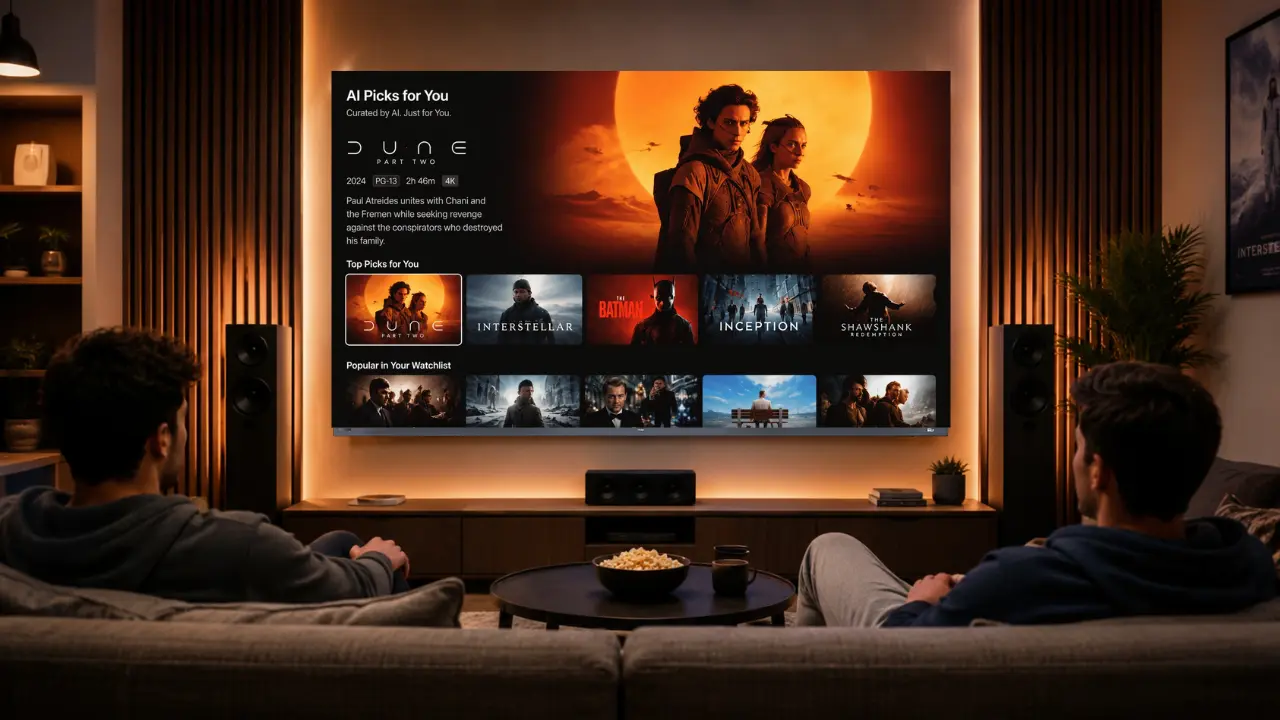

There was a time when binge-watching meant only one thing.
Finding a show.
Today, oddly enough, finding a show is often the hardest part.
You open an OTT app. Scroll for ten minutes. Watch a trailer. Skip it. Open another platform. Browse again. Suddenly half an hour disappears before you’ve watched a single scene.
Sound familiar?
The challenge is no longer content availability. India has more entertainment options than ever before. Movies, web series, sports, documentaries, live events, regional content, international content the choices seem endless.
The real challenge is relevance.
This is where Artificial Intelligence is quietly transforming the way people consume entertainment. Modern AI-powered televisions are no longer passive screens. They actively analyse viewing patterns, optimise content presentation, improve sound delivery, and create experiences that feel uniquely tailored to each household.
And that changes binge-watching completely.
The Shift From Content Consumption to Content Understanding
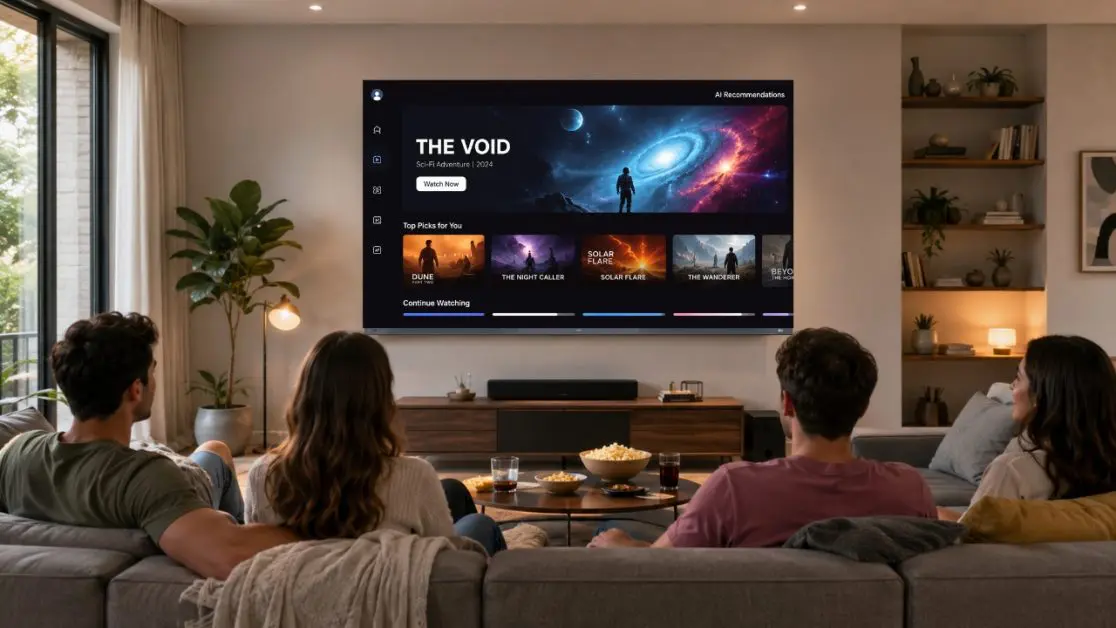
Most people think AI in televisions simply means voice commands.
That’s only a tiny piece of the puzzle.
The real value comes from how intelligent televisions understand content and viewing behaviour.
Imagine watching:
- A fast-paced cricket match
- A dark thriller series
- An animated family movie
- A high-speed racing game
Each type of content requires a completely different visual and audio treatment.
Traditional televisions display everything similarly.
AI-powered televisions do not.
Instead, they analyse scenes in real time and adjust multiple picture parameters automatically, helping every frame appear more natural and engaging.
The result?
Less manual tweaking.
Less time spent adjusting settings.
More time enjoying what matters.
Why Modern Viewers Expect Personalisation
Entertainment habits in India have evolved dramatically.
A single television often serves multiple users throughout the day:
Morning
- News updates
- Spiritual content
- Educational videos
Afternoon
- Kids’ cartoons
- YouTube content
- Regional programming
Evening
- Sports streaming
- Family entertainment
Late Night
- Web series
- Movies
- Gaming sessions
Every viewer expects a different experience.
AI bridges that gap by adapting intelligently rather than forcing everyone into the same viewing setup.
That’s what makes modern binge-watching feel effortless.
AI Recommendations Are Getting Smarter
Let’s be honest.
Nobody enjoys scrolling endlessly through thousands of titles.
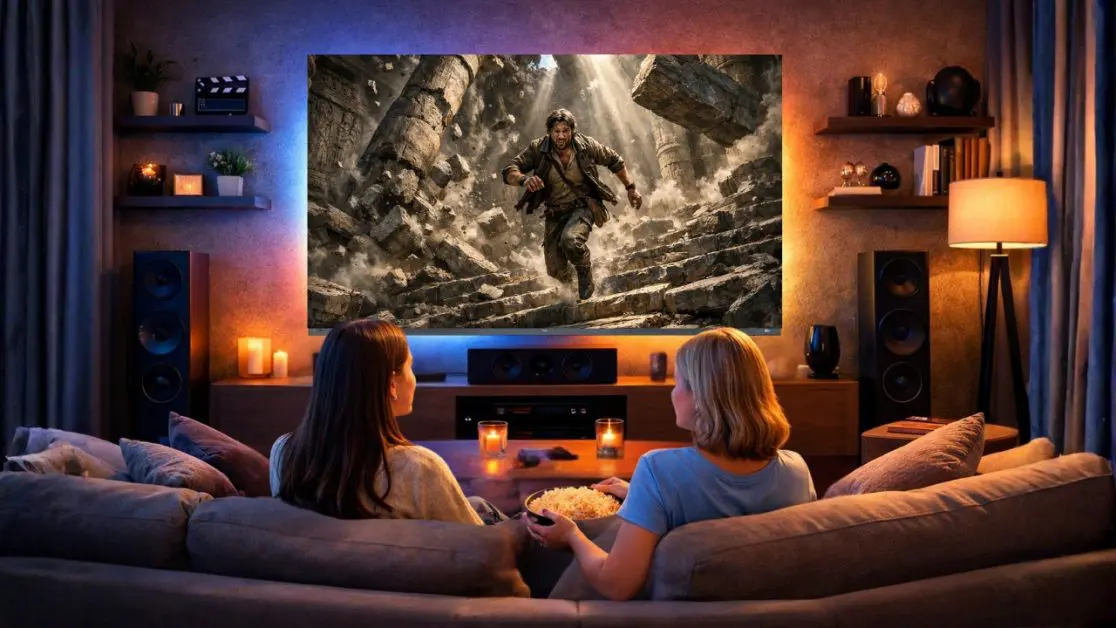
Modern AI-driven entertainment platforms work alongside smart television ecosystems to surface content based on viewing patterns, preferences, and watch history.
Instead of overwhelming users with endless choices, AI helps reduce decision fatigue.
The experience becomes:
- Faster
- More relevant
- More engaging
The more the system learns, the better the recommendations become.
In many households, it feels almost as if the television knows what people want to watch before they do.
A little surprising.
A little helpful.
Very convenient.
Picture Quality That Adapts Automatically
Here’s something many viewers never realise.
The same movie can look completely different depending on room conditions.
Bright afternoon sunlight.
Dim evening lighting.
Complete darkness.
All of these environments affect how content appears on screen.
Modern AI televisions compensate for this automatically.
AI-driven visual optimisation can help with:
- Brightness management
- Contrast enhancement
- Colour accuracy
- Shadow visibility
- Motion clarity
Rather than asking users to adjust settings repeatedly, the television continuously optimises viewing conditions.
The experience feels seamless because the technology works quietly in the background.
Exactly as it should.
When AI Improves Every Frame
Not all content is created equally.
Some streaming content is beautifully mastered.
Some aren’t.
Older content often lacks the visual quality modern viewers expect.
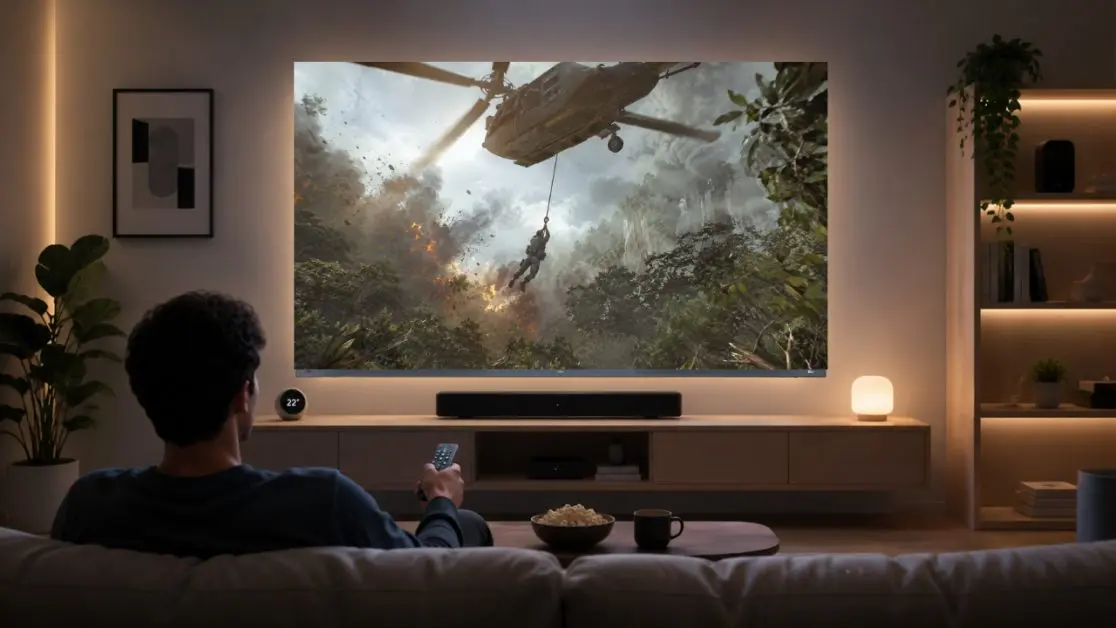
This is where advanced AI processing becomes particularly valuable.
The Haier M92 Series and flagship M96 Series feature the AI Ultra Sense Processor, designed to recognise scenes and intelligently optimise motion, colour, contrast, and depth in real time.
Rather than applying a single picture profile to everything, the processor adapts according to what is being displayed.
For viewers, the difference is simple:
Content feels richer.
More detailed.
More immersive.
Why Sound Matters More Than Most People Think
Picture quality usually gets all the attention.
Sound deserves equal credit.
Think about the last suspense thriller you watched.
The tension wasn’t created by visuals alone.
The background score.
The whispers.
The distant footsteps.
The sudden silence before a dramatic reveal.
That’s where immersion lives.
Modern AI televisions are increasingly designed to create balanced audio experiences that complement visual performance.
Key elements that improve binge-watching include:
- Clear dialogue reproduction
- Better bass response
- Enhanced surround effects
- Consistent volume management
The Haier M92 Series integrates Sound by KEF along with Dolby Atmos and a 2.1 channel speaker system for a fuller entertainment experience.
For viewers who spend hours watching content, this can significantly enhance engagement.
Binge Watching Without Eye Fatigue
Nobody plans a six-hour streaming session.
It just happens.
One episode becomes three.
Three becomes six.
Before you know it, it’s 2 AM.
That reality makes display comfort increasingly important.
Several AI-enabled display technologies are designed to improve long-duration viewing experiences.
Benefits may include:
- Reduced screen flicker
- Better brightness control
- Improved visibility in changing lighting conditions
- More comfortable viewing during extended sessions
For modern households where television usage extends well beyond traditional prime-time hours, these improvements matter more than many people realise.
AI and the Rise of Shared Entertainment
An interesting thing happened when smart televisions became more intelligent.
They became better family devices.
Not individual devices.
AI helps create experiences that work across generations.
Parents want simplicity.
Children want instant access.
Sports fans want motion clarity.
Movie lovers want cinematic visuals.
Gamers want responsiveness.
One television now serves all these expectations simultaneously.
That balance is becoming a defining feature of premium home entertainment.
How Haier Is Redefining Personalised Viewing
Personalisation is no longer limited to content recommendations.
It now extends across:
- Picture optimisation
- Audio enhancement
- Gaming performance
- Smart home integration
- Voice interactions
- Streaming experiences
Haier’s latest QD Mini LED AI Google TV lineup reflects this evolution.
The Haier New M92 Series QD Mini LED AI Smart Google TV, available in 164cm (65) and 189cm (75) screen sizes, combines, AI Ultra Sense Processor, Dolby Vision IQ, HDR10+, 144Hz refresh rate, Google TV, Dolby Atmos, Sound by KEF, and hands-free voice control into a single entertainment ecosystem.
For those seeking an even more immersive experience, the Haier New M96 Series 254cm (100) QD Mini LED AI Smart Google TV elevates home entertainment with premium visual performance, AI-powered optimisation, Sound by KEF, Dolby Atmos, and an ultra-large screen experience designed for modern viewing habits.
Highlights Across the Series
| Feature Area | User Benefit |
| AI Ultra Sense Processor | Real-time scene recognition and enhancement |
| Dolby Vision IQ & HDR10+ | Dynamic picture adjustment based on content and room conditions |
| Google TV | Curated and personalised content discovery |
| Sound by KEF | Richer and more immersive audio |
| Dolby Atmos | Multi-dimensional sound experience |
| 144Hz Refresh Rate | Smoother motion for sports, gaming and action content |
| Hands-Free Voice Control | Easier interaction without relying on a remote |
The Future of Binge Watching Is Already Here
People often imagine AI as something futuristic.
But the truth is much simpler.
It’s already sitting in the living room.
It’s already improving everyday entertainment.
And most viewers don’t even notice it.
That’s probably the best compliment AI can receive.
Because when technology works perfectly, it disappears.
The focus shifts back to the story.
The match.
The movie.
The moment.
As streaming libraries continue to expand and viewer expectations continue to evolve, personalised entertainment will become less of a luxury and more of a standard expectation.
Televisions are no longer just screens.
They are intelligent entertainment companions.
And with innovations such as Haier’s M92 and M96 QD Mini LED AI Google TVs, binge-watching becomes more than watching content.
It becomes an experience built around you.
Frequently Asked Questions
Why do I spend more time searching for something to watch than actually watching it?
Streaming platforms now offer thousands of titles. AI helps reduce this overload by analyzing your viewing habits and surfacing content that better matches your interests, reducing endless scrolling.
How does my TV know what kind of shows I like?
Modern smart TV ecosystems and streaming services track watch history, viewing duration, genres, and engagement patterns to recommend content that aligns with your preferences.
Why do recommendations seem to get better over time?
AI systems continuously learn from your viewing behavior. The more content you watch, the more accurately they can predict what you might enjoy next.
Can AI help me discover regional or niche content I would normally miss?
Yes. AI recommendation engines often identify patterns beyond mainstream choices and can surface regional films, documentaries, and lesser-known series based on your interests.
Why do different family members get different recommendations on the same TV?
Many smart entertainment platforms create separate user profiles or recognize different viewing patterns, allowing personalized recommendations for each viewer.